
Reviewed · HISTORICAL TOURS
Mostar gastro and historical treasures
Mostar’s past and its food are best understood together, and this private walk links the two well. You move from Spanish Square and wartime memorials to the Old Bridge, then pause for homemade pie, Bosnian coffee, local wine, beer, traditional dishes, and desserts. Armela is named as a guide, and the tour is offered in English.
I like the generous food plan, which covers far more than a token tasting, and I like the local angle of walking beneath the Old Bridge to consider what it means to Mostar’s people. The main drawback is timing: the advertised duration is about four hours, but the listed stops add up to nearly five hours if every stop receives its full allocation.
Key points
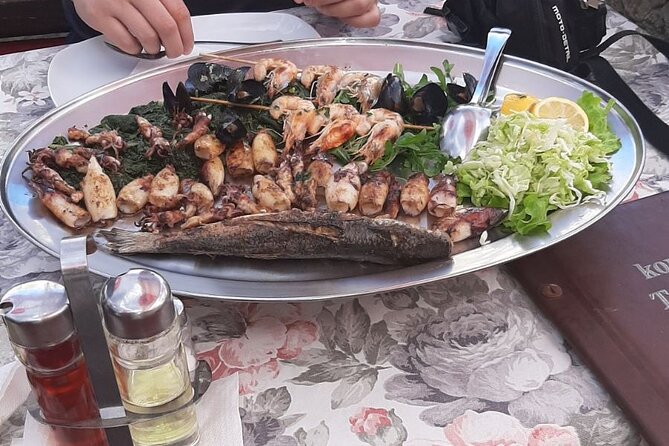
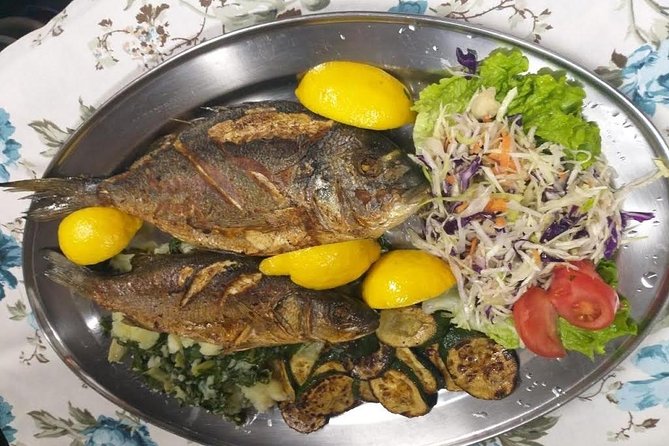
- Food is built into the history walk: Expect homemade pie, traditional dishes, coffee, wine, beer, and dessert rather than one small sample.
- The Old Bridge gets a local perspective: You visit the Crooked Bridge and walk beneath Mostar’s famous bridge.
- The route covers more than the postcard center: Spanish Square, Zrinjevac Park, monuments, the Peace Bell Tower, Lučki Most, and the Museum of Herzegovina all appear.
- Private guiding keeps the pace personal: Only your group participates, with food adapted for vegetarian, vegan, and gluten-free diets.
- The museum visit adds substance: A 45-minute ethnographic exhibition gives the food and customs more context.
- Plan for a full midday outing: The start is 11 a.m., and the combination of meals, tastings, walking, and museum time can stretch beyond four hours.
Why food makes Mostar’s past easier to grasp
A standard city walk can leave you with a list of dates and buildings. This experience takes a more useful route. You see monuments and historic places, then stop to taste the kind of food people connect with home, family, and daily life.
The food is not a side note. The included plan lists breakfast, lunch, dinner, snacks, coffee or tea, alcoholic drinks, and dessert. That sounds broad for a half-day tour, but the supplied details describe a mix of traditional dishes rather than three formal restaurant meals. You should expect several substantial food stops that together can replace a meal, not a full day of dining.
That is good value if you want both sightseeing and lunch without arranging separate bookings. It is less useful if you have already planned a food crawl or prefer to spend the whole day inside museums. The tour’s strength is the combination.
The food can be adjusted for vegetarian, vegan, and gluten-free diets. Tell the operator your needs when booking, and be clear about the level of avoidance required. The information confirms that these diets can be catered to, but it does not describe a dedicated menu or separate kitchen.
A few more Mostar trips to weigh up
- Mostar thru history -private tour
★ 4.9 · 43 reviews - Mostar War Heritage Walking Tour
★ 5.0 · 6 reviews - Sarajevo Full Day Tour: History, Culture, Nature, War & Olympics
★ 5.0 · 27 reviews
Starting at Spanish Square at 11 a.m.
Meet at Španski trg, or Spanish Square, at 11 a.m. The square provides a practical starting point because the tour begins with Mostar’s wider story rather than rushing straight to the Old Bridge.
The opening stop lasts about 20 minutes and focuses on the area in relation to Mostar since 1476. That date gives the walk a clear historical starting point. You are not simply looking at attractive buildings. You are being introduced to how the city developed and how its past still shapes the streets around you.
Because the tour is private, you can ask questions without waiting for a large group to catch up. That matters most at the beginning, when you are still learning the city’s basic layout. Public transportation is nearby, and no private transport is included, so you should arrive at the meeting point on your own.
Monuments around Hrvatski Dom and Zrinjevac Park
The next stops are short but add variety. At Hrvatski Dom, you visit a monument to a Bosnian queen, with about 10 minutes set aside. It is a quick look, so do not expect a long historical lecture at this point.
Zrinjevac Park follows for another 10 minutes. It is described as Mostar’s most beautiful park, giving you a calmer stretch between monuments and the denser old-city area. Parks are easy to skip on a fast sightseeing route, but this stop gives the walk a change of pace.
The schedule uses many short visits. That can work well for orientation and photographs, but it also means the guide may need to keep moving. If a monument catches your interest, use the private format to ask for more context or clarify how much time is available.
First food stop, then a look at wartime memory
A 30-minute food tasting comes next. The details do not name the exact dishes served at this stop, but the overall food plan includes homemade traditional pie, traditional Bosnian food, coffee or tea, local wine, beer, and dessert later in the route.
The homemade pie is a particularly appealing touch. Food prepared by the guide gives the tour a personal feel that a standard restaurant tasting cannot easily match. It also makes the meal more than a series of restaurant samples. You get a direct connection to the person guiding you.
After the tasting, the route pauses at a monument to the victims of the Second World War. This is another 10-minute stop, and it places Mostar’s food and ordinary life beside the hard events that shaped the city and region.
The experience does not present Mostar as only a pretty old town. That balance matters. You get pleasant food and good views, but you also encounter memorials that require a more thoughtful pace.
Same country, a completely different kind of day:
- Dubrovnik: Kravica Waterfalls, Mostar and Pocitelj Day Trip
★ 4.5 · 3,045 reviews - From Mostar: Blagaj, Počitelj & Kravice Waterfalls Day Tour
★ 5.0 · 1,310 reviews - From Mostar: Kravice Waterfalls, Blagaj, & Počitelj
★ 5.0 · 565 reviews - Herzegovina Day Tour from Mostar: Blagaj, Pocitej, Kravice falls (Join Us! :D)
★ 5.0 · 372 reviews
The Peace Bell Tower and Mostar’s changing skyline
The Mostar Peace Bell Tower is scheduled for about 15 minutes. The tour presents it as the location of the highest bell tower in Bosnia and Herzegovina.
This stop gives you a different visual point from the bridges and old streets. It also broadens the walk beyond the best-known center. You should treat the visit as a stop at the location, not assume that a climb or interior access is included. The supplied details do not promise entry to the tower itself.
The Peace Bell Tower also fits the tour’s larger theme. Mostar is not one single period preserved behind walls. Religious, civic, wartime, and modern symbols sit close together. A guide can help you see those layers instead of treating each monument as an isolated photo stop.
The Crooked Bridge before the famous one
The Old Bridge area includes a visit to the Crooked Bridge, with about 10 minutes planned. It is a smart choice because it gives you a smaller bridge for comparison before the main attraction.
The stop should help you notice scale, shape, and setting. Mostar’s famous bridge can dominate your attention, so seeing another bridge first gives your eyes a useful reference point. This is also a short photo opportunity, not a full historical museum visit.
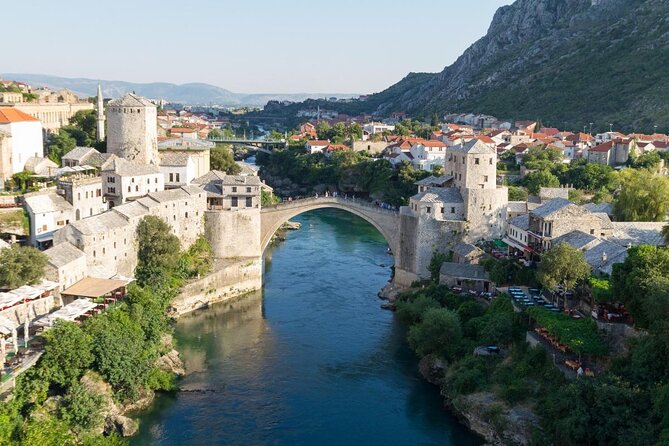
From there, you go to Mostar Old Bridge. The planned 15-minute visit includes walking beneath it to experience the bridge in a way locals do. That instruction is more interesting than simply stopping above the river for the usual view.
The bridge is a symbol of Mostar, but symbols can become flat when reduced to one photograph. Walking beneath it gives you another sense of its structure and place in the city. It also encourages you to think about what the bridge means to local people, not only what it means to a sightseeing brochure.
The information does not promise a bridge jump, special access, or a climb. Book this for the guided viewpoint and local context, not for an extra attraction that is not listed.
Food and beer in the Old Bridge area
The largest food stop lasts one hour and includes food and beer in the Old Bridge area. This is likely the point at which the tour feels most like a proper meal.
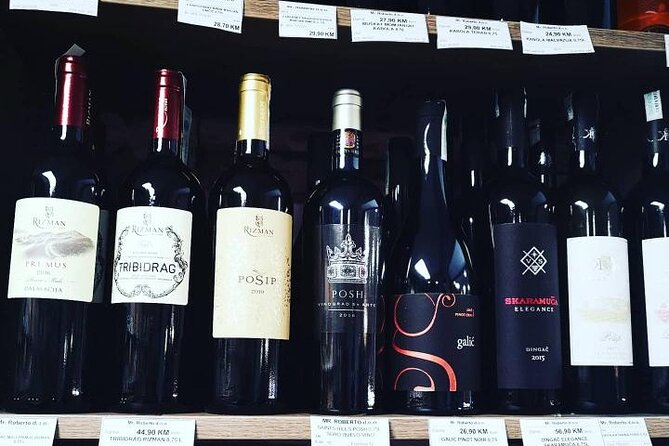
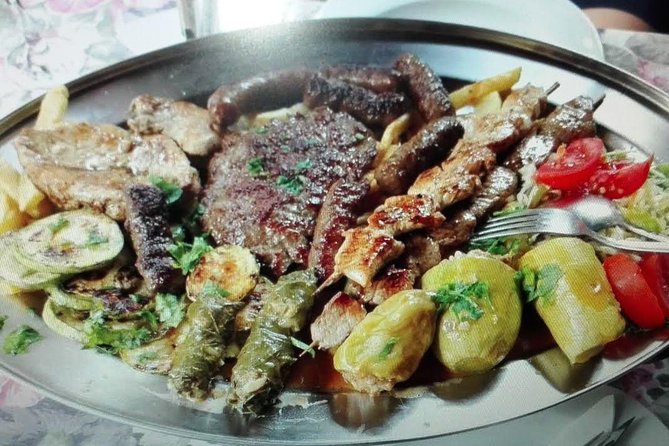
The included food is described as a mix of traditional dishes. Local wine and beer are included, along with the earlier coffee or tea. If you do not drink alcohol, the nonalcoholic options listed are coffee and tea, but the details do not specify soft drinks or other substitutes.
An hour gives you time to eat without treating lunch as a rushed interruption. It also creates a natural point for questions. Ask your guide what you are eating, how it is normally served, and which dishes are common in homes or local cafés. The tour’s value improves when you use the meal as a conversation rather than simply consuming the samples.
Dietary planning is important here. Vegetarian, vegan, and gluten-free diets can be accommodated, but you should state your requirements before the day. A gluten-free request can mean different things to different kitchens, so ask for the precise arrangements if cross-contact matters to you.
Lučki Most and the poet Aleksa Šantić

After the main food stop, the route pauses on Lučki Most for about 15 minutes. This is the designated spot for photographs, and it should give you another bridge view rather than repeating the Old Bridge angle.
The stop is useful because Mostar’s bridges are part of the city’s visual identity. A photo from Lučki Most lets you take in the connection between water, stone, and the surrounding city. The information does not specify a particular view or camera setup, so treat this as a scenic photo stop rather than a guaranteed panoramic viewpoint.
The route then visits the monument to Aleksa Šantić, Mostar’s most important poet, for about 10 minutes. This adds culture beyond food and war memorials. Even if you know little about Šantić, the stop gives the guide a chance to explain how literature and local identity connect.
Again, the stop is brief. You will get an introduction, not a full biography or literary seminar. That is fine for a first look, especially if you note the poet’s name and decide later if you want to learn more.
Forty-five minutes at the Museum of Herzegovina
The Museum of Herzegovina is the longest dedicated cultural stop, with about 45 minutes in an ethnographic exhibition. Admission is included.
This is one of the most valuable parts of the experience for anyone who wants more than attractive streets and food. An ethnographic exhibition can help explain household customs, clothing, tools, craft traditions, and everyday life. The supplied details do not list the specific objects on display, so the guide’s explanation will matter.
Forty-five minutes is enough time for a meaningful introduction, though not enough for every room in depth if the museum is large. Use the private setting to ask the guide to focus on items that connect with the meal or with life in Herzegovina.
The museum also helps balance the outdoor route. Mostar’s bridges and monuments are easy to photograph, but indoor collections can show how people lived when cameras were not around. That makes this stop a useful bridge between the city’s public symbols and its private past.
Traditional desserts at Narodno Pozoriste Mostar
The last listed stop is Narodno Pozoriste Mostar, where you visit a café and taste traditional desserts. The stop lasts about 30 minutes.
Ending with coffee and something sweet makes sense after a route that has already included savory food, beer, and wine. Traditional Bosnian coffee is included in the overall food plan, and this is a natural place to enjoy it, although the details do not explicitly say every item is served at this exact café.
The dessert stop is also a gentle finish. You are not ending at another monument or memorial, but in a social setting where you can ask final questions and review what you have seen. It gives the tour a human scale.
The listed end point is on Maršala Tita. Since no private transportation is included, confirm the exact finishing instructions with the operator, especially if you have luggage or a timed departure afterward.
How the timing works in practice
The experience is advertised at approximately four hours, beginning at 11 a.m. Yet the individual stop allocations total about 290 minutes, or roughly four hours and 50 minutes. Food stops may overlap with conversation, and the guide may shorten some brief monument visits, but you should not schedule a tight connection immediately after the tour.
This timing difference is the clearest practical caution. The route includes 13 stops, several meals or tastings, a museum, and many short outdoor visits. That is a lot for four hours.
The private format helps. A small group can move faster than a large one, and you will not wait for strangers at every corner. Still, you should allow extra time, particularly if you want to eat comfortably and ask questions.
The route is on foot, with no private transportation included. The information says most participants can take part and that public transportation is nearby. It does not provide a detailed accessibility statement, so contact MostarTransfer Tours if you need specific information about walking surfaces, steps, or museum access.
Value, group size, and who should book
No tour price is supplied, so I cannot judge the exact cost in local currency. I can judge what the package offers: a private English-language guide, a substantial food plan, alcoholic drinks, traditional coffee, museum admission, and a route through major historical and cultural sites.
That is strong potential value for you if you would otherwise pay separately for lunch, drinks, a museum visit, and a walking guide. The private format is especially useful for couples, families, or friends who want to control the pace and discuss sensitive parts of Mostar’s past in a quieter setting.
It is less suitable if you want a short, tightly timed introduction to the Old Bridge only. You may also find it too food-heavy if you have dietary restrictions that are difficult to explain or if you prefer to choose every dish yourself.
The experience has a top rating from six submitted ratings, and Armela is specifically praised as entertaining and effective at explaining both old and new Mostar. That fits the tour’s design: it is not only an eating outing, and it is not only a history lecture. The strongest guide will connect the two.
Should you book Mostar Gastro and Historical Treasures?
Book it if you want Mostar explained through meals, memorials, bridges, poetry, and museum objects in one private outing. The homemade pie, traditional coffee, local wine and beer, and full food mix make it more generous than a basic tasting walk.
I would book it early in a Mostar stay, then use what you learn to choose later restaurants and museums. Allow at least half a day, and possibly longer than the advertised four hours. Confirm dietary needs, the expected guide, and the exact end time before booking.
Skip it if your priority is a quick Old Bridge photo stop, independent restaurant-hopping, or a highly structured museum tour. For everyone else, it offers a thoughtful way to connect Mostar’s difficult past with the food and daily customs that keep the city personal.
FAQ
Where does the tour begin?
It begins at Španski trg 1, Mostar 88000, Bosnia and Herzegovina.
What time does the experience start?
The start time is 11 a.m.
Where does the tour end?
The listed end point is Maršala Tita, Mostar 88000, Bosnia and Herzegovina.
How long does the tour last?
The advertised duration is approximately four hours. The listed stop times add up to nearly five hours, so allow extra time and confirm the expected finish with the provider.
Is the experience private?
Yes. Only your group participates in the private tour.
Is the tour offered in English?
Yes. English is the offered language.
Are meals and drinks included?
Yes. The included food plan lists traditional food, homemade pie, snacks, traditional Bosnian coffee or tea, local wine, beer, and traditional desserts.
Can dietary requirements be accommodated?
The tour can be catered to vegetarian, vegan, and gluten-free diets. Give the provider your requirements when booking.
Is museum admission included?
Yes. Admission to the Museum of Herzegovina is included.
Just added around Mostar
- Mostar Old Town Walking Tour – Best Seller★ 5.0 · 4 reviews
- Stolac, the crossroads of civilisations, private walking tour.★ 5.0 · 9 reviews
- Neretva kayak canoe safari★ 5.0 · 12 reviews
- Private Transfer from Mostar to Split★ 5.0 · 3 reviews
- Mystical Sutjeska National Park★ 5.0 · 3 reviews
- Private Transfer Mostar–Dubrovnik English Speaking Local Driver★ 5.0 · 13 reviews
- Mostar War Heritage Walking Tour★ 5.0 · 6 reviews
- Private group city tour of Mostar and the Old Bridge★ 5.0 · 6 reviews
Historical Tours, compared.
Sarajevo Full Day Tour: History, Culture, Nature, War & Olympics
Read our review →
Sarajevo genuine walking tour: Steps through history
Read our review →
SARAJEVO STREET ART TOUR (art, history & mystery) – sARTajevo!
Read our review →
BOSNIAN PYRAMIDS TOUR (nature, history & archeology)
Read our review →
Browse the lists this tour appears in