
Reviewed · HISTORICAL TOURS
Mostar War Heritage Walking Tour
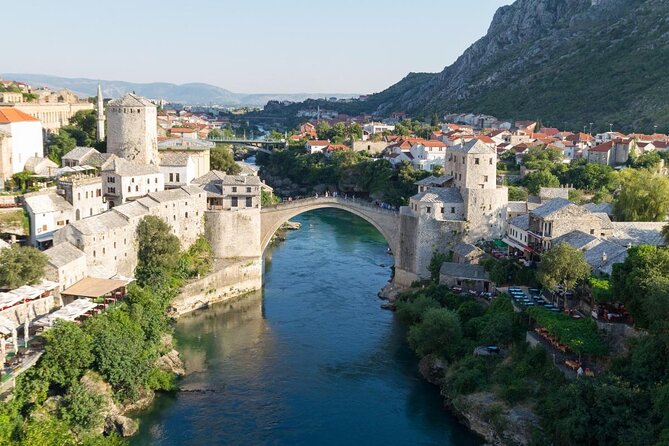
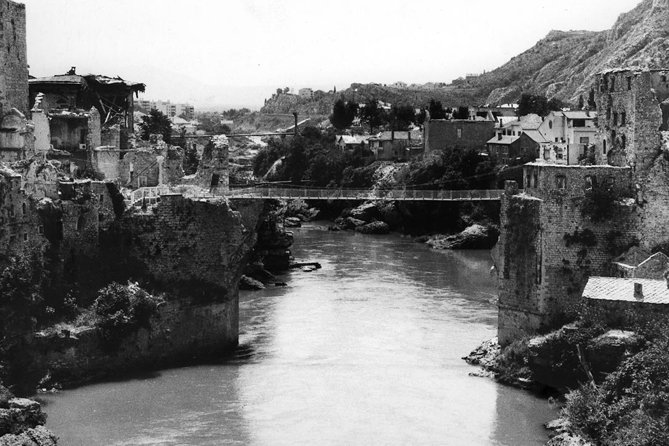
Mostar’s famous Old Bridge is more than a pretty picture. On this walking tour, you use it as the starting point for understanding how the city was split, damaged, and rebuilt after the 1992 to 1995 war. The strongest part is the human side: guides such as Elma and Serdin connect the streets and ruins to personal memories, rather than giving you only dates and military facts.
I like the walk along the former front line, and I like that it includes places many visitors pass without understanding, including Liska Park cemetery and Spanish Square. The short film adds useful background before or during the walk. The main consideration is the subject matter. Personal accounts of wartime suffering can be moving, so this tour suits you best if you want a serious look at Mostar, not a light sightseeing stroll.
Key points before you book
- Personal war stories: Guides including Elma and Serdin explain Mostar’s recent past through lived experience and local memory.
- A different view of the Old Bridge: You see the bridge not only as a 16th-century masterpiece, but also as a symbol of destruction and reconstruction.
- Former front-line route: The walk links important places across the city’s divided wartime story.
- Small private setting: Only your own group takes part, which gives you room to ask direct questions.
- Short but full program: In about two to three hours, you cover major landmarks, a cemetery, historic bridges, and a film.
- Good practical value: At $47.66 per person, the price includes a professional authorized guide, while lunch and tips cost extra.
Why Mostar’s Old Bridge is the right place to begin
The tour starts at Spanish Square, but the Old Bridge is the first major landmark in the route. That makes sense. Mostar is known around the world for Stari Most, yet the bridge also gives you a way to understand the city’s older political and cultural story.
Before the stone bridge, a wooden bridge hung on chains at this crossing over the Neretva. It was difficult to cross and eventually wore out. Local people asked authorities in Istanbul for a stronger replacement, and the architect Hajrudin, a pupil of the great Ottoman builder Sinan, designed the stone bridge.
The finished bridge opened in July or August 1566. Its single arch stretches 28.70 meters, with a width of 4.49 meters and a height of about 21 meters above the summer water level. Square stones were held together with iron hooks set in lead. Those details help you see why the bridge is a work of engineering, not just an attractive viewpoint.
Your guide also places the bridge within the old town around it, with its towers, forts, gates, and stone lanes. This is useful because Mostar’s Ottoman-era center can look like a collection of picturesque buildings if you only wander through with a camera. The guide gives the setting a clear purpose.
The tour’s war focus changes how you look at the bridge. You are not simply being told to admire a monument. You are asked to consider what it meant when a landmark so closely tied to Mostar’s identity was destroyed during the war, and what rebuilding it meant afterward. That shift is one of the best reasons to take this walk early in your stay.
A few more Mostar trips to weigh up
- Mostar thru history -private tour
★ 4.9 · 43 reviews - Mostar gastro and historical treasures
★ 5.0 · 6 reviews - Sarajevo Full Day Tour: History, Culture, Nature, War & Olympics
★ 5.0 · 27 reviews
Liska Park brings the cost of war down to one place
Liska Park, also called Mezarje or Groblje Liska, is a green space with a difficult past. It was first established in 1954. During the 1992 to 1995 war, it became a burial site for civilians and soldiers of different nationalities because normal cemetery space was not available.
The stop is brief, about five minutes, but it carries considerable weight. A cemetery can tell you more about a conflict than a long list of battles. Here, the important point is the mix of people buried in the same place and the shortage of burial grounds during the fighting.
You should expect a respectful pause rather than a large presentation. Liska Park is not a traditional sightseeing stop, and that is exactly why it matters. The guide helps you connect the physical setting with the human cost of the war.
If you prefer tours that stay cheerful and decorative, this section may feel heavy. If you want to understand how ordinary people were affected, it is one of the most meaningful points on the route.
Spanish Square links wartime memory with school and architecture
Spanish Square is the meeting point, and it also plays an important role in the tour. The name honors 21 Spanish troops serving with UNPROFOR who were killed during the last war. That gives the square an international connection, but the nearby Old Gymnasium adds a local one.
The Old Gymnasium was completed in 1902 and was one of the oldest schools in the former Yugoslavia. For many years, it carried the name of the poet Aleksa Šantić. Its Moorish Revival, or Neo-Moorish, style makes it one of the most distinctive buildings around the square, and it is listed as a national monument.
This is a useful stop because it keeps Mostar’s story from becoming only a war story. You see a city shaped by the Ottoman period, the Austro-Hungarian era, Yugoslav history, and the conflict of the 1990s. The building also reminds you that Mostar has long been a place where different cultural influences meet.
The tour begins at the skate plaza at Spanish Square at 9:00 a.m. Starting here gives you a clear landmark and avoids the confusion of trying to find a small shop or office in the old town. The activity ends back at the meeting point, so you can plan your next stop without arranging a separate return.
Walking the former front line
The former front line is the heart of the experience. Rather than hearing about the war from a distant viewpoint, you walk through the parts of Mostar where the conflict divided the city. The exact pace and emphasis can vary because this is a private activity, but the guide’s role is to explain how the streets and key crossings fit into the wartime story.
This is where a personal guide can make a major difference. Elma is described as friendly and flexible, while Serdin is noted for showing a small group many interesting places through town. One guide also experienced the atrocities of the war as a teenager and speaks about that period directly. That does not turn the tour into a dramatic performance. It gives the facts a human voice.
The private format is especially valuable here. Only your group takes part, so you can ask about a building, pause when a subject needs more thought, or move on if the discussion becomes too intense. A standard large group often has to keep moving. This setup allows a more natural conversation.
You should still keep your expectations realistic. The tour lasts about two to three hours, so it cannot explain every military event or political cause. Its strength is the city walk and the guide’s local perspective. For a full study of the war, you would need a museum visit or a longer specialist program.
Same country, a completely different kind of day:
- Dubrovnik: Kravica Waterfalls, Mostar and Pocitelj Day Trip
★ 4.5 · 3,045 reviews - From Mostar: Blagaj, Počitelj & Kravice Waterfalls Day Tour
★ 5.0 · 1,310 reviews - From Mostar: Kravice Waterfalls, Blagaj, & Počitelj
★ 5.0 · 565 reviews - Herzegovina Day Tour from Mostar: Blagaj, Pocitej, Kravice falls (Join Us! :D)
★ 5.0 · 372 reviews
Kujundziluk shows what survived
Kujundziluk is the old bazaar on the left bank of the Neretva. Its name comes from the coppersmiths, known as kujundžije, who once worked there. Tailors and leather workers were also part of the area’s trade, with tanners known for processing leather.
Today, the bazaar has small artisan workshops and handicrafts. The stop lasts about 15 minutes, making it one of the longer pauses in the walk. You get time to look at the narrow shopping area and see how craft traditions remain part of Mostar’s old quarter.
This stop gives the tour a welcome change of mood. After cemeteries, front lines, and wartime deaths, the bazaar shows daily life and work. It also helps you understand that rebuilding a city is not only about repairing bridges and walls. It includes bringing back places where people make, sell, and buy ordinary goods.
You may be tempted to spend much longer here. If you see something you want to buy, remember that the guided walk continues. Lunch is not included, and the tour does not promise a meal stop, so you may want to plan food separately after the activity.
The Carinski Bridge and the quieter crossings
The Carinski Bridge, or Customs Bridge, is north of the Old Bridge and receives less attention than its famous neighbor. It crosses the Neretva and dates to the Austro-Hungarian period. Its role was practical: it connected different parts of Mostar.
The bridge is a good reminder that Mostar’s story is not built around one crossing alone. The Old Bridge attracts the photographs, but smaller bridges often explain how a city worked from day to day. On a war heritage walk, a crossing also raises a basic question: who could move where, and how did the division of the city affect everyday life?
No separate timing is provided for this stop, so the guide may treat it as a passing point rather than a long presentation. That is not a weakness by itself. The value comes from seeing another part of the city’s network and placing it beside the better-known bridge.
Kriva Ćuprija, a small bridge with a clear link to Stari Most
The Crooked Bridge, or Kriva Ćuprija, sits over the Radobolja River in the old quarter. It is believed to be a miniature prototype of the Old Bridge and dates to the 16th century.
The stop lasts about five minutes. That is enough to take in its shape and hear why it matters, but not enough for a long architectural lesson. I would treat it as a compact visual comparison: after seeing Stari Most over the Neretva, you get a smaller bridge with a related design idea in a quieter setting.
This stop also keeps the route from becoming a straight march between war landmarks. Mostar’s older architecture remains visible throughout the walk, and the Crooked Bridge is a reminder that the city’s appeal did not begin in the modern period.
The short film gives the walk a useful frame
A short film about Mostar’s history is included in the experience. The supplied details do not state exactly where or when you watch it, so you should not plan around a particular theater or screening length.
Its purpose is clear, though. A film can quickly show the city before the war, the damage caused by the conflict, and the rebuilding that followed. That visual sequence can make the later walking route easier to follow.
The film should be seen as an aid, not the main event. The strongest part of the tour is being outside with a guide who can connect the broad story to particular streets and places. If you prefer learning through conversation and direct observation, the film should support the walk rather than replace it.
Is $47.66 per person a fair price?
At $47.66 per person, the tour is not the cheapest way to see Mostar’s Old Bridge and bazaar. You can visit those public places without paying an admission fee. The price is for the professional authorized guide, the private format, the planned route, the war context, and the short film.
That value improves if you are traveling with people who want the same pace and subject. You are not paying for a large coach, an included lunch, or attraction tickets. You are paying for interpretation and access to personal local knowledge. Group discounts are available, which may make the per-person cost more attractive for a larger booking.
The private structure also changes the comparison. A public group tour may cost less, but it may not offer the same freedom to ask questions or discuss sensitive subjects at your own pace. On the other hand, if you only want photographs of the Old Bridge, this tour is more than you need.
Tips and lunch are not included. Bring that extra cost into your plans, especially since the morning schedule starts at 9:00 a.m. and finishes back at Spanish Square.
Who should take this Mostar walk?
I would recommend this experience to you if you want the recent history of Mostar explained by someone from the city. It is particularly suitable for first-time visitors who want a strong introduction before exploring the old town alone.
It also suits people interested in the breakup of Yugoslavia, memorial sites, rebuilding, and the way war remains present in a modern city. The personal stories can make the experience memorable, but they can also be painful. You should be ready for direct discussion of civilian deaths, soldiers, destruction, and wartime memories.
The walk may work well for couples, families with older children, and friends who prefer a private guide. Most travelers can participate, and service animals are allowed. The tour is offered in English and takes place near public transportation.
I would not choose it if your only goal is shopping, food, or relaxed architecture. You will visit attractive places, but the focus is serious. The Old Bridge and Crooked Bridge are part of the route, yet the central subject is what happened to Mostar and its people during the war.
Practical details for a smoother morning
Meet at the Spanish Square skate plaza, listed at 8RV4+9QM, Španski trg, Mostar 88000. The start time is 9:00 a.m. Because the route includes old-town streets, bridges, a cemetery, and former front-line areas, comfortable walking shoes are a sensible choice, though the supplied information does not specify a required dress code or level of physical difficulty.
The duration is approximate, about two to three hours. The activity returns to the starting point, which makes it easy to continue sightseeing afterward. Admission is free at the listed stops, so the guide is the main paid element.
Confirmation is normally sent at booking. If you book within five hours of departure, confirmation comes as soon as possible and depends on availability. Free cancellation is available up to 24 hours before the local start time. Cancellations or changes made later are not refunded or accepted.
Should you book the Mostar War Heritage Walking Tour?
Book it if you want Mostar explained through its people, streets, and wartime scars, not just its postcard bridge. The strongest reasons are the private setting, the former front-line walk, and the chance to hear a guide such as Serdin or Elma connect the past to present-day Mostar.
Skip it if you want a casual old-town stroll with no difficult subject matter. At $47.66, the tour makes sense when personal interpretation and recent history matter to you. For that kind of visit, it offers a focused way to understand why Mostar is beautiful, divided in memory, and still rebuilding its story.
FAQ
How long does the Mostar War Heritage Walking Tour last?
The tour lasts approximately two to three hours.
Where does the tour begin?
It begins at the Spanish Square skate plaza, at 8RV4+9QM, Španski trg, Mostar 88000, Bosnia and Herzegovina.
What time does the tour start?
The scheduled start time is 9:00 a.m.
Where does the tour end?
The activity ends back at the meeting point at Spanish Square.
Is the tour private?
Yes. Only your own group participates in the activity.
Is lunch included?
No. Lunch is not included, though it is available as an optional extra.
What is the cancellation policy?
You can cancel up to 24 hours before the experience for a full refund. Cancellations or changes made less than 24 hours before the local start time are not accepted.
Just added around Mostar
- Mostar Old Town Walking Tour – Best Seller★ 5.0 · 4 reviews
- Stolac, the crossroads of civilisations, private walking tour.★ 5.0 · 9 reviews
- Neretva kayak canoe safari★ 5.0 · 12 reviews
- Private Transfer from Mostar to Split★ 5.0 · 3 reviews
- Mystical Sutjeska National Park★ 5.0 · 3 reviews
- Private Transfer Mostar–Dubrovnik English Speaking Local Driver★ 5.0 · 13 reviews
- Mostar gastro and historical treasures★ 5.0 · 6 reviews
- Mostar Ancient Town★ 5.0 · 13 reviews
Historical Tours, compared.
Sarajevo Full Day Tour: History, Culture, Nature, War & Olympics
Read our review →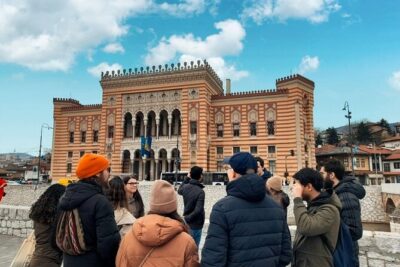
Sarajevo genuine walking tour: Steps through history
Read our review →
SARAJEVO STREET ART TOUR (art, history & mystery) – sARTajevo!
Read our review →
BOSNIAN PYRAMIDS TOUR (nature, history & archeology)
Read our review →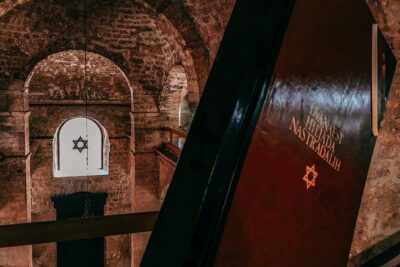
Browse the lists this tour appears in