
Reviewed · WALKING TOURS
Mostar Old Town Walking Tour – Best Seller
Mostar’s story is easiest to grasp on foot, and this tour connects its Ottoman houses, old bridges, and working bazaar in a compact route. You’ll start at Spanish Square, move toward the Neretva River, and finish among the stone lanes of the Old Town.
I like the short format and the included entrance to Bišćevića House. I also like the small maximum of 15 people, which should make it easier to hear the guide in narrow lanes. The main drawback is that 1 to 2 hours gives you an introduction, not a full study of Mostar, and the published meeting details list the end at Bišćevića House even though the route visits it near the beginning.
Key points at a glance
- Spanish Square gives you a modern starting point: You begin outside the Ottoman core, near schools and the University of Mostar.
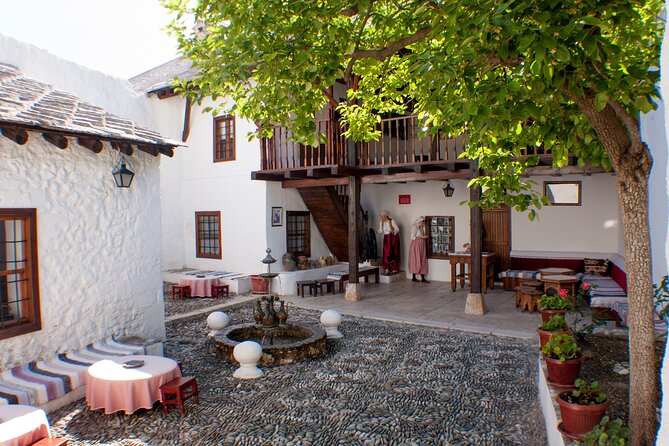
- Bišćevića House adds an indoor experience: The 17th-century residence shows wooden rooms, handmade carpets, and views toward the river.
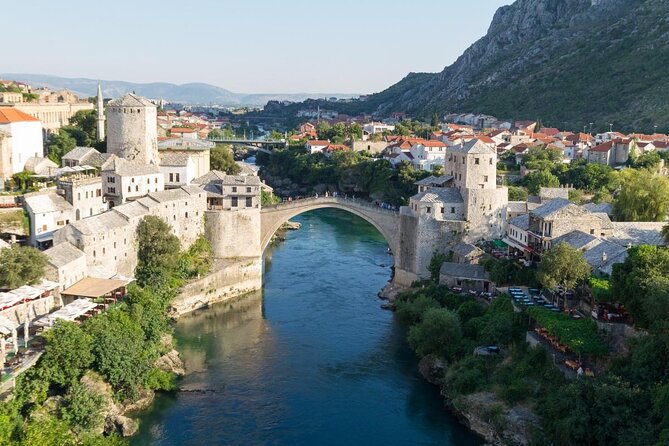
- The Old Bridge carries the main story: You’ll hear about its Ottoman beginnings, wartime destruction, and reconstruction.
- Kujundžiluk keeps craft traditions in view: The bazaar remains associated with coppersmiths and small artisan workshops.
- The Crooked Bridge offers a quieter contrast: This small stone arch over the Radobolja is linked to the design tradition of Stari Most.
- A professional English-speaking guide leads the walk: Gordon is one guide associated with the experience, and the group limit is 15 people.
Why this short Mostar walk works
Mostar can look simple at first glance: a river, an old bridge, and a cluster of stone lanes. A good guide helps you see the layers. Spanish Square speaks to modern civic life and wartime memory, while the Old Town reflects centuries of Ottoman influence. Between them, the tour shows how the city changes from broad urban streets to tight lanes and river crossings.
At $35.50 per person, this is not the cheapest way to stroll through Mostar. You can walk across the Old Bridge and browse the bazaar without paying an admission fee. The value comes from having the route explained, entering Bišćevića House, and getting a focused introduction in a small group rather than wandering without context.
The pace also matters. The experience lasts roughly 1 to 2 hours, so it fits neatly into a day trip or a first afternoon in Mostar. A previous booking described the pace as comfortable, with enough time to appreciate the sights without feeling hurried. That is useful here, since the old lanes and bridge areas are better understood when you can stop, look, and ask a question.
If you want a long museum visit, a food tour, or time to explore every lane, you’ll need to add those on your own. This walk is best viewed as a well-planned orientation.
A few more Mostar trips to weigh up
- Mostar Private Walking Tour
★ 5.0 · 93 reviews - Charming Mostar: Private Mostar Walking Tour
★ 5.0 · 23 reviews - Best of Mostar – Private Walking Tour
★ 5.0 · 21 reviews
Starting at Spanish Square
The tour begins at Španjolski trg, or Spanish Square, listed at 8RV4+CR6 in Mostar. The square is named for Spanish volunteers who fought during the Bosnian War. Its position near schools and the University of Mostar makes it part of daily city life, with students and local activity giving it a different feel from the tourist center.
That is a smart place to start. You first see Mostar as a living city, not just as an old quarter preserved for sightseeing. The square also helps frame the city’s recent past before you move toward older buildings and Ottoman streets.
You’ll spend about five minutes here, with no admission charge. Do not expect a long stop or a formal memorial visit based on the supplied schedule. The point is to get your bearings and hear why the square matters.
The route also mentions Musala, an area near the Neretva that provides a modern counterpoint to the Old Town. It is associated with coffee culture, people-watching, and the ordinary rhythm of Mostar. The exact timing for this stop is not specified, so treat it as part of the walking route rather than a separate attraction with a fixed visit.
Inside Bišćevića House
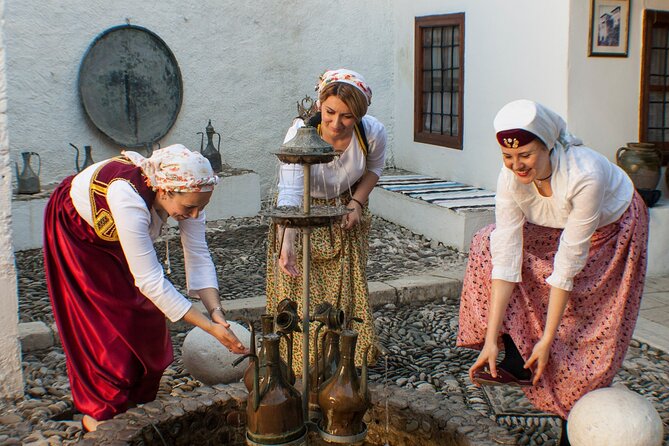
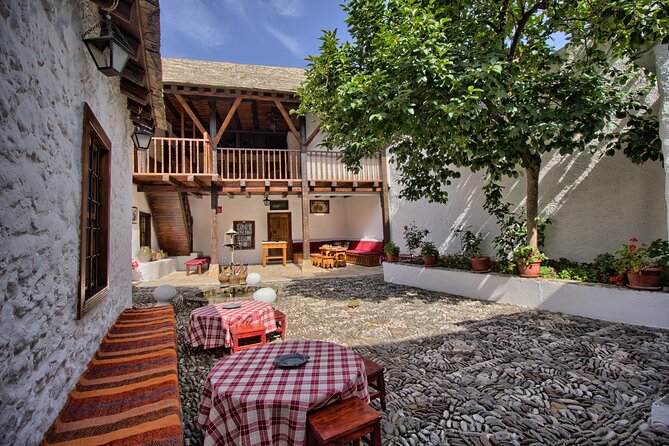
Bišćevića House is the tour’s main paid entrance and one of its most useful stops. This 17th-century Ottoman family home gives you a look at domestic life rather than grand public monuments.
Inside, you can expect wooden interiors, handmade carpets, and calm views toward the river. These details help explain how an Ottoman-era home worked and why Mostar’s older architecture is more than a collection of pretty façades. The house shows scale, materials, and household design in a direct way.
The scheduled visit is about 15 minutes, which is enough for a guided introduction but not enough for an extended examination of every room. I would pay attention to the woodwork and carpets, then use the guide’s explanation to connect the house to the streets outside.
The entrance fee is included, so you do not need to budget separately for this stop. That makes the $35.50 price easier to justify, especially if you value access to historic interiors. The published end point is also Bišćevića House, even though the listed route places the house before the Old Bridge and bazaar. I would confirm the exact finishing point with Fortuna Trade Tours Mostar if having a precise end location matters for your plans.
The unnamed mosque and Mostar’s water-bound setting
The route includes a mosque on the right bank of the Neretva, built before 1600. A small stream from the Radobolja runs beneath it before joining the Neretva south of the Old Bridge.
The unusual detail is practical as well as memorable: the imam could remain on the mainland during prayer while worshippers were on the water. The supplied information does not identify the mosque by name, so I would not expect this stop to function like a separately advertised museum visit. Instead, it adds a small but striking example of how religious buildings and waterways shaped old Mostar.
This is the kind of detail that makes a walking tour worthwhile. You are not only looking at stone walls. You are learning how the river and its smaller channels affected movement, worship, and the layout of the town.
No separate admission fee is listed for this stop. The time spent there is also not specified, so the guide may cover it briefly while moving through the quarter.
Same country, a completely different kind of day:
- Dubrovnik: Kravica Waterfalls, Mostar and Pocitelj Day Trip
★ 4.5 · 3,045 reviews - From Mostar: Blagaj, Počitelj & Kravice Waterfalls Day Tour
★ 5.0 · 1,310 reviews - From Mostar: Kravice Waterfalls, Blagaj, & Počitelj
★ 5.0 · 565 reviews - Herzegovina Day Tour from Mostar: Blagaj, Pocitej, Kravice falls (Join Us! :D)
★ 5.0 · 372 reviews
Stari Most and the Old City
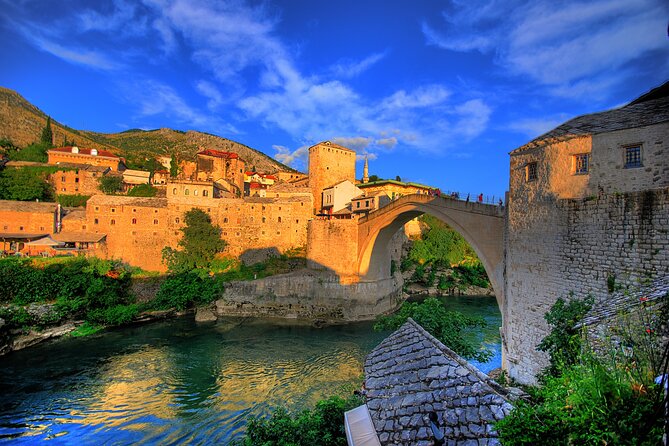
The Old Bridge area is the heart of the experience. Stari Most began as an Ottoman bridge and later became a powerful symbol of Mostar. The guide explains its original role, its destruction during the Bosnian War, and its reconstruction.
That sequence matters. The bridge is not simply an old stone crossing. It represents the city’s Ottoman past, the damage caused by war, and the effort to restore a shared landmark. You’ll get more from the view if you know those three parts of the story.
The scheduled time here is about 15 minutes, and admission is free. That is enough to hear the main account and take in the bridge area, but you should not expect a long private viewing period. The Old Bridge is also the busiest section of the route, so the guide’s explanations may compete with ordinary foot traffic and activity around the crossing.
From here, the walk enters the cobbled Old Town. The change in surfaces and scale is immediate. Broad modern streets give way to stone lanes, small shops, and river views. Wear sensible shoes, since the route includes old paving and uneven walking surfaces.
Kujundžiluk and the old crafts quarter
Kujundžiluk is the old part of Mostar on the left bank of the Neretva. Its name comes from the many coppersmiths, known as kujundžije, who once worked there. Tailors were also present, while tanners were among the most numerous artisans and were valued for their leatherwork.
Today, the area is lined with small workshops and handicrafts. This is where the tour connects Mostar’s past with a still-visible commercial tradition. You can look at the goods, watch the rhythm of the lane, and understand why this quarter developed around making and selling objects rather than only around monumental buildings.
The stop is listed at about 15 minutes and has no admission charge. That short visit is enough to point out the quarter’s character, but you’ll want to return later if you plan to shop or inspect crafts carefully. The tour’s job is to explain the setting, not give you a long buying session.
I like this part because it gives the Old Town a practical identity. Kujundžiluk was not built merely to be admired. It was a place where skilled people worked, traded, and served the wider city. That makes the lanes feel more connected to daily life.
The Crooked Bridge over the Radobolja
The Crooked Bridge, or Kriva Ćuprija, is a smaller arch crossing the Radobolja River. It dates to the 16th century and is often described as a miniature prototype of Stari Most.
It makes a fine contrast with the famous bridge. Stari Most draws the attention, while the Crooked Bridge offers a smaller setting where you can notice the relationship between water, stone, and passage. The route places it in Mostar’s old quarter, so you reach it after the main bridge and bazaar have established the larger story.
No admission fee or fixed time is listed for this stop. It may be a brief guide explanation rather than a formal visit. Keep your expectations measured, but do not skip the view if the group pauses there. The smaller bridge helps you see that Mostar’s bridge culture is not limited to one landmark.
Guide, group size, and pace
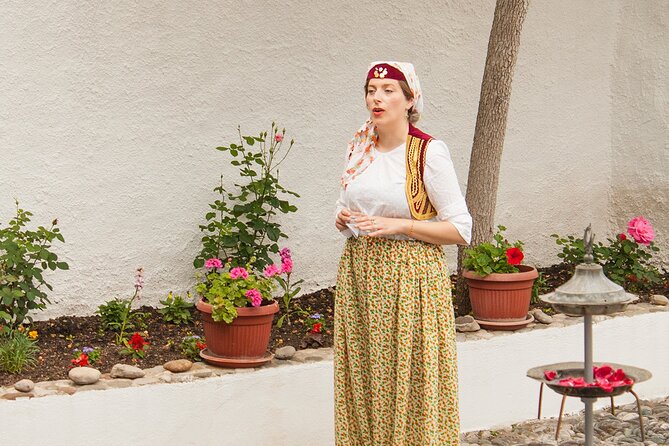
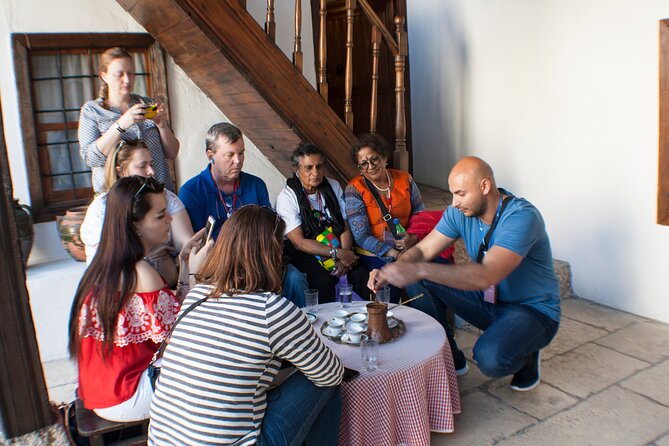
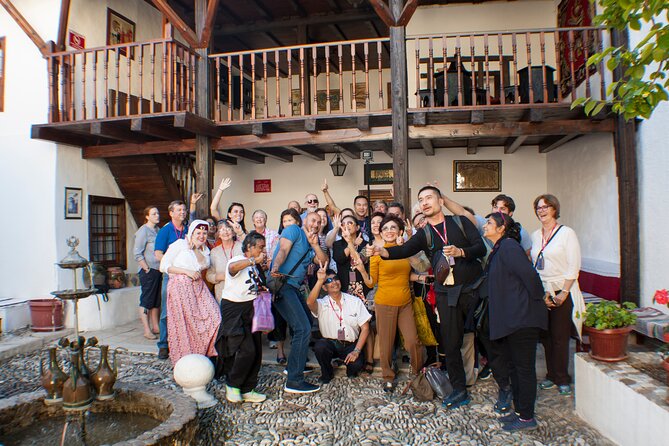
A professional English-speaking guide is included. Gordon is the guide named in the available feedback, and his clear explanations and comfortable pacing received especially strong praise. Guides can vary by date, so bookers should treat Gordon as one possible guide rather than a guarantee.
The maximum group size is 15 people. That is a useful limit in Mostar, where narrow lanes can make a large group awkward. A smaller group should also make it easier to hear the guide and ask about the bridge, homes, or religious sites.
This is a walking-only experience. Private transportation is not included, and neither are lunch or dinner. That is not a problem for a central Old Town route, but it means you should plan your own meal before or after the walk.
Tips are not included. Keep that in mind when working out your final cost. The tour price covers the guide and the entrance to Bišćevića House, while food, transport, and gratuity remain separate.
Is $35.50 a fair price?
For a one-hour tour, $35.50 can feel high if you only want directions to Stari Most. The main bridge area, Kujundžiluk, and the Crooked Bridge are free to see on your own.
The price makes more sense if you want a guide to connect the sites and include an Ottoman house. Bišćevića House gives the experience something beyond an outdoor stroll, and the group cap keeps it from becoming a large procession. You are paying for interpretation and structure, not just entry tickets.
I would also consider the value of your time. If you have only a short stay in Mostar, this route covers several important places quickly. If you have a full day or more, you could explore independently and spend longer in the house, bazaar, and bridge area.
Who should book this walk?
I would recommend it to first-time visitors who want a clear introduction to Mostar, couples and families who prefer a short outing, and anyone interested in Ottoman architecture and the city’s wartime story. The English format and modest group limit make it practical for many people, and the activity notes say most participants can take part.
It also suits people arriving with limited time. The 1 to 2 hour length leaves room for lunch, independent shopping, or a longer look at the river.
I would choose something else if you want private guiding, a very slow photography walk, a meal included, or detailed access to every site. Private transport is not part of the package, and the route is designed as a compact introduction.
Free cancellation is available when you cancel at least 24 hours before the local start time. Changes made within 24 hours are not accepted, and late cancellations are not refunded. The tour depends on good weather and a minimum number of participants. If the operator cancels for either reason, you are offered another date or experience, or a full refund.
Should you book the Mostar Old Town Walking Tour?
Book it if you want the city’s main sights explained in a short, organized walk, with Bišćevića House included and a group of no more than 15 people. The bridge story, Ottoman home, crafts quarter, and Crooked Bridge create a useful first picture of Mostar.
Skip it if your main goal is simply to cross Stari Most and browse the shops, since those parts are free and easy to reach. For most first visits, though, the tour earns its price through context, a steady pace, and a brief look inside a historic home.
FAQ
Where does the tour start?
The listed starting point is Spanish Square, at Španjolski trg 8RV4+CR6, Mostar 88000, Bosnia and Herzegovina.
Where does the tour end?
The listed end point is Bišćevića House, Biščevića bb, Mostar 88000, Bosnia and Herzegovina. The route information also places Bišćevića House early in the walk, so confirm the exact finish with the provider if needed.
How long does the walking tour last?
The experience lasts approximately 1 to 2 hours.
What language is offered?
The tour is offered in English.
How much does the tour cost?
The listed price is $35.50 per person.
Is admission to Bišćevića House included?
Yes. The entrance fee for the Ottoman House Bišćevića is included.
Is private transportation included?
No. Private transportation is not included.
Is food included?
No. Lunch and dinner are not included.
How many people can join the tour?
The maximum group size is 15 participants.
Can I cancel for a full refund?
Yes, if you cancel at least 24 hours before the experience start time. Cancellations made less than 24 hours in advance are not refunded.
Just added around Mostar
- Stolac, the crossroads of civilisations, private walking tour.★ 5.0 · 9 reviews
- Neretva kayak canoe safari★ 5.0 · 12 reviews
- Private Transfer from Mostar to Split★ 5.0 · 3 reviews
- Mystical Sutjeska National Park★ 5.0 · 3 reviews
- Private Transfer Mostar–Dubrovnik English Speaking Local Driver★ 5.0 · 13 reviews
- Mostar War Heritage Walking Tour★ 5.0 · 6 reviews
- Mostar gastro and historical treasures★ 5.0 · 6 reviews
- Private group city tour of Mostar and the Old Bridge★ 5.0 · 6 reviews
Walking Tours, compared.
Private Walking Tour, Food Tasting and Bosnian Coffee in Sarajevo
Read our review →
PROFESSIONAL SARAJEVO WALKING TOUR – With guide who guided STING!
Read our review →Browse the lists this tour appears in