
Reviewed · MOSTAR TOURS
Mostar Shelters tour in Mostar
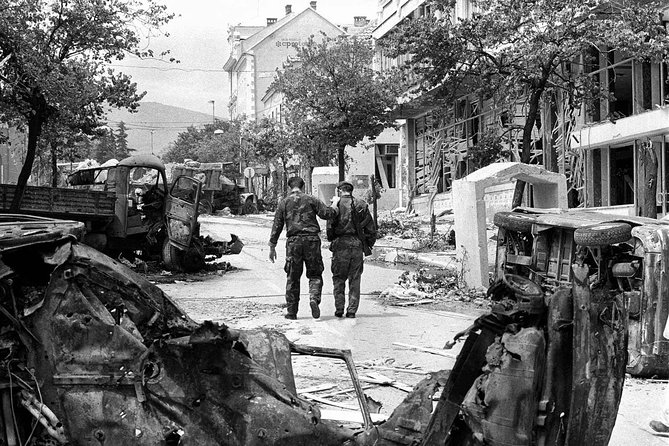
Mostar’s famous bridge is only part of the story. This Mostar Shelters tour takes you beyond the Old Town to artillery positions, trench lines, damaged buildings, and other places tied to the 1992 to 1995 Bosnian War. Much of it is by vehicle, with short walks and local commentary that explains what you are seeing.
I like two things right away: the tour gives you access to parts of Mostar that are hard to understand from the main tourist streets, and guides such as Miran and Dario explain the conflict with personal stories, photos, and wartime footage. The price is also fair for a small-group outing with hotel pickup at selected hotels.
The main consideration is the subject itself. This is not a light sightseeing trip, and the material can be painful. The tour is also listed as about two hours, though the actual outing may run closer to two or three hours, so do not schedule it too tightly against a bus or dinner reservation.
Key points before you book
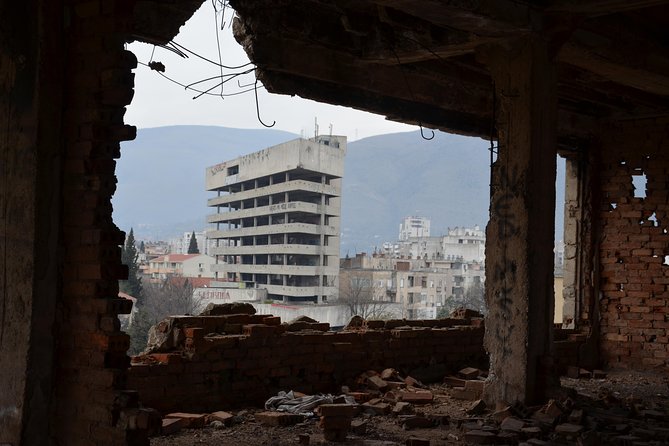
- Mostar beyond the Old Town: See war-damaged parts of the city, military positions, and viewpoints that most short city visits miss.
- A half-driving, half-walking format: Most of the route is by car or van, with short walks at selected sites.
- Personal local guidance: Miran and Dario use photographs, footage, and their own connection to Mostar to explain difficult events.
- A strong city view: The route includes a mountain viewpoint near the cross, looking down over Mostar.
- Small-group value: The maximum group size is 16, with a professional guide and live commentary included.
- A serious subject handled openly: No topic is treated as off limits, so you can ask direct questions about the war and its effects.
Why this tour changes how you see Mostar
Mostar is easy to read as a postcard city. You walk across the old bridge, browse stone-paved lanes, watch the river, and move on. Yet bullet holes, burned buildings, and patched walls hint at a much harder recent past.
This tour helps connect those fragments. Instead of simply pointing out damage, the guide explains how the city functioned during the war, where the fighting took place, and what happened to people afterward. That context matters because Mostar’s war was not an abstract event happening somewhere else. It shaped the streets, buildings, neighborhoods, and families you see today.
I find the tour especially useful if you have arrived with questions but lack the background to ask them clearly. The subject is complicated, and the experience is designed to explain the local story rather than give you only a broad account of the breakup of Yugoslavia.
The guide’s approach is direct. You can expect historical explanation alongside personal accounts, photographs, and real footage. That mix gives the tour an emotional weight that a standard sightseeing talk cannot match, but it also makes the experience more accessible if you know little about the conflict.
Other Mostar days people book alongside this one:
- Dubrovnik: Kravica Waterfalls, Mostar and Pocitelj Day Trip
★ 4.5 · 3,045 reviews - From Mostar: Blagaj, Počitelj & Kravice Waterfalls Day Tour
★ 5.0 · 1,310 reviews - From Mostar: Kravice Waterfalls, Blagaj, & Počitelj
★ 5.0 · 565 reviews
The van ride into Mostar’s wartime story
The experience is a combined driving and walking tour. Much of the route takes place in a car or van, which makes it possible to cover several areas of Mostar in a fairly short time. You are not expected to spend two or three hours walking between distant sites.
That format is practical. Military positions and wartime viewpoints are not all clustered beside the old bridge, and the vehicle lets the guide link them into one story. You get a sense of how the city’s parts relate to each other rather than seeing one isolated ruin.
The vehicle portion also gives the guide room to use images and footage while you sit comfortably. One guide, Miran, is specifically praised for taking time with photographs and real wartime footage. Dario is also described as presenting difficult material in a clear, personal way without making the three-hour discussion feel heavy or dull.
Do not expect a polished sightseeing bus with a constant stream of scripted facts. The appeal here is closer to a local history lesson on the move. The guide responds to questions, explains details in context, and brings the subject back to places outside the Old Town.
Artillery positions and trench lines
The route visits artillery positions and trench lines, two types of sites that help explain the physical reality of the fighting. These are more useful than simply seeing bullet holes because they show how the city was viewed and attacked from different positions.
At an artillery site, the guide can explain the role of the position and how it related to the city below. At trench lines, you begin to understand how close the fighting could come to homes and streets. The tour information does not promise a preserved military museum or a large underground shelter complex, so you should think of these stops as interpreted locations rather than a formal exhibition.
That distinction is important. Some places may feel stark or modest when seen without explanation. Their value comes from the story attached to them. Listen closely to the guide’s directions, because the visible details may include terrain, remnants, damaged structures, or lines of sight that are not obvious at first glance.
Short walks make these stops manageable for most people. Still, you should wear sensible shoes and be prepared for an outing that is not limited to smooth Old Town paving. No special fitness level is stated, and most people can participate, but the tour does include moving between the vehicle and outdoor locations.
The urban front line and damaged buildings
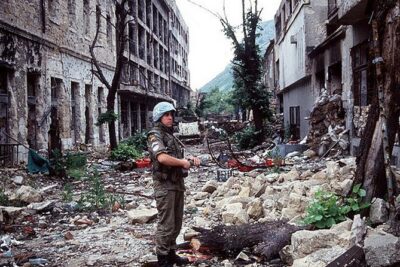
One of the most affecting parts of the experience is seeing the urban front line and the bullet-riddled or burned buildings in and around central Mostar. These marks are not simply old walls. They raise immediate questions: who lived there, how did daily life continue, and what happened after the fighting ended?
The guide’s job is to answer those questions without pretending the story is simple. The tour focuses on how people lived through the period and what happened later. That human angle keeps the outing from becoming only a list of dates and military sites.
You may already have noticed bullet holes during a walk through Mostar. On your own, it can be hard to tell which damage came from the war, how it fits into the city’s wider story, or why some buildings remain damaged. Here, the guide helps you read those signs.
This is also where the emotional side of the tour becomes strongest. The subject includes destruction, displacement, and personal loss. If you prefer cheerful sightseeing, this is not the right match. If you want to understand Mostar honestly, it is one of the most useful ways to move beyond the picture-perfect center.
Same country, a completely different kind of day:
- Herzegovina Day Tour from Mostar: Blagaj, Pocitej, Kravice falls (Join Us! :D)
★ 5.0 · 372 reviews - Mostar and Kravice Waterfalls Full-Day Tour from Split
★ 4.8 · 308 reviews - From Mostar: Kravice Waterfalls, Pocitelj & Blagaj Day Trip
★ 5.0 · 245 reviews - From Mostar: Herzegovina Full-Day Tour
★ 4.8 · 163 reviews
A mountain viewpoint with a different view of Mostar
The route includes a climb by vehicle to the mountain cross viewpoint, where you can look across Mostar. The view gives the tour a pause from the close-up evidence of war.
From above, the city’s layout becomes easier to grasp. You see the river corridor, the built-up areas, and the surrounding mountains that frame Mostar. The viewpoint is attractive in its own right, but its greater value is how it supports the guide’s explanation of positions, movement, and the city’s wartime geography.
Bring your camera, but keep the viewpoint in context. This is not a separate scenic excursion added to a standard city tour. It is part of a route focused on the war, and the guide uses the view to help explain the events rather than simply offering a photo stop.
The mountain location may also be the most physically exposed part of the outing. The supplied details do not specify facilities, walking distance, or exact terrain, so ask the guide if you have mobility concerns. The tour is generally suitable for most people, but the route includes outdoor stops beyond the main streets.
Miran, Dario, and the value of local explanation
The guide can make or break a tour about a difficult subject. Here, Miran and Dario are the names associated with the experience, and both are described as bringing strong personal commitment to Mostar’s story.
Miran is noted for using photos and real footage and for inviting questions. That matters because the conflict can feel distant or confusing when presented only through a standard timeline. Visual material helps connect the explanation to actual places around you.
Dario is described as using personal stories while making complicated material understandable to people who have never experienced war. That is a useful quality for an international audience. You do not need to arrive as a specialist in Balkan history to follow the tour.
The tone is serious but conversational. The tour description makes clear that no subject is treated as taboo. You can ask direct questions, though you should also allow for the fact that answers may be personal and painful.
The guide assignment may vary. If you have a preference for Miran or Dario, ask when booking, but do not assume a particular person is guaranteed unless the provider confirms it.
What the $41.20 price gets you
At $41.20 per person, this is a solid value if you want more than a quick Old Town walk. The cost includes a professional guide, live commentary, and hotel pickup from selected hotels. Food and drinks are not included, but a meal is not really central to this experience.
The value comes from the route and the access. You are paying for a vehicle-based trip to several locations, interpretation of a difficult subject, and a small group capped at 16 people. A private tour would give you more control, but this group size should still feel more personal than a large coach outing.
The price is easiest to justify if you have only a short stay in Mostar. In roughly two to three hours, you can see sites that would be difficult to locate and interpret independently. You also avoid spending part of your visit trying to work out transport between scattered places.
There are limits. The outing does not include food, drinks, or a museum admission, and the exact balance between driving and walking may vary. If you want a broad tour covering every period of Mostar’s past, this is too focused. If you want a serious look at the 1990s conflict, the price is reasonable.
Timing, pickup, and group size
The listed meeting point is Onešćukova 32, Mostar 88000, and the activity ends back at the meeting point. The stated start time is 5:00 pm. The experience is also described as being offered at multiple times during the day, so confirm your selected departure at booking rather than relying on a general schedule.
Hotel pickup is included from selected hotels. That can save time, but it does not mean every hotel is covered. If pickup matters to you, confirm your hotel and the meeting instructions in advance.
A maximum of 16 people keeps the group from becoming unwieldy. The actual size may be smaller, but that is not guaranteed. The tour requires at least two people per booking, and children must be accompanied by an adult.
Mobile tickets and confirmation at booking make the practical side simple. The experience is near public transportation, though the provided details do not specify the exact bus or taxi connections. Allow a little breathing room around the start and finish, since the outing may last closer to three hours.
Free cancellation is available if you cancel at least 24 hours before the start time. Changes or cancellations made inside that window are not accepted for a refund.
Who will get the most from Mostar Shelters
I would choose this tour for you if you want to understand the marks left on Mostar rather than photograph them and move on. It suits history-minded visitors, people interested in recent European conflicts, and anyone who prefers local explanation to a quick list of attractions.
It is also a good choice if you have already seen the bridge and Old Town. The route adds another layer to your stay and takes you to places you would be unlikely to reach as a casual sightseer.
You should think twice if you are looking for a relaxed scenic drive or a family outing built around entertainment. Children can participate with an adult, but the subject matter is serious and includes war, destruction, and personal suffering.
The tour can pair well with another history-focused experience in Mostar. It has a specific focus on the city’s wartime locations, while a broader Yugoslavia or Bosnia history tour may cover different material. If you book two such tours, ask the provider how the content differs so you do not spend your limited time hearing the same introduction twice.
My advice on booking this Mostar tour
Book Mostar Shelters if you want the difficult, necessary part of Mostar’s story explained with local context. Its strongest features are the access to artillery positions, trenches, and the urban front line, plus the guides’ use of personal stories, images, and footage.
The main tradeoff is emotional rather than practical. You will spend your afternoon with a painful subject, and the experience may last longer than the advertised two hours. For many people, that is precisely why it is worth making room for.
I would schedule it after you have had time to see the Old Town, then let the guide show you what the postcard view leaves out. At $41.20, with transport, commentary, and a group of no more than 16, it offers a focused and unusually personal way to understand Mostar.
FAQ
Where does the Mostar Shelters tour begin?
The stated meeting point is Onešćukova 32, Mostar 88000, Bosnia and Herzegovina.
What time does the tour start?
The listed start time is 5:00 pm. The experience is also described as being offered at multiple times during the day, so confirm the departure time you select when booking.
How long does the tour last?
The official duration is approximately two hours. The outing may take between two and three hours, so allow extra time in your schedule.
Is hotel pickup included?
Hotel pickup is included from selected hotels. Confirm that your hotel is covered and check the pickup instructions before the tour.
What places does the tour visit?
The route includes prominent wartime locations in Mostar, such as artillery positions, trench lines, the urban front line, damaged buildings, and a mountain viewpoint near the cross.
Is the tour mainly walking?
No. It is a half-driving, half-walking experience, with most of the route covered by car or van and shorter walks at selected locations.
Can children join the tour?
Yes. Children must be accompanied by an adult. A minimum of two people is required per booking, and the maximum group size is 16.
Just added around Mostar
- Mostar Old Town Walking Tour – Best Seller★ 5.0 · 4 reviews
- Stolac, the crossroads of civilisations, private walking tour.★ 5.0 · 9 reviews
- Neretva kayak canoe safari★ 5.0 · 12 reviews
- Private Transfer from Mostar to Split★ 5.0 · 3 reviews
- Private Transfer Mostar–Dubrovnik English Speaking Local Driver★ 5.0 · 13 reviews
- Mystical Sutjeska National Park★ 5.0 · 3 reviews
- Mostar gastro and historical treasures★ 5.0 · 6 reviews
- Mostar War Heritage Walking Tour★ 5.0 · 6 reviews
Mostar Tours, compared.
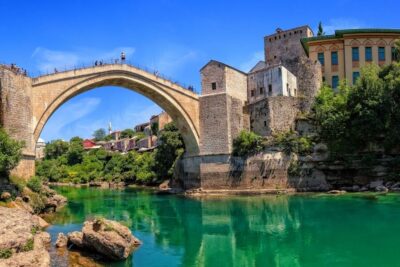
Kravica Waterfalls, Mostar and Pocitelj Day Trip
Read our review →
Blagaj, Počitelj & Kravice Waterfalls Day Tour
Read our review →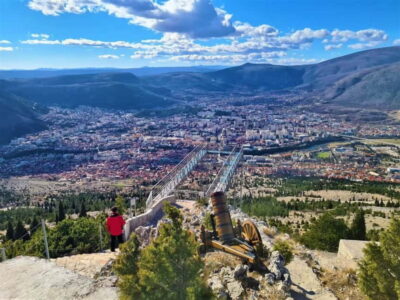
Herzegovina Day Tour from Mostar: Blagaj, Pocitej, Kravice falls (Join Us! :D)
Read our review →
Mostar and Kravice Waterfalls Full-Day Tour from Split
Read our review →
Break-up of Yugoslavia & The War in Mostar: Life Under Siege
Read our review →Browse the lists this tour appears in