
Reviewed · SREBRENICA MEMORIAL TOURS
Understanding Srebrenica Genocide Tour + Lunch with Local Family Included
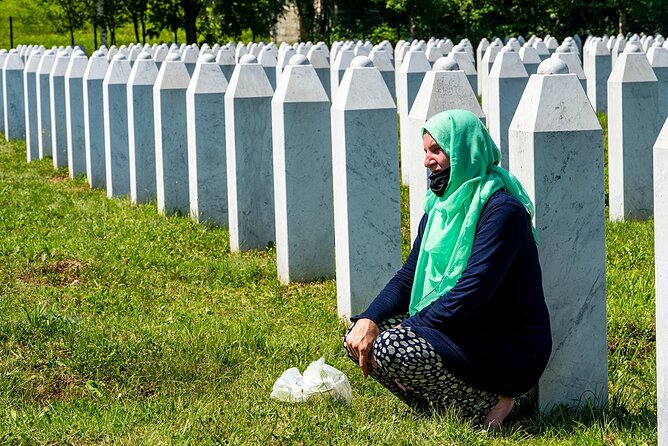
The most powerful part of this day is not only the Potočari Memorial. It is the chance to sit at a family table in Srebrenica after learning what happened here, and to connect the genocide of 1995 with the lives of people rebuilding the town today. I like the small group of no more than eight and the way the drive from Sarajevo gives your guide time to explain the history. I also like the home-cooked lunch, which supports local survivor families.
This is a long, serious day, with about three hours on the road each way. The memorial and cemetery are painful places, and the museum exhibitions are extensive, so you will need to manage your time and emotions. This is not a casual sightseeing trip, but it is one of the most meaningful historical excursions you can make from Sarajevo.
Key points to know before you go
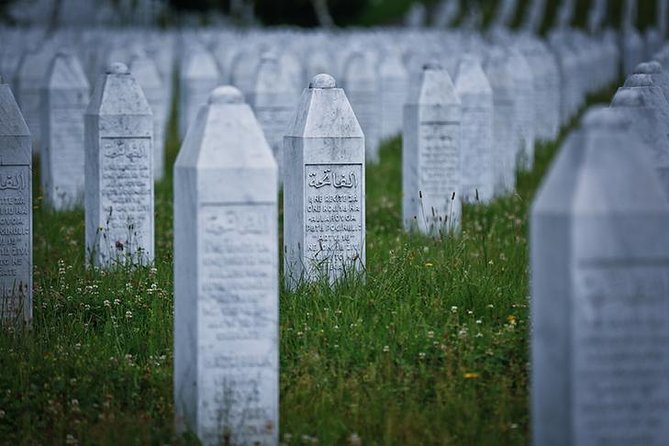
- Potočari Memorial and cemetery: Spend about three hours at the site dedicated to those killed in the July 1995 Srebrenica Genocide.
- Personal local guidance: Guides such as Adnan, Almir, and Ado have offered detailed explanations and, in some cases, personal wartime experiences.
- Lunch with a Srebrenica family: Eat a full-course meal prepared from scratch with ingredients from local farms connected to genocide survivors.
- More than one memorial site: Hear about ethnic cleansing, the Sušica concentration camp, the Zaklopača Massacre, and the road to Srebrenica.
- Pickup across Sarajevo: Start at 8:00 a.m. with collection from a hotel, hostel, or another agreed address.
- A small and practical setup: Travel in a private vehicle with a maximum of eight people, then return to Sarajevo at the end of the roughly 10-hour day.
Why this Srebrenica day trip matters
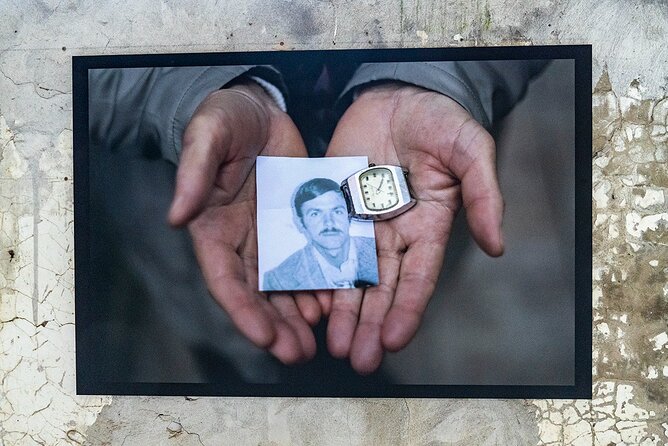
Srebrenica is not simply a place to check off a map. It is a place where the consequences of the Bosnian War remain visible in the cemetery, the town, the empty spaces, and the stories of surviving families.
This tour gives you a framework before you arrive. On the way from Sarajevo, the guide explains the breakup of Yugoslavia, the 1992 to 1995 war, the ethnic cleansing of Bosniaks, and the events that led to the genocide in July 1995. That background matters because the memorial can feel overwhelming without it.
I especially value the human scale of the experience. You are not left to walk through a memorial in silence with only a few labels to guide you. The guides have been praised for answering questions carefully and for explaining the subject with respect. Adnan, Almir, and Ado are among the guides associated with this experience, and some guides bring personal connections to the war or to Srebrenica.
That personal element can be difficult. It can also make the history clearer and less abstract. You should come ready to listen, ask thoughtful questions, and accept that the day may stay with you long after you return to Sarajevo.
More srebrenica memorial tours in Sarajevo:
- From Sarajevo: Srebrenica Genocide Memorial Study Tour
★ 5.0 · 359 reviews - Sarajevo: Srebrenica Genocide Study Tour with War Veteran
★ 5.0 · 263 reviews - From Sarajevo: Srebrenica Genocide Memorial Study Tour
★ 5.0 · 242 reviews
The road from Sarajevo to Srebrenica
Pickup begins at 8:00 a.m. The company collects you from an address in Sarajevo, which is useful if you are staying outside the central meeting point or have only recently arrived in the city.
The route takes roughly three hours in each direction, depending on the day and the stops. That sounds like a lot of driving, but the journey is part of the tour rather than dead time. Guides use it to explain the war and to answer questions as the route moves east toward Srebrenica.
You travel in a private vehicle, with a maximum group size of eight. That setup offers two practical benefits. You avoid the feel of a large coach tour, and you have more room to ask questions or take a quiet break when the subject becomes heavy.
The road passes through attractive mountain scenery, including the area around Romanija Mountain. The natural setting can feel sharply at odds with the events discussed in the vehicle. At the same time, do not expect a scenic road trip with frequent photo stops. The main purpose of the journey is historical understanding.
Some of the most useful time may come during the drive. Past participants have valued the opportunity to speak with guides such as Adnan and Ado, who explained events in a calm and courteous way. Almir has also been described as a former soldier who shared personal wartime experiences. The exact guide can vary, but the tour is strongest when you use the drive to ask questions.
Romanija and the first wartime stories
The first part of the route reaches a small mountain town at the foot of Romanija Mountain. The town is known for its natural scenery, but the tour also introduces the ethnic cleansing of Bosniaks carried out by Republic of Srpska forces in the area during 1992.
This opening stop helps you understand that Srebrenica did not exist in isolation. The genocide followed years of displacement, imprisonment, killings, and forced removal across eastern Bosnia.
You may find this part of the day more difficult than expected because the setting looks peaceful. That contrast is common throughout Bosnia. Green hills and quiet roads do not erase what happened, and your guide’s explanation helps connect the ordinary places outside the window with the history of the war.
The Sušica concentration camp region
The route continues through a region associated with Concentration Camp Sušica, established by the Republic of Srpska Army in 1992. More than 8,000 Bosniaks were successively held there, according to the information presented on the tour.
This stop adds another layer to the story. The Potočari Memorial focuses much of your attention on the genocide of July 1995, while the earlier locations show the process of persecution that came before it.
You will not simply be looking at a famous monument. You will be hearing about real places tied to detention and ethnic cleansing. That makes the guide especially important. A well-ordered explanation can help you understand the sequence of events without reducing the subject to a list of dates.
A few more Sarajevo trips to weigh up
- Lukomir Nomad Village Hiking from Sarajevo – Local Lunch Included
★ 5.0 · 21 reviews - Understanding Srebrenica Genocide + Lunch With Local Family – Private Tour
★ 5.0 · 18 reviews - Understanding Srebrenica Genocide + Lunch with Local Family
★ 4.9 · 14 reviews - Traditional Bosnian Cooking Class in Mostar with Lunch and Drinks
★ 5.0 · 16 reviews
Zaklopača and the cost of a village
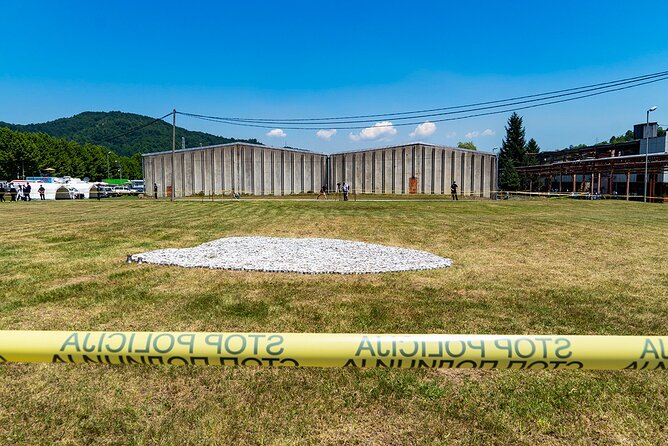
The tour also covers the Zaklopača Massacre, which took place on May 16, 1992. All members of the village were killed, including 59 Bosniaks and 12 children, with only a very small number of survivors.
This is one of the day’s starkest reminders that the war affected small communities as well as large towns. The story is not presented as a distant military event. It concerns families, children, and a village whose members were targeted together.
For you, this stop may be brief in physical terms but large in emotional weight. There is no need to rush your response or try to photograph every place. Listen closely, and give yourself room to process what you are hearing.
Bratunac and the road to July 1995
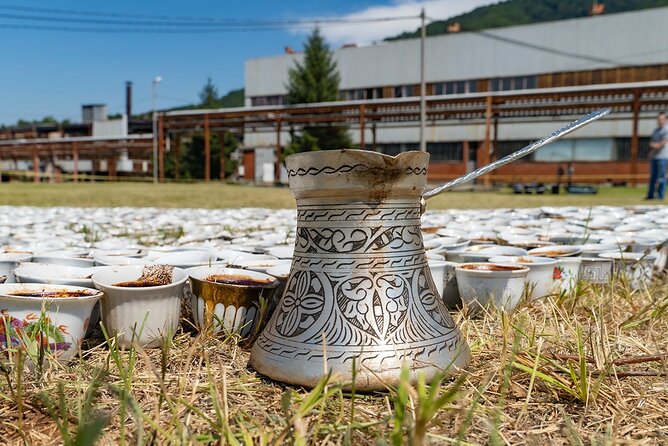
Another town on the route is connected with the 1992 ethnic cleansing of Bosniaks. It later became the first gathering point for many Bosniaks who were killed in mass executions during the Srebrenica Genocide in July 1995.
This part of the tour links the earlier local attacks with the final genocide. It also helps explain why the memorial visit is about more than one day or one battlefield. The events unfolded across a region and over several years.
The guide’s role is again central. Ado, who has been described as being from the Srebrenica area, brought local details and personal stories to the route. If your guide has a similar connection, ask about the places you pass. The long drive gives you time for questions that may not fit into the formal memorial visit.
Three hours at the Potočari Memorial
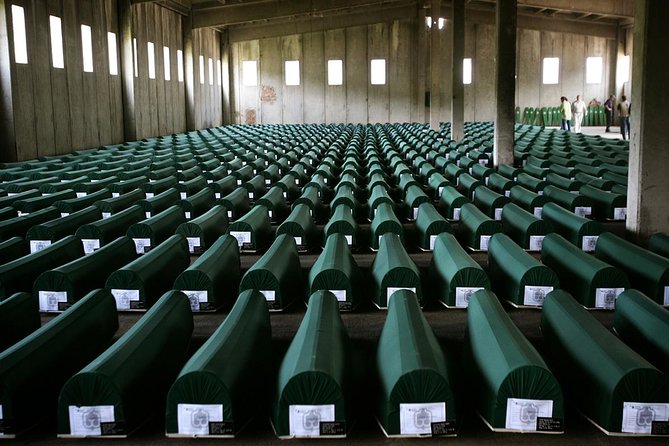
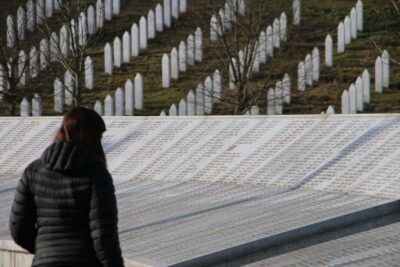
The main visit is to the Srebrenica Genocide Memorial in Potočari. You have about three hours here, and admission is included.
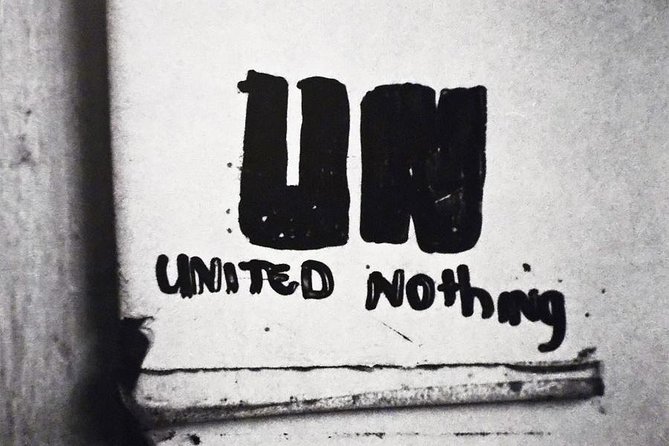
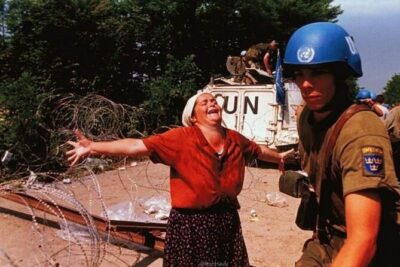
The memorial and cemetery are quiet, dignified places. Rows of white gravestones make the scale of the killings visible, while the museum exhibitions provide documents, testimony, and historical context. The nearby former United Nations building is also powerful because thousands of people gathered there believing they had found protection.
You will not have time to examine every exhibition in detail during the three-hour visit. I suggest deciding early how you want to use the time. You might begin with the guide’s explanation, walk through the cemetery, then focus on the museum sections that help you understand the events most clearly.
The site can be emotionally exhausting. Some people will want to read every panel, while others will need quiet time outdoors. Both are reasonable ways to visit. The important point is to avoid treating the memorial like an ordinary attraction. Dress respectfully, keep your voice low, and follow the site’s expectations.
The dress code is smart casual, with suitable clothing required for entering the Muslim cemetery. Service animals are allowed, and most people can participate, but the long day and serious subject are worth considering before booking.
Lunch in a survivor family’s home
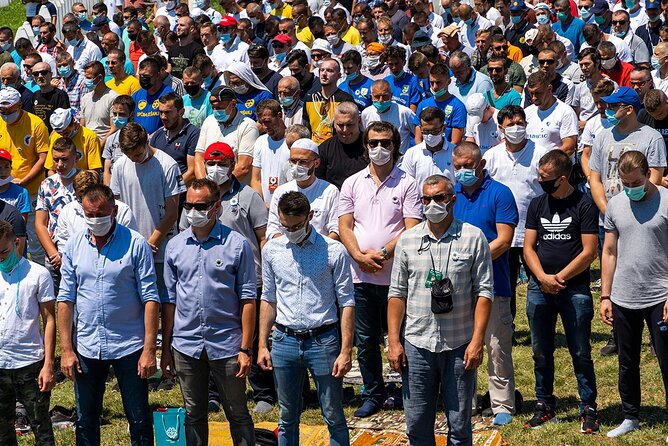
The home-hosted lunch in Srebrenica is the tour’s most personal moment. You sit down with a local family for about an hour and share a full-course meal prepared from scratch.
The food uses organically grown ingredients from local farms connected with Srebrenica Genocide survivors. That gives the meal value beyond what is on the plate. Your payment helps support small local producers and families working toward a more secure future in a town affected by unemployment, discrimination, and genocide denial.
You should expect a warm welcome, but do not treat the family visit as a staged performance. People in Srebrenica may share both pleasant memories and painful personal stories. Listen with care, and let the conversation develop naturally.
The meal also gives your mind a break after the memorial. You can talk about what you have seen, ask about life in Srebrenica today, and experience Bosnian hospitality in a setting that feels personal rather than commercial.
Food preferences and dietary arrangements are not specified in the tour information, so you should raise any important requirements when booking. The meal is a central part of the experience, not an optional snack.
Seeing Srebrenica town itself
After the memorial and lunch, the tour visits the town of Srebrenica for about an hour. This is useful because it takes you beyond the cemetery and museum to the place where people live now.
You learn more about the genocide and see real locations connected with the material presented at Potočari. The town visit gives the day a present-day dimension. Srebrenica is not only a memorial site or a chapter in a history book. It is also a community trying to continue life under difficult conditions.
The hour is not long, so do not expect an extensive independent exploration. The value lies in the guide’s context and in seeing how the town relates to the memorial outside it.
Is $96.75 a fair price?
At $96.75 per person, this is a strong value if you want an organized Srebrenica visit from Sarajevo.
The price covers an approximately 10-hour day, Sarajevo pickup and return, private vehicle transport, a small group of up to eight, guiding, and a full-course family lunch. Admission to the Potočari Memorial is free, so the value comes mainly from transport, interpretation, organization, and the local meal.
Trying to reach Srebrenica independently would require arranging transport and working out how to connect the scattered historical stops. You would also lose the guide’s explanation during the long drive and may find the memorial harder to place in context.
The main cost is time and emotional energy, not just money. You give up most of a day in Sarajevo, and the return journey can feel tiring. For a subject this important, though, the private transport and careful planning remove much of the practical strain.
Who will get the most from this tour?
I would choose this experience if you want to understand Bosnia beyond Sarajevo’s old town and war museums. It suits visitors who are willing to spend a full day on difficult history and who value direct contact with local people.
It is also a good choice if you prefer a guide-led visit rather than reading your way through the memorial alone. The small group makes it easier to ask questions, and the private vehicle offers more comfort than a large bus.
Families with older children may find the day educational, but parents should judge the subject matter for themselves. The material concerns mass killings, concentration camps, ethnic cleansing, and children among the victims.
You may want to skip it if you are looking for a light day in the countryside or if you have only a short stay in Sarajevo. The journey is long, and the memorial is not easy sightseeing. You should also avoid booking it immediately before an important evening event, since the schedule lasts about 10 hours and the subject can leave you needing quiet time afterward.
Useful planning details for the day
Pickup is offered from any address in Sarajevo, including a hotel, hostel, or another agreed location. The advertised start time is 8:00 a.m., and the tour returns to its starting point.
Confirmation is sent within 48 hours, subject to availability. The activity is offered in English, uses a mobile ticket, and allows service animals. Most people can take part, but you should be comfortable with a long vehicle journey and several hours of walking and standing at memorial sites.
Wear respectful smart-casual clothing. Since the tour enters a Muslim cemetery, choose clothing that covers you appropriately.
Free cancellation is available if you cancel at least 24 hours before the start time. Changes or cancellations made within 24 hours are not accepted for a refund, and the cut-off follows local time.
Should you book the Srebrenica tour?
Yes, if you want a serious, carefully guided day that connects Bosnia’s wartime history with life in Srebrenica today. The strongest parts are the guide-led context, the three-hour visit to Potočari, and the home lunch with a local family.
Before booking, accept that the journey from Sarajevo is long and the subject is painful. If that sounds like the kind of history you came to Bosnia to understand, the $96.75 price is reasonable for the transport, small group, guidance, and meal. Book it early if your dates are fixed, since it is commonly reserved well ahead of time.
FAQ
How long does the Srebrenica tour take?
The tour lasts approximately 10 hours, including the journey from Sarajevo and the return trip.
What time does the tour start?
Pickup begins at 8:00 a.m.
Where does the tour start and finish?
The tour starts with pickup from an address in Sarajevo and ends back at the starting point or agreed pickup location.
Is hotel pickup available in Sarajevo?
Yes. Pickup is available from a hotel, hostel, or another agreed address in Sarajevo.
Is transportation provided?
Yes. You travel in a private vehicle with your group.
How many people can join the tour?
The maximum group size is eight people.
Is the tour offered in English?
Yes, the experience is offered in English.
How much time is spent at the Srebrenica Genocide Memorial?
The visit to the Potočari Memorial takes about three hours.
Is lunch included?
Yes. A full-course lunch with a local family in Srebrenica is included.
Is admission to the memorial included?
Admission to the Srebrenica Genocide Memorial is free.
What should I wear?
Smart-casual clothing is requested. Dress respectfully and appropriately for entering the Muslim cemetery.
Can I cancel for a full refund?
Yes, if you cancel at least 24 hours before the experience start time. Cancellations made less than 24 hours in advance are not refunded.
Just added around Sarajevo
- Sarajevo Under Siege: A War History Tour★ 5.0 · 10 reviews
- WAR TUNNEL – Sarajevo’s only way of a communication during the WAR – Top secret★ 5.0 · 12 reviews
- Private Full Day Safari Tour★ 5.0 · 8 reviews
- Ultimate Gastro Experience★ 4.5 · 14 reviews
- Mysterious Visoko Pyramids Driving and Walking Tour★ 5.0 · 7 reviews
- Secret Tito’s Bunker/Konjic Tour★ 5.0 · 4 reviews
- The Secret Lifeline: Sarajevo’s War Tunnel Tour★ 5.0 · 6 reviews
- Crossroads of Cultures – Sarajevo Walking Tour★ 5.0 · 8 reviews
Srebrenica Memorial Tours, compared.
Srebrenica Genocide Study Tour with War Veteran
Read our review →
Sarajevo to Srebrenica: Genocide Study Tour with War Veteran
Read our review →
Understanding Srebrenica Genocide – Day tour from Sarajevo
Read our review →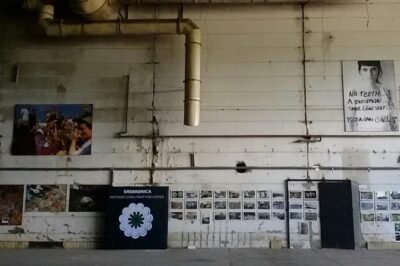
Understanding Srebrenica Genocide + Lunch With Local Family – Private Tour
Read our review →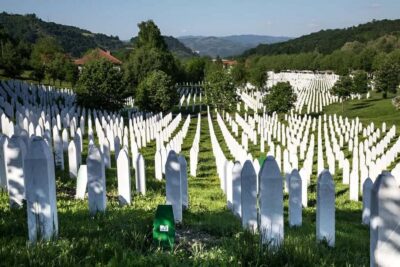
Understanding Srebrenica Genocide + Lunch with Local Family
Read our review →
Srebrenica Genocide Memorial and Testimonial Tour
Read our review →Browse the lists this tour appears in