
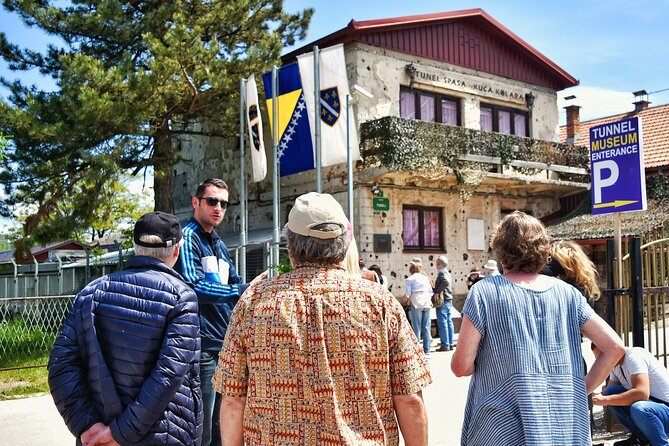
Reviewed · SARAJEVO WAR TUNNEL TOURS
WAR TUNNEL – Sarajevo’s only way of a communication during the WAR – Top secret
Sarajevo’s Tunnel of Hope is small, plain, and unforgettable. During the four-year siege, this narrow passage was the city’s only working link with the outside world. I like that this tour puts the tunnel in context by passing Markale market and Sniper Alley, rather than treating the museum as an isolated sight.
I also like the local storytelling. Guides including Aid, Adna, Argan, Eddie, and Amir have been praised for explaining the breakup of Yugoslavia and adding family stories from Sarajevo. The main drawback is that the tunnel visit itself is brief and the total timing can stretch from about 1 hour 40 minutes to 2 hours 30 minutes, depending on pickup and traffic.
Key points before you book
- Walk through a surviving section of the 800-meter Tunnel of Hope, the only connection into besieged Sarajevo.
- See Markale and Sniper Alley, two places that help explain the danger faced by civilians.
- Expect personal wartime stories, with guides such as Aid and Adna praised for clear explanations and thoughtful answers.
- Pay 15 BAM extra for museum entry, since the admission ticket is not included in the $30.10 tour price.
- Use hotel pickup and drop-off if your location is not close to the agency in Baščaršija.
- Allow up to two and a half hours, even though the advertised duration begins at about 1 hour 40 minutes.
Why the Tunnel of Hope matters
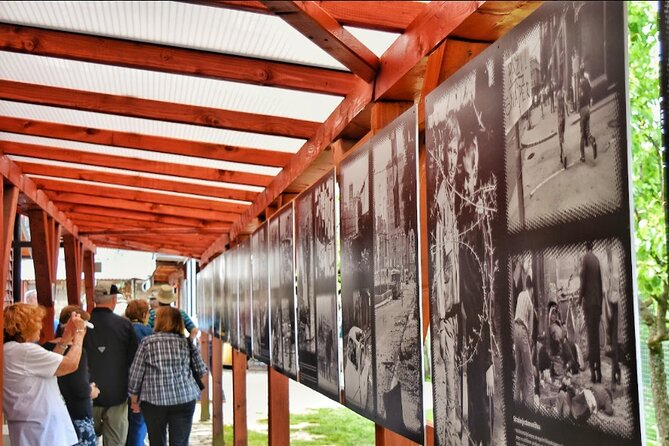
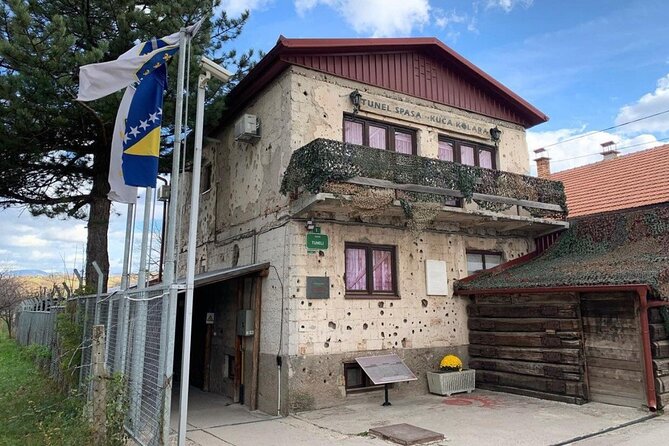
The Sarajevo War Tunnel, now called the Tunnel of Hope Museum, tells one of the clearest stories of daily life during the Siege of Sarajevo. The city was surrounded for four years, and the tunnel provided its only entrance and exit beneath the airport area.
The full tunnel was about 800 meters long. You do not walk all 800 meters today. The museum preserves a section that lets you enter the cramped passage and get a physical sense of the route used during the siege.
That physical experience matters. A display case can explain shortages, shelling, and isolation. A narrow tunnel makes you think about carrying supplies, moving in darkness, and trying to get through while the city above remained under attack.
I would not book this as a light sightseeing outing. The subject is civilian suffering, mass killing, and a city under prolonged fire. It is suitable for most participants, but you should be ready for difficult material and serious conversation.
More sarajevo war tunnel tours in Sarajevo:
- Fall of Yugoslavia, Sarajevo War Tour with Tunnel of Hope Museum and Frontlines
★ 5.0 · 1,314 reviews - Sarajevo: Tunnel Museum Yugoslavia War Tour with War Veteran
★ 5.0 · 1,111 reviews - Sarajevo: Tunnel of Hope Tour – Survival and Resilience
★ 4.8 · 630 reviews
Starting in central Sarajevo
The tour begins at Meet Bosnia Tours at Gazi Husrev-beg Street 75. This is in the central old town area, close to Baščaršija and public transport. If your hotel is nearby, you may be asked to meet at the agency rather than wait for a vehicle.
At the office, a licensed guide welcomes you and explains the plan. The tour includes a professional driver, a modern vehicle, bottled water, and hotel pickup and drop-off when arranged. The maximum group size is listed as 50 people, so the actual feel can vary. A small group should allow more room for questions, while a full vehicle will feel more like a standard group excursion.
The stated duration is approximate. Some departures may finish in about 1 hour 40 minutes, while others can take up to 2 hours 30 minutes. Build in extra time if you have a restaurant booking, train departure, or another fixed appointment.
Markale market and the cost of survival
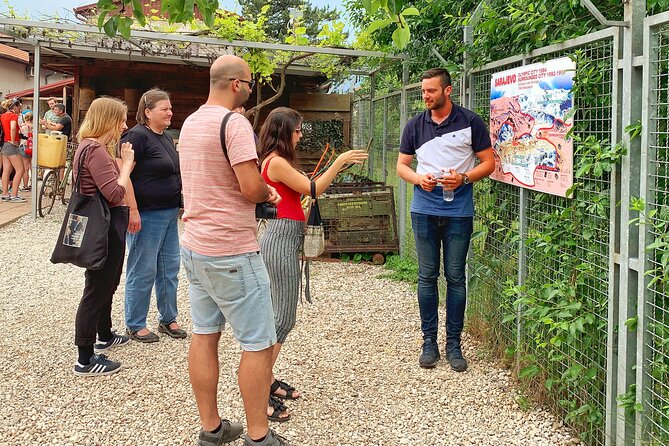
Markale market helps place the siege in everyday terms. Even during the war, citizens came here hoping to find food and other basic supplies. That simple act, buying something to eat, became a dangerous task in a city under siege.
The market was also the site of two major massacres carried out by the Army of Republika Srpska. Your guide explains what happened and why Markale became such a painful symbol of the war.
This stop is valuable because it moves the story away from military maps. You are not only hearing about front lines and political decisions. You are thinking about people trying to find bread and other necessities.
The itinerary describes the stop as part of the drive rather than a long independent visit. Do not expect a large museum presentation here. Its importance comes from the location and the explanation provided by your guide.
Passing through Sniper Alley
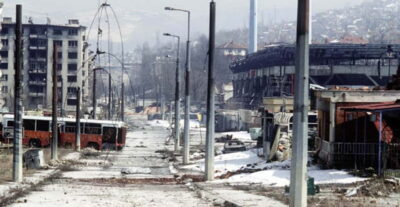
The route continues through Sniper Alley, the name given to one of Sarajevo’s most dangerous streets during the siege. Snipers fired on people moving through the city, and the road became a grim part of Sarajevo’s wartime vocabulary.
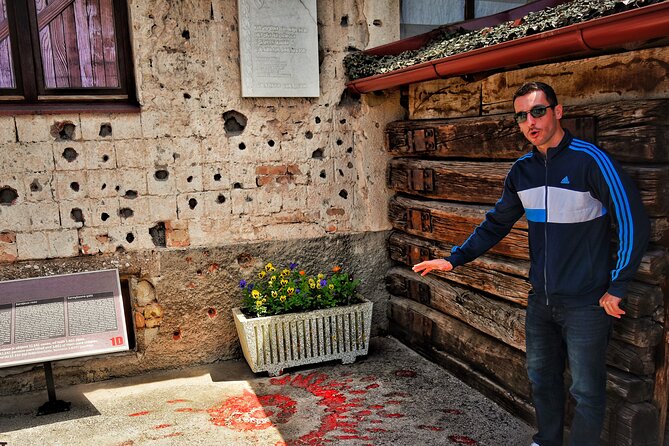
You will see Yugoslav-era buildings that still show the effects of the war. The damaged facades make the past visible, but the guide’s commentary is what gives them meaning. Pay attention to where the vehicle stops, what buildings are pointed out, and how the street functioned during the siege.
I like this part of the tour because it connects the tunnel to the city above. The museum explains how people found a route out. Sniper Alley shows why movement inside Sarajevo was so perilous in the first place.
This is mainly a drive-by and explanation stop, listed at about 15 minutes. If you want extensive time to photograph individual buildings, this tour may feel too quick. Take photographs respectfully. These are not simply old ruins, and the sites remain tied to living memory.
Same country, a completely different kind of day:
- Sarajevo: Mostar, Konjic, Blagaj Tekke, Pocitelj & Waterfall
★ 4.9 · 1,666 reviews - Sarajevo: Grand Walking Tour Through Time and Cultures
★ 4.8 · 1,236 reviews - Sarajevo: Mostar, Konjic, Sufi House, Pocitelj & Kravice Falls
★ 5.0 · 1,179 reviews - ROSES OF SARAJEVO (Official WAR + CITY tour)- Story of a Survivor
★ 5.0 · 770 reviews
Sarajevo City Hall and the road back
Sarajevo City Hall appears on the route as another important wartime landmark. The building was badly damaged during the Bosnian War and has since been rebuilt. Today it is one of the city’s essential sights and a symbol of Sarajevo’s recovery.
The stop is not described as a full interior visit, so treat it as a passing point unless your guide says otherwise. Its value here is symbolic. The tour places a restored civic building beside streets that still carry scars from the conflict.
On the return route, you pass through the old town and Baščaršija, Sarajevo’s best-known historic quarter. This helps you reconnect the war story with the city you are exploring today. If you are staying near the old town, the route also gives you a useful sense of how the central districts relate to the outer area where the tunnel museum is located.
Inside the Tunnel of Hope Museum
The Tunnel of Hope Museum is the central stop and takes about two hours in the itinerary, though the exact time inside may vary. Your 15 BAM admission ticket is separate from the tour price, so bring enough local currency or confirm the current payment arrangement before setting out.
The museum preserves a section of the tunnel itself. You can walk through it, but expect a confined passage rather than a spacious attraction. The narrow conditions are part of the lesson. The tunnel was built for necessity, not comfort.
The 800-meter route connected Sarajevo with territory beyond the siege lines. It allowed food, medicine, supplies, and people to move in and out when normal roads were blocked. The museum helps you understand why this route became essential to the city’s survival.
The tour guide’s explanation is especially important here. Past visitors have singled out Aid, Adna, Argan, Eddie, and Amir for clear historical accounts and personal stories. One guide, Aid, has also led longer private siege tours, so you may get especially detailed answers if your group has time for questions.
Do not expect a polished, entertainment-focused attraction. The museum is modest, and the preserved tunnel section is not large. That is also why the visit can be so effective. You are asked to picture the people who used this passage under pressure, often carrying heavy loads and moving through a tight, difficult space.
The guides make the difference
This tour depends heavily on the guide. The route itself is important, but the same street can feel like a quick bus ride without strong explanation. The best accounts connect the political breakup of Yugoslavia with events at street level.
The most praised guides include Aid and Adna, along with Argan, Eddie, and Amir. Their approach combines dates and events with stories about families and the effect of the siege on ordinary residents. You should feel free to ask questions, especially if you want help understanding how the political crisis led to violence in Sarajevo.
One useful detail is that the driver may also add local information during the journey. That can make the vehicle time more worthwhile, especially on a short departure.
The guide will not make the tour cheerful, and that is appropriate. The best tone here is calm, direct, and respectful. You get a stronger experience when the history is explained without turning suffering into spectacle.
What the $30.10 price includes
At $30.10 per person, the tour offers reasonable value if you want transportation and interpretation in one package. The price includes the guide, driver, modern vehicle, bottled water, and hotel pickup and drop-off.
The biggest extra cost is the Tunnel of Hope Museum admission, listed at 15 BAM. Personal expenses are also excluded. Since the museum is the main reason to book, remember that the advertised price is not the final cost of the experience.
The value is strongest for people who want a guided introduction to Sarajevo’s siege sites. You could visit the tunnel on your own, but you would need to arrange transport and piece together the wider story yourself. This tour links the museum to Markale, Sniper Alley, City Hall, and Baščaršija in one outing.
The value is less clear if you already know Sarajevo’s wartime history well or have booked a longer private siege tour. A private half-day tour can offer more time and a more flexible route. This experience is better suited to a first introduction, a tight city schedule, or anyone who prefers not to arrange transport alone.
Practical details that affect your day
The experience is offered in English. Confirmation is provided when you book, and pickup is available from your location. If your pickup point is close to Gazi Husrev-beg 75, the company may ask you to walk to the agency instead.
Most people can participate, and the tour is near public transportation. The vehicle portion reduces the amount of walking between distant sites, while the tunnel itself requires you to walk through the preserved passage.
The company lists weekday operating hours from 9:00 AM to 5:30 PM for the stated operating periods. Check your booking details for the exact departure time and pickup instructions.
Free cancellation is available up to 24 hours before the start time for a full refund. Cancellations or changes made less than 24 hours before departure are not accepted under the stated policy.
I would wear comfortable shoes and bring water beyond the supplied bottle if you prefer to stay hydrated. The tunnel is a serious historical site, not a place for rushed sightseeing, so leave room afterward to process what you have seen.
Who should book this experience
I would recommend this tour to you if you want to understand Sarajevo through its recent past, not only through cafés, Ottoman streets, and Austro-Hungarian buildings. It is particularly useful on a first visit, when you need a clear introduction to the city’s wartime geography.
Families with older children may find the tunnel memorable, but parents should decide if the subject matter is suitable. The tour deals with massacres, civilian danger, and the breakup of Yugoslavia. It is not designed as a children’s attraction.
History-focused visitors, military history enthusiasts, photographers interested in damaged architecture, and anyone with a personal connection to the 1990s conflict will find plenty to think about. One especially detailed version of the siege tour has been praised for helping a former U.S. service member connect aerial wartime experience with Sarajevo’s ground-level story.
You may want a longer or private tour if you prefer extensive battlefield detail, more time at each location, or a fully tailored route. The standard experience gives you a strong outline, but the short format limits how far the guide can go into every event.
My verdict on the Tunnel of Hope tour
I would book this tour if your goal is to understand what the Siege of Sarajevo meant for civilians. The tunnel alone is worth seeing, but the route becomes much more useful when Markale, Sniper Alley, and City Hall are added.
The best reason to choose it is the combination of access and explanation. You get a vehicle, a licensed English-speaking guide, a preserved tunnel, and personal accounts without having to organize the day yourself.
The main caution is simple: this is a grave experience, and the museum entry costs extra. It can also run longer than expected. If you accept those points, this is a focused and worthwhile way to confront Sarajevo’s recent past.
FAQ
How much does the tour cost?
The listed price is $30.10 per person. Admission to the Tunnel of Hope Museum is not included and costs 15 BAM.
How long does the tour last?
The approximate duration is 1 hour 40 minutes to 2 hours 30 minutes. Allow extra time because pickup, traffic, and the length of each stop can affect the schedule.
Where does the tour start?
The meeting point is Meet Bosnia Tours at Gazi Husrev-beg 75 in Sarajevo, Bosnia and Herzegovina.
Is hotel pickup available?
Yes. Hotel pickup is offered. If your location is close to the agency, you may be asked to meet at the main starting point instead.
Does the tour include hotel drop-off?
Yes. If you are picked up at your location, the driver will return you there after the tour.
Is the Tunnel of Hope admission included?
No. The entrance ticket is separate and is listed at 15 BAM.
Is the tour offered in English?
Yes. The experience is offered in English with a licensed tour guide.
Can I cancel for a full refund?
Yes, if you cancel at least 24 hours before the experience start time. Cancellations or changes made less than 24 hours before departure are not accepted for a refund.
Just added around Sarajevo
- Sarajevo Under Siege: A War History Tour★ 5.0 · 10 reviews
- Private Full Day Safari Tour★ 5.0 · 8 reviews
- Ultimate Gastro Experience★ 4.5 · 14 reviews
- Mysterious Visoko Pyramids Driving and Walking Tour★ 5.0 · 7 reviews
- Secret Tito’s Bunker/Konjic Tour★ 5.0 · 4 reviews
- The Secret Lifeline: Sarajevo’s War Tunnel Tour★ 5.0 · 6 reviews
- Crossroads of Cultures – Sarajevo Walking Tour★ 5.0 · 8 reviews
- Sutjeska National Park Hike from Sarajevo★ 5.0 · 8 reviews
Sarajevo War Tunnel Tours, compared.

Fall of Yugoslavia, Sarajevo War Tour with Tunnel of Hope Museum and Frontlines
Read our review →
Sarajevo Grand Tour: Old Town, War Tunnel, Olympic Sites & More
Read our review →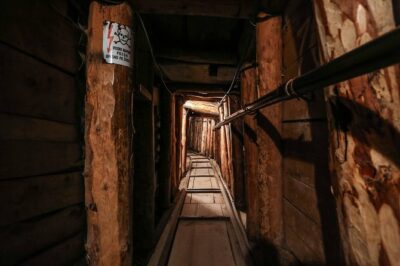
Times of Misfortune – Life Under Siege and the Tunnel of Hope
Read our review →
Sarajevo Grand Tour: 5 Hours Old Town, War Tunnel, Olympics
Read our review →
SARAJEVO SIEGE TIMES ’92-’95 / Sarajevo Roses & Tunnel of Hope /
Read our review →Browse the lists this tour appears in