
Reviewed · WALKING TOURS
Crossroads of Cultures – Sarajevo Walking Tour
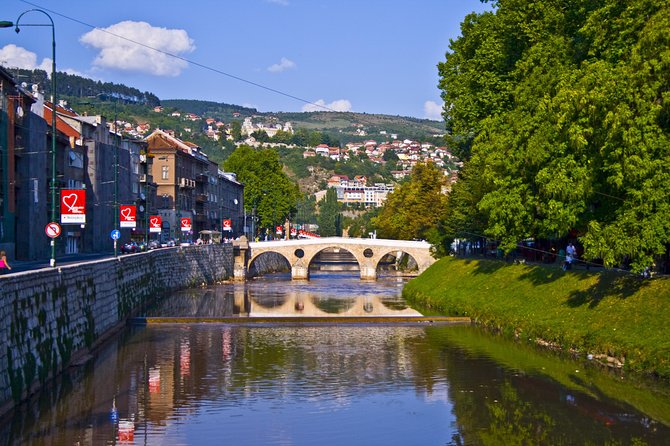
Sarajevo’s story is written in a surprisingly small area. In two hours, this walk takes you from a Catholic cathedral to a Jewish museum, an Ottoman mosque, a Serbian Orthodox church, and the Latin Bridge, the site tied to the 1914 assassination that helped set off World War I. It is a quick lesson in why Sarajevo is called a meeting point of East and West.
I like the compact route, which packs major sights into a walk that begins and ends at Muvekita 7. I also like the chance to hear local explanations from Adnan, the guide most often named in the tour’s feedback, including stories about Sarajevo coffee, old crafts, food, religion, and the city’s difficult 20th-century past. The main drawback is the pace: 15 stops in about two hours means you will see many places from the outside and have little time for long museum visits.
Key points to know
- Four faith traditions in one short walk: Visit Catholic, Jewish, Muslim, and Serbian Orthodox landmarks within Sarajevo’s historic center.
- A strong first-day introduction: The route helps you understand the city’s layout, food, customs, and major historical events before exploring on your own.
- Adnan is a highlighted guide: Past visitors specifically praised his friendly manner, clear explanations, and Spanish ability, while the current tour is offered in English.
- Food guidance is built in: Bravadziluk Street brings recommendations for cevapi and burek, while Kazandziluk introduces Bosnian coffee and traditional metalwork.
- Small group size: The tour accepts no more than 15 people, a useful limit for a narrow old-town route.
- Good value at $24.08: The price includes a guide and a focused orientation, but museum and City Hall entry fees are extra.
Why Sarajevo makes such a good walking lesson
You do not need a long bus ride to understand Sarajevo. The central sights sit close together, and this route uses that advantage well. In a short distance, you move between Austro-Hungarian avenues, Ottoman-era streets, religious buildings, market lanes, and places linked to the 20th century’s most painful chapters.
That variety gives the tour its purpose. It is not just a march past pretty buildings. You are shown how different communities shaped the city, how trade worked, how faiths shared the same urban space, and how Sarajevo’s past still affects the way you read its streets.
The route is also useful for orientation. It begins at Muvekita 7, near the central pedestrian area, and returns there at the end. Since the walk includes the market, old craft street, food area, City Hall, Latin Bridge, and Eternal Flame, you can mark places you want to revisit after the guide leaves.
A few more Sarajevo trips to weigh up
- Sarajevo: Grand Walking Tour Through Time and Cultures
★ 4.8 · 1,236 reviews - Sarajevo: 2 Hours Old Town Walking Tour With Local Guide
★ 5.0 · 505 reviews - Private Walking Tour, Food Tasting and Bosnian Coffee in Sarajevo
★ 5.0 · 255 reviews
Meeting at Muvekita 7 and setting off
Your meeting point is the Toureedoo office at Muvekita 7, Sarajevo 71000. The listed start time is 10:30 a.m., and the guide meets you in front of the office. The activity ends back at the same meeting point, which makes planning the rest of your day fairly simple.
The group limit is 15 people. That is not a private tour, but it is small enough to keep the group together on older streets and to make questions practical. You should expect a walking experience rather than a sightseeing ride, so wear shoes suited to roughly two hours on foot.
The tour is listed in English. Adnan is the guide most closely associated with this experience, and he has also led Spanish-language tours. Past groups praised his friendly attitude, clear explanations, and ability to make history easy to follow. If you need a language other than English, confirm it before booking rather than assuming a Spanish tour is scheduled on your date.
Sacred Heart Cathedral and Sarajevo’s religious mix
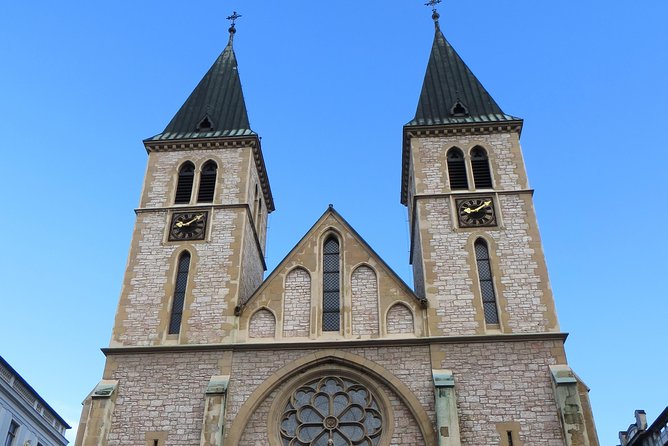
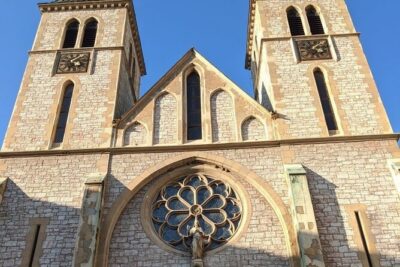
The first formal stop is Katedrala Srca Isusova, the Sacred Heart Cathedral. You spend about 10 minutes here while the guide explains its importance. That timing suggests a focused outdoor introduction, not an extended visit for quiet study or prayer.
Starting with the cathedral is a smart choice. It puts Sarajevo’s Catholic presence into the picture before the walk shifts toward the Ottoman center. The building also helps you see that Sarajevo’s identity cannot be reduced to one empire or one faith.
From here, the route moves toward the Jewish Museum of Bosnia and Herzegovina. This is the place associated with Sarajevo’s first Jewish temple, and it adds another essential part of the city’s story. Admission is not included, so you should be prepared for an extra fee if you want to enter.
The stop is scheduled for about 10 minutes. That is enough for context and an exterior look, but not much time for a full museum visit. If Jewish history is a main reason for your visit, ask the guide how to return later and set aside more time on your own.
The Meeting of Cultures and Gazi Husrev-beg Mosque
At the Sarajevo Meeting of Culture, the guide explains why the city is described as a place where East meets West. This is one of the most useful stops for getting your bearings. You are not simply told that the city has different influences. You are shown where the change in architectural and cultural feel becomes clear as you walk.
The stop lasts about five minutes, so expect a concise explanation. Use it as a visual pause and listen for details that help you compare the streets you have just crossed with the Ottoman quarter ahead.
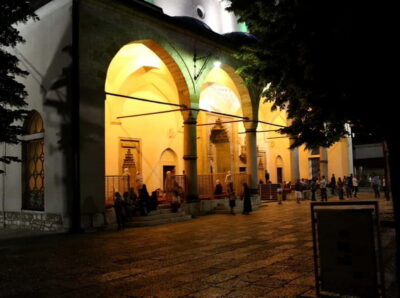
Next comes Gazi Husrev-beg Mosque, the central mosque of Bosnia and Herzegovina. The tour allows about 10 minutes here, with no admission fee listed. The guide gives you background on the mosque’s role and place in Sarajevo.
This stop adds more than religious architecture. It helps explain the Ottoman character of the old center, where commerce, worship, craft, and daily routines grew up close together. Dress respectfully for the setting and follow any instructions in force at the mosque. The supplied details do not promise an interior visit, so do not book this walk expecting a long guided tour inside.
Same country, a completely different kind of day:
- Sarajevo: Mostar, Konjic, Blagaj Tekke, Pocitelj & Waterfall
★ 4.9 · 1,666 reviews - Fall of Yugoslavia, Sarajevo War Tour with Tunnel of Hope Museum and Frontlines
★ 5.0 · 1,314 reviews - Sarajevo: Mostar, Konjic, Sufi House, Pocitelj & Kravice Falls
★ 5.0 · 1,179 reviews - Sarajevo: Tunnel Museum Yugoslavia War Tour with War Veteran
★ 5.0 · 1,111 reviews
Clock Tower, Morica Han, and the old trading center
The Old Sarajevo Clock Tower receives a short five-minute stop. That may seem brief, but it keeps the walk moving while adding a practical landmark to the story of the old town. The guide explains its importance, giving you another piece of the Ottoman-era center.
Morica Han is given about 10 minutes. It is described as the only preserved han, or traditional roadside inn, in Sarajevo. This is one of the route’s more distinctive stops because it connects the city to the movement of merchants and goods. A han was not simply a place to sleep. It belonged to the working life of a trading town.
Admission is included at Morica Han, but the itinerary does not promise a long interior tour. Think of it as a compact historical stop that helps you picture how travelers and traders once used the city.
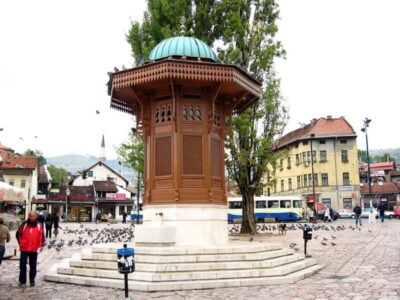
The route then reaches Sebilj Brunnen, the famous fountain also known as Pigeon’s Square. You have about five minutes here. It is a well-known meeting point in the old bazaar area and a natural place to pause, take in the surroundings, and hear the guide explain its place in Sarajevo’s public life.
Kazandziluk and the case for Bosnian coffee
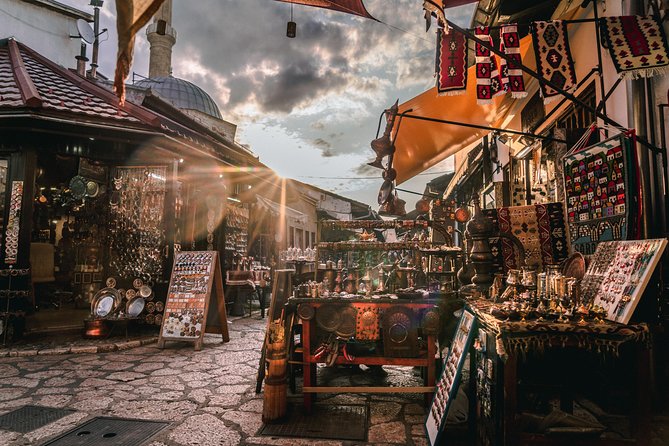
Kazandziluk is one of the most appealing stops for anyone who likes travel details that involve the hands, not just grand buildings. The guide discusses Sarajevo’s old crafts and explains how Bosnian coffee is made.
The street’s name is tied to traditional coppersmith work, and the tour uses it to show how the old center still connects craft with everyday life. You should not expect a formal workshop unless the guide specifically arranges one. The value is in seeing the craft district and learning how coffee fits into local custom.
Past groups were welcomed with Bosnian coffee before some tours, including tours led by Adnan and his family. That detail is not listed as a guaranteed part of this booking, so treat it as a possibility rather than an included feature. The coffee explanation itself is part of the advertised route.
This is also where the tour becomes more sensory. You are no longer hearing only about rulers, wars, and architecture. You are learning how people prepare a familiar drink and how old trades shaped the feel of the quarter.
Bravadziluk Street, cevapi, and burek
At Bravadziluk Street, the guide points you toward places to try cevapi and burek. This stop lasts about five minutes and does not include lunch, so you will pay for any food you order.
That arrangement is useful. Instead of being sent to one fixed restaurant, you get local suggestions and can decide how much you want to eat. Cevapi gives you a taste of one of Bosnia’s best-known foods, while burek offers a different style of savory pastry. The tour does not include a tasting, so plan to return after the walk if you want a proper meal.
This is one reason I would schedule the experience early in your Sarajevo stay. Food advice is more valuable before you have already chosen your meals. You can note the recommended spots and come back when you have time to eat without watching the clock.
Sarajevo City Hall and the 1914 assassination
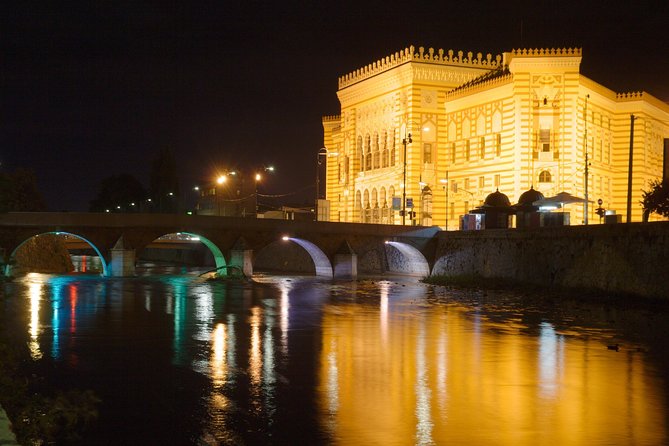
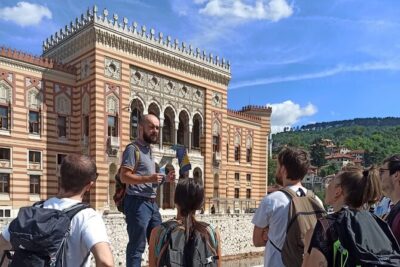
Sarajevo City Hall is one of the route’s major architectural pauses. The guide describes it as one of the finest buildings from the Austro-Hungarian period, and the stop lasts about 10 minutes.
The building gives you a sharp contrast with the Ottoman streets. Its presence helps show how Sarajevo changed under Austro-Hungarian rule and why the city has such a distinct visual shift between quarters. Admission is not included, so the tour does not cover a full interior visit.
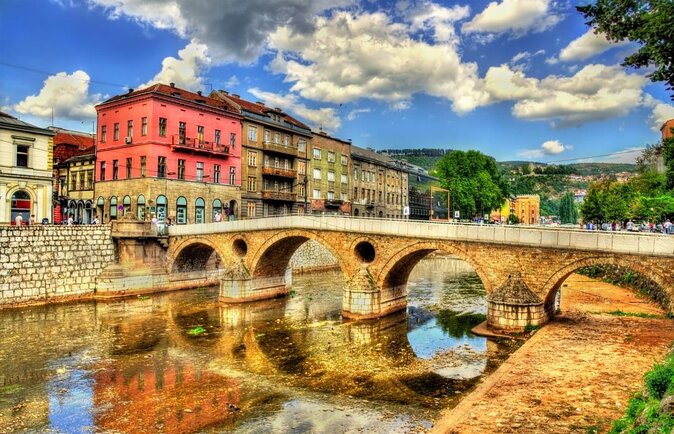
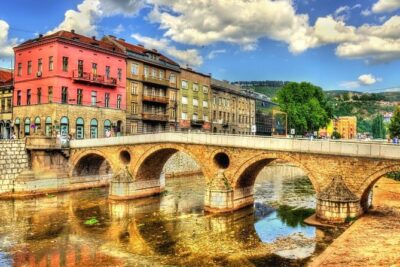
The walk then reaches Latin Bridge, with about 20 minutes devoted to the Sarajevo assassination of 1914. This is the longest stop on the route, and for good reason. The event here shook Europe and is closely tied to the beginning of World War I.
A good guide can make this more than a date and a name. You should expect an explanation of what happened and why the location mattered, along with broader context about the political pressures of the time. The information provided does not specify an entrance to a museum at the bridge, and the admission line lists the stop as free.
If you have only a loose grasp of the 1914 event, this stop can be especially helpful. It gives you a clear place to connect the political story to the physical city, rather than treating the assassination as an isolated textbook fact.
Serbian Orthodox Cathedral, Markale Market, and the Eternal Flame
The Serbian Orthodox Cathedral comes next, with about five minutes for the guide to explain the main Orthodox church in Sarajevo. Like the cathedral and mosque earlier in the route, it reinforces the city’s religious variety. The stop is brief, and admission is not included, so expect an outside explanation unless you arrange more time separately.
Pijaca Markale, the city market, receives about 10 minutes. It is a practical stop, not just a historical one. You can see where people buy fruit, vegetables, and meat products, and the guide can help connect the market to ordinary city life.
The market also adds a different tone after the grand religious buildings and major political sites. Here, Sarajevo is presented as a place where people shop, cook, and carry on with daily routines. The tour does not include purchases or lunch, but you can return later if you want more time.
The final stop is the Eternal Flame, a monument dedicated to the fighters of World War II. You spend about five minutes here before returning to the meeting point. It gives the walk a clear closing note, linking Sarajevo’s older imperial history with its 20th-century experience.
What $24.08 buys you
At $24.08 per person, this is a sensible price for a two-hour guided orientation, especially if you are new to Sarajevo. You are paying for a local guide, a structured route, and explanations that would be hard to assemble efficiently on your own during a first walk.
The value comes from the range of subjects covered. Religious buildings, Ottoman trade, traditional crafts, food, Austro-Hungarian architecture, World War I, World War II, and the city market all appear in one compact outing.
The price does not cover museum admissions or lunch. The Jewish Museum and Sarajevo City Hall are specifically listed with admission not included, while food on Bravadziluk Street is also your responsibility. That keeps the base price modest, but you should budget extra if you want to go inside paid sites or stop for a meal.
I would not choose this tour as a replacement for a full-day history program or a detailed museum visit. I would choose it as a first look that helps you decide where to spend your own time afterward.
Timing, comfort, and who should book
The route lasts about two hours and includes 15 stops. Because several stops last only five minutes, the experience favors people who want a brisk overview rather than long periods inside each site.
Most people can participate, and the tour is near public transportation. Service animals are allowed. The route returns to its starting point, which is handy if you need to collect belongings or continue from the same central area.
Weather matters. The activity requires good weather, and poor conditions can lead to a different date or a full refund. You can also cancel for a full refund up to 24 hours before the start time. Changes or cancellations within 24 hours are not accepted for a refund, and the tour requires a minimum number of participants.
I would recommend it to first-time visitors, history-minded walkers, food lovers, and anyone who wants a simple way to understand Sarajevo’s central quarters. It also suits people who prefer a small group and a guide who can answer questions along the way.
You may want something else if you dislike brisk walking, want extensive interior access, or already know the main sights. A two-hour route cannot give every stop the same attention. Its strength is range, not depth.
Should you book the Crossroads of Cultures walk?
Book this tour if you want Sarajevo explained as a city of overlapping cultures rather than a checklist of monuments. The mix of Catholic, Jewish, Muslim, and Orthodox sites is the heart of the experience, while the han, craft street, market, coffee, and food advice keep it grounded in daily life.
The strongest reason to choose it is the guide-led context, especially if Adnan is leading your departure. The most important caution is to keep your expectations realistic: museums, City Hall entry, and lunch cost extra, and the short stops leave little time for detailed visits.
For $24.08, I see this as a good first-morning investment. Take notes on the places that catch your interest, return to the market or food street afterward, and save extra time for any museum or interior you want to explore properly.
FAQ
Where does the Sarajevo walking tour start?
The tour starts in front of the Toureedoo office at Muvekita 7, Sarajevo 71000, Bosnia and Herzegovina.
What time does the tour begin?
The listed start time is 10:30 a.m.
How long does the walking tour last?
The experience lasts approximately two hours.
Is the tour offered in English?
Yes. The tour is listed as offered in English. Past tours led by Adnan also included Spanish-language departures, but you should confirm the language available for your date.
Are entrance fees included?
The guide is included, but museum entrance fees are not. The Jewish Museum and Sarajevo City Hall are listed with admission not included. Lunch is also not included.
Can I cancel for a full refund?
Yes. You can cancel at least 24 hours before the local start time for a full refund. Cancellations or changes made less than 24 hours before the start are not accepted for a refund. If bad weather or an insufficient minimum number of participants cancels the activity, you will be offered another date or a full refund.
Just added around Sarajevo
- Sarajevo Under Siege: A War History Tour★ 5.0 · 10 reviews
- WAR TUNNEL – Sarajevo’s only way of a communication during the WAR – Top secret★ 5.0 · 12 reviews
- Private Full Day Safari Tour★ 5.0 · 8 reviews
- Ultimate Gastro Experience★ 4.5 · 14 reviews
- Mysterious Visoko Pyramids Driving and Walking Tour★ 5.0 · 7 reviews
- Secret Tito’s Bunker/Konjic Tour★ 5.0 · 4 reviews
- The Secret Lifeline: Sarajevo’s War Tunnel Tour★ 5.0 · 6 reviews
- Sutjeska National Park Hike from Sarajevo★ 5.0 · 8 reviews
Walking Tours, compared.
Private Walking Tour, Food Tasting and Bosnian Coffee in Sarajevo
Read our review →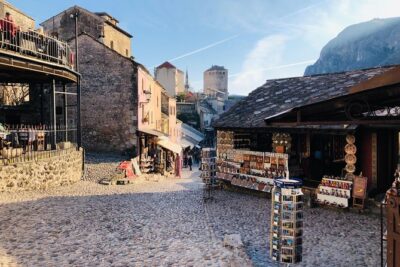
PROFESSIONAL SARAJEVO WALKING TOUR – With guide who guided STING!
Read our review →Browse the lists this tour appears in