
Reviewed · CYCLING TOURS
Sarajevo City SIghtseeing / War Bike Tour
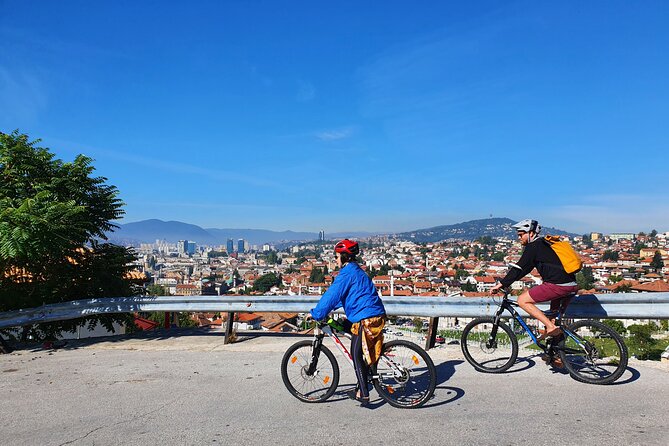
Sarajevo’s story makes the most sense when you move through it, from the Ottoman lanes of Baščaršija to the Sarajevo War Tunnel and the spring-fed park at Vrelo Bosne. This is not just a pedal past monuments. It connects the city’s daily life, imperial past, World War I, and 1990s siege in one long day.
I like the small maximum group of 10, which gives a local guide room to answer questions and adjust the pace. I also like that the bike covers far more ground than a standard walking tour, while the bike, helmet, Bosna spring admission, and Tunnel of Hope admission are included.
The main thing to consider is the distance. One account describes a ride of just over 25 miles, so this is a serious half-day outing rather than a gentle spin around the old town. You should be comfortable cycling for several hours, and the tour requires good weather.
Key points before you book
- A long ride with a broad view of Sarajevo: You combine central landmarks with the outskirts, rather than seeing only the compact old town.
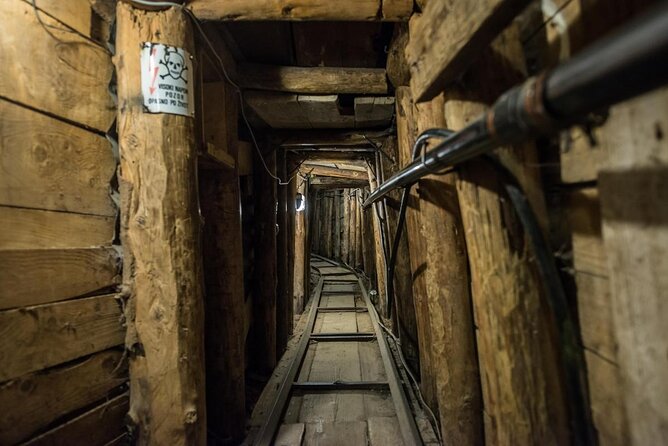
- The Tunnel of Hope is the emotional centerpiece: The museum explains how a tunnel linked Bosnian-held areas during the siege.
- Local guides shape the experience: Mustafa, Mirza, Said, Arna, and other guides are praised for clear storytelling, friendly communication, and useful local suggestions.
- The group is capped at 10 people: That is a good size for conversation without turning the ride into a private tour price.
- Two admissions are included: Your price covers Vrelo Bosne and the war tunnel museum, along with the bicycle and helmet.
- It begins and ends centrally: Meet at Obala Isa-bega Ishakovića 3 at 9:00 a.m., then return to the same point after roughly 6 to 7 hours.
Why a bicycle works so well in Sarajevo
Sarajevo’s central sights sit close together, but the Tunnel of Hope and Vrelo Bosne are outside the historic core. A walking tour can explain the city beautifully, yet it cannot cover this full range in one morning and afternoon.
The bicycle changes the scale of the day. You can begin among Ottoman shops and mosques, pass major buildings shaped by the Austro-Hungarian period and Yugoslavia, then reach places tied directly to the siege. That movement gives you useful context: Sarajevo is not a museum frozen around Baščaršija. It is a living capital whose neighborhoods and outskirts are part of the story.
The route is also a practical way to see more if you have limited time. The stated duration is about 6 to 7 hours, and one ride was just over 25 miles. That distance will suit you if you want an active day and prefer seeing a lot in one outing. If you want a short, easy introduction, a walking tour would be a better match.
The ride includes a bicycle and helmet. The group limit of 10 matters here. A bike tour needs more coordination than a stroll, and a smaller group makes it easier to hear the guide, stop together, and ask questions without losing the thread.
A few more Sarajevo trips to weigh up
- Trebevic Mountain Biking Tour from Sarajevo – Bobsleigh Track
★ 5.0 · 16 reviews - Skakavac Waterfall Mountain Biking Tour from Sarajevo MTB
★ 5.0 · 11 reviews - Sarajevo E-Bike City Tour
★ 5.0 · 3 reviews
Starting with Sebilj and the craft lanes
The day begins at Sebilj Brunnen, the famous wooden fountain in Baščaršija. Built in the 18th century, Sebilj is one of Sarajevo’s clearest visual symbols, with Ottoman design and a busy public setting of cobbled lanes, cafés, and shops.
The stop itself is brief, about five minutes, but it gives you an immediate sense of Sarajevo’s old commercial center. I would use this moment to orient yourself, listen for the guide’s explanation of the quarter, and notice how the fountain functions as a meeting point rather than simply a photo stop.
From here, the route passes along Kazandžiluk, one of the oldest streets in the bazaar. This narrow pedestrian lane is known for coppersmiths who still sell handmade objects such as coffee pots, trays, and jewelry. The work connects present-day shopping with the Ottoman craft tradition that shaped Baščaršija.
You may want to return here later, since the short stop does not leave much time for browsing. It is a good place to find a small souvenir, but the real value on the tour is seeing how a working craft street fits into the city’s older plan.
Vijećnica and the House of Spite
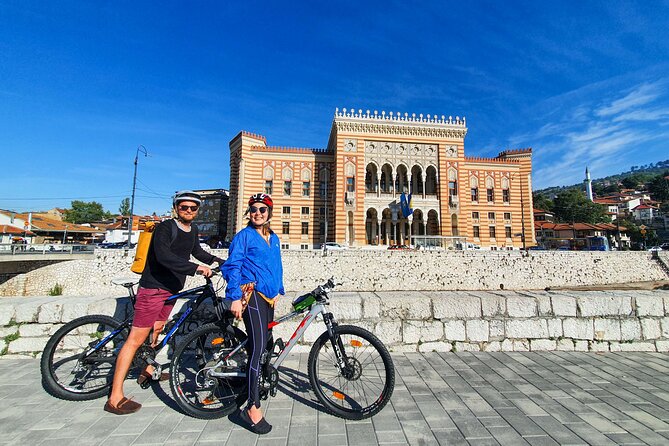
Sarajevo City Hall, known as Vijećnica, brings a different architectural chapter into view. Built in 1894 in the Moorish Revival style, it first served as the city hall and later housed the National Library.
The building was badly damaged during the Siege of Sarajevo and reopened after restoration in 2014. That history gives the exterior more weight than a quick architectural glance might suggest. You are looking at a public building that was damaged in the war and then repaired as a national monument and cultural venue.
Across the river, Inat Kuća, or the House of Spite, adds one of Sarajevo’s best local stories. Its owner refused to sell the house when authorities wanted the site for City Hall. The solution was to move the building, brick by brick, to the opposite bank.
Today the house is a restaurant serving Bosnian food. The tour only allows about five minutes here, so think of it as a story and orientation stop, not time for a meal. Still, it helps explain Sarajevo’s sense of humor and stubborn civic character better than a plaque would.
Latin Bridge and the city’s turning point
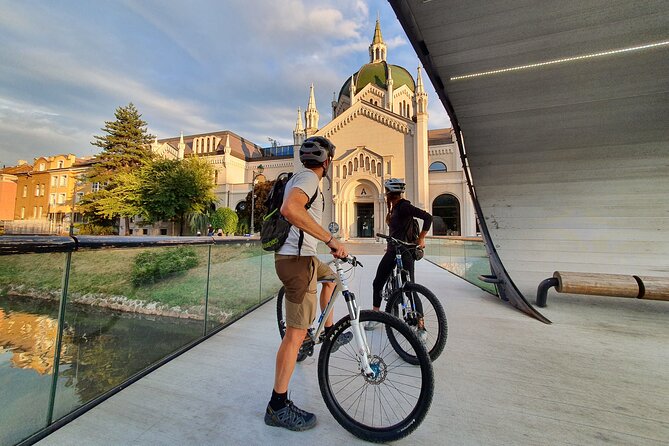
Latin Bridge is a small Ottoman bridge with world-changing associations. It is linked to the 1914 assassination of Archduke Franz Ferdinand, an event that helped trigger World War I.
The bridge itself is easy to see in a few minutes, but its importance rewards a little attention. Your guide can place the event within Sarajevo’s streets rather than leaving it as a distant date from a textbook. You stand in the setting where local politics, imperial power, and international tension collided.
This stop is another brief one, listed at about five minutes. If you want a detailed account of the assassination, you may need to ask questions or explore more afterward. The tour’s purpose is to connect many parts of Sarajevo in one day, so no single central sight receives a long museum-style visit.
Same country, a completely different kind of day:
- Sarajevo: Mostar, Konjic, Blagaj Tekke, Pocitelj & Waterfall
★ 4.9 · 1,666 reviews - Fall of Yugoslavia, Sarajevo War Tour with Tunnel of Hope Museum and Frontlines
★ 5.0 · 1,314 reviews - Sarajevo: Grand Walking Tour Through Time and Cultures
★ 4.8 · 1,236 reviews - Sarajevo: Mostar, Konjic, Sufi House, Pocitelj & Kravice Falls
★ 5.0 · 1,179 reviews
The mosque, market, and cathedral
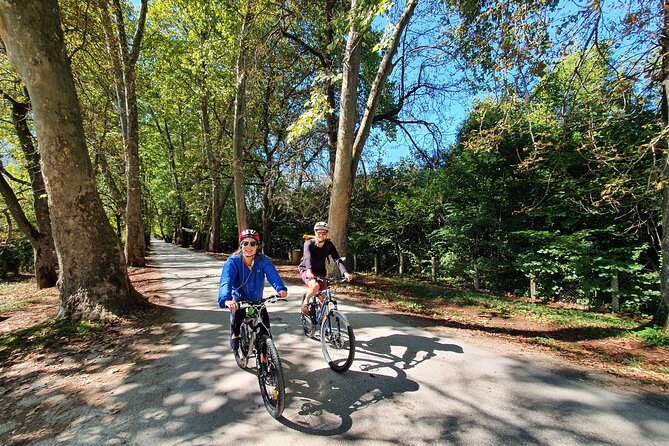
Gazi Husrev-beg Mosque is the largest mosque in Sarajevo and dates from 1530. It is a key marker of the city’s Ottoman past, and its architecture helps you understand why Baščaršija feels distinct from other European old towns.
Nearby, Gazi-Husrev Beg’s Bezistan is a covered 16th-century market built by the same Ottoman governor. Shops sit beneath arched arcades, making this a useful place to see how trade once operated in the old quarter.
The Sacred Heart Cathedral shifts the religious picture again. Built in the late 19th century, it is the largest cathedral in Bosnia and Herzegovina, with a Neo-Gothic design. Seeing the mosque, covered bazaar, and cathedral in one compact part of the city makes Sarajevo’s religious and cultural mix easier to grasp than a general statement about diversity.
Each of these stops is scheduled for about five minutes. I like the range, but you should set your expectations correctly. You will get a guided introduction and a chance to see each place, not a full interior tour or extended time for quiet reflection.
Modern Sarajevo and the road outward
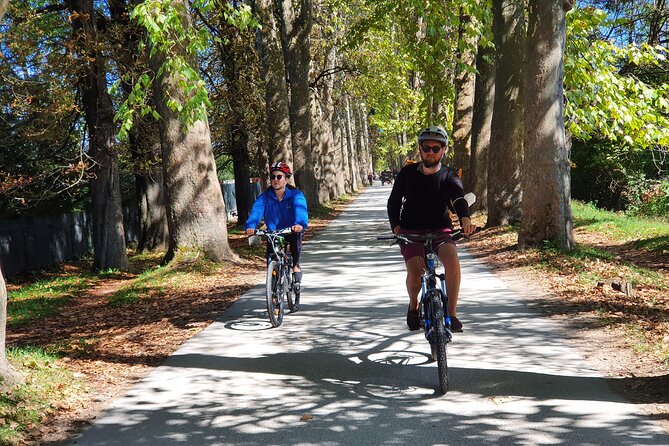
The Parliamentary Assembly building offers another change of mood. Constructed in 1982 and designed by Juraj Neidhardt, it represents Yugoslav modernism rather than Ottoman Sarajevo or Austro-Hungarian architecture.
The building was heavily damaged during the siege and later restored. Its inclusion makes the route more than a prettiest-sights tour. You see how the city’s 20th-century institutions were also caught in the conflict, and how Sarajevo contains several architectural eras within a relatively small urban area.
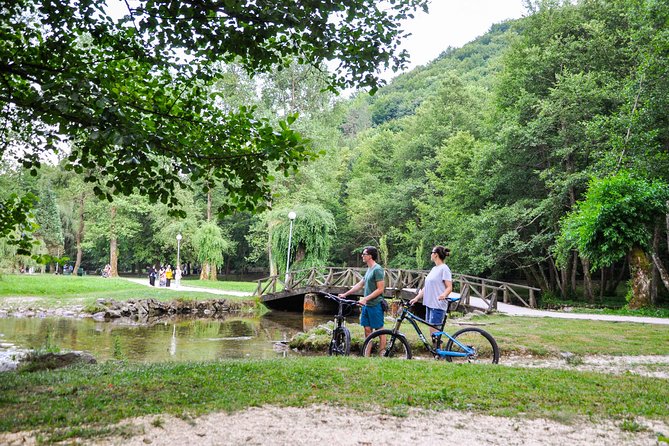
After the central sights, the ride reaches Vrelo Bosne, the public park at the foot of Mount Igman. This is where the day shifts from streets and buildings to the source of the River Bosna. The stop lasts about an hour, and admission is included.
That longer pause matters. After several quick city stops, you have time to slow down and enjoy a different side of Sarajevo. The park centers on the river’s spring and offers a calmer setting on the city’s outskirts. I would treat this as a breathing space before the more serious war history that follows.
The Tunnel of Hope and Sarajevo’s siege story
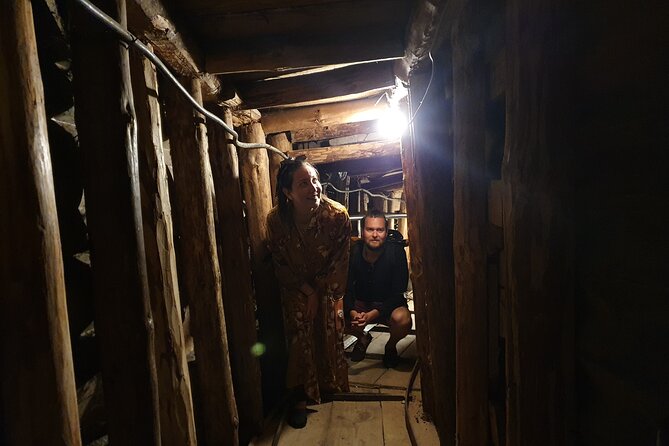
The Sarajevo War Tunnel is the tour’s most important stop. During the Bosnian War, the tunnel linked two Bosnian-held areas cut off by the Army of Republika Srpska. It provided a vital connection during the siege, when Sarajevo was surrounded and ordinary movement in and out of the city was severely restricted.
The included museum visit lasts about an hour. That is enough time for the site to carry real weight rather than becoming a rushed photo stop. The tunnel gives physical scale to the siege: you are not only hearing about blocked roads and isolation, but learning about the improvised route that helped connect people and supplies.
This part can be difficult, especially if you have little prior understanding of the Bosnian War. A strong guide is especially valuable here. Mustafa, Mirza, and Said are singled out in the feedback for combining clear explanations with an engaging manner, while Arna is praised for her command of Bosnian history and culture. Guide assignments can change, but the experience clearly depends heavily on who leads your group.
You should allow yourself to listen carefully and ask questions. The tunnel is not simply another attraction added to a sightseeing list. It explains why Sarajevo’s recent past remains present in its buildings, streets, and public memory.
What the guides add to the day
The best feature of this tour is not any single landmark. It is the local interpretation that ties the landmarks together.
Mustafa is praised for taking time with the city highlights and adding less obvious places along the way. Mirza is described as both informative and entertaining, a useful combination on a long ride. Said is noted for being charming and accommodating, which matters when a group has different cycling speeds or interests.
Arna’s strength is the old town’s culture and history, along with practical suggestions for places to eat, shop, and visit after the tour. That sort of advice can be more useful than another list of standard sights, especially if Sarajevo is part of a longer Bosnia and Herzegovina trip.
You should not expect a scripted lecture delivered without pause. The small group and local approach are designed for conversation. Ask about the war, the religious communities, the city’s food, or what to see next. The guides are the bridge between the route’s many stops.
Price, group size, and what you receive
The price is $138.34 per person. That is not the cheapest way to see central Sarajevo, but it covers a full 6 to 7 hours, bicycle use, helmet use, admission to Vrelo Bosne, and entry to the Tunnel of Hope museum.
The value depends on how you plan to spend your day. If you would otherwise book separate transport to the outskirts, pay for the two admissions, and arrange a guide, the package becomes more reasonable. You are also paying for a route that links places difficult to combine on foot.
The small group helps justify the cost. With no more than 10 people, you get a more personal outing than a large coach excursion. Group discounts are available, which may improve the price for a party traveling together.
The activity is offered in English. Confirmation is sent within 48 hours, subject to availability, and the starting point is near public transportation. The ride begins at 9:00 a.m. at Obala Isa-bega Ishakovića 3 and finishes back there.
The cancellation rule is useful but firm. You receive a full refund if you cancel at least 24 hours before the start time. Changes or cancellations inside that window are not refunded, and bad weather can lead to a new date or full refund. The tour also needs a minimum number of participants, so a cancellation for that reason comes with the option of another date, another experience, or a refund.
Who should book this Sarajevo bike tour?
I would choose this tour if you want a single day that explains Sarajevo across several eras and takes you beyond the old town. It suits active visitors who enjoy history, local stories, and a good amount of cycling.
It is especially useful early in a Sarajevo stay. The route gives you a mental map of Baščaršija, the river, the major public buildings, the outskirts, and the Tunnel of Hope. You can then return to the places that deserve more time.
You should think twice if you dislike long bike rides, need a slow sightseeing pace, or want extended indoor visits at each landmark. Most central stops last only about five minutes, and the route may reach 25 miles. The tour is active and broad rather than leisurely and highly detailed at every stop.
Should you book it?
Book the Sarajevo City Sightseeing and War Bike Tour if you want to cover a lot of ground, understand the city through a local guide, and see the Tunnel of Hope without arranging separate transport. The combination of Ottoman lanes, imperial architecture, Yugoslav modernism, Vrelo Bosne, and siege history gives you a useful first look at Sarajevo.
Skip it if you are looking for a short city-center outing or are not comfortable with a long ride. For everyone else, the included equipment and admissions, small group, English-language guiding, and strong guide lineup make this a well-rounded way to spend a full day in Sarajevo.
FAQ
How long does the Sarajevo City Sightseeing and War Bike Tour last?
The tour lasts approximately 6 to 7 hours.
What time and where does the tour begin?
It begins at 9:00 a.m. at Obala Isa-bega Ishakovića 3, Sarajevo 71000, Bosnia and Herzegovina.
Where does the tour finish?
The activity ends back at the meeting point.
Is bicycle equipment included?
Yes. Use of a bicycle and helmet is included in the tour price.
Are the admissions included?
Yes. Admission to Vrelo Bosne and the Sarajevo War Tunnel museum is included.
How many people can join the tour?
The maximum group size is 10 travelers.
What happens if the weather is poor?
The tour requires good weather. If it is canceled because of poor weather, you will be offered a different date or a full refund.
Just added around Sarajevo
- Sarajevo Under Siege: A War History Tour★ 5.0 · 10 reviews
- WAR TUNNEL – Sarajevo’s only way of a communication during the WAR – Top secret★ 5.0 · 12 reviews
- Private Full Day Safari Tour★ 5.0 · 8 reviews
- Ultimate Gastro Experience★ 4.5 · 14 reviews
- Mysterious Visoko Pyramids Driving and Walking Tour★ 5.0 · 7 reviews
- Secret Tito’s Bunker/Konjic Tour★ 5.0 · 4 reviews
- The Secret Lifeline: Sarajevo’s War Tunnel Tour★ 5.0 · 6 reviews
- Crossroads of Cultures – Sarajevo Walking Tour★ 5.0 · 8 reviews
Cycling Tours, compared.
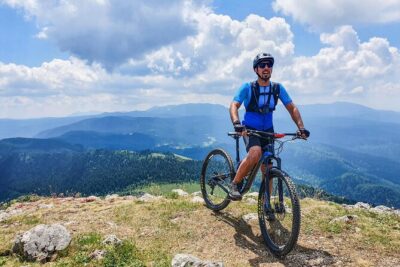
Trebevic Mountain Biking Tour from Sarajevo – Bobsleigh Track
Read our review →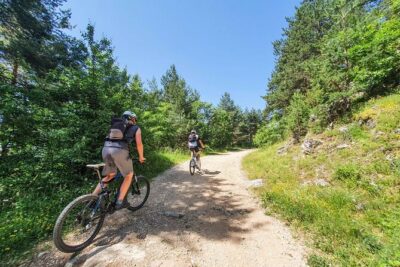
Skakavac Waterfall Mountain Biking Tour from Sarajevo MTB
Read our review →
Browse the lists this tour appears in