
Reviewed · SARAJEVO WAR TUNNEL TOURS
Fall of Yugoslavia, Sarajevo War Tour with Tunnel of Hope Museum and Frontlines
Sarajevo’s War Tunnel is the heart of this experience. For four years, the besieged city had one narrow route to the outside world, an 800-meter passage dug beneath the airport runway. You pair that sobering visit with Sniper Alley, Olympic sites, cemeteries, and mountain viewpoints that show how the siege shaped Sarajevo.
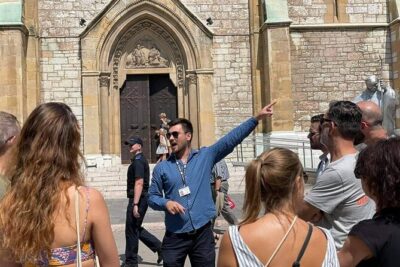
I like the way this tour connects places rather than treating the war as a museum display. I also like the personal touch: guides such as Ayoub, Almir, Emin, Ejub, Kristian, Tarik, Ago, and Zahmet have been praised for clear explanations and, in some cases, family memories of the conflict. The main drawback is emotional weight, and the Tunnel Museum entrance fee is extra.
Key points to know before booking
- The War Tunnel explains Sarajevo’s survival: Walk through a surviving section of the only land link into the surrounded city.
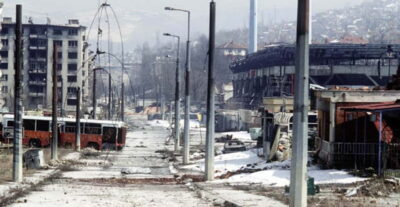
- Sniper Alley is seen from the vehicle: You pass the former Holiday Inn and war-damaged Yugoslav-era buildings along the notorious route.
- The 1984 Olympics add another layer: Visit the bobsleigh and luge track, now marked by war and time.
- Yellow Fortress gives you the best opening view: The guide sets the siege in context while pointing out Sarajevo and a defenders’ cemetery.
- Personal storytelling is a major strength: The guide and driver may add family or firsthand memories to the historical account.
- The tour is practical and fairly priced: About four hours, hotel pickup, transport, fuel, and water are included for $36.28 per person.
Why this Sarajevo war tour matters
This is not a general city sightseeing ride with a short war-history stop tacked on. The route is built around the fall of Yugoslavia and the Siege of Sarajevo, then uses the city itself as the evidence.
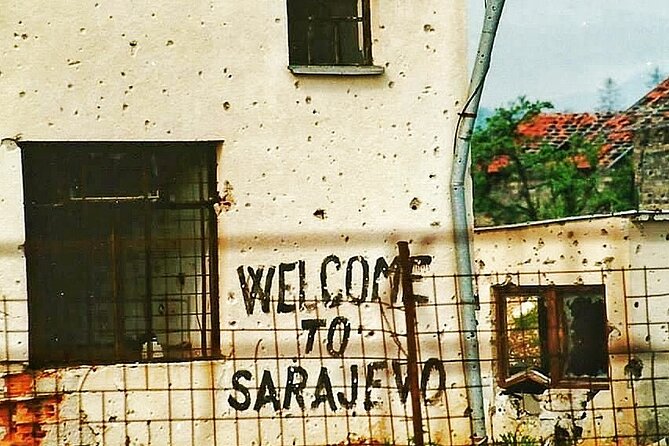
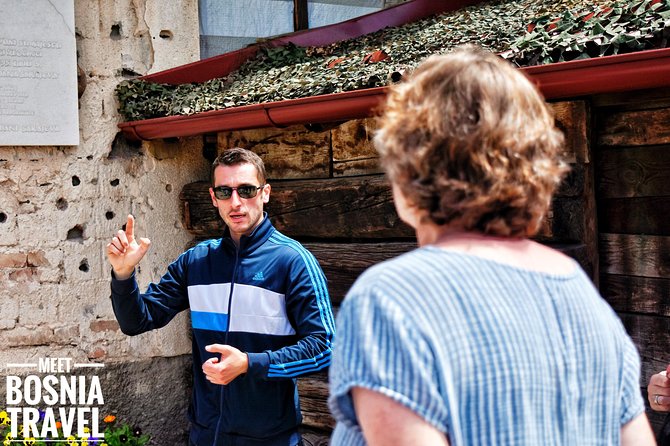
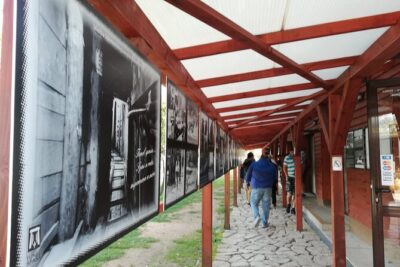
You see cemeteries on hillsides, buildings still marked by fighting, former Olympic facilities, military positions, and the route used by journalists and peacekeepers. The guide explains how the conflict began, what the siege meant for daily life, and how the city was cut off from the rest of the world.
I find that structure useful because Sarajevo’s recent past can be hard to grasp from dates alone. The drive gives you a map in your head. By the time you reach the tunnel, you understand why an underground passage could mean food, medicine, communication, and survival.
The subject is heavy. This is not the right choice if you want a light afternoon of cafés and postcard views. It is a good choice if you want to understand the city you are walking through, especially if the war is unfamiliar to you.
More sarajevo war tunnel tours in Sarajevo:
- Sarajevo: Tunnel Museum Yugoslavia War Tour with War Veteran
★ 5.0 · 1,111 reviews - Sarajevo: Tunnel of Hope Tour – Survival and Resilience
★ 4.8 · 630 reviews - Tunnel Museum: Bosnian & Yugoslav Wars Tour with War Veteran
★ 5.0 · 551 reviews
Yellow Fortress opens with Sarajevo from above
The tour begins at the Yellow Fortress, where you get a broad view across Sarajevo. This is a smart starting point because the city’s shape makes more sense from above. You can see the valley, the surrounding slopes, and the elevated ground from which the siege was directed.
Your guide introduces the Siege of Sarajevo here, rather than waiting until the museum. A defenders’ cemetery is visible from the fortress, bringing the discussion down from military strategy to the people who died protecting the city.
You have about 25 minutes at this stop, with admission included. That is enough time for the view, an introduction, and questions without letting the opening become a long lecture.
The fortress is also one of the better places to pause and orient yourself. If you are new to Sarajevo, I especially like doing this tour early in your visit. The vehicle route later takes you across much of the city, so you begin to recognize areas you may want to revisit on foot.
Olympic Sarajevo and places marked by loss
The route continues around the Olympic Complex, a reminder that Sarajevo hosted the Winter Olympics in 1984, less than a decade before the war. That contrast is one of the tour’s most striking themes. A city celebrated worldwide for sport later became known for siege, shelling, and sniper fire.
You pass the destroyed children’s hospital and the grave associated with Sarajevo’s Romeo and Juliet. The latter refers to the young couple whose deaths became one of the war’s most painful symbols. The stop is not presented as entertainment, and it should not be. It is a brief, human detail that helps show how the conflict affected ordinary families.
The Stadium Cemetery is another important stop. Sports grounds and nearby public spaces took on new roles during the siege, and cemeteries became part of the city’s daily view. Your guide can explain the setting and its place in Sarajevo’s wartime story.
Because several of these locations are viewed from the vehicle, the experience is not a series of long walks. That makes the route manageable in four hours, though you should expect some stops to be more observational than hands-on.
The War Tunnel Museum shows how Sarajevo stayed connected
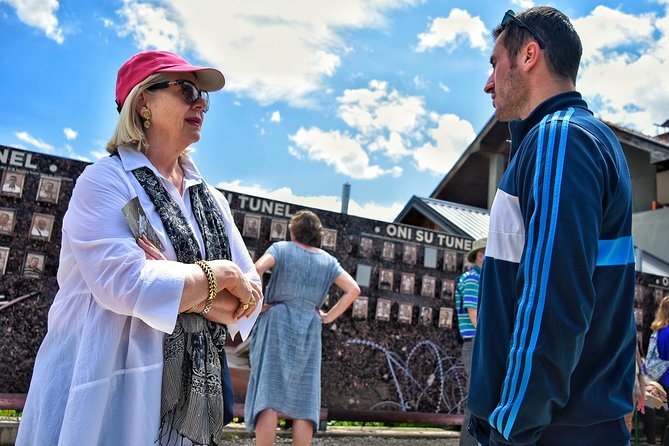
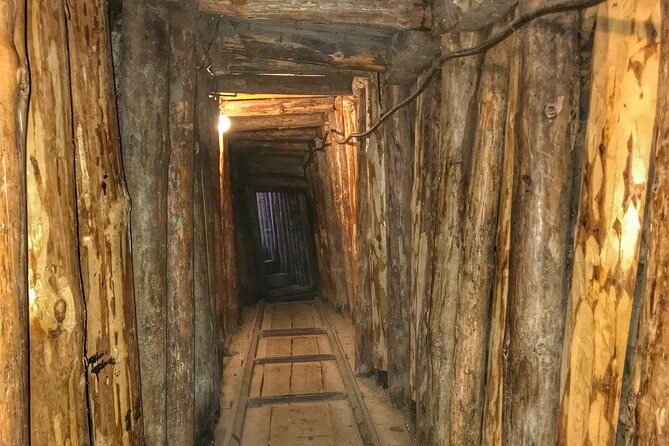
The Tunnel of Hope is the central visit. During the four-year siege, the tunnel served as Sarajevo’s only entrance to the outside world. It was about 800 meters long, running beneath the airport area and linking the surrounded city with territory beyond the blockade.
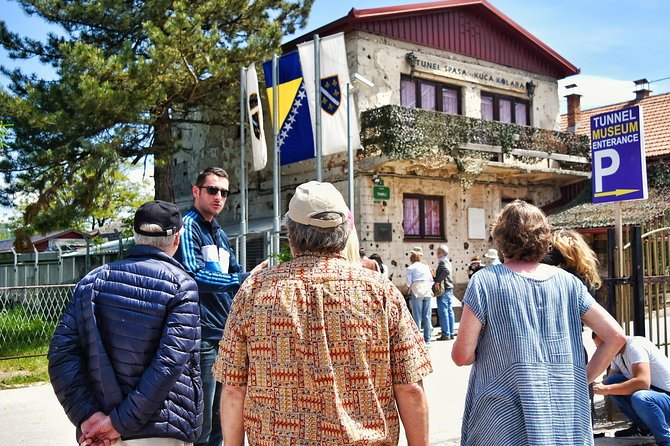
Today, the museum includes a section of the tunnel. You spend about an hour at the site, including the museum visit and the guide’s explanation. The preserved passage is modest and cramped, which is part of its force. You are not looking at a grand memorial hall. You are seeing a practical wartime route built under desperate conditions.
The tunnel helped move supplies and people in and out of Sarajevo. It also represents the city’s effort to keep functioning when normal roads were blocked or exposed. The guide’s explanation matters here because the physical space alone cannot tell you how the tunnel worked or why it became so important.
The adult entrance fee is 15 BAM. Students pay 5 BAM with a student ID. This cost is not included in the tour price, so carry enough local currency or confirm payment arrangements before setting out.
One hour is a useful amount of time. You get the main story and a chance to absorb the site without turning the museum into an all-day stop. The tunnel can be emotionally difficult, especially after seeing the hospital and cemeteries, so give yourself a little quiet time afterward.
More sarajevo siege tours in Sarajevo:
- Sarajevo: Bosnian War & Fall of Yugoslavia Tour with Tunnel
★ 4.9 · 398 reviews - Sarajevo War Tour: A Veteran’s Story of the Siege (fees included)
★ 5.0 · 326 reviews - Sarajevo: Srebrenica Genocide Study Tour with War Veteran
★ 5.0 · 263 reviews - Sarajevo: A Siege Story – The Tunnel of Hope Experience
★ 4.8 · 206 reviews
Sniper Alley and the former Holiday Inn
From the vehicle, you pass along Sniper Alley, the four-kilometer route once known as one of the most dangerous streets in Sarajevo. Snipers fired on people here during the siege, making ordinary movement through the city a deadly risk.
The former Holiday Inn is a key landmark. During the siege it served as a base for journalists and visiting United Nations peacekeepers. Its location along Sniper Alley made it a familiar image in international news coverage.
This part of the tour is less about entering a single attraction and more about seeing the city as a working historical site. Buildings from the Yugoslav period still show the effects of the war, and your guide points out details you could easily miss from a taxi or city bus.
Keep your expectations realistic. You are passing through the area rather than stopping at every damaged building. The value comes from the explanation and the connection between the street, the hotel, the hospital, and the wider siege.
Gavrilo Princip adds an earlier chapter
The tour passes the chapel associated with Gavrilo Princip, who assassinated Archduke Franz Ferdinand. That event in 1914 helped trigger the First World War, so this brief stop reaches back into an earlier period of Balkan and European history.
It is a useful counterpoint to the main subject. Sarajevo’s story did not begin in the 1990s, and the city has repeatedly found itself at the center of events far beyond its streets.
Do not expect a full Austro-Hungarian or First World War tour here. The chapel is a passing point within a route focused mainly on Yugoslavia, the breakup of the country, and the Siege of Sarajevo.
Trebević gives the tour room to breathe
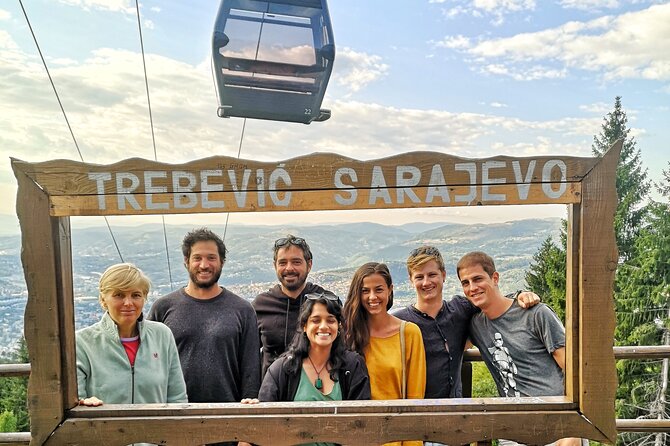
After the denser city stops, the vehicle climbs toward Trebević Mountain. At Trebević Vidikovac, you get another wide view over Sarajevo, with about 15 minutes at the viewpoint.
This is a valuable pause. The city looks peaceful from above, but the guide’s earlier explanations change what you see. Hills that appear scenic also formed part of the military setting around the valley. The view helps connect the scattered locations into one geographic picture.
A defenders’ cemetery is part of the mountain area and adds another solemn note. You may find the stop both beautiful and difficult, which is exactly why the pacing works. The tour does not leave you at the tunnel and immediately return you to ordinary sightseeing.
The viewpoint stop is short, so keep your camera and water ready. The tour includes bottled water, but food and other drinks are not included.
Walking the 1984 bobsleigh and luge track

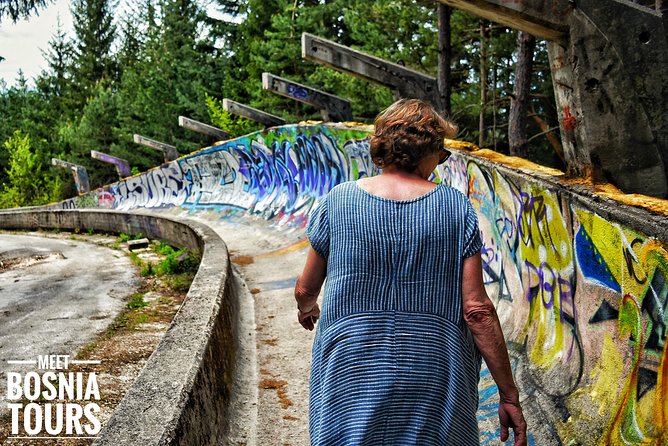
The Sarajevo Olympic bobsleigh and luge track is one of Trebević’s most unusual sights. Built for the 1984 Winter Olympics, it later became associated with the war and has weathered years of neglect.
You have about 20 minutes here, and admission is free. The track offers a change of mood from the cemeteries and tunnel. It also shows how an Olympic venue can take on a second life in the memory of a city.
The visit is mainly a walk and viewing stop, not a sporting activity. Wear shoes suitable for uneven ground, and do not expect a polished modern attraction. Its appeal lies in the contrast between its original purpose, its wartime setting, and its present condition.
One useful planning detail comes from the route’s position on Trebević. Some visitors have combined the bobsleigh stop with a cable-car ride down toward the old town, but that should not be treated as part of this included four-hour tour. Ask the operator if you want to plan extra time around it.
The guides make the difficult history easier to follow
The guides are a major part of the experience. The names assigned vary, but the tour has included Ayoub, Almir, Emin, Ejub, Kristian, Tarik, Ago, and Zahmet.
The strongest pattern is clear explanation. You hear about the causes of the war, the breakup of Yugoslavia, and the siege in language that is meant to be understood rather than admired for its complexity. That matters because this history contains political, ethnic, religious, and military details that can quickly become confusing.
Personal accounts can make the route more affecting. Almir has been praised for sharing his own memories, while Tarik has connected parts of the story to his father, who was a commander during the war. One driver was also described as having fought in the war at age 16.
Those details are not guaranteed with every departure, and you should not book expecting a particular guide. Still, they show the kind of human perspective that can accompany the formal history.
Several guides have also been praised for welcoming questions and keeping a steady pace. That is especially helpful here. You need time to listen, look outside, and process what you are hearing. The best version of this tour is not a flood of dates. It is a clear story with space for questions.
Transport, timing, and group size
The experience lasts about four hours and uses an air-conditioned vehicle. Hotel pickup is included, along with fuel and bottled water. Hotel drop-off is not included, and the tour ends back at the listed meeting point in central Sarajevo.
The starting address is Meet Bosnia Tours at Gazi Husrev begova 75, near the crossroads of Mula Mustafe Bašeskije. Check your booking confirmation for the exact meeting instructions.
The advertised maximum is 50 people, although the experience may operate with a smaller group. A small group makes it easier to hear the guide and ask questions, but you should not assume that every departure will be intimate.
The vehicle is important because the sites are spread across Sarajevo and Trebević. Doing this independently would require arranging transport between several distant places, and you would lose the steady explanation between stops.
The tour is offered in English. Most people can participate, and the meeting point is near public transport.
Is $36.28 good value?
At $36.28 per person, I consider this a strong value for a four-hour route covering the city, the tunnel area, Trebević, and Olympic sites. You are paying not only for transport, but also for a local guide who can explain how the places fit together.
The tunnel entrance is the one extra cost to plan for: 15 BAM for adults or 5 BAM for students with ID. Food and drinks are also extra, though water is supplied.
The price is particularly fair if you have limited time in Sarajevo. You cover more ground than you could comfortably walk, and you get a useful first orientation to the city. If you already know the siege in detail and prefer long museum visits, the short stops may feel less satisfying.
Free cancellation is available up to 24 hours before the start time. Changes or cancellations made less than 24 hours before departure are not accepted for a refund.
Who should book this tour?
I would choose this tour for a first visit to Sarajevo, especially if you want the city’s recent past explained before exploring on your own. It suits solo visitors, couples, families with older children, and anyone who wants a clear introduction without arranging several separate rides.
It is also a good fit for people who have heard of the Siege of Sarajevo but do not understand its setting. The route links the valley, the hills, the airport tunnel, the Olympic complex, and Sniper Alley in a way that makes the geography easier to follow.
You should think twice if war memorials are not your kind of sightseeing. The destroyed hospital, cemeteries, tunnel, and sniper route are not casual attractions. You will hear painful details and may find the personal stories hard to process.
Book it early in your stay if you can. The drive gives you a useful sense of Sarajevo’s layout, and you may spot places to return to later. The tour is often booked around three weeks ahead, so reserving early is sensible during busy periods.
Should you book the Fall of Yugoslavia Sarajevo War Tour?
Yes, if you want context rather than a checklist of sights. The War Tunnel is the main reason to go, but the cemeteries, Sniper Alley, Olympic track, and mountain views give that visit meaning.
The tour is well suited to a four-hour introduction. It is affordable, transport is handled for you, and the guides are praised for clear delivery, patience with questions, and personal insight. Just budget for the museum entrance and prepare for a serious afternoon.
If you want to understand Sarajevo, not simply photograph it, this is one of the most useful ways to begin.
FAQ
How long is the Fall of Yugoslavia Sarajevo War Tour?
The tour lasts approximately four hours.
What language is the tour offered in?
The tour is offered in English.
Is hotel pickup included?
Yes, hotel pickup is included.
Is hotel drop-off included?
No, hotel drop-off is not included. The activity ends back at the meeting point.
Where does the tour start?
It starts at Meet Bosnia Tours, Gazi Husrev begova 75, near the crossroads of Mula Mustafe Bašeskije in Sarajevo.
Is admission to the Tunnel Museum included?
No. The adult entrance fee is 15 BAM, and the student fee is 5 BAM with a valid student ID.
What is included in the tour price?
A professional local guide, hotel pickup, car transport, fuel surcharge, bottled water, and an air-conditioned vehicle are included.
What is not included?
The Tunnel Museum entrance fee, food, beverages other than water, and hotel drop-off are not included.
How many people can join the tour?
The maximum group size is 50 people.
Can I cancel for a full refund?
Yes, you can cancel at least 24 hours before the experience start time for a full refund. Cancellations or changes made less than 24 hours before the start are not accepted for a refund.
More Museums in Sarajevo
- Cable Car Olympic Tour With Museum
★ 5.0 · 17 reviews - SARAJEVO CONCEPTUAL ART TOUR (galleries, art and arhitecture)
★ 5.0 · 7 reviews - Sarajevo: A City Under Siege – War Tour With Tunnel Museum
★ 5.0 · 4 reviews
Just added around Sarajevo
- Sarajevo Under Siege: A War History Tour★ 5.0 · 10 reviews
- WAR TUNNEL – Sarajevo’s only way of a communication during the WAR – Top secret★ 5.0 · 12 reviews
- Private Full Day Safari Tour★ 5.0 · 8 reviews
- Ultimate Gastro Experience★ 4.5 · 14 reviews
- Mysterious Visoko Pyramids Driving and Walking Tour★ 5.0 · 7 reviews
- Secret Tito’s Bunker/Konjic Tour★ 5.0 · 4 reviews
- The Secret Lifeline: Sarajevo’s War Tunnel Tour★ 5.0 · 6 reviews
- Crossroads of Cultures – Sarajevo Walking Tour★ 5.0 · 8 reviews
Sarajevo War Tunnel Tours, compared.
Sarajevo Grand Tour: Old Town, War Tunnel, Olympic Sites & More
Read our review →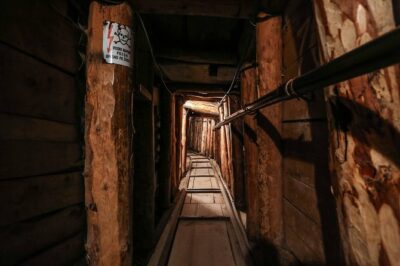
Times of Misfortune – Life Under Siege and the Tunnel of Hope
Read our review →
Sarajevo Grand Tour: 5 Hours Old Town, War Tunnel, Olympics
Read our review →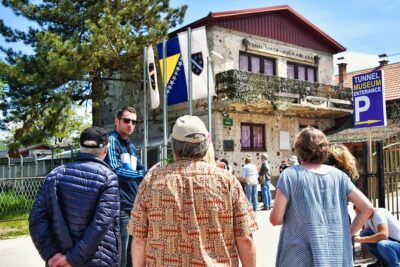
WAR TUNNEL – Sarajevo’s only way of a communication during the WAR – Top secret
Read our review →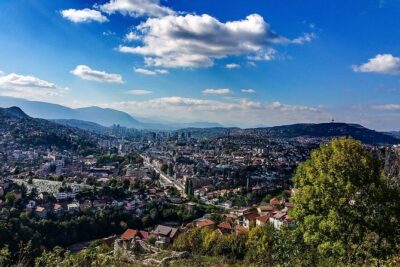
SARAJEVO SIEGE TIMES ’92-’95 / Sarajevo Roses & Tunnel of Hope /
Read our review →Browse the lists this tour appears in