
Reviewed · BOSNIAN COOKING CLASSES
Bosnian Cooking Lessons
Bosnian cooking is built for the table: stuffed vegetables, tender meat, rice, warm spices, and burek made from dough thin enough to see through. This four-hour class with Mersiha and Mustafa turns those dishes into a hands-on lesson in their Sarajevo home, with a panoramic city view and a shared dinner at the end.
I like the small maximum of 13 people, which keeps the class personal, and I like that the food is not just demonstrated. You help make it, including the tricky hand-stretched phyllo for burek. Wine, coffee, and soft drinks are included, too. The main thing to consider is the meeting point and lack of private transportation, so you need to plan your way to Skendera Kulenovića.
Key details before you book
- You make several Bosnian classics: Prepare sogan dolma, japrak, dolma, and burek rather than watching a single recipe from the sidelines.
- Mersiha leads the cooking: Her friendly, patient teaching style is especially helpful when you are working with delicate phyllo dough.
- The class takes place in a home: You get a more personal setting, with stories about growing up in Bosnia and time to ask questions.
- Wine is part of the lesson: Herzegovina wine is served alongside coffee, tea, soft drinks, and the meal you prepare.
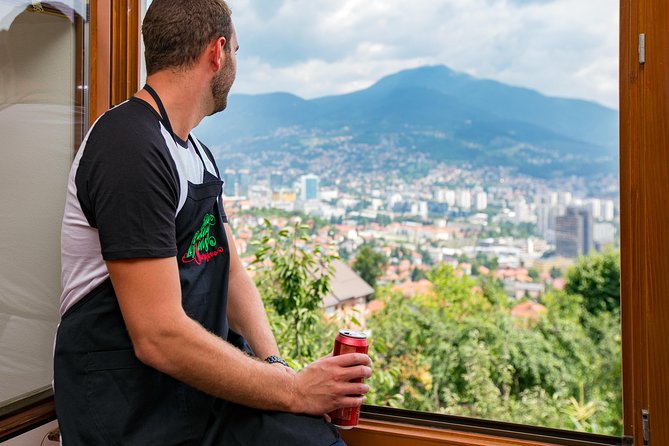
- The view adds to the afternoon: The home offers a broad panorama of Sarajevo, and some people choose to walk from the city center.
- Vegetarian and vegan choices need notice: Ask for these options when booking, not at the last minute.
Why this Sarajevo cooking class feels personal
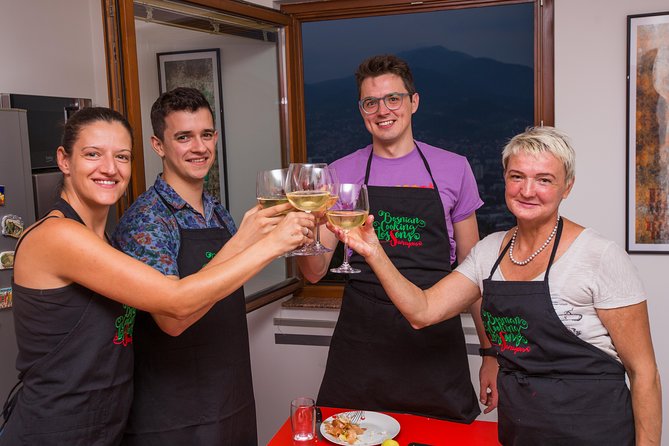
Many cooking classes take place in polished studios with spotless counters and a strict schedule. This one takes place in a private home, which changes the tone from lesson to social afternoon. You are welcomed with a drink, coffee, or tea, then introduced to the people who will guide you through the meal.
Mersiha is the main cooking teacher, and Mustafa helps create the warm, relaxed setting. Her mother may also be part of the welcome and meal, depending on the arrangement. You can expect conversation as you cook, not just instructions delivered across a worktable.
That home setting is one of the strongest reasons to choose this experience. You learn about Bosnian food while also hearing personal stories about life in Bosnia, growing up there, local activities, and practical matters such as bus travel. If you like meeting local people as much as you like eating, this is a strong fit.
The group limit is 13 people. That is not a private class, but it is still small enough for a chef guide to see what you are doing and help with the fiddly parts. Solo visitors are welcome. One solo participant found the warm attention and photos taken during the class especially helpful, since cooking alone can otherwise leave you with few pictures of the experience.
More bosnian cooking classes in Sarajevo:
- Experience Sarajevo: Bosnian Cooking Class
★ 5.0 · 3 reviews - Burek Masterclass: Roll, Bake, Eat
★ 4.9 · 91 reviews - Traditional Bosnian Cooking Class in Mostar with Lunch and Drinks
★ 5.0 · 16 reviews
Arriving for the 2:30 pm class
The class starts at 2:30 pm at Skendera Kulenovića, 71000 Sarajevo. The activity ends back at the meeting point, and private transportation is not included.
The location is worth considering before booking. One participant walked from Sarajevo city center in about 40 minutes and enjoyed the views along the way. That walk may suit you if you have time and comfortable shoes, but you should not treat it as a guaranteed transfer service. Plan your own route to the address.
On arrival, you receive a welcome drink, coffee, or tea. This gives you time to meet Mersiha and Mustafa before the cooking begins. The view over Sarajevo also helps set the mood. You are not simply being ushered into a kitchen and handed an apron. The first part is a chance to settle in, look out over the city, and get acquainted.
The activity lasts about four hours. With a 2:30 pm start, you should expect to spend the late afternoon and early evening there. Come ready for a full meal rather than a quick snack.
Part one: three kinds of stuffed vegetables
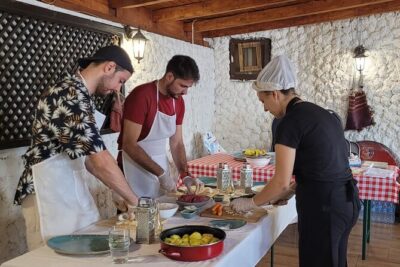
The first cooking section covers three dishes built around the same useful Bosnian idea: vegetables filled with minced meat, rice, and seasoning.
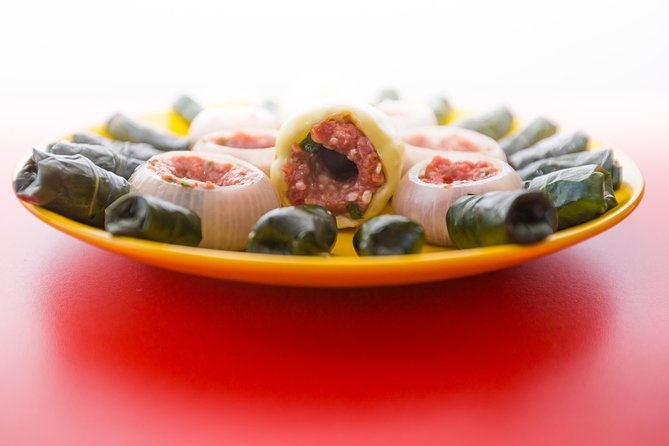
You begin with sogan dolma, onions stuffed with minced meat, rice, and spices. Onions are not the easiest vegetable to handle, so this is a good introduction to the care needed when preparing stuffed dishes. You learn how the layers are managed and how the filling is placed without tearing the vegetable.
Next comes japrak, made with mangel or spinach leaves rolled around the filling. This gives you a different wrapping method. The leaves are softer and more flexible than onion layers, and rolling them neatly takes a little practice. You learn the relationship between the leaf, the rice, and the meat, rather than treating the filling as a loose mixture.
The third dish is dolma, with paprika filled with minced meat, rice, and spices. The paprika provides a larger, sturdier container, so it is an approachable contrast to the onion and leafy rolls. Preparing all three helps you see how one family of dishes changes with the vegetable used.
This part of the class is valuable because it gives you several recipes that share a basic method. Once you understand the filling and the wrapping, you can apply the technique at home with different vegetables. You are not just collecting dishes. You are learning a pattern used in Bosnian home cooking.
The meal also has a clear seasonal element. The ingredients for the stuffed vegetables are familiar and practical, but the burek filling can change with the season. That makes the cooking feel connected to everyday food rather than fixed restaurant presentation.
Part two: the art of stretching burek dough
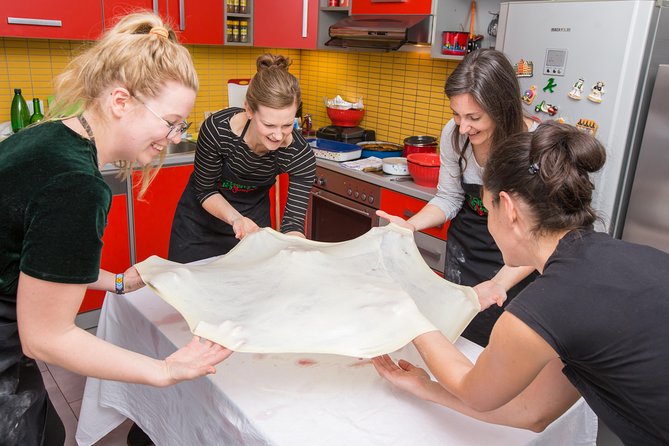
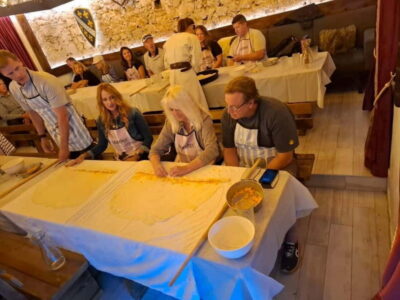
Burek is the class centerpiece for many people. The dish uses phyllo dough rolled and stretched around a filling, with potatoes, meat, or cheese depending on the season.
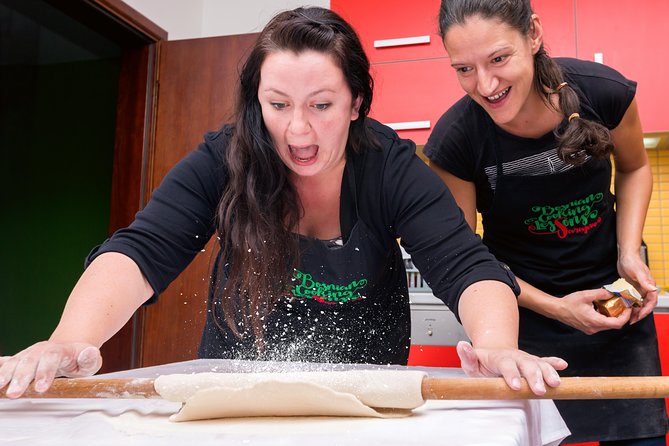
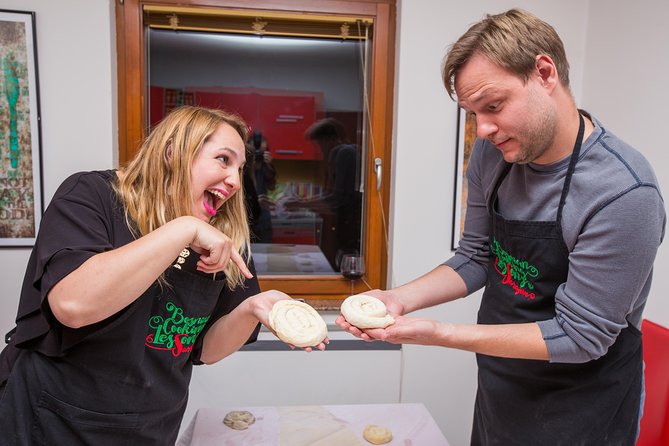
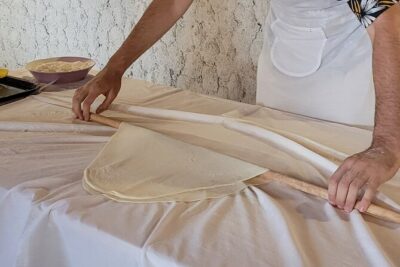
This is where you get your hands involved in a more demanding way. The dough must be handled gently and stretched very thin. The process can look simple when someone experienced does it, but your first attempt may be less graceful. That is part of the fun.
The class description makes a playful point about wine helping you relax before stretching the dough. Herzegovina wine is served as you cook, and the relaxed mood matters here. You need to be willing to handle the dough boldly without pulling it apart. A little patience helps more than perfection.
Mersiha’s teaching style suits this task. She explains the steps, answers questions, and guides your hands when you are too rough with the dough. English-language instruction is available in a clear, easy-to-follow style, which can help if English is not your first language.
You may prepare burek with meat, potatoes, or cheese, based on the season. The filling affects the final character of the pastry, but the real lesson is the dough. Once you see how thin it should become and how it is rolled, the flaky texture makes more sense. You return home with a better chance of understanding why restaurant burek has those delicate layers.
Burek is also the class’s best bit of culinary theater. The stuffed vegetables teach steady preparation. The dough asks you to take a risk. Expect flour, imperfect shapes, and plenty of laughter if your first roll looks more rustic than professional.
Same country, a completely different kind of day:
- Sarajevo: Mostar, Konjic, Blagaj Tekke, Pocitelj & Waterfall
★ 4.9 · 1,666 reviews - Fall of Yugoslavia, Sarajevo War Tour with Tunnel of Hope Museum and Frontlines
★ 5.0 · 1,314 reviews - Sarajevo: Grand Walking Tour Through Time and Cultures
★ 4.8 · 1,236 reviews - Sarajevo: Mostar, Konjic, Sufi House, Pocitelj & Kravice Falls
★ 5.0 · 1,179 reviews
Dinner with wine, coffee, and time to talk
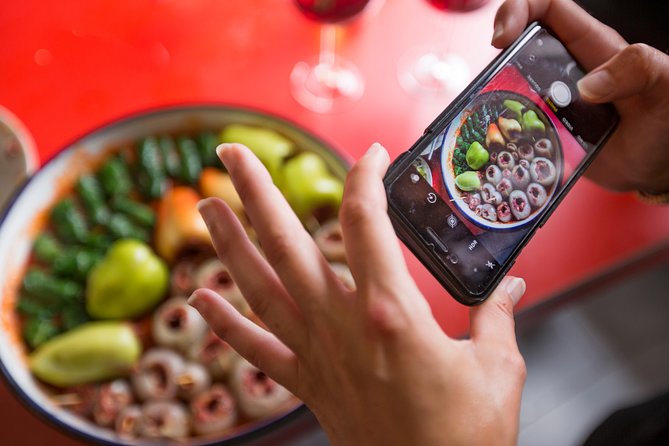
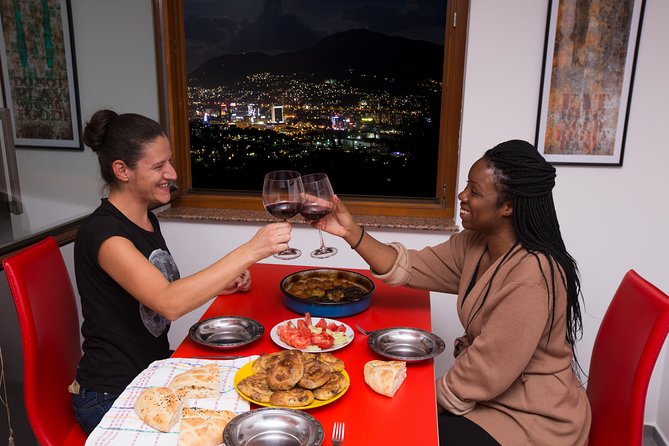
After cooking, you sit down to eat what you made together. Dinner is included, along with coffee or tea, soft drinks, and alcoholic beverages.
That final meal matters because you can taste the results while the techniques are still fresh. You have seen the filling go into the vegetables, handled the leaves, and worked with the dough. The food on your plate is connected to your own effort, not just something placed in front of you.
The drink service also makes the experience feel social rather than rushed. Wine from Herzegovina is a special touch, since the region is well known for quality wine and the class presents it as part of the meal. If you do not drink alcohol, coffee, tea, and soft drinks are included.
Allow plenty of time for questions after dinner. You can ask about ingredients, cooking methods, Bosnian food, family traditions, or places to visit in Sarajevo. This unhurried conversation is one of the better reasons to choose a home-based class instead of a quick commercial demonstration.
There is no promise of an elaborate restaurant menu. The appeal is different. You get generous, home-style dishes and the satisfaction of having helped prepare them.
Recipes you can use after Sarajevo
A cooking class is only a good value if you can remember what you learned. This one is particularly useful for home cooks because the recipes can be recreated after you return.
Recipes and step-by-step videos have been provided after the class, giving you a practical reference for the dishes. That is helpful with burek, where the dough technique can be hard to remember from a single afternoon. It also gives you a way to repeat the stuffed vegetables without relying on guesswork.
The dishes are well suited to sharing with family and friends. Sogan dolma, japrak, and dolma offer different shapes and textures, while burek makes a satisfying pastry for a meal or gathering. You do not need to reproduce every detail perfectly to bring the Bosnian idea into your own kitchen.
Ask questions while you have the chance. Find out how firmly to pack the rice and meat mixture, how thin to stretch the dough, and how the seasonal filling changes. Those small points often matter more than a printed ingredient list.
Price, group size, and overall value
The price is $96.79 per person for about four hours. That is more than the cost of a simple Sarajevo dinner, but the comparison is not quite fair. You are paying for a meal, instruction, drinks, a local home setting, and several recipes rather than only a plate of food.
The value is strongest if you enjoy active experiences. You take part in multiple dishes, eat dinner, hear personal stories, and leave with cooking material for later use. If you only want to sample Bosnian food, a restaurant will be cheaper and simpler.
A group of up to 13 people keeps the advertised price below many private cooking experiences. It also means the class may have a social feel. Solo visitors can join without needing to organize a group, while couples and friends have enough room to work together.
You should also count the time and cost of getting to the meeting point, since private transportation is not included. That is a minor concern, but it affects the real price of the afternoon.
The experience is booked an average of 21 days ahead. That suggests you should reserve early if your Sarajevo dates are fixed, especially during a busy season. Confirmation is normally received at booking, although reservations made within five hours of the start time are confirmed as soon as possible, subject to availability.
Who will enjoy this most
I would choose this class if you like food with a story and prefer meeting people in a home to sitting in a formal cooking school. It suits couples, families, small groups, solo visitors, and anyone who wants a relaxed afternoon away from the usual sightseeing route.
It is also a good choice for uncertain cooks. You do not need to arrive with advanced skills. The class includes direct guidance, and the challenge of burek becomes manageable when someone shows you how to handle the dough.
Vegetarians and vegans can take part, but you must request suitable options in advance. The listed recipes center on minced meat, so do not assume that a meat-free version will be ready unless you have arranged it.
This may be less suitable if you want a private lesson, a short activity, or a tightly scheduled food tour. The class is social and unhurried. Conversation and dinner are part of the point.
The class is also a nice choice after a more serious day in Sarajevo. One participant described arriving after visiting a Srebrenica exhibition and feeling shaken, then finding the hosts’ kindness and shared meal comforting. That does not make the class a substitute for thoughtful historical visits, but it shows the value of a warm human encounter during an emotionally heavy trip.
Booking and cancellation details
The experience has a mobile ticket, and confirmation is normally sent at the time of booking. The maximum group size is 13 people.
Free cancellation is available if you cancel at least 24 hours before the local start time. Cancellations or changes made less than 24 hours before the start are not accepted for a refund.
For vegan or vegetarian food, request the option when you book. For transportation, make your own arrangements to Skendera Kulenovića because private transfers are not included.
Should you book Bosnian Cooking Lessons?
Book it if you want to understand Bosnian food by making it, not just ordering it. The combination of stuffed vegetables, hand-stretched burek, Herzegovina wine, a home setting, and a panoramic view gives the afternoon real character.
I especially like the practical mix of recipes. You learn several dishes in one session, and the dough lesson gives you a memorable challenge to talk about afterward. Mersiha’s patient guidance and Mustafa’s welcoming presence also make this a good option for solo visitors and people who feel unsure about joining a class abroad.
Skip it if you only have time for a quick meal, dislike group activities, or need transport included. Otherwise, $96.79 buys much more than dinner. It buys an afternoon with useful cooking skills, local conversation, and food you can try to make again at home.
FAQ
Where does the Bosnian cooking class begin?
It begins at Skendera Kulenovića, 71000 Sarajevo, Bosnia and Herzegovina.
What time does the class start?
The class starts at 2:30 pm.
How long does the experience last?
It lasts approximately four hours.
What dishes will I prepare?
The class covers sogan dolma, japrak, dolma, and burek. The stuffed vegetables use minced meat, rice, and spices. Burek may use potato, meat, or cheese depending on the season.
Is dinner included?
Yes. Dinner made during the class is included.
Are drinks included?
Yes. Coffee or tea, soft drinks, and alcoholic beverages are included. Herzegovina wine is served during the experience.
Can I request vegetarian or vegan food?
Yes. Vegetarian and vegan options are available upon request. Make the request when booking.
How many people can join the class?
The maximum group size is 13 people.
Is private transportation included?
No. Private transportation is not included. You need to make your own way to the meeting point.
What is the cancellation policy?
You can cancel for a full refund up to 24 hours before the experience start time. Cancellations or changes made less than 24 hours before the start are not accepted for a refund.
More Workshops in Sarajevo
- Bosnian Traditional Handicraft, half-day – do it yourself – Coppersmith Workshop
★ 5.0 · 13 reviews - COPPER HANDICRAFT WORKSHOP (Make your own souvenir from Sarajevo)
★ 5.0 · 10 reviews - Jewelry Making Workshop in Mostar
★ 5.0 · 39 reviews
Just added around Sarajevo
- Sarajevo Under Siege: A War History Tour★ 5.0 · 10 reviews
- Private Full Day Safari Tour★ 5.0 · 8 reviews
- WAR TUNNEL – Sarajevo’s only way of a communication during the WAR – Top secret★ 5.0 · 12 reviews
- Ultimate Gastro Experience★ 4.5 · 14 reviews
- Mysterious Visoko Pyramids Driving and Walking Tour★ 5.0 · 7 reviews
- Secret Tito’s Bunker/Konjic Tour★ 5.0 · 4 reviews
- The Secret Lifeline: Sarajevo’s War Tunnel Tour★ 5.0 · 6 reviews
- Crossroads of Cultures – Sarajevo Walking Tour★ 5.0 · 8 reviews
Bosnian Cooking Classes, compared.
Traditional Bosnian Cooking Class in Mostar with Lunch and Drinks
Read our review →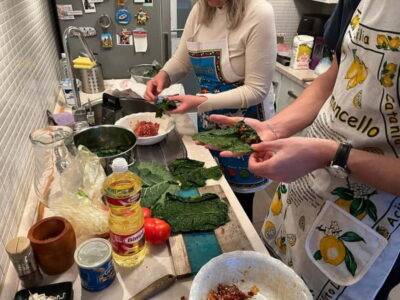
Browse the lists this tour appears in