
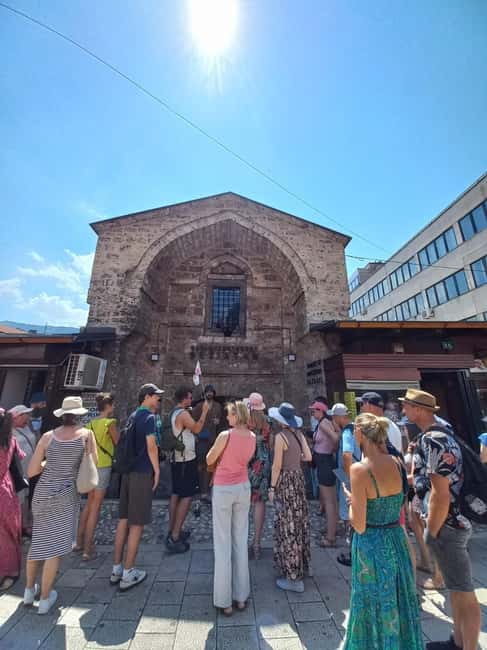
Reviewed · SARAJEVO TOURS
Sarajevo Old Town: Bosnian Coffee, Baklava & Panoramic Views
Sarajevo reveals itself best over a small copper coffee set, a piece of baklava, and a walk through streets shaped by Ottoman, Austro-Hungarian, and modern Balkan life. This tour connects those details with major sights, including the Latin Bridge, Gazi Husrev-beg Mosque, Sarajevo City Hall, and Baščaršija.
I like the local guide’s personal view of Sarajevo, especially when the conversation reaches the 1984 Winter Olympics, the assassination of Archduke Franz Ferdinand, and the city’s more recent wartime experience. I also like the pause for traditional Bosnian coffee, since it turns a sightseeing walk into a useful lesson in local custom.
The main consideration is the pace. You cover many landmarks in 150 minutes to three hours, with a moderate amount of walking and a final uphill or elevated viewpoint section possible. Comfortable shoes matter, and the exact amount of time may depend on questions, group size, and the guide.
Key points at a glance
- Bosnian coffee served the traditional way: Take a 20-minute café break and learn how this small ritual fits Sarajevo’s daily life.
- A walk through several faiths and eras: See the Orthodox Cathedral, Sacred Heart Cathedral, Emperor’s Mosque, and Gazi Husrev-beg Mosque.
- The Sarajevo story in one route: Move from the Eternal Flame and City Market Hall to the Latin Bridge, City Hall, and Baščaršija.
- A hands-on copper tradition: Visit Kazandžiluk, Sarajevo’s famous coppersmith street, and try copper crafting yourself.
- A personal guide rather than a basic audio script: Guides who have led this experience include Dijana, Daniella, and Amela.
- A panoramic finish: End near Sebilj after reaching a special viewpoint over Sarajevo.
Why this Sarajevo walk is more than a checklist
At $20 per person, this is priced as an affordable introduction to Sarajevo rather than an all-day cultural program. You get a live local guide, a walking route through the Old Town, Bosnian coffee, and a panoramic view without paying separate entry fees for the stops.
The real value is the connection between places. Sarajevo’s landmarks are close together, but the meaning can be easy to miss if you simply walk from one photo stop to the next. A guide can explain why a mosque, cathedral, market, bridge, and Austro-Hungarian building all sit within a compact area.
You should also expect conversation. The guides who have led this experience include Dijana, Daniella, and Amela. Feedback about them has especially praised their friendliness, clear explanations, and willingness to answer questions about architecture, food, customs, and war. Amela has also spoken personally about living through Sarajevo’s most recent war, which can give the city’s recent past a direct human voice.
That personal element is important here. Sarajevo is not only a pretty Old Town with cafés and souvenir shops. It is a city where major religious traditions meet, where an assassination changed world history, and where the memory of the 1984 Olympics sits alongside memories of conflict.
More bosnian coffee experiences in Sarajevo:
- Private Walking Tour, Food Tasting and Bosnian Coffee in Sarajevo
★ 5.0 · 255 reviews
Starting at the Eternal Flame
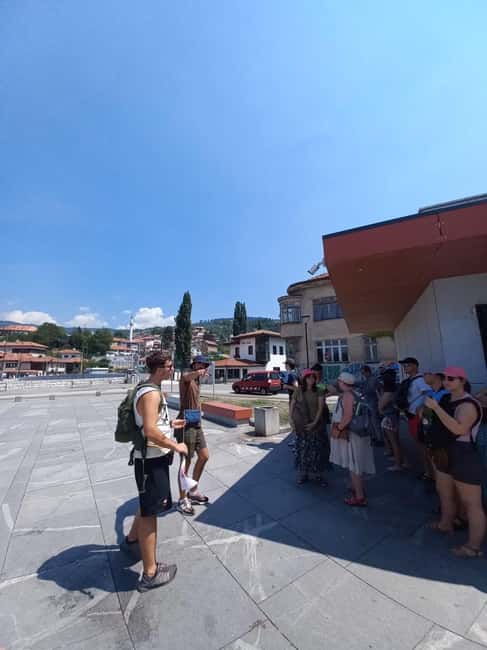
The meeting point is the Eternal Flame, or Vječna vatra, at 10 a.m. each day unless you arrange a private tour. Look for a guide wearing a Sarajevo Experiences T-shirt or holding a Sarajevo Experiences umbrella.
The monument is a fitting place to begin. It marks the central part of Sarajevo and gives the guide an early chance to explain the city’s 20th-century story. From here, you move toward the Old Town on foot.
If you book a private group, hotel or address pickup can be arranged at no extra charge. For the standard public departure, plan to arrive early enough to locate the guide without rushing.
From City Market Hall to Sarajevo’s churches
The City Market Hall, or Markale, brings the tour into everyday Sarajevo. It is a useful stop because the city’s story is not limited to grand buildings. Markets show how people shop, eat, meet, and carry on with ordinary life.
The route then reaches the Cathedral Church of the Nativity of the Theotokos, an important Orthodox landmark. You continue to the Sacred Heart Cathedral, a Catholic landmark whose presence helps explain Sarajevo’s mix of religious communities.
This section works well for anyone interested in architecture. You can compare different religious buildings within a short walk and ask your guide about their design, use, and place in the city. The focus is not simply on taking exterior photographs. It is on seeing how Sarajevo’s identity has been shaped by several communities living close together.
The tour also visits Sarajevo Meeting of Cultures. This point marks the change between the Austro-Hungarian part of the city and the Ottoman-style Old Town. It is one of the clearest visual ideas on the route: walk a short distance and the street feel changes.
That transition is one of the best reasons to take this tour early in your stay. Once you understand the division between the two sections, Sarajevo becomes easier to read on your own.
The Latin Bridge and the event that changed Europe
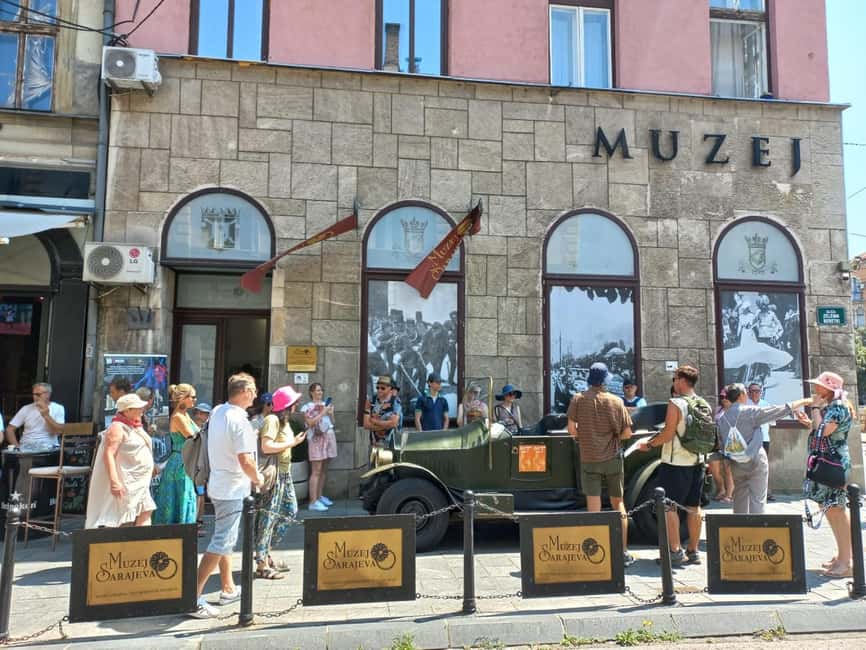
At the Latin Bridge, the guide explains the assassination of Archduke Franz Ferdinand and his wife, Sophie. The event took place in Sarajevo and helped set off the chain of events that led to World War I.
This stop is compact, but the subject is large. A guide can place the assassination into the surrounding city rather than treating it as a detached date in a textbook. You stand near the bridge, see the streets around it, and hear how one local event became part of world history.
The tour does not appear to include an indoor museum visit here, so you should think of the Latin Bridge as an explained outdoor stop. That keeps the walk moving, but anyone wanting detailed exhibits about World War I may need to visit a museum separately.
Same country, a completely different kind of day:
- Sarajevo: Mostar, Konjic, Blagaj Tekke, Pocitelj & Waterfall
★ 4.9 · 1,666 reviews - Fall of Yugoslavia, Sarajevo War Tour with Tunnel of Hope Museum and Frontlines
★ 5.0 · 1,314 reviews - Sarajevo: Grand Walking Tour Through Time and Cultures
★ 4.8 · 1,236 reviews - Sarajevo: Mostar, Konjic, Sufi House, Pocitelj & Kravice Falls
★ 5.0 · 1,179 reviews
Emperor’s Mosque and Gazi Husrev-beg Mosque
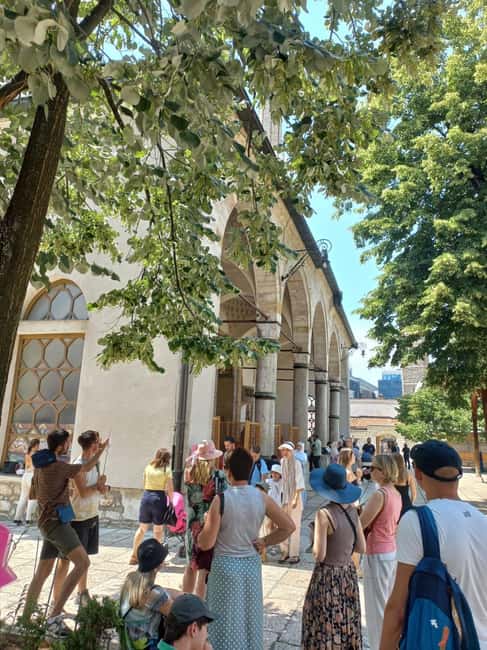
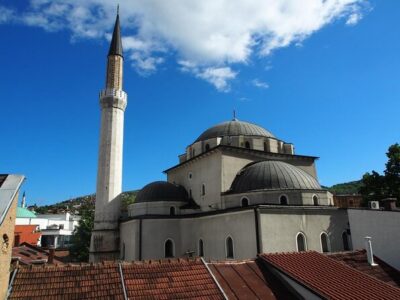
The route continues to the Emperor’s Mosque and Gazi Husrev-beg Mosque. Together, these stops show the importance of Sarajevo’s Ottoman period and the continuing role of Islamic culture in the city.
Gazi Husrev-beg Mosque is one of the major landmarks of the Old Town. The surrounding area helps you understand how religious buildings, commercial streets, courtyards, and cafés fit together. The Emperor’s Mosque adds another layer to the story and widens the view beyond a single famous building.
The walk is not built around long interior visits, and you should follow the guide’s instructions about access and respectful behavior. As with any religious site, clothing and conduct matter. The tour’s value here is the context: you learn how these places fit into Sarajevo’s urban and cultural life.
Morića Han and the Ottoman-era Old Town
Morića Han offers a change of mood from the larger religious landmarks. A han was a lodging and trading place, and this stop helps you picture the old commercial life of Sarajevo.
You then move through Baščaršija, the historic Ottoman-style center. This is where the walk begins to feel especially social. Narrow streets, small shops, cafés, craft workshops, and traditional sweets make the area a good place to slow down and look around.
Baščaršija can also be distracting. You may want to stop at every shop or take repeated photographs, but the tour has a set route and a final viewpoint still ahead. Save some browsing for after the walk if you want to give the guide your full attention.
Kazandžiluk and Sarajevo’s copper craft
Kazandžiluk is the copper-crafting street, and the tour explains a tradition that has been part of Sarajevo for about 500 years. This is one of the more distinctive stops because it connects history with a working craft.
You also get the chance to try copper crafting yourself. That hands-on moment gives the street more meaning than simply seeing finished coffee sets in shop windows. You can understand the care behind the objects used for Bosnian coffee and the skill required to shape them.
This is especially useful if you want to buy a souvenir with a local connection. The guide can help you understand what you are seeing, while the activity gives you a better sense of why copperware remains tied to Sarajevo’s identity.
Bosnian coffee, baklava, and a 20-minute pause
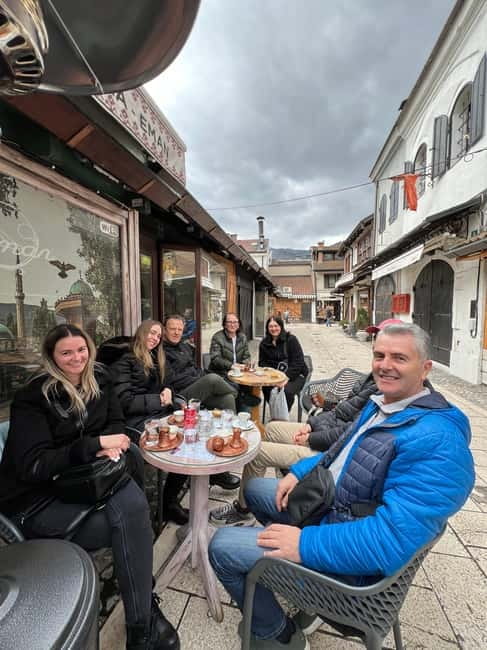
The café break lasts about 20 minutes and includes Bosnian coffee. Traditional sweets such as baklava are part of the experience described, so this is your chance to taste two familiar parts of Sarajevo’s food culture.
Bosnian coffee is usually prepared in a small copper pot called a džezva and served with a tiny cup, sugar, and often a sweet treat. The important point on this tour is not only the taste. Your guide shows you the traditional way it is prepared and served, and explains how the ritual fits local hospitality.
Do not expect a long meal. Twenty minutes is enough for a tasting and a short rest, but not for a full lunch or a leisurely café session. If you are hungry, plan another meal before or after the tour.
I like this pause because it breaks up the walking and gives you a natural chance to ask questions. It also turns the idea of hospitality into something you experience rather than merely hear about.
Sebilj and the final view over Sarajevo
The walk returns to Sebilj, the wooden fountain that is one of Baščaršija’s best-known meeting points. It is a practical end point because you finish in the heart of the Old Town, close to cafés, shops, and further sights.
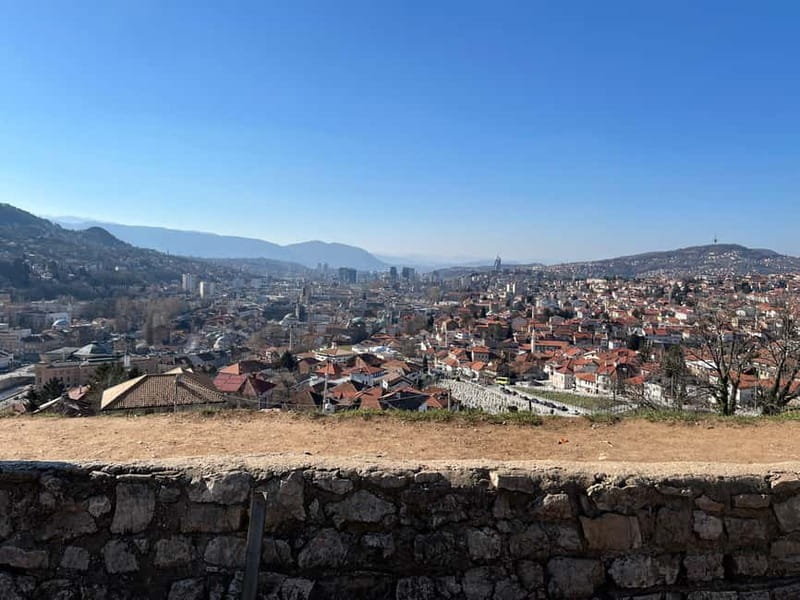
Before the tour ends, you visit a special viewpoint for a panoramic look at Sarajevo. The exact viewpoint is not specified, so you should not book this expecting a named fortress or a particular cable-car ride. What is clear is that the route includes a 15-minute scenic stop with a broad view over the city.
This final look helps tie together everything you have seen. From above, the relationship between the old center, surrounding hills, and wider urban area becomes easier to understand. It is also a good place for photographs, especially if the weather is clear.
The viewpoint may add effort to an already active walk. The tour is wheelchair accessible, but the listing still advises a moderate amount of walking, comfortable shoes, and clothing suited to the forecast. If you have mobility concerns, ask about the exact route and viewpoint before booking.
How the timing and price work for you
The advertised duration is 150 minutes to three hours. That is a wide range, but it makes sense for a walking tour with many stops. A group that asks lots of questions may take longer, while a faster private visit may finish closer to the shorter estimate.
The public tour meets at 10 a.m. Private groups can arrange another starting time and receive pickup at a hotel or agreed address. The live guide can conduct the tour in English, Croatian, Serbian, Serbo-Croatian, or Bosnian.
At $20, the price is strong if you want orientation, local context, coffee, and a city view in one outing. It is less suitable if your main goal is extensive indoor sightseeing, because the listed stops are primarily photo stops and guided walks rather than long museum visits.
You can cancel up to 24 hours before the start for a full refund, and you can reserve while paying later. Those options help if your Sarajevo plans depend on weather or a changing road trip schedule.
Who should book this experience
I would choose this tour for a first day in Sarajevo. The route covers the main Old Town sights and gives you enough context to return later to the places that interest you most.
It is also a good match for:
- First-time visitors who want a clear introduction to Sarajevo
- People interested in religious coexistence and architecture
- Anyone curious about the assassination of Franz Ferdinand
- Visitors who want a local explanation of the 1984 Olympics
- Food-focused visitors who want Bosnian coffee and traditional sweets
- Small private groups looking for pickup and a flexible start
- Travelers who enjoy asking questions rather than following a fixed script
You may want a different experience if you dislike walking, want a full meal, or prefer long visits inside museums and monuments. The route offers broad coverage, not deep time at each individual sight.
Practical advice before you go
Wear shoes you can comfortably walk in for up to three hours. Check the weather and dress accordingly, since much of the experience takes place outdoors.
Bring a little extra time after the tour for Baščaršija. The walk ends at Sebilj, so you can continue exploring the Old Town, return to a shop on Kazandžiluk, or find lunch nearby.
If you have strong interests in architecture, wartime Sarajevo, food, or religious history, tell your guide early. The guides associated with this experience, including Dijana, Daniella, and Amela, have been praised for answering questions across those subjects.
For a private booking, confirm your pickup address and preferred start time. For the regular tour, go to the Eternal Flame and look for the branded shirt or umbrella.
Should you book Sarajevo Old Town: Bosnian Coffee, Baklava and Panoramic Views?
Book it if you want one affordable walk that connects Sarajevo’s key sights with coffee, craft, food, and a view. The strongest feature is the human explanation of the city, especially for visitors who want to understand how different faiths, empires, wars, and daily customs meet in one compact center.
Skip it if you want a museum-heavy tour or a slow food crawl. For most first-time visitors, though, the combination of the Latin Bridge, religious landmarks, Kazandžiluk, Bosnian coffee, and the final panorama gives you a useful and enjoyable first look at Sarajevo.
FAQ
Where does the tour start?
The regular tour starts at the Eternal Flame monument, or Vječna vatra, in Sarajevo.
What time does the regular tour begin?
The regular tour meets every day at 10 a.m. Private tours may arrange a different starting time.
How long does the experience last?
The duration is listed as 150 minutes to three hours, depending on availability and the way the tour proceeds.
What is included in the price?
The price includes a guided walking tour, an English-speaking local expert guide, Bosnian coffee, and a panoramic view of Sarajevo.
Is Bosnian coffee included?
Yes. The experience includes a 20-minute café break with traditional Bosnian coffee.
Which languages are available?
Guided tours are available in Croatian, English, Serbian, Serbo-Croatian, and Bosnian.
Is the tour wheelchair accessible?
Yes, the activity is listed as wheelchair accessible. You should still be prepared for a moderate amount of walking and ask about the exact viewpoint route if needed.
Can I cancel the booking?
Yes. You can cancel up to 24 hours in advance for a full refund. You can also reserve now and pay later.
Just added around Sarajevo
- Sarajevo Under Siege: A War History Tour★ 5.0 · 10 reviews
- WAR TUNNEL – Sarajevo’s only way of a communication during the WAR – Top secret★ 5.0 · 12 reviews
- Private Full Day Safari Tour★ 5.0 · 8 reviews
- Ultimate Gastro Experience★ 4.5 · 14 reviews
- Mysterious Visoko Pyramids Driving and Walking Tour★ 5.0 · 7 reviews
- Secret Tito’s Bunker/Konjic Tour★ 5.0 · 4 reviews
- The Secret Lifeline: Sarajevo’s War Tunnel Tour★ 5.0 · 6 reviews
- Crossroads of Cultures – Sarajevo Walking Tour★ 5.0 · 8 reviews
Sarajevo Tours, compared.

Fall of Yugoslavia, Sarajevo War Tour with Tunnel of Hope Museum and Frontlines
Read our review →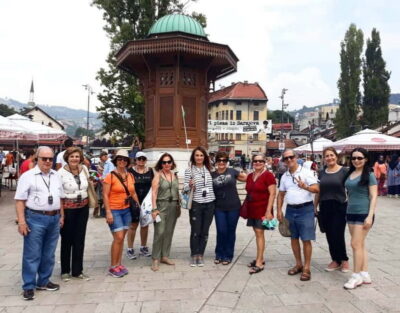
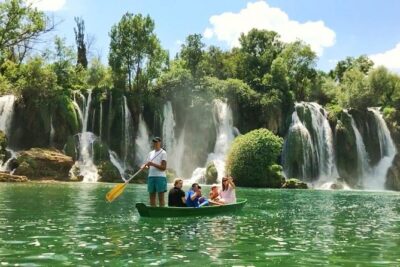
Mostar, Konjic, Sufi House, Pocitelj & Kravice Falls
Read our review →
Mostar, Konjic, Dervish House, Pocitelj & Kravica Falls
Read our review →
Bosnian War & Fall of Yugoslavia Tour with Tunnel
Read our review →Browse the lists this tour appears in