
Reviewed · PRIVATE DRIVERS
Sarajevo to/from Belgrade UNESCO Transfer Day Tour (Fees Incl.)
The most useful thing about this Sarajevo to Belgrade transfer is that it turns a long border crossing into a full day of culture, mountain roads, and memorable stops. Instead of spending the journey on a direct bus or in a plain car, you pass medieval tombstones, an Ottoman bridge, Serbian monasteries, film-set villages, a historic railway, and the Drina River.
I like the door-to-door pickup and drop-off, especially when you have luggage and are changing countries. I also like the mix of experiences: the short forest walk to Borak, the boat ride beneath Višegrad’s bridge, and the 45-minute Šargan Eight train journey give the day more variety than a standard sightseeing drive.
The catch is the 12 to 13-hour duration. Most of the road is on winding mountain routes rather than fast motorways, and the border crossing can add uncertainty. If you suffer from motion sickness or need to reach Belgrade early, this may feel like a very long day.
Key points to know before booking
- UNESCO-listed sights: See the Borak stećci necropolis and Mehmed Pasha Sokolović Bridge in Višegrad.
- Two included rides: Take a boat on the green Drina River and ride the narrow-gauge Šargan Eight railway.
- Door-to-door service: Pickup and drop-off are arranged at your chosen address in Sarajevo or Belgrade.
- Small group format: The vehicle carries a maximum of 15 people, with an English-speaking guide and driver.
- Mountain roads all day: Expect beautiful scenery, but also long stretches of twisty two-lane driving.
- Good value at $174.99: Admission fees, train, boat, taxes, transport, and guiding are included, but food and drinks are extra.
Why this transfer is more than a ride between two cities
Sarajevo and Belgrade are close enough to connect by road, yet the route between them passes through some of the most striking corners of eastern Bosnia and western Serbia. This is not the quickest way to cover the distance. It is the more interesting way.
The experience begins at 7:00 am and usually reaches Belgrade by about 8:00 pm. That timing leaves little room for a relaxed morning or evening, but it lets you visit places that would otherwise require several separate trips.
You travel in an air-conditioned vehicle with an English-speaking professional guide and driver. The group limit of 15 keeps the format smaller than a large coach excursion, although the exact vehicle and guide may vary. Guides named in past experiences include Enis, Tarik, Ajla, Annis, Zlata, Doris, Ajdin, and Amar.
The strongest part of the guiding is the regional context. You are not simply shown a bridge or a monastery, then hurried away. The stops connect Bosnia’s medieval and Ottoman past with Serbian Orthodox culture, Yugoslav cinema, railway engineering, and the difficult borderlands of the former Yugoslavia.
A few more Sarajevo trips to weigh up
- Sarajevo to/from Dubrovnik Transfer Tour via Mostar & Herzegovina
★ 5.0 · 115 reviews - Sarajevo to Belgrade: Transfer With East Bosnia Tour
★ 5.0 · 63 reviews - Sarajevo to Split (or opposite): Transfer With Herzegovina Tour
★ 5.0 · 28 reviews
The forest tombstones near Rogatica and Stjenice
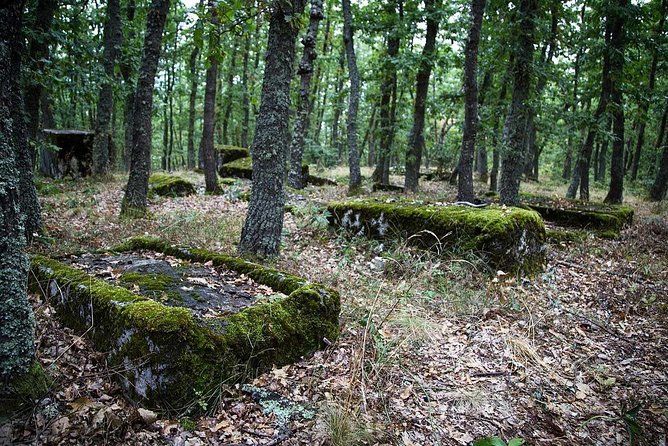
The first major stop is a medieval stećci necropolis near Rogatica. Stećci are large medieval stone tombstones found across Bosnia and Herzegovina and neighboring areas. Their shapes, carvings, and placement offer a glimpse into the medieval Bosnian Kingdom and local burial traditions.
The visit is free and lasts about 45 minutes. That sounds brief, but the stop works well early in the day because it gets you out of the vehicle before the longer drive toward Višegrad.
The next stop is Borak, near the village of Burati. It takes about 20 minutes of driving from Rogatica, followed by a short hike through dense forest. Allow roughly 30 minutes at the site.
This is one of the most unusual parts of the day. The necropolis is set away from the main road, and the forest setting gives the stones a quiet, almost forgotten feel. You should wear practical shoes, since the route includes a short walk rather than a vehicle drop-off directly beside the tombstones.
The UNESCO connection matters here, but the appeal is not just the label. You get a sense of how historic places in Bosnia can sit outside the usual sightseeing circuit. The site is simple, atmospheric, and not dressed up for mass tourism.
Višegrad’s bridge and the green Drina
After about an hour through the mountains, the road reaches Višegrad and the turquoise Drina River. The town’s best-known sight is the Mehmed Pasha Sokolović Bridge, completed in 1577 during the Ottoman period.
The bridge was designed by Mimar Sinan, one of the great Ottoman architects, and is recognized by UNESCO for its elegant proportions and monumental form. You have time to walk across it and see its stone arches from the river.
This is the historical heart of the tour. The bridge is also tied to Ivo Andrić’s novel The Bridge on the Drina. Reading the book before the trip is not essential, but it gives the town and bridge a stronger sense of place. Andrić was born in nearby Travnik and won the Nobel Prize in Literature, and his novel follows the bridge through changing eras and communities.
The included Drina boat cruise adds a welcome change of pace. The ride lasts about 5.5 EUR in listed value and takes you beneath or near the bridge, giving you views that are hard to get from the shore. The river is one of the day’s most attractive natural features, with steep hills and green water around Višegrad.
The cruise is short, so do not expect a long sightseeing voyage. Its value comes from breaking up the drive and showing the bridge from a different angle.
Andrićgrad, a modern town with an unusual identity
After the bridge and boat ride, you visit Andrićgrad, also called Andrić Town. It is a recently built stone complex dedicated to Ivo Andrić and created by filmmaker Emir Kusturica.
The site presents itself as a small town, with stone buildings, cafés, shops, a cinema, and an Orthodox church. It also reflects Kusturica’s interest in Yugoslav cinema and his film Life Is Miracle.
You only have about 15 minutes here, so think of it as a quick orientation stop rather than a full visit. The setting is interesting because it is neither an untouched historic quarter nor an ordinary modern shopping area. Some people will enjoy its theatrical style and film connection. Others may find it artificial or overly constructed.
That difference is worth knowing before you go. The bridge and Dobrun Monastery are genuine historic places. Andrićgrad is a modern interpretation of regional culture, and its appearance can feel unusual beside the older monuments.
Same country, a completely different kind of day:
- Sarajevo: Mostar, Konjic, Blagaj Tekke, Pocitelj & Waterfall
★ 4.9 · 1,666 reviews - Fall of Yugoslavia, Sarajevo War Tour with Tunnel of Hope Museum and Frontlines
★ 5.0 · 1,314 reviews - Sarajevo: Grand Walking Tour Through Time and Cultures
★ 4.8 · 1,236 reviews - Sarajevo: Mostar, Konjic, Sufi House, Pocitelj & Kravice Falls
★ 5.0 · 1,179 reviews
Dobrun Monastery and the Bosnia to Serbia crossing
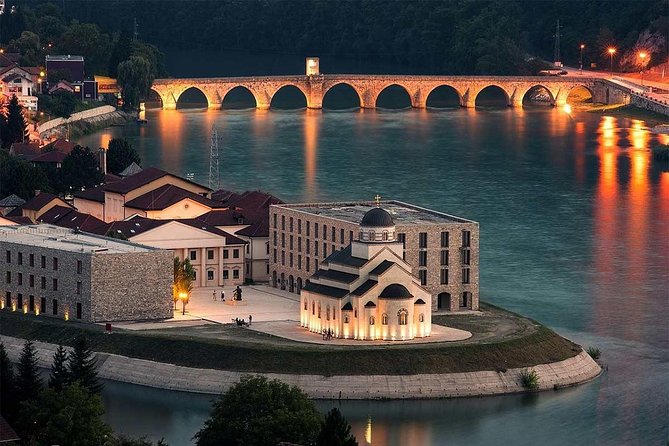
The route continues toward the border with a stop at Dobrun Monastery. Originally built in 1343, the Serbian Orthodox monastery is known for frescoes that have survived from earlier centuries.
The visit lasts about 20 minutes. It is a compact stop, but it gives the day a religious and artistic dimension that differs from the Ottoman bridge and medieval stećci. The natural setting around the monastery also makes the stop feel calm after the busy sequence in Višegrad.
You then cross from Bosnia and Herzegovina into Serbia. A valid current passport is required on the day of the tour. Border delays are difficult to predict, so you should avoid booking a flight, train, or fixed appointment in Belgrade soon after the expected 8:00 pm arrival.
The border crossing is also part of the experience. You see how the Drina region connects two countries while carrying different religious, political, and cultural associations. Guides such as Enis, Ajdin, Amar, and Zlata have been praised for explaining the history of Bosnia, Serbia, the Ottoman era, and Yugoslavia in a clear and personal way.
Drvengrad, film, and lunch in Mokra Gora
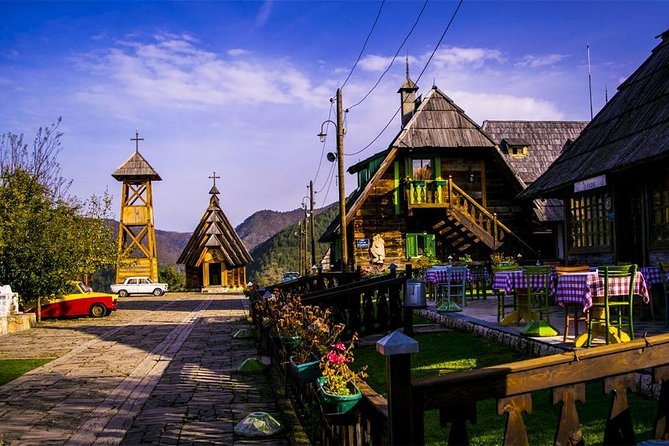
Once in Serbia, the road enters the Šargan-Mokra Gora nature area. The first stop is Drvengrad, also known as Timber Town, Küstendorf, or Mećavnik.
Emir Kusturica designed this wooden village for his film Life Is Miracle. Its architecture later received the Philippe Rotthier European Architecture Award from the Brussels Foundation for Architecture.
The village is deliberately stylized. Wooden buildings, lanes, and public spaces create a film-like setting rather than a traditional Serbian village preserved exactly as it was. That is what makes it worth seeing, but it is also why you should not mistake it for an old settlement.
You have about an hour here, usually with the option to eat lunch. Food and drinks are not included, so budget separately for the meal. One particularly useful detail is that the schedule can feel tight. An hour gives you time to look around and eat, but not necessarily time for a slow meal, shopping, and extensive photography.
The Serbian take on Balkan grilled meat, including čevapčići, is a practical lunch choice if it is available. Keep an eye on the departure time, since the train schedule and the remaining drive still have to fit into the day.
The Šargan Eight train ride
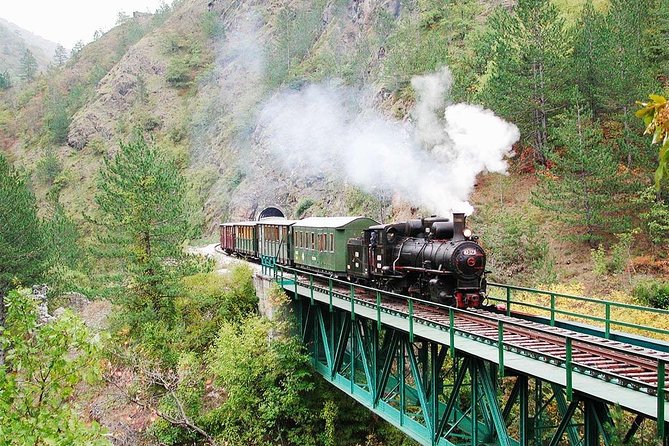
The Šargan Eight is the tour’s most distinctive transport experience. This narrow-gauge railway was built in 1925 and once linked Sarajevo and Belgrade. Its name comes from the shape of the track, which forms an eight when viewed from above.
The line climbs about 300 meters over a short distance of roughly 3.5 kilometers, using tunnels and bridges to manage the steep terrain. The restored tourist route now covers about 15.44 kilometers and passes through 22 tunnels and five bridges.
The included ride lasts about 45 minutes. The railway is historically fascinating, and it makes the transfer theme feel complete: you are following an old connection between the two cities rather than simply driving from one capital to the other.
Set your expectations correctly. Promotional images may show a steam locomotive, but the train can be pulled by a modern diesel-electric engine. Much of the ride runs through wooded country, so the views are not nonstop panoramas. If you love old railways, engineering, and the feel of a heritage line, you will likely enjoy it. If you want sweeping views from every window, the Banjska Stena viewpoint later in the day is the stronger stop.
Tara National Park and Banjska Stena
After the train, the route follows roads through Tara National Park. Declared a national park in 1981, Tara is known for biological variety, hiking areas, wildlife, and the rare Picea omorika spruce.
The drive itself is part of the appeal. You travel through wooded mountain country rather than spending the whole afternoon on a motorway. The tradeoff is time and comfort. These are winding roads with climbs and descents, and the trip can be tiring for anyone prone to motion sickness.
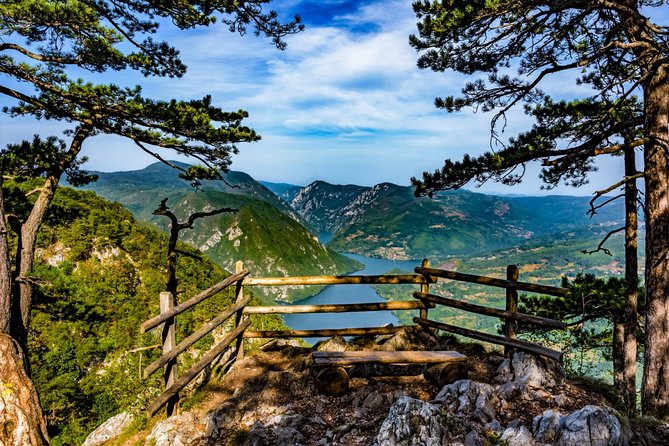
The main stop is Banjska Stena, a viewpoint above Perućac Lake. From here, you can see the lake and the Drina, which forms part of the natural border between Bosnia and Herzegovina and Serbia.
You have about 30 minutes at the viewpoint. That is enough for photographs and a short look around, but not for a serious hike. Wear shoes suitable for uneven ground, particularly if you want to move beyond the main viewing area.
This is one of the best places to appreciate the geography of the route. Earlier, you saw the Drina from water level in Višegrad. Here, you see the river system from above, framed by forest and steep hills.
Perućac Lake and the Drina River House
The road continues alongside Perućac Lake, an artificial lake formed by a dam on the Drina River. The drive offers another change in scenery, with the water visible between the wooded slopes.
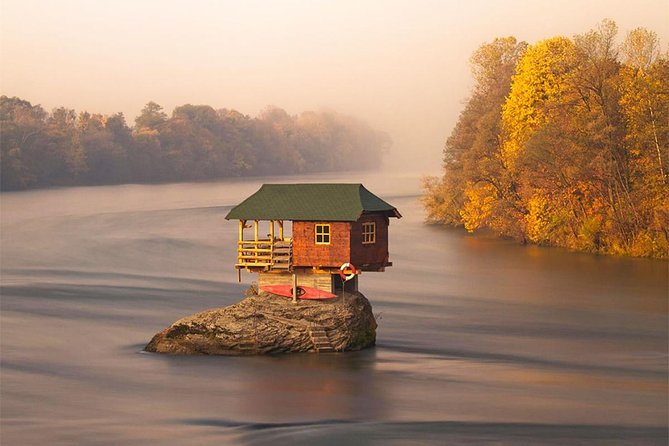
Near Bajina Bašta, the final short stop is the House on the Drina. This small structure sits on a rock in the middle of the river and has become one of the region’s most recognizable photo stops.
You have about 15 minutes there. It is not a museum visit or a long walk. It is a quick chance to see a memorable piece of local river culture and take photographs before the final drive.
From here, expect roughly three more hours to Belgrade. Traffic near the capital can delay arrival, even if the day has run on schedule. The door-to-door drop-off is particularly useful at this point, since you will likely be tired and still carrying luggage.
What the $174.99 price includes
At $174.99 per person, this is not a cheap transfer. It is also much more than a transfer.
The price includes an air-conditioned vehicle, professional English-speaking guide and driver, all listed admission fees and taxes, the Šargan Eight train ride, the Drina boat cruise, Drvengrad admission, and the Mokra Gora nature fee.
The included experiences have a listed value of about 19 to 21 EUR, depending on the nature fee. More important than the ticket savings is the time saved arranging several separate connections. You would need to coordinate border transport, local taxis, attraction tickets, and the railway on your own, and many of these stops are difficult to combine by public transport in one day.
Food and drinks are extra. Bring water and plan for lunch at Drvengrad or another arranged stop. The vehicle may stop for a short break if needed, but the schedule remains full.
The tour has a 4.9 rating from 54 submitted ratings and is recommended by 96 percent of customers. Those figures suggest strong consistency, especially in guiding, punctuality, vehicle comfort, and personal care. One person with a medical condition described the staff as flexible and considerate, but you should still explain any needs when booking rather than rely on last-minute changes.
Who should book this long mountain transfer
I would choose this tour if you want to connect Sarajevo and Belgrade while seeing the smaller places between them. It is a particularly good fit for first-time visitors to the region, history fans, railway enthusiasts, photographers, and anyone who dislikes losing a full day to a basic transfer.
It also suits you if you value door-to-door service. Pickup and drop-off are available at your chosen locations in either city, which removes the need to manage luggage through separate stations or terminals.
I would be more cautious if you need a relaxed pace. The day includes many stops, but most visits are short. You will see a lot, yet you will not have time to linger at every site.
Motion sickness is another real consideration. Several hours pass on twisty mountain roads, and one direct account specifically advised carrying motion-sickness medication. If your legs make the Banjska Stena walk difficult, the schedule may be adjusted, but ask about this before departure.
Free cancellation is available up to 24 hours before the start time. Changes or cancellations inside that window are not accepted for a refund.
Should you book the Sarajevo to Belgrade UNESCO transfer?
Book it if you want the journey itself to be one of your main Balkan experiences. The combination of stećci, Višegrad, the Drina cruise, Dobrun, Drvengrad, a heritage train, Tara, and the river house gives you a broad look at eastern Bosnia and western Serbia in one demanding day.
Skip it if your priority is speed, quiet, or a guaranteed early arrival. A direct transfer will be less tiring, but it will also leave you with far fewer memories between Sarajevo and Belgrade.
At $174.99, I see this as a good-value sightseeing transfer rather than a budget ride. The guides are central to the experience, and names such as Enis, Tarik, Ajla, Zlata, Ajdin, and Amar appear among the staff praised for clear stories, patience, safe driving, and good timing. If you can handle the long hours and mountain roads, this is one of the more rewarding ways to cross the Bosnia and Serbia border.
FAQ
How long does the Sarajevo to Belgrade transfer take?
The experience lasts approximately 12 to 13 hours. It starts at 7:00 am and is expected to reach Belgrade by about 8:00 pm, though traffic and border conditions can affect the arrival time.
Is hotel pickup and drop-off included?
Yes. Complimentary pickup and drop-off are offered at your chosen starting and ending addresses in Sarajevo or Belgrade.
Is the tour available in both directions?
Yes. You can travel from Sarajevo to Belgrade or from Belgrade to Sarajevo, with the same connecting door-to-door format.
What is included in the price?
The price includes transport in an air-conditioned vehicle, an English-speaking guide and driver, all fees and taxes, the Šargan Eight train ride, the Drina River boat cruise, Drvengrad admission, and the Mokra Gora nature fee.
Are food and drinks included?
No. Food and drinks are not included, so you should budget separately for lunch and refreshments.
Do I need a passport?
Yes. A current valid passport is required on the day of the tour because the route crosses the Bosnia and Herzegovina to Serbia border.
How many people can join the tour?
The maximum group size is 15 travelers. The tour is offered in English, and most people can participate. Service animals are allowed.
Just added around Sarajevo
- Sarajevo Under Siege: A War History Tour★ 5.0 · 10 reviews
- WAR TUNNEL – Sarajevo’s only way of a communication during the WAR – Top secret★ 5.0 · 12 reviews
- Private Full Day Safari Tour★ 5.0 · 8 reviews
- Ultimate Gastro Experience★ 4.5 · 14 reviews
- Mysterious Visoko Pyramids Driving and Walking Tour★ 5.0 · 7 reviews
- Secret Tito’s Bunker/Konjic Tour★ 5.0 · 4 reviews
- The Secret Lifeline: Sarajevo’s War Tunnel Tour★ 5.0 · 6 reviews
- Crossroads of Cultures – Sarajevo Walking Tour★ 5.0 · 8 reviews
Private Drivers, compared.
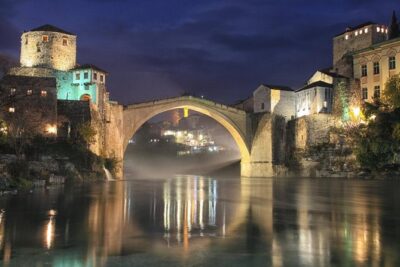
Sarajevo to/from Dubrovnik Transfer Tour via Mostar & Herzegovina
Read our review →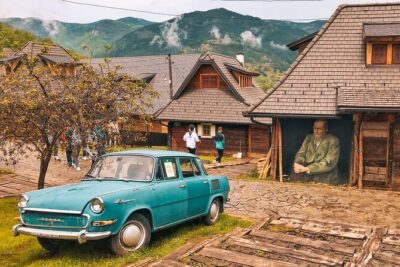
Sarajevo to Belgrade: Transfer With East Bosnia Tour
Read our review →
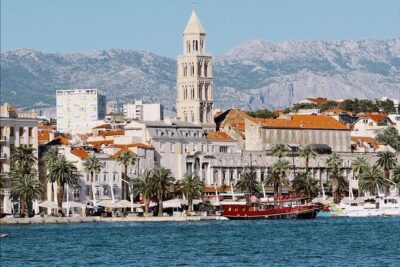
Sarajevo to Split (or opposite): Transfer With Herzegovina Tour
Read our review →
Transfer Mostar to Dubrovnik with Kravice Waterfalls, Blagaj and Počitelj tour
Read our review →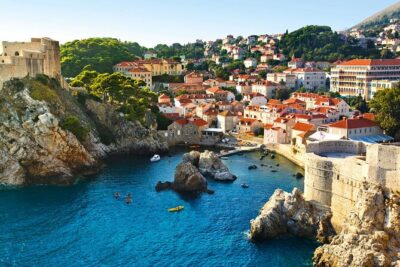
Sarajevo to Dubrovnik: Transfer With Herzegovina Tour
Read our review →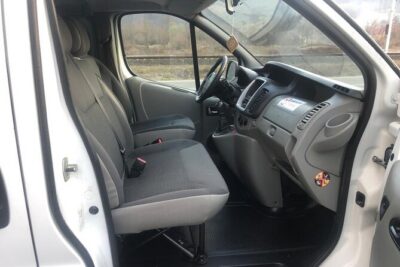
Transfer from Sarajevo to Kotor+Herzegovina tour
Read our review →Browse the lists this tour appears in