
Reviewed · TOURS
7 Days Balkan Tour Bosnia Croatia Montenegro Albania N.Macedonia
Sarajevo’s layered past sets the tone for this five-country Balkan journey. In one week, you move from Ottoman bazaars and World War I sites to the Siege of Sarajevo, Mostar’s famous bridge, Dubrovnik’s stone walls, Kotor Bay, Tirana, Lake Ohrid, and Skopje. It is a lot of ground, but the route gives you a strong first look at a complicated and rewarding corner of Europe.
I like the private format, since your group travels together in an air-conditioned vehicle and can ask questions without a busload of strangers listening in. I also like the mix of local guides and a dedicated driver or tour director. Edis, Elvis, and Zulfo are specifically praised for their stories, warmth, and ability to explain both centuries-old events and present-day Balkan life.
The catch is the pace. Several days include long drives, border crossings, and only a few hours in major cities. Summer heat and traffic can make the schedule harder, so May, September, or another cooler period may suit you better than July.
Key points to know before booking
- Five countries in seven days: Bosnia and Herzegovina, Croatia, Montenegro, Albania, and North Macedonia all appear on one compact route.
- Sarajevo gets the deepest treatment: You visit the old town, religious landmarks, Markale Market, and the Sarajevo War Tunnel.
- The best scenery comes by road: The route follows the Neretva Canyon, Jablanica Lake, and the coast toward Dubrovnik and Montenegro.
- Private transport matters: Your group has an air-conditioned vehicle and an English-speaking driver or guide rather than joining a large coach.
- Four-star hotels and breakfast are included: Six nights of accommodation and six breakfasts are covered, while lunch and dinner are your responsibility.
- Expect history with difficult subjects: The tour discusses the assassination that triggered World War I, the Siege of Sarajevo, communism, and the region’s ethnic conflicts.
Sarajevo begins with Ottoman streets and wartime memory
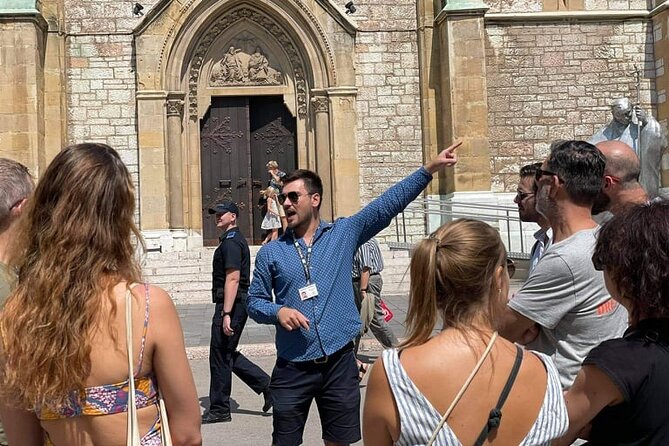
Your first day starts with pickup anywhere in Sarajevo, followed by a guided introduction to the old city. The route begins near City Hall and moves through craft streets toward Baščaršija Square and the Sebilj fountain, the wooden Ottoman-style drinking fountain that has become one of the city’s familiar symbols.
This is a good opening because Sarajevo is easiest to understand on foot. The compact center brings together Ottoman buildings, Austro-Hungarian architecture, and religious sites belonging to several communities. You will not simply see a mosque, cathedral, synagogue, and Orthodox church in separate parts of town. They appear within a short walk of one another.
The copper workshop adds a small but useful human detail. You can see how the old craft tradition remains part of the bazaar, rather than treating the Ottoman quarter as a museum set. The visit is brief, only about 15 minutes, but it gives the market streets more meaning.
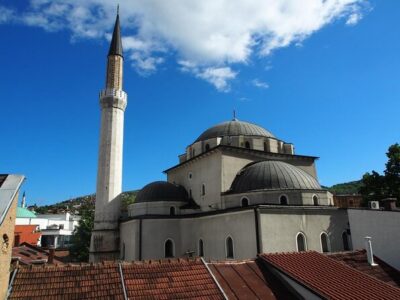
At Gazi Husrev-beg Mosque, your guide explains the 16th-century benefactor who spent much of his fortune on Sarajevo. His endowment included a mosque, school, caravan accommodation, and covered market. Entry is not included, so bring a little local currency or confirm the current fee if you want to go inside.
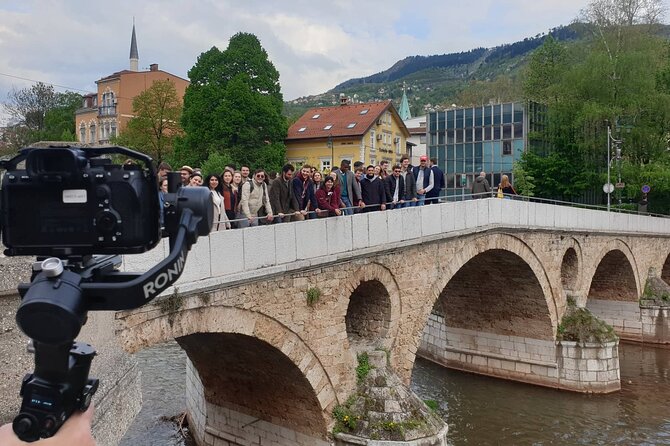
The stop at Latin Bridge turns the city into a European history classroom. Here you hear about the assassination of Archduke Franz Ferdinand, an event that helped trigger World War I. A short walk away, the former Jewish temple now houses the Jewish Museum of Bosnia and Herzegovina. The visit is listed as a short stop, and admission is not included.
The Catholic Cathedral, Markale Market, and Serbian Orthodox Cathedral complete the first day’s view of Sarajevo’s religious and civic life. Markale is especially sobering. The guide connects the marketplace to the Siege of Sarajevo, including the daily danger faced by ordinary people and the massacre that took place there.
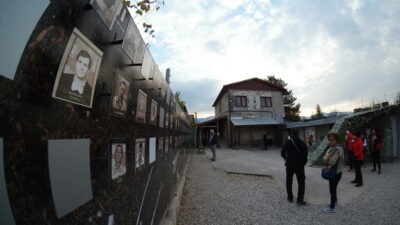
The day ends at the Sarajevo War Tunnel Museum. This is the most powerful stop for many people. During the siege, the tunnel provided a link to the outside world when the city was surrounded. The museum visit lasts about an hour, and admission is included. Give this stop your full attention. It explains the war in a way that maps and dates alone cannot.
Other Sarajevo days people book alongside this one:
- Sarajevo: Mostar, Konjic, Blagaj Tekke, Pocitelj & Waterfall
★ 4.9 · 1,666 reviews - Fall of Yugoslavia, Sarajevo War Tour with Tunnel of Hope Museum and Frontlines
★ 5.0 · 1,314 reviews - Sarajevo: Grand Walking Tour Through Time and Cultures
★ 4.8 · 1,236 reviews
Konjic and Mostar follow the Neretva south
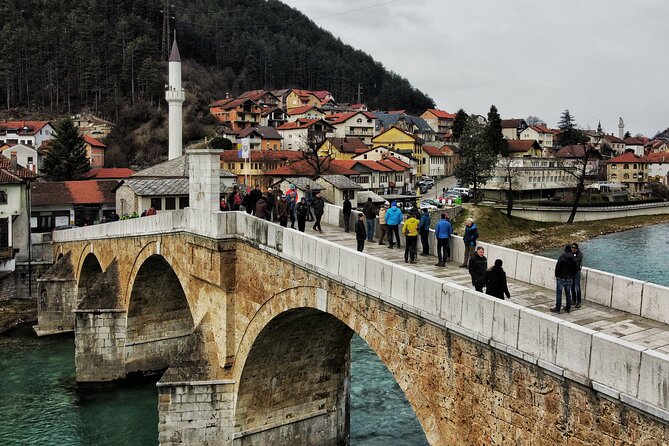
After breakfast, you leave Sarajevo for Herzegovina. The first stop is Konjic, about an hour away, where a stone Ottoman bridge crosses the Neretva River. The visit is short, but the bridge and river make a pleasant break before the road climbs and curves through the canyon.
The drive toward Mostar is one of the route’s scenic rewards. You pass Jablanica Lake and follow the Neretva Canyon. Since the road itself is part of the experience, try to sit where you can see out clearly, and keep your camera ready during stops.
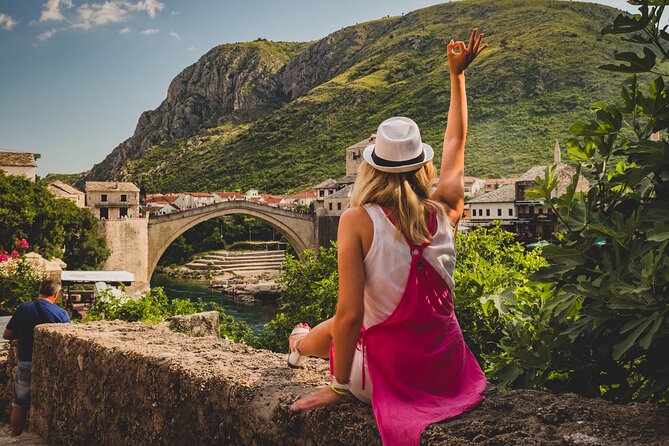
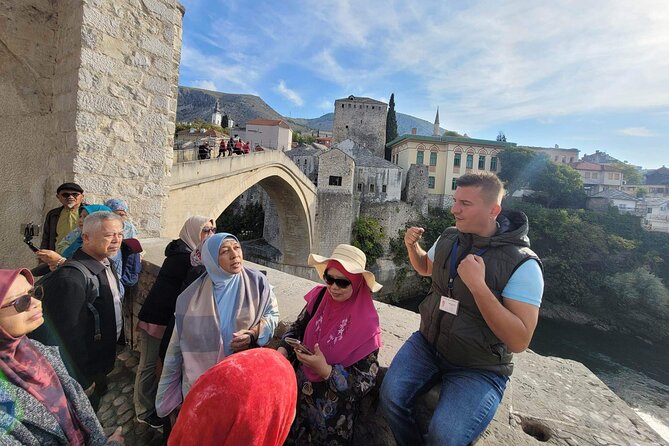
Mostar receives the rest of the day. A local guide leads you through the Ottoman bazaar, across the Crooked Bridge, and toward Stari Most, the celebrated Old Bridge. You see both riverbanks and visit Koski Mehmet Pasha Mosque. The old town is compact, but its polished stone streets can be tiring in hot weather, particularly when you climb toward viewpoints or mosque terraces.
Mostar is one of the places where a local guide adds real value. The bridge is beautiful, but its destruction and reconstruction also reflect the damage caused by the 1990s war. The tour gives you the setting and the history without reducing the city to a single tragic chapter.
You then check into your hotel, with the remainder of the day free. That free time is welcome after the drive and walking tour. It lets you return to a favorite street, sit by the river, or simply rest. The schedule does not promise a bridge jump or any other optional activity, so treat those as personal choices rather than included parts of the tour.
Blagaj, Počitelj, and Kravica Falls show Herzegovina’s softer side
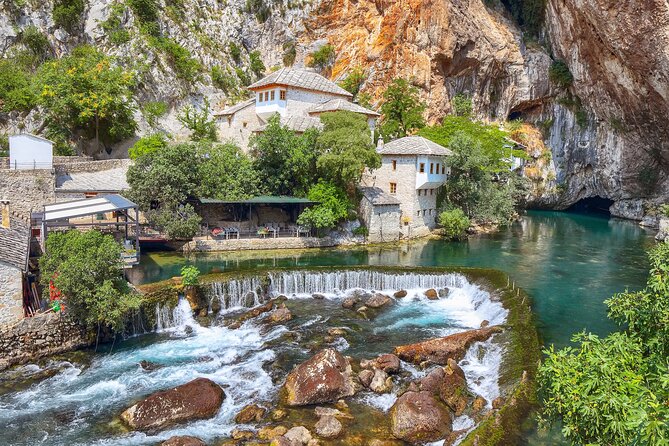
Day three leaves Mostar for Blagaj, a village known for the Buna River springs and a striking dervish house beside the water. The stop lasts about an hour. It offers a calmer contrast to Sarajevo’s war sites and Mostar’s crowded old town, with water, stone, and religious architecture in a small setting.
Next comes Počitelj, a medieval stone settlement. You stop for photographs and may climb toward the 16th-century fortress. The wording allows for the climb rather than guaranteeing it, so wear shoes that handle uneven stone and do not count on a long exploration if the day is hot.
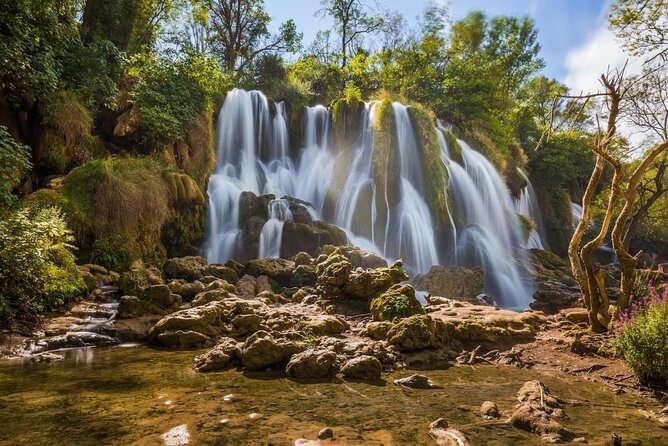
Kravica Falls gets two hours, making it one of the more relaxed outdoor stops. Admission is included. You have time to enjoy the falls and surrounding nature instead of making only a quick photograph stop. If you prefer city sightseeing to outdoor breaks, this will still be a welcome change of rhythm.
The night is spent in Neum, Bosnia and Herzegovina’s only coastal town. Neum is useful here as an overnight stop on the route toward Dubrovnik, not as a full beach holiday. The schedule gives you the night and free time, but it does not list a dedicated coastal excursion.
Dubrovnik and Kotor bring two famous old towns in one day
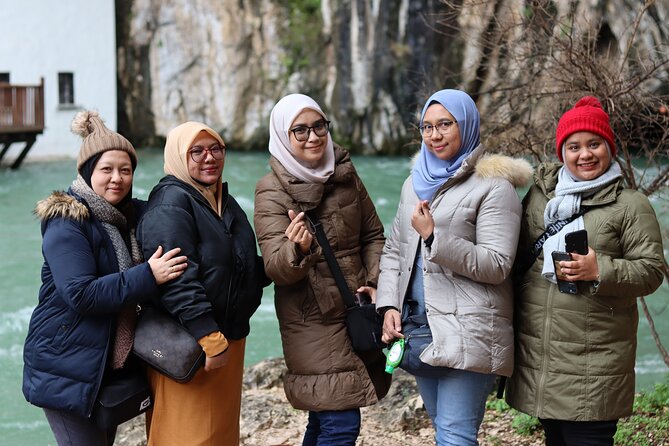
After breakfast, you check out and drive about 80 kilometers to Dubrovnik. A local guide leads you inside the fortified old town, then you have two hours to explore on your own before continuing into Montenegro.
Dubrovnik is a major attraction, so two hours of free time will feel short. The guided walk helps you understand the stone streets and walls quickly, but you will need to choose what matters most afterward. This is not enough time to see every corner at a leisurely pace, particularly if you want to walk the full city walls or visit several museums.
The route continues to Kotor, where another local guide leads you around the old town. You get free time before moving on to Budva. Kotor and Dubrovnik are both walled historic towns, but placing them on the same day gives you comparison rather than depth. Kotor’s setting and compact streets make a strong impression, yet the schedule leaves little room for a slow meal or a long climb.
Budva is a short ride away. You walk through the old town before checking into your hotel, then the evening is free. That free evening is valuable after a demanding sightseeing day. It also gives you a chance to eat dinner independently, since meals beyond the six included breakfasts are not part of the price.
Same country, a completely different kind of day:
- Sarajevo: Mostar, Konjic, Sufi House, Pocitelj & Kravice Falls
★ 5.0 · 1,179 reviews - Sarajevo: Tunnel Museum Yugoslavia War Tour with War Veteran
★ 5.0 · 1,111 reviews - ROSES OF SARAJEVO (Official WAR + CITY tour)- Story of a Survivor
★ 5.0 · 770 reviews - Sarajevo: Tunnel of Hope Tour – Survival and Resilience
★ 4.8 · 630 reviews
Shkoder and Tirana shift the mood in Albania
Day five crosses into Albania and visits Shkoder with a local guide. The town receives about three hours, giving you an introduction rather than a full survey. The border crossing is part of the day’s practical reality, and delays can affect how much time remains for sightseeing.
You then continue to Tirana. The city tour covers Skanderbeg Square, Ethem Bey Mosque, Mother Teresa Square, communist bunkers, and the Pyramid. These stops create a useful introduction to Albania’s changing identity, from Ottoman-era traces to communist architecture and modern civic spaces.
The communist bunkers and Pyramid are particularly helpful for seeing Tirana beyond the postcard version of the city. You are given context for the country’s recent past while still having time to notice its present-day streets and public squares.
After the guided visit, you check into your hotel and have the rest of the day free. As with the other overnight cities, the free time is not a second guided tour. You choose how to use it, and you pay separately for lunch, dinner, and personal purchases.
Ohrid offers a slower day beside the lake
After checkout, the vehicle heads toward Ohrid in North Macedonia. The journey takes about two hours, plus the border crossing. Ohrid gets roughly ten hours in the schedule, so this is one of the more generous city stops.
A local guide introduces the main promenade and the gates into the old town. The route includes a pearl shop, an old paper factory, and St. Sofia Monastery. These are specific, hands-on details that keep the visit from becoming only a walk past grand facades.
The remainder of the day is free and easy in Ohrid. That phrase matters. After several days of road travel and formal tours, you have room to set your own pace. You can spend time near the lake, revisit the old town, or simply rest before the final transfer to Skopje.
The tour information does not list a boat ride, swimming, or particular restaurant, so do not assume those are included. Ohrid is best treated as a chance to slow down within the structure of a busy multi-country route.
Skopje closes the journey with two sides of the Vardar
The final touring day drives about three hours from Ohrid to Skopje, with short stops along the way. In Skopje, a local guide walks with you through both sides of the Vardar River.
One side focuses on the Ottoman-influenced old town, bazaar, small shops, and restaurants. The other presents Macedonian national symbols and Alexander the Great references. Seeing both areas together helps you notice the city’s sharp contrasts rather than treating it as one uniform center.
The guided visit lasts about three hours. At the end, you are transferred to your accommodation or airport, depending on your plans. The service ends there, so arrange any later sightseeing, airport timing, or extra nights separately.
What the $2,013.49 price really covers
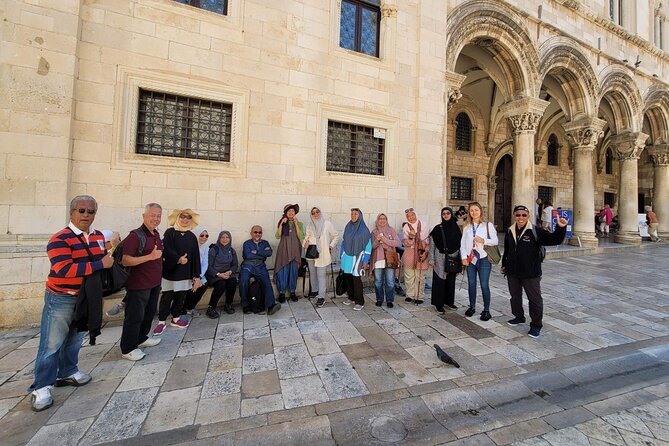
At $2,013.49 per person, this is not a budget hop between Balkan capitals. The value comes from what is bundled: six nights in four-star hotels, six breakfasts, private transport, an English-speaking driver or guide, local guides, entrance fees where stated, and taxes.
The private vehicle is the biggest practical advantage. You avoid arranging five-country transport yourself, and your group can travel with the same driver across a complicated route. Airport pickup and pickup from any location in Sarajevo are also included as conveniences.
Still, the price does not cover lunch or dinner. You should budget for twelve main meals at minimum, along with drinks, mosque or museum admissions not included in the itinerary, and personal spending. Gazi Husrev-beg Mosque, the Jewish Museum, and the Serbian Orthodox Cathedral are specifically marked as not included, while the Sarajevo War Tunnel and Kravica Falls are included.
The tour is a stronger value for a small private group than for a solo booker looking for the lowest possible price. Group discounts are offered, but the exact discount is not specified. Ask for the total group price before booking.
The pace, roads, and best season
Seven days across five countries requires discipline. You will spend substantial time in the vehicle, especially on days linking Mostar, Dubrovnik, Kotor, Budva, Shkoder, Tirana, Ohrid, and Skopje. Border checks and summer traffic can reduce free time, and the route cannot promise a perfectly smooth timetable.
The air-conditioned vehicle matters. One July account describes temperatures in the 90s and sometimes above 100 degrees Fahrenheit, with air conditioning in both the car and hotels. Even so, cooler months such as May or September may make walking tours and old-town climbs more comfortable.
Bring a small day bag, water, sun protection, and shoes suited to cobbled streets and stone steps. Keep your passport accessible for the international crossings, and leave some flexibility around meal times and arrival hours.
The tour suits you best if you want an overview and prefer someone else to handle the driving. It is also a good fit for families and private groups who enjoy asking questions. One account specifically describes the experience working well for a parent and teenage son, with Edis offering stories that held both of their interest.
Should you book this Balkan route?
Book it if your priority is breadth with private guidance. You will see major highlights in five countries without piecing together buses, hotels, border routes, and local tours on your own. Sarajevo, Mostar, Dubrovnik, Ohrid, and Skopje are the strongest anchors, while Blagaj, Počitelj, Kravica Falls, Kotor, Budva, and Shkoder add variety.
Think twice if you want slow mornings, long museum visits, or several nights in each city. This is a brisk introduction, not a restful regional stay.
I would ask three questions before paying: which specific hotels will be used, how many people will share the vehicle, and which admissions are covered beyond the Sarajevo War Tunnel and Kravica Falls. Also confirm the speaking language of your assigned driver or guide. The team has included English and, in one case, French-speaking support, but your booking should state exactly what you will receive.
Cancellation terms are strict close to departure: a full refund requires cancellation at least six full days before the start, a 50 percent refund applies two to six days before, and cancellations less than two days ahead are not refunded. The tour also requires a minimum number of participants, with a different date or full refund offered if that minimum is not met.
FAQ
Where does the tour start?
Pickup is offered from any location in Sarajevo.
How many countries does the tour visit?
The route covers Bosnia and Herzegovina, Croatia, Montenegro, Albania, and North Macedonia.
Are hotels and breakfast included?
Yes. The package includes six nights at four-star hotels and six breakfasts.
Are lunch and dinner included?
No. Lunch and dinner are not included in the tour price.
Is this a private tour?
Yes. Only your group participates, and transport is provided in an air-conditioned vehicle.
Where does the tour end?
The final day ends in Skopje, with transfer to your accommodation or the airport according to your choice.
Just added around Sarajevo
- Sarajevo Under Siege: A War History Tour★ 5.0 · 10 reviews
- WAR TUNNEL – Sarajevo’s only way of a communication during the WAR – Top secret★ 5.0 · 12 reviews
- Private Full Day Safari Tour★ 5.0 · 8 reviews
- Ultimate Gastro Experience★ 4.5 · 14 reviews
- Mysterious Visoko Pyramids Driving and Walking Tour★ 5.0 · 7 reviews
- Secret Tito’s Bunker/Konjic Tour★ 5.0 · 4 reviews
- The Secret Lifeline: Sarajevo’s War Tunnel Tour★ 5.0 · 6 reviews
- Crossroads of Cultures – Sarajevo Walking Tour★ 5.0 · 8 reviews
Tours, compared.

Fall of Yugoslavia, Sarajevo War Tour with Tunnel of Hope Museum and Frontlines
Read our review →
Blagaj, Počitelj & Kravice Waterfalls Day Tour
Read our review →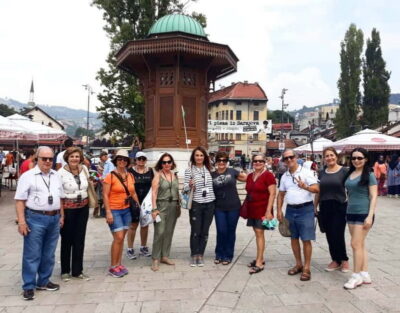
Bosnian War & Fall of Yugoslavia Tour with Tunnel
Read our review →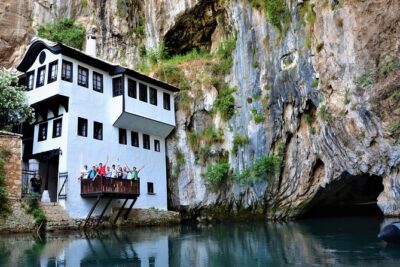
Herzegovina Day Tour from Mostar: Blagaj, Pocitej, Kravice falls (Join Us! :D)
Read our review →Browse the lists this tour appears in