
Reviewed · SARAJEVO WAR TUNNEL TOURS
Sarajevo: Tunnel Museum Yugoslavia War Tour with War Veteran
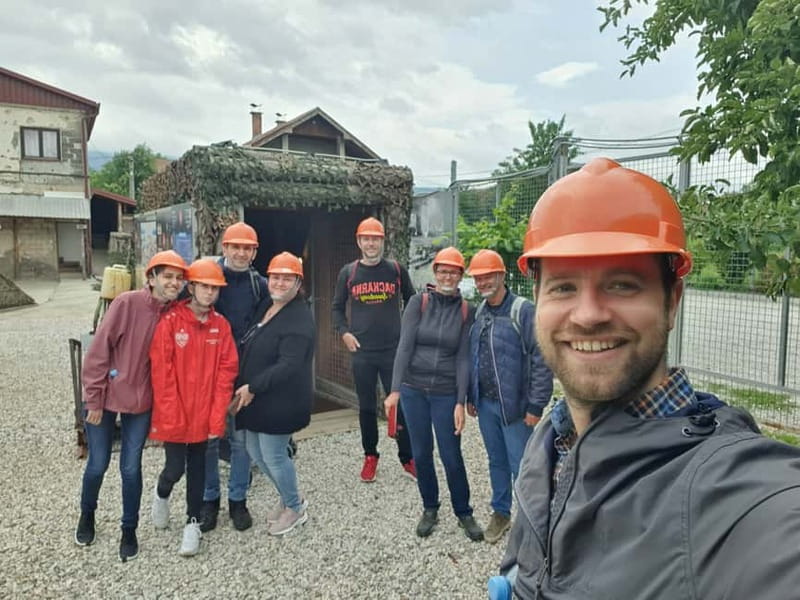
Sarajevo’s Tunnel of Hope is more than a short underground passage. It is the physical link that kept a besieged city supplied, and this tour helps you understand its purpose by showing you the mountains, streets, cemeteries, and military positions around Sarajevo. The strongest part is the chance to hear firsthand memories from a guide such as Adnan, Adis, Mustafa, or Samira, all guides praised for explaining the war with clarity and feeling.
I like the carefully connected route. The tunnel makes sense on its own, but Trebevic, Sniper Alley, the Jewish cemetery, and the Olympic track show how the siege shaped the whole valley. I also like the mix of formal museum material and personal testimony. The main consideration is emotional: this is a serious tour about civilian suffering, death, and survival, not a light sightseeing outing.
Key points to know before booking
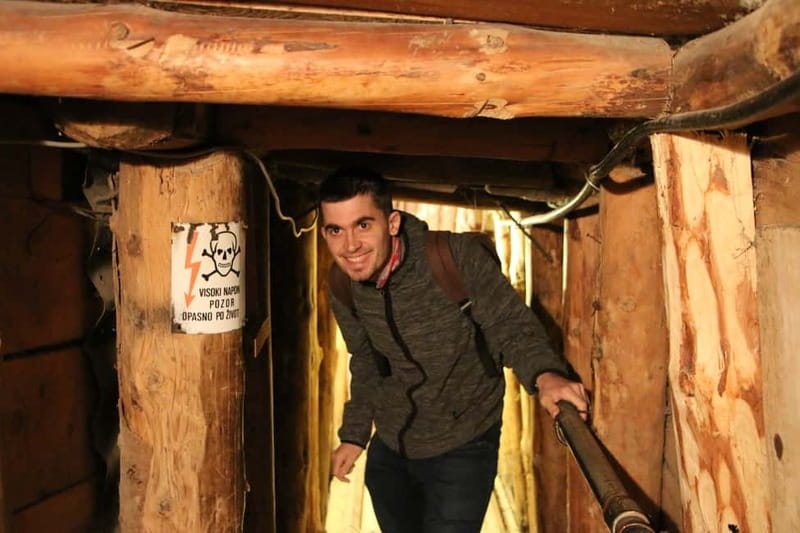
- The Tunnel of Hope anchors the tour: You watch a short film, hear about the breakup of Yugoslavia, and walk through the surviving section of the wartime tunnel.
- A veteran or war survivor leads the experience: Guides including Adnan, Adis, Mustafa, Samira, Halid, and Senka have been praised for personal, clear, and compassionate explanations.
- Trebevic explains the siege from above: The mountain’s views also reveal why its wartime positions were so dangerous for people in the city.
- The Olympic ruins add a surprising second story: You visit the abandoned bobsleigh and luge track, a reminder of Sarajevo before the war.
- The route includes less obvious sites: The ruined Osmice hotel, Jewish cemetery, Yellow Bastion, and martyr cemetery give the tour more range than a museum visit alone.
- The $36 price covers four hours of guided touring: The tunnel admission is included only with the option that lists it, so check your selected booking carefully.
Why the Tunnel of Hope matters
The tour begins with transport from central Sarajevo toward the Tunnel of Hope Museum. The ride takes about 25 to 30 minutes, and the guide uses that time to introduce the war and point out important buildings and locations along the way.
That opening matters. You do not arrive at the tunnel with no context. By the time you reach the museum, you have already started seeing the geography that shaped the siege. Sarajevo’s valley, surrounding hills, and exposed roads become part of the story rather than a background view from a car window.
The museum entrance includes a Sarajevo Rose, one of the red resin marks placed where mortar explosions killed or wounded people. These marks turn ordinary pavement into a memorial. They also prepare you for the way this tour treats the city itself as part of the museum.
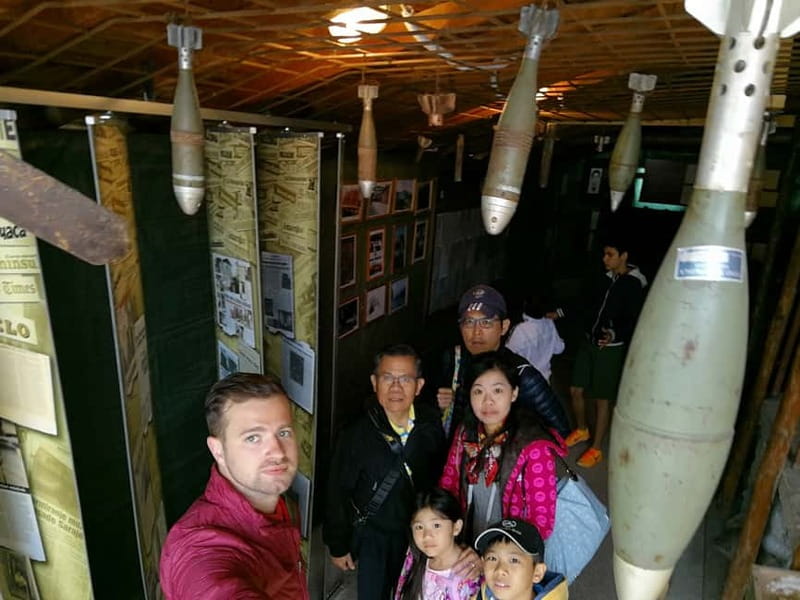
Inside, you watch a short film before a presentation of about one hour. The talk covers the fall of Yugoslavia, the wars in Slovenia and Croatia, the conflict in Bosnia and Herzegovina, and the tunnel’s construction and importance.
The presentation is a useful starting point if you know only the broad outlines of the 1990s wars. It gives you the political sequence before the tour turns to daily life in Sarajevo. Guides have been especially effective at explaining difficult events in plain English, then answering questions without rushing.
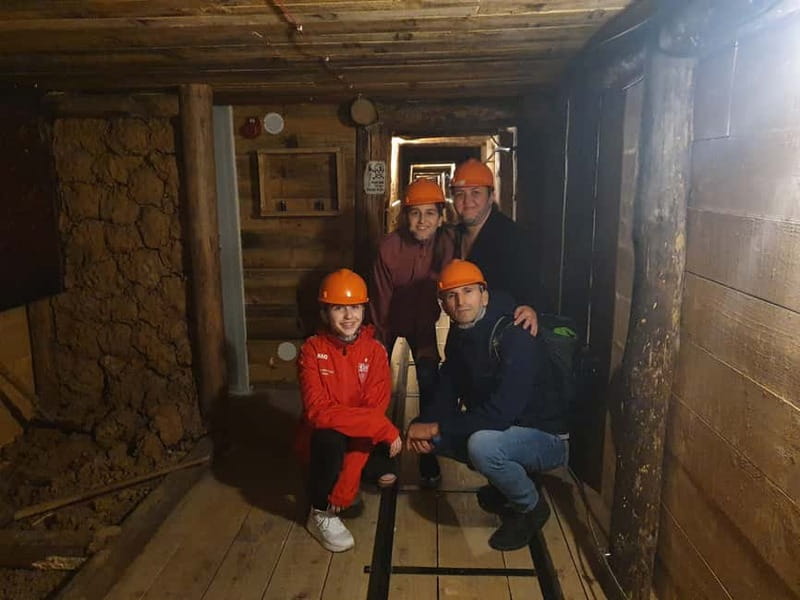
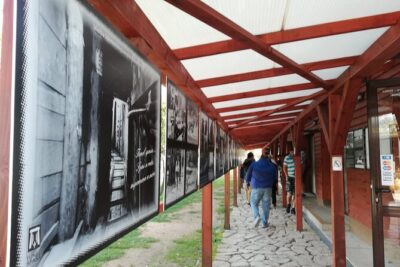
You also walk through the remaining section of the tunnel. It is not a long underground expedition, and that is worth knowing before you go. The power comes from understanding what the passage meant: a narrow route under the airport that connected Sarajevo with territory outside the siege lines and allowed supplies, people, and equipment to move.
The tunnel stop can feel crowded or tightly timed if several groups arrive together. Still, the museum is the central piece of the outing, and the presentation gives it much more meaning than a quick photo stop would.
More sarajevo war tunnel tours in Sarajevo:
- Fall of Yugoslavia, Sarajevo War Tour with Tunnel of Hope Museum and Frontlines
★ 5.0 · 1,314 reviews - Sarajevo: Tunnel of Hope Tour – Survival and Resilience
★ 4.8 · 630 reviews - Tunnel Museum: Bosnian & Yugoslav Wars Tour with War Veteran
★ 5.0 · 551 reviews
Sniper Alley and the city below
During the drive, you pass important parts of Sarajevo, including the area known as Sniper Alley and the Hotel Holiday. The hotel is a pass-by point rather than a full interior visit, but its location helps you picture the exposed roads and buildings that became part of the siege story.
This is where the tour’s vehicle is useful. Sarajevo’s wartime sites are spread across the valley and hills, and walking between them would take far longer than four hours. As you move through the city, your guide can connect visible damage, streets, and public places with what happened there.
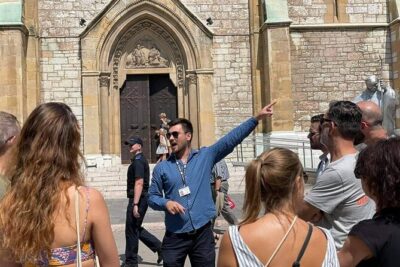
The most valuable element is not simply seeing a bullet-scarred building. It is hearing how the sites fit together. Adnan has been praised for linking geography, military strategy, and personal experience, while Mustafa has explained what it was like to live through the war as a child or teenager. The guides do not all tell the same story, so the exact tone depends on who leads your group.
That variation is a consideration. The company assigns different guides, and the supplied experiences name Adnan, Adis, Mustafa, Samira, Halid, Senka, and others. The consistent feature is firsthand experience, but you cannot assume you will receive one particular guide unless the company confirms it.
Trebevic and the ruined Osmice hotel
From Sarajevo, the tour climbs toward Trebevic, the Olympic mountain closest to the city center. Trebevic hosted part of the 1984 Winter Olympics, but during the siege it also formed part of the front line.
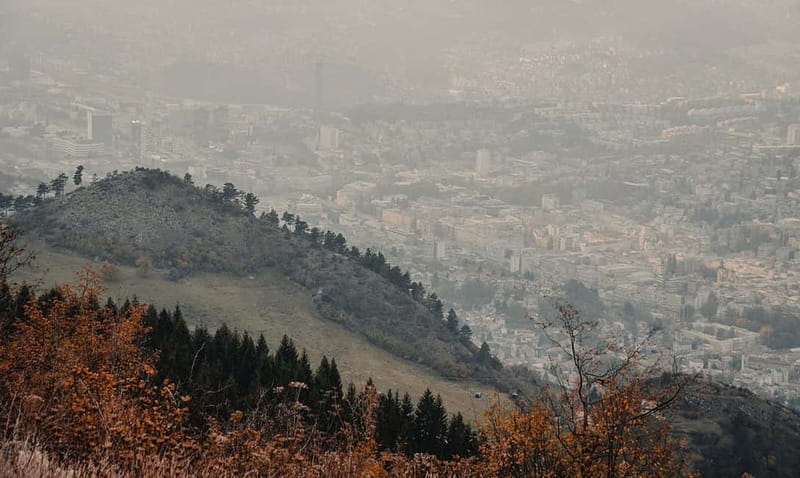
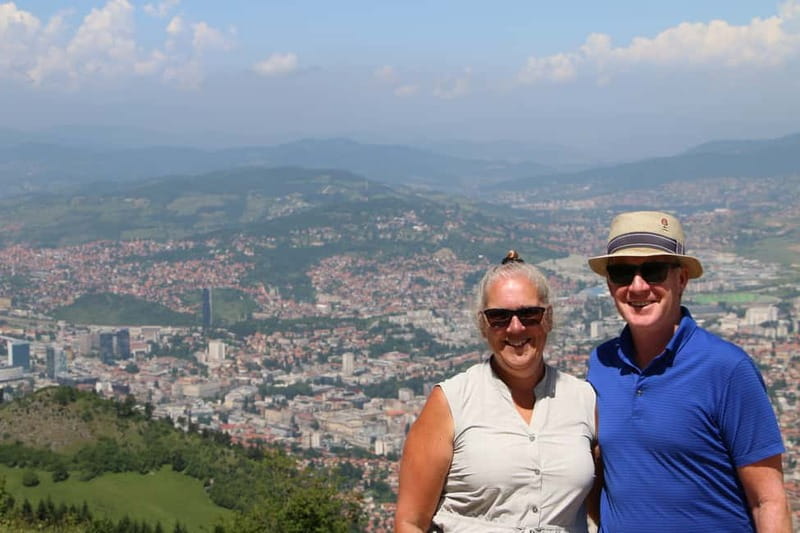
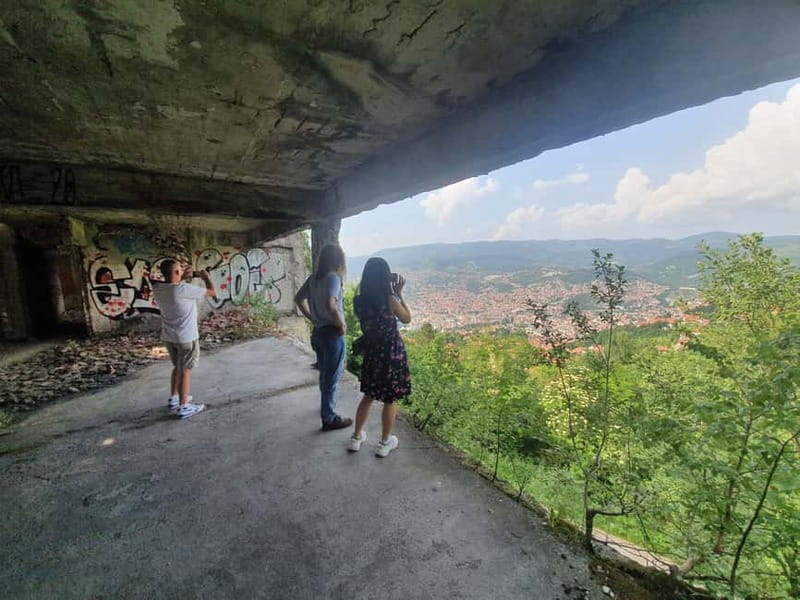
The road up changes your view of Sarajevo. From the city, the hills can look peaceful and green. From above, you see how close the high ground is to the neighborhoods below. The same slopes that offer some of the best views of the city also provided positions for the forces surrounding Sarajevo.
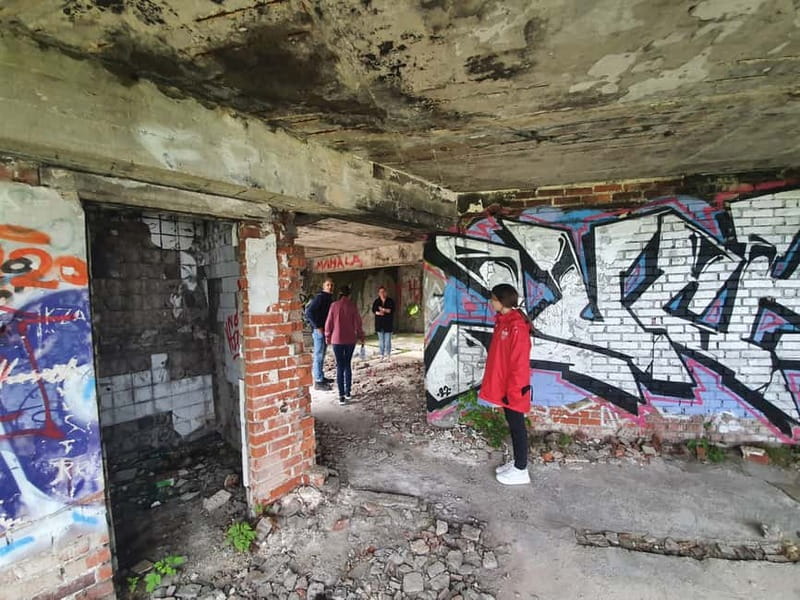
You visit the destroyed hotel-restaurant known as Osmice. The description of this stop allows you to enter the ruined building, though conditions can vary at an abandoned site. Wear sturdy shoes and take care around uneven surfaces. The attraction is not a polished exhibit. It is the raw remains of a place caught in the conflict.
I find this stop especially useful because it turns military geography into something you can see. The guide can indicate the city below and explain why the view was both beautiful and threatening. Several guides have been praised for knowing the valley and surrounding mountains well, which makes this section more than a scenic drive.
The panorama is a highlight, but it carries a hard truth. Many of the most attractive viewpoints around Sarajevo were also positions from which the city could be watched and attacked. That contrast gives the mountain stop its force.
Weather can affect this part of the tour. Fog, cloud, or winter conditions may change the view, and the mountain will feel different from the sunny photographs often used to promote Sarajevo. The abandoned sites and outdoor stops also require more care in wet or cold weather.
Walking the 1984 Olympic bobsleigh track
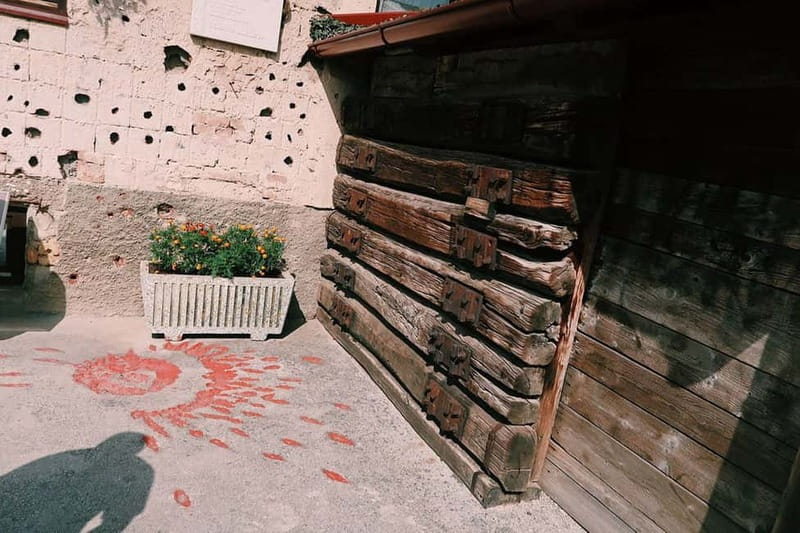
The Sarajevo Olympic Bobsleigh and Luge Track is one of the tour’s most unusual stops. It winds through the forest on Trebevic, now abandoned and marked by the passage of time and war.
You have time for photographs, a guided explanation, and some free time to walk. The track gives you a second way to understand Sarajevo’s past. In 1984, the city welcomed the world for the Winter Olympics. Less than a decade later, the mountain was part of a war zone.
The stop also breaks up the difficult subject matter. You are still looking at a damaged site, but the Olympic connection adds another layer. Families may appreciate the chance to walk and explore here, and children often find the track more immediately engaging than a museum presentation.
Do not expect a restored Olympic attraction or a formal sports museum. The appeal is the abandoned structure, its setting, and the story your guide adds. Fog can make the track feel eerie, while clear weather gives you a better sense of its curves and position in the woods.
More sarajevo siege tours in Sarajevo:
- Sarajevo: Bosnian War & Fall of Yugoslavia Tour with Tunnel
★ 4.9 · 398 reviews - Sarajevo War Tour: A Veteran’s Story of the Siege (fees included)
★ 5.0 · 326 reviews - Sarajevo: Srebrenica Genocide Study Tour with War Veteran
★ 5.0 · 263 reviews - Sarajevo: A Siege Story – The Tunnel of Hope Experience
★ 4.8 · 206 reviews
The Jewish cemetery and Sarajevo’s layered past
Just below Trebevic is Sarajevo’s Jewish cemetery, described as the second largest Jewish cemetery in Europe. The site contains distinctive tombstones associated with Bosnia and Herzegovina.
The tombstones are often linked to the form of medieval Bosnian stecak monuments. That detail gives the stop a cultural purpose beyond the war narrative. You are reminded that Sarajevo’s story includes Jewish, Ottoman, Austro-Hungarian, Slavic, and other layers, not only the events of the 1990s.
The cemetery also sits within the geography of the siege. Its position beneath the mountain helps you see how historic places and residential districts could be caught between front lines. The guide’s explanation is important here, since the cemetery may not be immediately understandable from a short visit alone.
This is a quieter stop than the tunnel or bobsleigh track. You should approach it respectfully. It is included as a photo and guided visit, but it is still an active place of remembrance rather than a dramatic ruin made for sightseeing.
Yellow Bastion and the final cemetery
The route heads back toward the old Ottoman part of Sarajevo and ends near the Yellow Bastion. The bastion offers another broad view over the city, and its position makes it a natural place to review what you have seen from the valley and mountains.
The final stop is the Shehidi, or martyr, cemetery. It is the resting place of soldiers who died fighting for an independent Bosnia and Herzegovina. At its center is the grave of Alija Izetbegovic, Bosnia and Herzegovina’s first president.
This ending is more political and national in tone than the tunnel museum. The guide can explain how the cemetery fits into the country’s independence story and the memory of the war. If you are interested in modern Bosnian identity, it adds important context. If you prefer a strictly neutral presentation, listen carefully and ask questions. Guides praised on this tour have generally been described as sincere, balanced, and willing to discuss difficult subjects.
The tour finishes with drop-off in Sarajevo, with the listed options returning you to the city or to the Info Bosnia Tours location. The route is efficient for a half-day outing and leaves you in a good position to continue into the old town for coffee or dinner.
What the $36 price delivers
At about $36 per person, this is a strong value for a four-hour experience if you want both transportation and interpretation. You are not paying only to enter a small tunnel. You are paying for a vehicle route across the valley and up Trebevic, several stops that are difficult to combine independently, and a guide who can explain the sites in relation to one another.
The tour includes an air-conditioned vehicle and a small-group format, with private options available. Hotel pickup and drop-off are included if you choose the private option. The standard meeting point is the Info Bosnia Tourist Information Center on the main pedestrian street, close to the Sarajevo Meeting of Cultures marker.
Check the ticket details before paying. The Tunnel of Hope Museum entrance fee is listed as 10 EUR when that option is selected, but not every booking option handles it in the same way. Personal expenses are not included.
The transport score is particularly strong, with 93 percent of ratings giving it a perfect mark. That matters because the route includes a mountain drive and scattered locations. A dependable vehicle saves time and makes the four-hour schedule workable.
You can cancel up to 24 hours before the start for a full refund, and a reserve-now, pay-later option is available. Starting times depend on availability.
How the guide shapes the experience
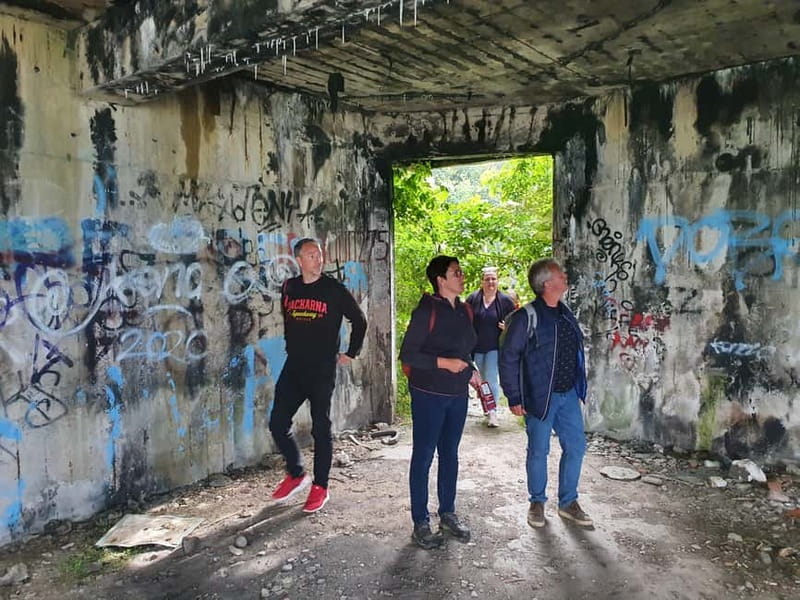
The guide is the reason to choose this tour over a self-guided visit to the tunnel. A museum presentation can give you dates and diagrams. A veteran or survivor can explain what those facts meant for people living inside the city.
Adnan is repeatedly described as clear, objective, patient, and able to explain military strategy as well as personal memory. Adis has been praised for organizing the story in a logical way. Mustafa brings memories of surviving the siege as a young teenager, while Samira has been praised for combining broad political causes with her own experience and a strong affection for Sarajevo.
Those details do not mean every guide will use the same approach. They do show the range of voices available. Some guides served in the Bosnian Army. Others lived through the war as children or teenagers. In each case, you should allow time for questions. The personal side of the tour becomes most useful when you ask how a particular place affected ordinary life.
The subject requires care. This is not entertainment built around combat stories. Good guides keep the focus on civilians, resilience, loss, and the city’s survival. You may find the experience moving or uncomfortable, especially at the tunnel and cemeteries. That is part of its purpose.
Who should book this Sarajevo war tour?
I would choose this tour if you have limited time in Sarajevo but want a serious introduction to the siege and the breakup of Yugoslavia. It suits history-minded visitors, first-time visitors who want context for the city, and anyone who prefers learning through places rather than reading labels in a museum.
It also works well for families with older children. The bobsleigh track gives younger visitors something physical to explore, while the guide’s stories make the history easier to grasp. Adults should decide in advance how much discussion of violence and civilian suffering feels suitable for their children.
You should also book it if you want mountain views but do not want to arrange separate transport to Trebevic. The route combines war history, Olympic ruins, cemeteries, and viewpoints in one half-day.
I would skip it if you want a relaxed scenic excursion with little historical discussion. The four-hour schedule is full, the subject is heavy, and some stops involve damaged or uneven sites. It is also less suitable if you only want to walk through the tunnel and leave, since much of the value comes from the broader route.
Should you book the Tunnel Museum and War Tour?
Yes, if you want to understand Sarajevo rather than simply photograph it. The Tunnel of Hope is the headline stop, but the ruined Osmice hotel, Trebevic viewpoints, Olympic bobsleigh track, Jewish cemetery, Yellow Bastion, and martyr cemetery explain how war, memory, culture, and geography overlap here.
The $36 cost is reasonable for a four-hour small-group tour with transport and a veteran or survivor guide. Choose the private option if hotel pickup matters or if you want more control over questions and pacing. Before booking, confirm the tunnel admission option and accept that the experience may be emotionally demanding.
FAQ
How long does the Sarajevo Tunnel Museum tour last?
The tour lasts four hours.
What language is the tour conducted in?
The tour is conducted in English unless another arrangement is requested. The listed guide language is English.
Does a war veteran or survivor lead the tour?
Yes. The experience includes a war veteran or war survivor guide. Guides named in the supplied information include Adnan, Adis, Mustafa, Samira, Halid, and Senka.
Where is the meeting point?
The meeting point is the Info Bosnia Tourist Information Center on Sarajevo’s main pedestrian street, close to the Sarajevo Meeting of Cultures marker.
Is hotel pickup available?
Hotel pickup and drop-off are available when you select the private option.
Is the Tunnel of Hope Museum entrance included?
The 10 EUR museum entrance fee is included if you select the option that includes it. Check the exact option when booking.
What places are visited on the tour?
The route includes the Tunnel of Hope Museum, Sniper Alley as a pass-by sight, Trebevic mountain, the destroyed Osmice hotel-restaurant, the Sarajevo Olympic bobsleigh and luge track, the Jewish cemetery, Yellow Bastion, and the Shehidi martyr cemetery.
Can I cancel the tour?
You can cancel up to 24 hours in advance for a full refund.
Can I reserve now and pay later?
Yes. A reserve-now, pay-later option is available, so you can hold your place without paying at the time of booking.
More Museums in Sarajevo
- Cable Car Olympic Tour With Museum
★ 5.0 · 17 reviews - SARAJEVO CONCEPTUAL ART TOUR (galleries, art and arhitecture)
★ 5.0 · 7 reviews - Sarajevo: A City Under Siege – War Tour With Tunnel Museum
★ 5.0 · 4 reviews
Just added around Sarajevo
- Sarajevo Under Siege: A War History Tour★ 5.0 · 10 reviews
- WAR TUNNEL – Sarajevo’s only way of a communication during the WAR – Top secret★ 5.0 · 12 reviews
- Private Full Day Safari Tour★ 5.0 · 8 reviews
- Ultimate Gastro Experience★ 4.5 · 14 reviews
- Mysterious Visoko Pyramids Driving and Walking Tour★ 5.0 · 7 reviews
- Secret Tito’s Bunker/Konjic Tour★ 5.0 · 4 reviews
- The Secret Lifeline: Sarajevo’s War Tunnel Tour★ 5.0 · 6 reviews
- Crossroads of Cultures – Sarajevo Walking Tour★ 5.0 · 8 reviews
Sarajevo War Tunnel Tours, compared.

Fall of Yugoslavia, Sarajevo War Tour with Tunnel of Hope Museum and Frontlines
Read our review →
Sarajevo Grand Tour: Old Town, War Tunnel, Olympic Sites & More
Read our review →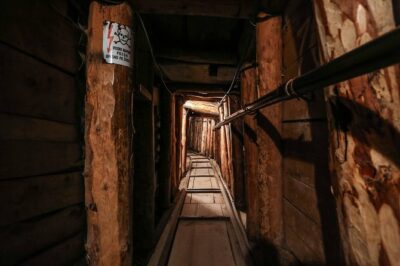
Times of Misfortune – Life Under Siege and the Tunnel of Hope
Read our review →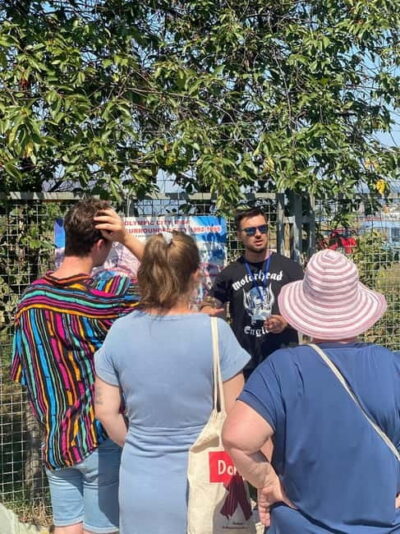
Sarajevo Grand Tour: 5 Hours Old Town, War Tunnel, Olympics
Read our review →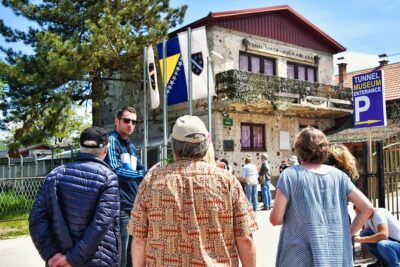
WAR TUNNEL – Sarajevo’s only way of a communication during the WAR – Top secret
Read our review →Browse the lists this tour appears in