
Reviewed · HISTORICAL TOURS
Sarajevo: Jewish Heritage Tour with Entry Tickets
Sarajevo’s Jewish story is not confined to one museum. It runs through the Old Town’s trading streets, former synagogues, grand family homes, schools, cemeteries, and the remarkable Sarajevo Haggadah. This three-hour tour shows how Sephardi Jews arrived under Ottoman rule, how Ashkenazi Jews later shaped the city, and how the community endured war and displacement.
I like the small group of up to eight, which gives you room to ask questions about religion, architecture, and Sarajevo’s wartime past. I also like the way the tour connects everyday crafts and Bosnian music with Jewish life, rather than treating the subject as a list of dates and buildings. The main consideration is timing: the Haggadah and synagogues have limited opening hours, and some sites close on weekends.
Key points to know before booking
- Five centuries in three hours: Follow Sarajevo’s Jewish story from the Ottoman period through World War II and the Bosnian War.
- The Jewish Museum is the main starting point: It occupies the Old Jewish Temple and introduces the community’s customs, work, and survival.
- The Sarajevo Haggadah requires careful planning: Viewing hours are limited, and access can change.
- The cemetery visit adds hard wartime context: You will learn about Jewish victims of World War II and the cemetery’s role during the 1990s siege.
- Guides bring different strengths: Arna, Armina, Ana, and Ahmed have led this experience, with particular praise for storytelling and thoughtful answers.
- Transport and tickets are included: Hotel pickup and drop-off, cemetery transport, water, and listed entrance fees are part of the $94 price.
Why Sarajevo’s Jewish story belongs in your Old Town walk
Sarajevo is often described through its mix of Ottoman Muslim, Catholic, Orthodox, and Jewish traditions. That mix is not just a slogan. In a short walk, you can encounter mosques, churches, synagogues, markets, and homes linked to several communities.
The Jewish presence here reaches back about 500 years. Sephardi Jews arrived after leaving Spain and Portugal, with many settling across the Ottoman Empire. Sarajevo offered a place to work, trade, worship, and build a community. Ottoman authorities recognized Jews as people of the book, and Jewish residents could buy property despite other limits placed on non-Muslim subjects.
That legal and social setting helped Jewish life take root. By 1856, the Ottoman state had granted full equality to Jews and other non-Muslim subjects. The tour gives this background practical meaning by showing you the buildings and streets connected to commerce, worship, education, and family life.
I find this approach useful because it avoids presenting Jewish history as an isolated chapter. You see how Jewish merchants helped link Sarajevo to wider trade networks, while the city’s Sephardi residents brought crafts and customs that became part of local life.
A few more Sarajevo trips to weigh up
- Sarajevo Full Day Tour: History, Culture, Nature, War & Olympics
★ 5.0 · 27 reviews - Sarajevo genuine walking tour: Steps through history
★ 5.0 · 22 reviews - SARAJEVO STREET ART TOUR (art, history & mystery) – sARTajevo!
★ 5.0 · 18 reviews
Inside the Old Jewish Temple and Jewish Museum
The tour begins at the Old Jewish Temple, now home to the Jewish Museum of Bosnia and Herzegovina. This is the central stop for understanding the community’s five centuries in Sarajevo.
The museum focuses on Jewish settlement, religious life, trade, and cultural traditions. You can expect the guide to explain how a community with roots in Spain adapted to life in Ottoman Sarajevo. The setting also helps you picture the former Jewish quarter as a living neighborhood, rather than simply a historic site.
The museum visit is included in the price, as is entry to the Jewish Community Center. The experience also refers to the New Temple Gallery, which adds another layer to the story of Jewish worship and public life in the city.
Pay attention to the connections between commerce and culture. Jewish merchants were not only passing through Sarajevo’s markets. Their work helped link the city with regional trade routes, and their skills became part of the Old Town’s working life.
Sephardi crafts, sevdalinka, and the sound of Sarajevo
One of the more memorable parts of the tour is the link between Jewish traditions and Sarajevo’s wider culture. In the Old Town, you learn about crafts associated with Sephardi Jews and the role Jewish merchants played in developing local trade.
The guide may also discuss sevdalinka, the traditional Bosnian song style. The tour explains its connection with Sephardi religious songs, giving you a way to hear cultural exchange rather than merely read about it.
This is where the experience feels most connected to present-day Sarajevo. You are not only looking at old walls. You are hearing how language, music, work, and worship moved between communities over time.
The Old Town portion includes several former Jewish landmarks. The exact rhythm can depend on opening hours and the guide’s route, but the named sites include the first hotel in Sarajevo, the first Jewish secondary school, the first Jewish credit foundation, Jewish Villa AMA, the Ješua D. Salom Mansion, and the Salom Family Palace.
Some of these sites are viewed from outside, so keep your expectations practical. Their value lies in the story attached to the building and its place in the city, not necessarily in an interior visit.
The Ashkenazi arrival and Sarajevo’s only active synagogue
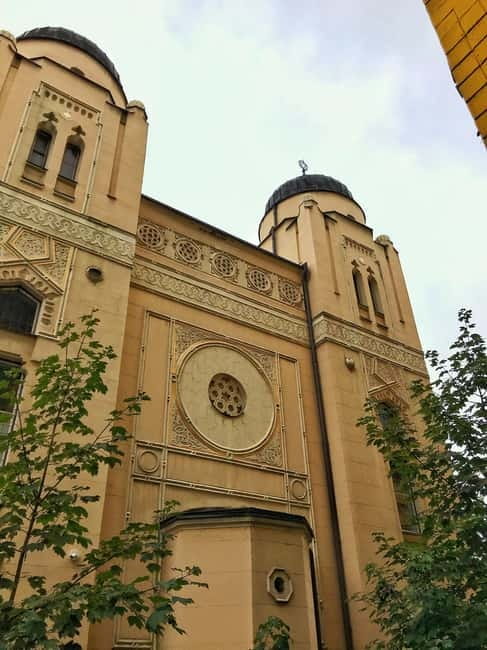
The tour then turns to Ashkenazi Jewish heritage. Ashkenazi Jews arrived later, particularly as Sarajevo changed under Austro-Hungarian rule. Their presence added new institutions, architectural styles, and links to Central European Jewish life.
The Ashkenazi Synagogue is the only active synagogue in Sarajevo today. It gives the tour a direct connection with the city’s current Jewish community, even though access depends on the day and opening schedule.
The Bosnian Cultural Center is another important stop. It occupies what was once a grand Jewish temple with Moorish-style architecture. Seeing a former synagogue used for another civic purpose can prompt useful questions about how Sarajevo’s Jewish buildings survived, changed function, or disappeared from daily community life.
The tour also points out the first Jewish school and other buildings tied to education and finance. These details matter because they show a settled community building institutions for itself. This was not only a group of merchants passing through the market. It had schools, religious buildings, charitable structures, homes, and systems for mutual support.
Saturday is the least convenient day for this part of the tour because both the Old Jewish Temple and Ashkenazi Synagogue are closed. On Sunday, the Ashkenazi Synagogue is closed, while the Old Jewish Temple is open from 9:00 a.m. to 1:00 p.m. If the synagogue is closed, the guide can substitute other Jewish sites, as happened for one participant who still found the altered route worthwhile.
Same country, a completely different kind of day:
- Sarajevo: Mostar, Konjic, Blagaj Tekke, Pocitelj & Waterfall
★ 4.9 · 1,666 reviews - Fall of Yugoslavia, Sarajevo War Tour with Tunnel of Hope Museum and Frontlines
★ 5.0 · 1,314 reviews - Sarajevo: Grand Walking Tour Through Time and Cultures
★ 4.8 · 1,236 reviews - Sarajevo: Mostar, Konjic, Sufi House, Pocitelj & Kravice Falls
★ 5.0 · 1,179 reviews
The Sarajevo Haggadah and a fragile survival story
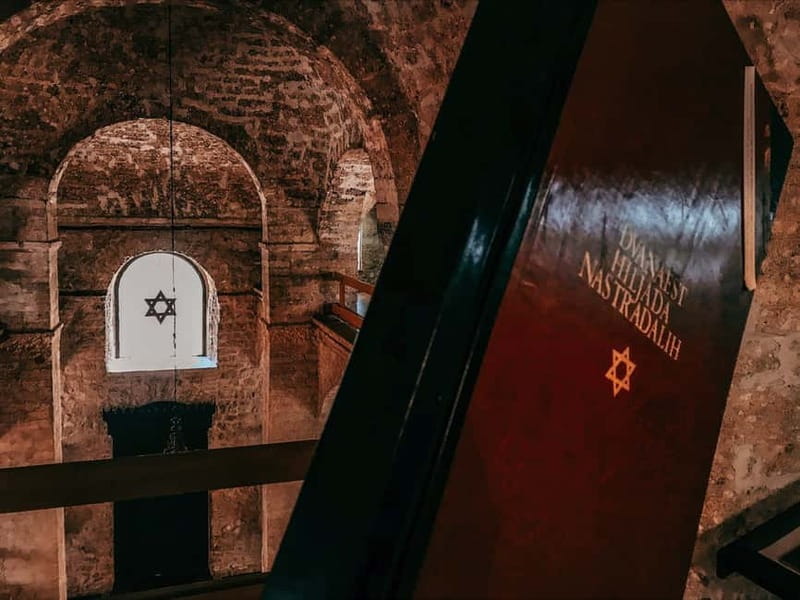
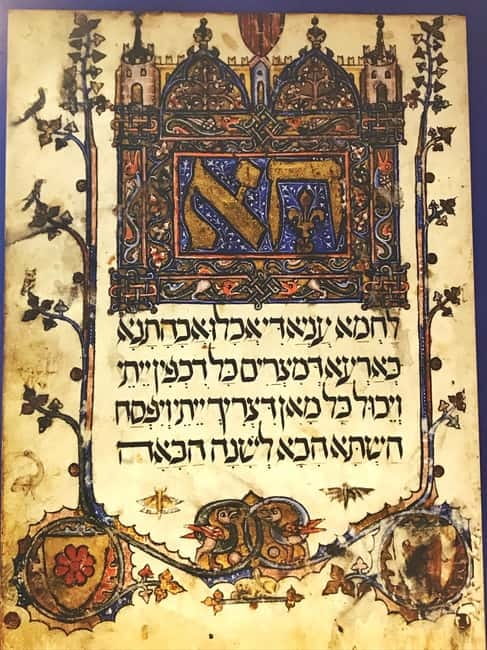
The Sarajevo Haggadah is the tour’s most famous object. This 700-year-old manuscript contains stories written in 14th-century Barcelona. A Jewish family brought it to Sarajevo in the 16th century, and it survived three wars.
The Haggadah is now associated with the National Museum of Bosnia and Herzegovina. It represents far more than an old book. It links medieval Spain, Sephardi migration, Sarajevo’s Jewish community, and the survival of cultural objects during violent periods.
You should treat a possible viewing as a bonus that needs planning, not as a guaranteed part of every departure. The stated viewing time is Tuesdays and Thursdays from noon to 1:00 p.m., with access also available on the first day of each month. Hours can change, so check before booking or ask the tour agency to confirm.
This limited schedule may not fit a three-hour morning tour. The tour can still explain the Haggadah and its place in Bosnian Jewish heritage even if the manuscript is not open for viewing. If seeing it matters most to you, plan your Sarajevo schedule around the published access window.
Sarajevo’s Jewish cemetery and the weight of the final stop
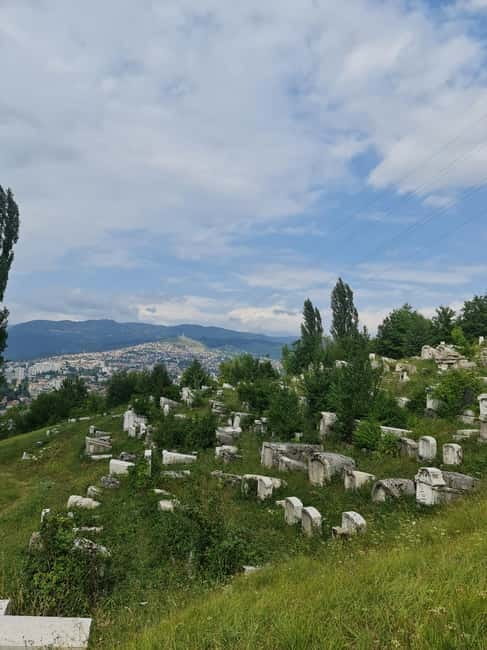
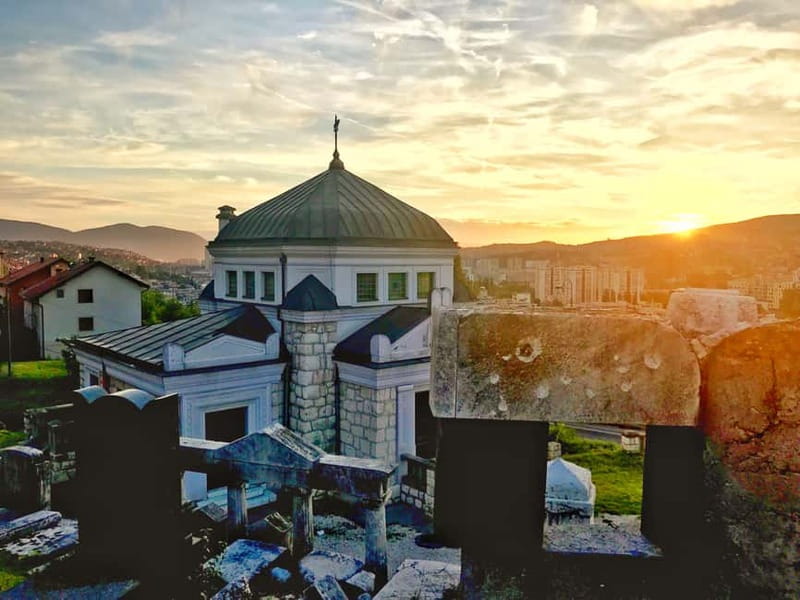
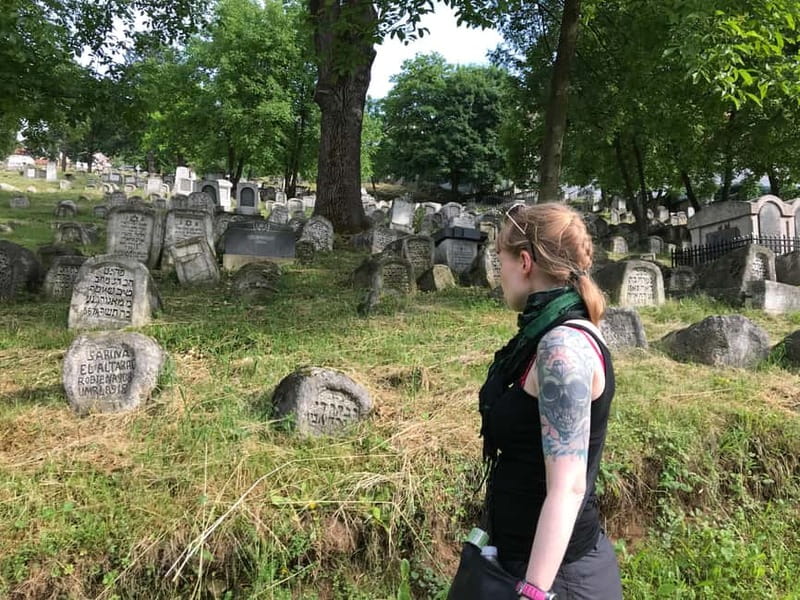
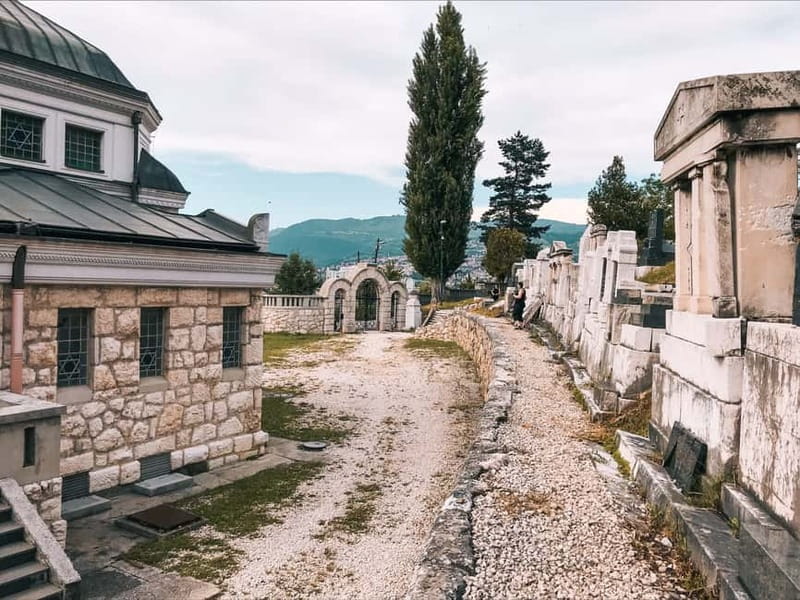
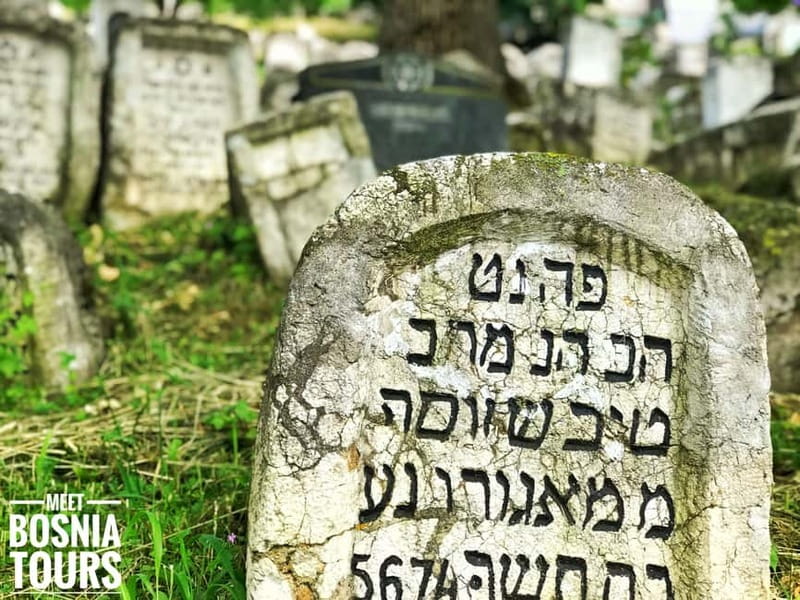
The cemetery visit gives the tour its most serious section. Sarajevo’s Jewish Cemetery is described as the second oldest Jewish cemetery in Europe and contains both Sephardi and Ashkenazi graves.
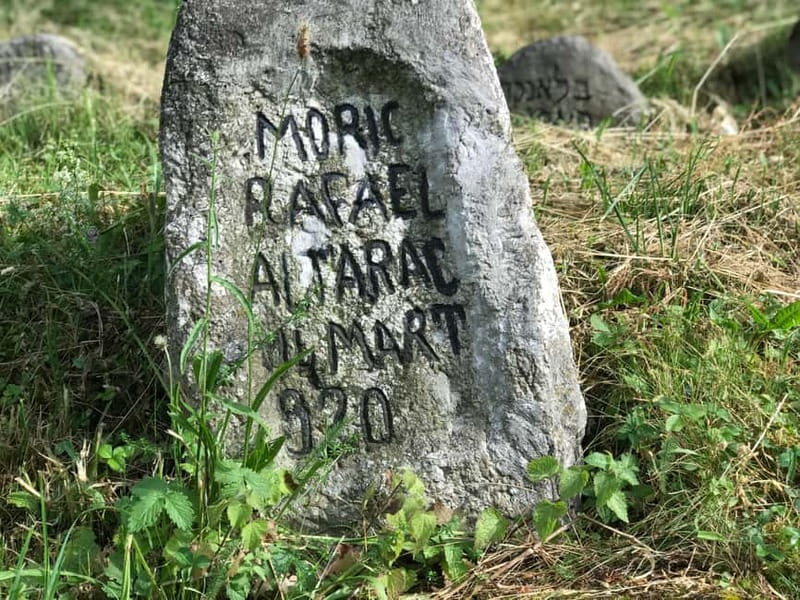
The mixed character of the cemetery reflects the city’s changing Jewish population. Your guide identifies important people buried there and explains the customs and traditions connected with the site. The stones also make the community’s history personal. Names, dates, and family groupings tell a different story from museum displays.
The cemetery is also tied to the destruction of Sarajevo’s Jewish population during World War II. The tour addresses the losses and the lasting effect on Jewish life in Bosnia.
Then the story moves forward to the Bosnian War of the 1990s. The cemetery was destroyed because of its strategic position during the siege. Its location gave military forces a view over parts of the city, turning a place of mourning into a site of fighting.
That connection makes the cemetery especially important. You are not looking at a quiet memorial separated from Sarajevo’s recent past. The site links the Holocaust, the siege, and the departure of many Jewish residents during the war.
Even after leaving Sarajevo, many Jews kept a strong connection with the city. Foundations and trusts were created to help the besieged city, reflecting gratitude for the support Sarajevo had offered its Jewish community. That is a powerful reminder that wartime history is not simply a story of separation. It can also include loyalty, memory, and practical aid.
Transportation to the cemetery is included, which matters because it is not simply another stop in the central Old Town. The drive also helps preserve time for the museum and walking portion.
Guides who make the subject approachable
The guide can shape this tour more than the buildings do. English-speaking guides named Arna, Armina, Ana, and Ahmed have led departures.
Arna receives especially strong praise for combining Jewish history with interreligious dialogue, the siege, the war, and Sarajevo’s current situation. She is also described as willing to answer broader questions about the city. Ahmed is praised for academic research, careful storytelling, and helping with practical questions during a visit.
That range is useful. Jewish heritage in Sarajevo involves religion, migration, architecture, trade, genocide, war, and modern identity. A guide who can connect those subjects without rushing gives the tour much more value than a simple walk between monuments.
The tone is intended to be thoughtful rather than sensational. You can expect serious material, especially at the cemetery and when discussing World War II. The strongest departures appear to be those where the guide allows time for questions.
A small group makes that easier. The maximum is eight people, and one booking even operated as a private-feeling tour with one participant while keeping the advertised price. That cannot be guaranteed, but it shows that the group format may remain personal even when numbers are low.
What $94 includes, and where the value lies
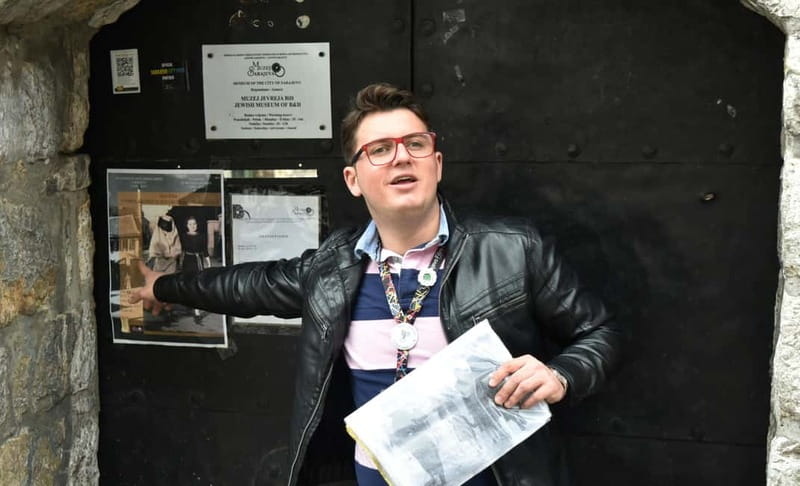
The price is $94 per person for three hours. That is not a budget walking tour, but the package includes hotel pickup and drop-off, a licensed guide accredited by the Jewish community of Bosnia and Herzegovina, water, Jewish Museum entry, Jewish Community Center entry, and transport to the cemetery.
The value depends on your interests. If you only want to see a synagogue from outside, the cost may feel high. If you want context, included admissions, cemetery transport, and a guide able to discuss Jewish and Bosnian history together, the price is easier to justify.
The accreditation matters because the subject requires care. The guide is not simply pointing out attractive façades. You are asking about minority life under Ottoman rule, the arrival of Ashkenazi Jews, the Holocaust, the siege, and the current Jewish community.
Food and drinks are not included, though a bottle of water is provided. Since the tour lasts three hours, you can easily arrange a meal before or after it in Sarajevo, but budget separately for that.
Hotel pickup and drop-off are included, while the meeting point is the Meet Bosnia Tours agency. You should arrive five minutes early and wear clothing suited to the weather. Since the tour includes walking, indoor visits, and cemetery transport, practical shoes and a flexible jacket make sense.
Free cancellation is available up to 24 hours before departure, and you can reserve now while paying later. Starting times depend on availability.
Who will get the most from this experience
I would choose this tour if you want Sarajevo explained through a minority community’s experience. It suits history fans, people interested in Jewish heritage, architecture enthusiasts, and anyone who wants more than the standard Old Town route.
It also works well early in your stay. The guide can help you understand Sarajevo’s religious mix, trade routes, wartime scars, and the city’s complicated modern identity. Afterward, you may notice Jewish buildings and cultural links that would otherwise pass without comment.
You do not need to be Jewish to appreciate it. The tour is about how communities share a city, how institutions form, and what remains after war and migration.
It may be less suitable if you want a light sightseeing outing with little discussion of loss. World War II and the Bosnian War are central parts of the story, not side notes. The cemetery, in particular, asks for attention and respect.
Should you book the Sarajevo Jewish Heritage Tour?
Book it if you want a focused, serious, and personal look at Sarajevo’s Jewish past. The strongest reasons are the small group, included museum access, cemetery transport, and guides such as Arna and Ahmed who can connect local Jewish life with the city’s wider history.
Check the calendar first if the Sarajevo Haggadah or Ashkenazi Synagogue is essential to you. Saturday closes both the Old Jewish Temple and Ashkenazi Synagogue, Sunday closes the synagogue, and Haggadah access is limited to specific hours.
For most visitors, the tour earns its price through explanation rather than spectacle. You see former temples, schools, homes, and cemeteries, but the real reward is understanding how Jewish Sarajevo helped shape the city and how Sarajevo continued to matter to Jews who later left.
FAQ
How long is the Sarajevo Jewish Heritage Tour?
The tour lasts three hours.
How much does the tour cost?
The listed price is $94 per person.
What language is the tour conducted in?
The live guided tour is conducted in English.
How large is the group?
The tour is limited to eight participants.
Are entrance tickets included?
Entry to the Jewish Museum of Bosnia and Herzegovina and the Jewish Community Center is included. The experience also includes transportation to the Jewish Cemetery.
Is hotel pickup available?
Yes. Hotel pickup and drop-off are included. The stated meeting point is the Meet Bosnia Tours agency, and you should arrive five minutes early.
Can I see the Sarajevo Haggadah?
The Haggadah is open on Tuesdays and Thursdays from 12:00 p.m. to 1:00 p.m., with access also available on the first day of each month. Hours can change, so check with the tour agency before booking.
Are the synagogues open every day?
No. The Old Jewish Temple and Ashkenazi Synagogue are closed on Saturdays. On Sundays, the Ashkenazi Synagogue is closed, while the Old Jewish Temple is open from 9:00 a.m. to 1:00 p.m.
Can I cancel the booking?
You can cancel up to 24 hours in advance for a full refund. Reserve now and pay later is also available.
Just added around Sarajevo
- Sarajevo Under Siege: A War History Tour★ 5.0 · 10 reviews
- WAR TUNNEL – Sarajevo’s only way of a communication during the WAR – Top secret★ 5.0 · 12 reviews
- Private Full Day Safari Tour★ 5.0 · 8 reviews
- Ultimate Gastro Experience★ 4.5 · 14 reviews
- Mysterious Visoko Pyramids Driving and Walking Tour★ 5.0 · 7 reviews
- Secret Tito’s Bunker/Konjic Tour★ 5.0 · 4 reviews
- The Secret Lifeline: Sarajevo’s War Tunnel Tour★ 5.0 · 6 reviews
- Crossroads of Cultures – Sarajevo Walking Tour★ 5.0 · 8 reviews
Historical Tours, compared.
Sarajevo Full Day Tour: History, Culture, Nature, War & Olympics
Read our review →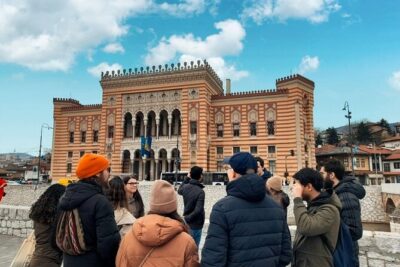
Sarajevo genuine walking tour: Steps through history
Read our review →
SARAJEVO STREET ART TOUR (art, history & mystery) – sARTajevo!
Read our review →
BOSNIAN PYRAMIDS TOUR (nature, history & archeology)
Read our review →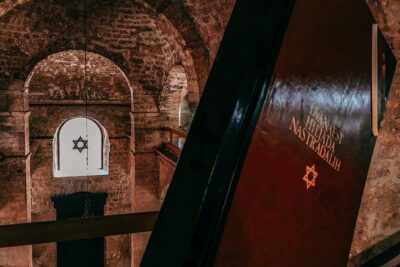
Browse the lists this tour appears in