Reviewed · FULL-DAY
Sarajevo Full Day Tour: Hotel Pickup And All Fees Included
Sarajevo’s story is unusually concentrated. In one day, you can walk from Ottoman courtyards to the spot linked with the First World War, then see the Olympic bobsled track and the tunnel that kept the city alive during its siege. I like the wide historical sweep and the fact that transport and entrance fees are handled for you. The main drawback is pace: seven hours covers a lot, so some stops are short.
I also like the mix of city streets, war history, mountain views, and a nature park. Guide Edis receives especially strong praise for careful planning, clear answers, and creating a day that leaves you with both beautiful and moving impressions. You should book this as an orientation to Sarajevo, not as a slow, specialist visit to every museum.
Key points at a glance
- One day, five sides of Sarajevo: Ottoman culture, Austro-Hungarian rule, modern history, the 1984 Winter Olympics, and wartime Sarajevo all appear in one route.
- The Tunnel of Hope is the emotional center: The museum and tunnel explain how Sarajevo functioned during the siege.
- Edis is a named guide to look for: His careful planning and willingness to answer questions are singled out in the available feedback.
- Old Town time includes Bosnian coffee: You visit Baščaršija, Kazandžiluk, Gazi Husrev-beg Mosque, Morića Han, and nearby landmarks.
- Transport saves effort: Pickup, drop-off, a modern vehicle, water, and entry tickets are included in the $93 price.
- The route ends with fresh air: Vrelo Bosne adds a quieter walk after a day of dense history and city sightseeing.
Sarajevo in one day, from empire to siege
The tour begins with pickup at your hotel or another location in Sarajevo. That small convenience matters here. You do not need to work out public transport between the Old Town, Trebević, the Tunnel Museum, the Jewish Cemetery, and Vrelo Bosne, which are different parts of the city and its surroundings.
The route is built around contrast. You start with Sarajevo’s old core, where Ottoman buildings, crafts, coffee, and religious sites sit close together. You then move through Austro-Hungarian and modern landmarks before turning to the 1984 Winter Olympics and the 1990s siege. The final stop, the Bosna River springs at Vrelo Bosne, gives the day a calmer finish.
That range is the tour’s greatest strength. If you have only one full day in Sarajevo, you get a useful sense of how the city changed over time and how its people adapted to each period. The tradeoff is that the tour cannot give every place a long visit. Think of it as a carefully chosen introduction.
A few more Bosnia and Herzegovina trips to weigh up
- From Dubrovnik: Mostar and Medjugorje Full-Day Tour
★ 4.4 · 898 reviews - Mostar and Kravice Waterfalls Full-Day Tour from Split
★ 4.8 · 308 reviews - From Mostar: Herzegovina Full-Day Tour
★ 4.8 · 163 reviews
Yellow Bastion gives you the first city view
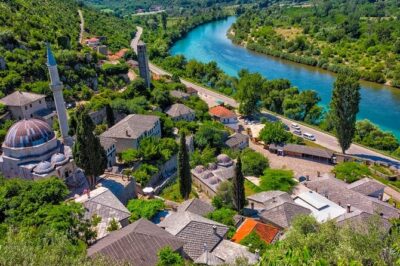
The first listed stop is Yellow Bastion, where you spend about 20 minutes with the guide and take photographs. From here, Sarajevo opens out below you, with the surrounding hills making the city’s setting clear.
This is a smart early stop. Before walking through the streets, you get a basic sense of Sarajevo’s shape and position. The short visit also keeps the morning moving, though you should not expect a long pause for quiet viewing or extensive photography.
The guide then takes you toward City Hall, known as Vijećnica. The planned visit here is about 10 minutes, enough for an explanation and a look at the building rather than a full architectural tour. It helps frame Sarajevo’s Austro-Hungarian period before you enter the older Ottoman quarter.
Baščaršija brings the city’s old center to life
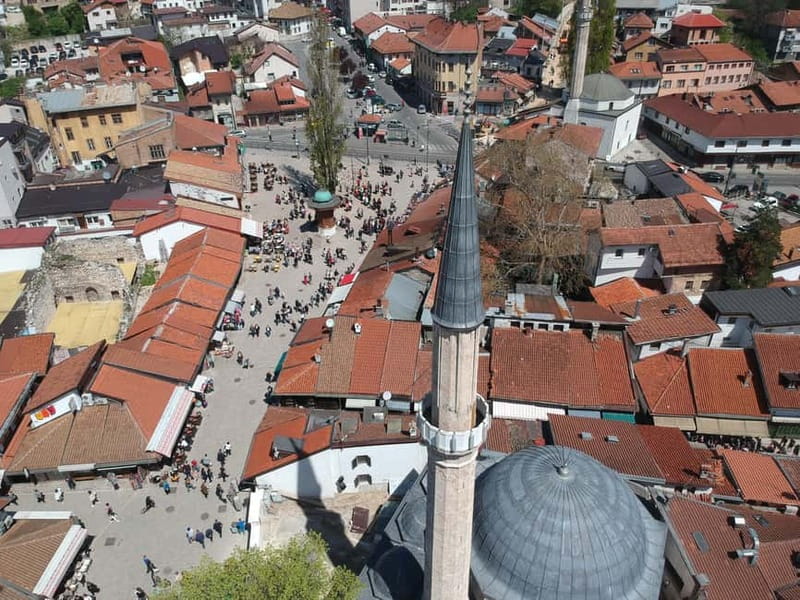
You spend about an hour in Baščaršija, Sarajevo’s best-known old town. This is the part of the day where you walk, look closely, and listen to the guide connect streets and buildings with the city’s changing rulers, religions, and customs.
The route includes Kazandžiluk, the coppersmiths’ street. You have around 20 minutes here for the crafts market and a workshop visit. The value is not just in buying something. The street shows how an old trade remains part of Sarajevo’s public identity, with handmade metalwork giving the quarter a strong sense of place.
You also visit Gazi Husrev-beg Mosque for about 10 minutes. This is an important stop for understanding Sarajevo’s Ottoman and Muslim heritage. The schedule allows for guided sightseeing, but it is brief, so dress and behave respectfully and follow the guide’s instructions at the site.
At Morića Han, you get a 20-minute break for coffee. Bosnian coffee tasting is included, and this is one of the more personal parts of the tour. Coffee is not treated simply as a quick drink here. The pause gives you time to sit in a historic setting and absorb the old town at a slower pace.
You will also see Sarajevo City Market Hall, with a five-minute guided visit, and Sacred Heart Cathedral, with about 10 minutes of sightseeing. These short stops help show Sarajevo as a meeting point of different faiths and cultural periods. The tour does not present the city as one single tradition. It shows the layers side by side.
Latin Bridge connects Sarajevo to world history
At Latin Bridge, you spend about 20 minutes on a guided visit and photo stop. The bridge is closely associated with the 1914 assassination of Archduke Franz Ferdinand, an event that helped trigger the First World War.
The stop is valuable because it links local streets to a global turning point. At the same time, the bridge itself is not a large attraction that requires hours. The guide’s explanation is the main reason to stop, and the short timing is sensible.
Taken together, the Old Town section offers more than a checklist of buildings. Baščaršija shows Ottoman Sarajevo in daily life, the cathedral and market add religious and civic contrasts, and Latin Bridge brings the city into the wider story of Europe. You get a useful framework before the tour changes subject.
Same country, a completely different kind of day:
- Dubrovnik: Kravica Waterfalls, Mostar and Pocitelj Day Trip
★ 4.5 · 3,045 reviews - Sarajevo: Mostar, Konjic, Blagaj Tekke, Pocitelj & Waterfall
★ 4.9 · 1,666 reviews - Fall of Yugoslavia, Sarajevo War Tour with Tunnel of Hope Museum and Frontlines
★ 5.0 · 1,314 reviews - From Mostar: Blagaj, Počitelj & Kravice Waterfalls Day Tour
★ 5.0 · 1,310 reviews
Trebević and the bobsled track recall the 1984 Olympics
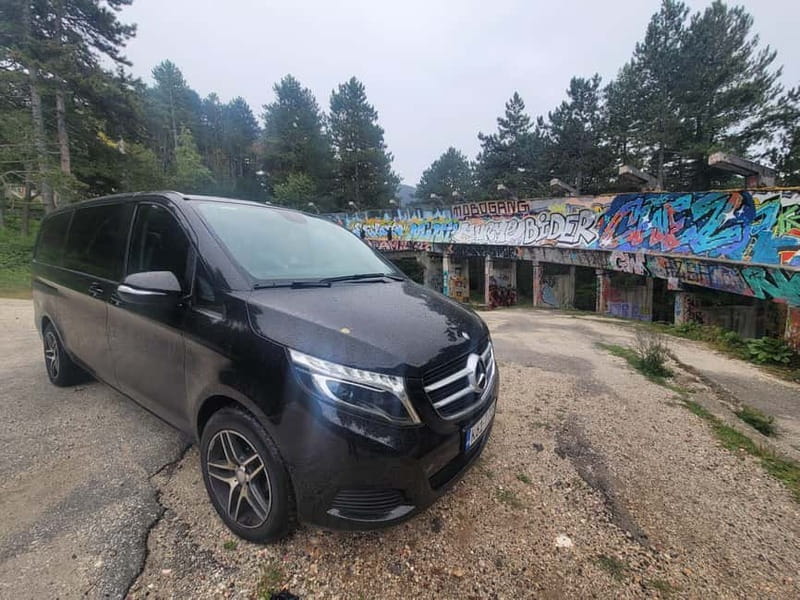
From the city, the tour continues to the Sarajevo Olympic Bobsleigh and Luge Track on Trebević. The visit lasts about 40 minutes. This is one of the most unusual stops because the track is a physical reminder of Sarajevo’s role as host of the 14th Winter Olympics.
The Olympic part of the tour gives you a different picture of the city. Sarajevo was not only an old imperial crossroads or a place known for war. It was also an international sports venue, with modern ambitions and a place on the world stage.
The bobsled track is a sightseeing visit rather than a sports activity. You should expect time to see and photograph it, with the guide explaining its place in the city’s story. Forty minutes gives you more room than several of the Old Town stops, but it is still a focused visit.
This is also where the day begins to move away from central Sarajevo. The included modern vehicle makes a real difference, since the route now connects sites that would be awkward to combine on foot.
The Tunnel of Hope explains the siege in human terms
The war section includes Sniper Alley, a sniper position associated with the Jewish Cemetery, and the Sarajevo Tunnel Museum, also known as the Tunnel of Hope. The museum visit lasts about 45 minutes and is the most substantial historical stop after Baščaršija.
The Tunnel of Hope is important because it explains how Sarajevo endured the siege. The tunnel provided a vital link during a period when the city was cut off, and the museum helps you understand the practical problems of daily life under attack. Instead of treating the siege as a distant date range, the visit gives it a physical setting.
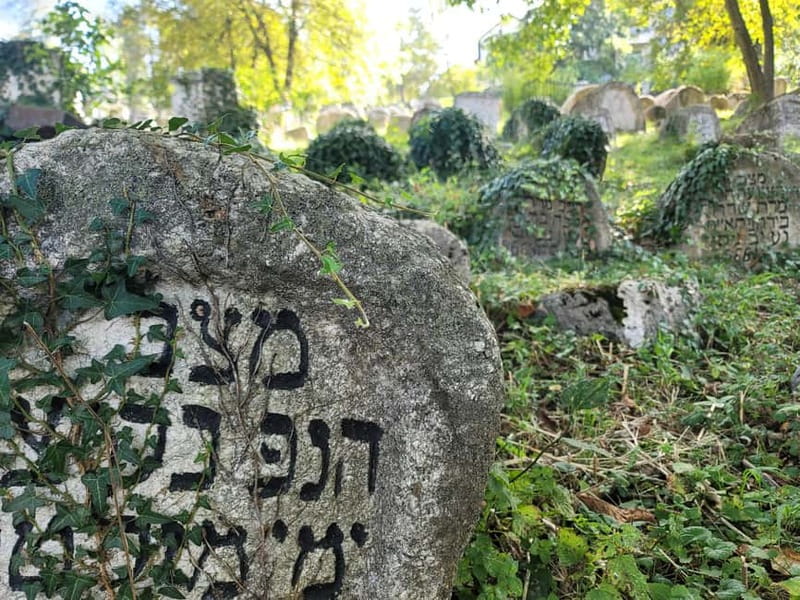
The stop at the Jewish Cemetery adds another viewpoint on the wartime geography of Sarajevo. You have about 15 minutes there with the guide. Sniper Alley and the cemetery are not presented as separate curiosities. Together, they help explain how exposed the city was and why movement through it became so dangerous.
This part can be difficult. The subject is serious, and the tour moves from the pleasures of coffee and crafts into recent suffering. That contrast is not a flaw, but you should be ready for a sober section of the day. I value the inclusion because a visit to Sarajevo feels incomplete without some understanding of the siege.
Vrelo Bosne closes the day with a walk by the springs
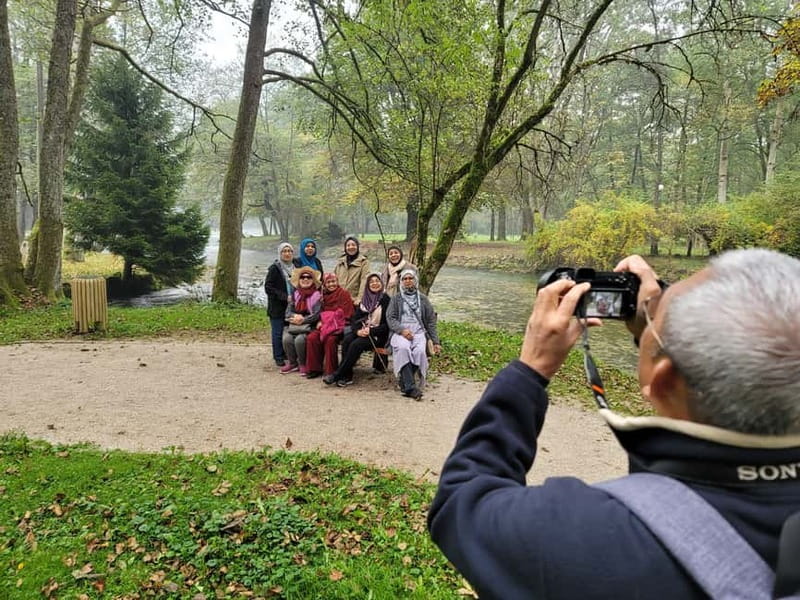
The final major stop is Vrelo Bosne, a nature park at the springs of the Bosna River. You have about 40 minutes for sightseeing and walking, and entry is included.
After the dense urban history and the emotional weight of the war museum, this is a welcome change of rhythm. You can walk, take photographs, and spend time near the river springs. The tour does not ask you to choose between Sarajevo’s city culture and its natural setting. It gives you a short look at both.
Do not expect a long nature excursion. Forty minutes is enough for a pleasant visit, not an extended hike or a full day in the park. Still, the timing works well as a closing stop. You finish with open space and moving water rather than another indoor explanation.
After Vrelo Bosne, you return to your accommodation. You can also ask to be left in the Old Town instead, which is useful if you want to continue your evening there. The tour data says this drop-off choice is available according to your preference.
What the $93 price covers
The price is $93 per person. That is not the cheapest way to see Sarajevo, but the value becomes clearer when you count what is bundled into the day:
- Hotel or accommodation pickup and drop-off
- Transport in a modern vehicle
- A licensed English-speaking guide
- Entry to the War Tunnel Museum
- Entry to Vrelo Bosne
- A bottle of water
- Bosnian coffee tasting
You are paying for a seven-hour route that links central Sarajevo with Trebević, the wartime sites, and Vrelo Bosne. The included transport and admissions remove several small costs and planning tasks. The main item not included is lunch, along with personal expenses.
The price makes the most sense if you want a broad first look at the city and do not want to organize separate rides or museum visits. If you prefer to spend half a day in Baščaršija alone, or want long visits at each historic site, a private custom arrangement might suit you better. No group size is specified, so ask about that before booking if the size of the vehicle or group matters to you.
How the guide shapes the day
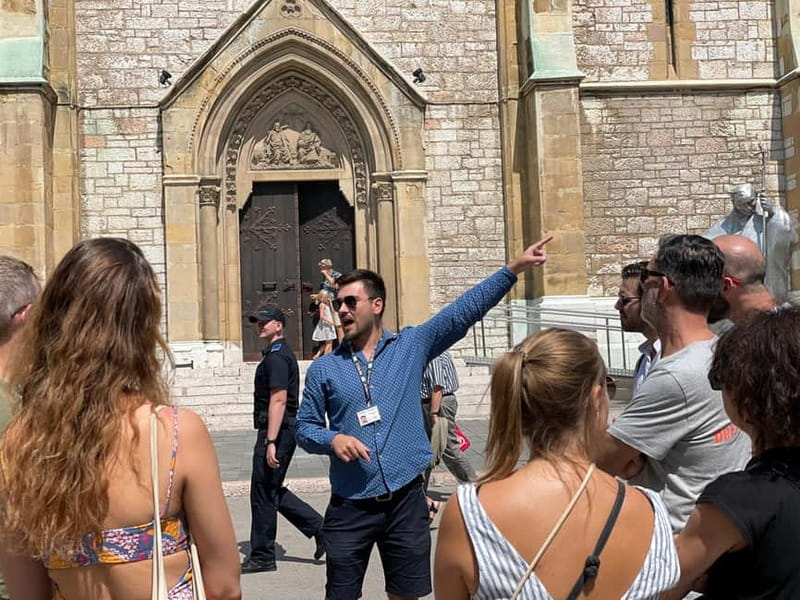
The guide is central to this experience because several stops are meaningful mainly through explanation. A bridge, cemetery, old market, and bobsled track can all be seen quickly, but the connections between them require context.
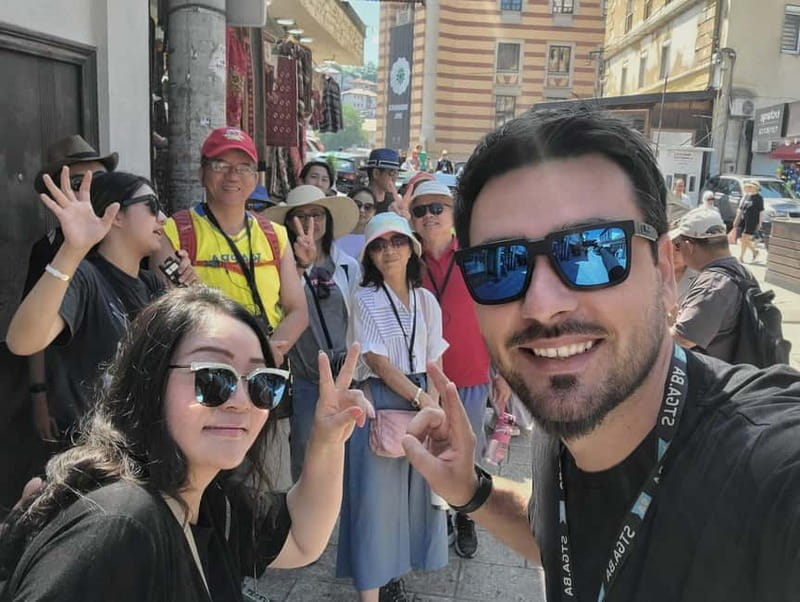
Edis is specifically praised for planning the day well, answering every question, and explaining Sarajevo, the country’s past, and its people. That is exactly the kind of guide you want on a route that moves across Ottoman, Austro-Hungarian, Olympic, and wartime subjects.
The tour is offered in English with a licensed guide. Since the schedule is full, do not hesitate to ask questions during the stops that matter most to you. The feedback connected with Edis suggests that questions are welcome, and his careful planning is one of the strongest reasons to consider this particular day.
Who should book this Sarajevo tour?
I would recommend it most strongly to a first-time visitor with one free day in Sarajevo. You get the essential old town, several religious and civic landmarks, the city view from Yellow Bastion, the Olympic track, the Tunnel of Hope, the Jewish Cemetery, and Vrelo Bosne.
It also suits you if history is your main interest but you do not want a day spent only indoors. The route moves between walking streets, viewpoints, a museum, an Olympic site, and a nature park.
Families and visitors who prefer arranged transport may also appreciate the pickup and drop-off. The activity is listed as wheelchair accessible, though the exact conditions at each stop are not described, so ask the provider about surfaces and access for your needs.
I would hesitate only if you dislike full schedules or want to explore at your own speed. The Old Town stops are short in places, and lunch is not included. Bring personal spending money and expect to choose a meal during the day, since no lunch arrangement is listed.
Practical details before you reserve
Pickup is provided from the lobby of your hotel or another location in Sarajevo. The tour lasts seven hours, with starting times available according to the booking calendar.
You can cancel up to 24 hours before the activity for a full refund, and the reserve-now, pay-later option keeps payment flexible. These terms are useful if your Sarajevo schedule is still changing.
The tour includes a bottle of water, but lunch is not included. Wear comfortable clothing for the Old Town walking section and the 40-minute visit at Vrelo Bosne. The tour combines guided sightseeing with photo stops, so carry whatever you need for both.
The activity has a perfect rating from three verified bookings, a small sample that should be read as encouraging rather than final proof. The most useful detail is the specific praise for Edis: strong planning, thoughtful answers, and a day that balances moving history with enjoyable city experiences.
Should you book the seven-hour route?
Book it if you want Sarajevo explained as a whole rather than visited in isolated pieces. The combination of Baščaršija, Bosnian coffee, Latin Bridge, Trebević’s Olympic track, the Tunnel of Hope, and Vrelo Bosne gives you a clear first picture of the city.
At $93, the included transport, guide, coffee, water, and entry fees make the cost reasonable for a full day. Choose it with realistic expectations: this is a fast, broad introduction, not a slow museum tour. If that sounds right, and you value careful guiding, pickup convenience, and a serious look at Sarajevo’s recent past, it is a strong choice.
FAQ
How long does the Sarajevo Full Day Tour last?
The tour lasts seven hours.
What language is the guided tour offered in?
The live tour guide speaks English.
Is hotel pickup included?
Yes. Pickup is provided from your hotel lobby or another location in Sarajevo.
Is hotel drop-off included?
Yes. You are returned to your accommodation, or you can be left in the Old Town according to your preference.
What entrance fees are included?
Entry tickets to the War Tunnel Museum and Vrelo Bosne are included.
Is lunch included?
No. Lunch and personal expenses are not included.
Is Bosnian coffee included?
Yes. A Bosnian coffee tasting is included during the visit to Morića Han.
Does the tour visit the Sarajevo Olympic bobsled track?
Yes. The Sarajevo Olympic Bobsleigh and Luge Track is visited for about 40 minutes.
Does the tour include the Tunnel of Hope?
Yes. You visit the Sarajevo Tunnel Museum for about 45 minutes.
Is the tour wheelchair accessible?
Yes. The activity is listed as wheelchair accessible.
Just added around Bosnia and Herzegovina
- Sarajevo Under Siege: A War History Tour★ 5.0 · 10 reviews
- WAR TUNNEL – Sarajevo’s only way of a communication during the WAR – Top secret★ 5.0 · 12 reviews
- Private Full Day Safari Tour★ 5.0 · 8 reviews
- Ultimate Gastro Experience★ 4.5 · 14 reviews
- Mysterious Visoko Pyramids Driving and Walking Tour★ 5.0 · 7 reviews
- Secret Tito’s Bunker/Konjic Tour★ 5.0 · 4 reviews
- The Secret Lifeline: Sarajevo’s War Tunnel Tour★ 5.0 · 6 reviews
- Crossroads of Cultures – Sarajevo Walking Tour★ 5.0 · 8 reviews
Full-Day, compared.

Mostar and Kravice Waterfalls Full-Day Tour from Split
Read our review →