
Reviewed · MUSEUMS
SARAJEVO CONCEPTUAL ART TOUR (galleries, art and arhitecture)
Sarajevo’s modern art scene often hides behind ordinary doors, and this tour takes you straight to it. You’ll move from a former Austro-Hungarian prison turned gallery to concrete war memorials, small exhibition spaces, and the playful Festina Lente bridge.
I like the mix of art and memory, especially the Sarajevo Roses and Mensud Kečo’s Srebrenica sculpture. I also like the small-group format, capped at 15 people, and the chance to hear guide Mak connect Sarajevo’s art with his own wartime experiences. The main consideration is pace: two to three hours gives you a useful introduction, but not much time for long gallery visits or unhurried coffee.
Key points to know before booking
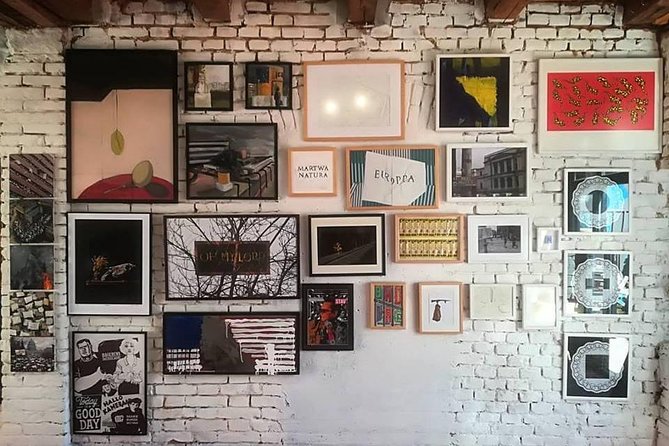
- Former prison turned art space: Brodac Gallery occupies an old building with a past tied to the Austro-Hungarian occupation and serves local craft beer.
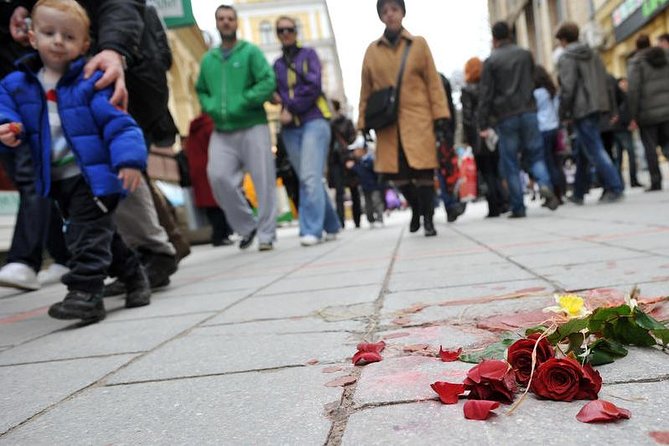
- War memorials in everyday places: See Sarajevo Roses on Ferhadija Street, where red resin fills concrete scars left by mortar explosions.
- A direct link to contemporary art: Galerija Java supports Bosnian and international artists across several mediums.
- A powerful Srebrenica memorial: Veliki Park holds Mensud Kečo’s Nermine, dođi, made from concrete, reinforcement bars, plastic, and silicon.
- Art with a café pause: The route ends near Skenderija Bridge, with a break at Gallery BORIS SMOJO and a look at Festina Lente.
- Easy small-group logistics: The tour runs in English, begins at 1 pm, and has a maximum of 15 participants.
Why Sarajevo’s art scene deserves a dedicated tour
Sarajevo is easy to read as a city of Ottoman streets, Austro-Hungarian buildings, and wartime scars. Those are important parts of the city, but they do not explain how Sarajevo’s artists respond to the present.
This experience gives you a different route through the center. You are not simply looking at paintings in a gallery. You are connecting exhibition spaces with public sculpture, damaged pavement, architecture, and the city’s recent past.
That mix matters. A conventional museum visit can separate art from daily life. Here, the city itself becomes part of the subject. A concrete scar in a pedestrian street can carry as much meaning as a sculpture inside a gallery.
I also like the practical design. You do not need to work out which small galleries are open, where they are, or how to link them on foot. The guide handles the route, while you get the context that is easy to miss when exploring alone.
The tour is in English and lasts roughly two to three hours. Since it begins at 1 pm, it fits neatly into an afternoon. It is long enough to give you a clear sense of Sarajevo’s contemporary art world without taking over your whole day.
A few more Sarajevo trips to weigh up
- Fall of Yugoslavia, Sarajevo War Tour with Tunnel of Hope Museum and Frontlines
★ 5.0 · 1,314 reviews - Sarajevo: Tunnel Museum Yugoslavia War Tour with War Veteran
★ 5.0 · 1,111 reviews - Tunnel Museum: Bosnian & Yugoslav Wars Tour with War Veteran
★ 5.0 · 551 reviews
Brodac Gallery, art inside a former prison
The first stop is Brodac Gallery, at Đulagina 2, where the tour begins. The building is part of the experience. It was once a prison during the Austro-Hungarian occupation, and it now serves as a cozy setting for contemporary Bosnian art exhibitions.
That contrast gives Brodac its character. You are entering an old place with a difficult past, but the room now supports artists and conversation. The setting keeps the visit from feeling like a quick white-wall gallery stop.
The exhibition changes from time to time, so you should think of Brodac as an introduction to Sarajevo’s art scene rather than a fixed collection. The focus is contemporary Bosnian work, and the guide can help explain what you are seeing and why this small space matters.
You also get a local craft beer option here, Gelender. It is a small but welcome detail. Art can be easier to discuss when the visit includes a relaxed drink, and this gives the stop a social feel rather than a purely formal one.
The planned visit lasts about 45 minutes, making Brodac the longest early stop. That should give you enough time to look around and ask questions. If you prefer large museums with permanent collections, this may feel modest. If you enjoy temporary shows in places with character, it is a strong opening.
Ferhadija Street and Sarajevo Roses
From Brodac, the route continues to Ferhadija Pedestrian Street. Ferhadija runs through the central part of Sarajevo, from the Vječna Vatra area toward Gazi Husrev-Begova Street, where it continues as Sarači Street.
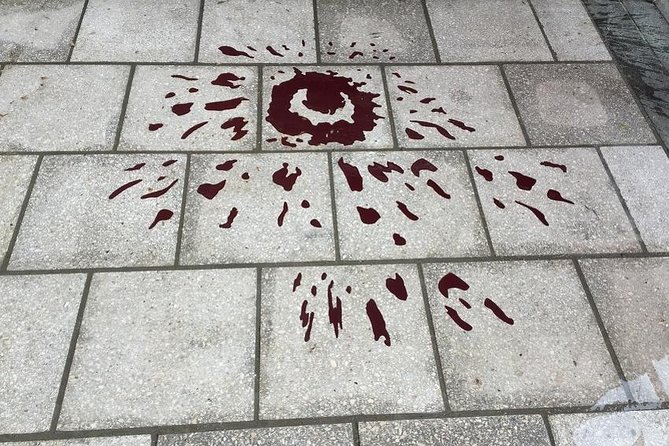
The important art here is on the ground. Sarajevo Roses are concrete scars created by mortar-shell explosions. The impact patterns are filled with red resin, giving them a flower-like shape and marking places where people were killed during the Siege of Sarajevo.
These are not decorative street details. They are memorials placed in the same public spaces where people once walked, waited, and tried to carry on with daily life. The tour gives you time to look closely and understand why these marks are part of Sarajevo’s visual identity.
The stop lasts about 30 minutes and has no admission fee. That makes it an efficient part of the experience, but it also means the conversation carries much of the weight. Guide Mak is especially relevant here. The one published personal account describes him as warm, helpful, and willing to share his own experiences during the war.
You should approach this section with some care. The subject is painful, and the tone is more reflective than light. That is also its value. You are not treating the city’s scars as background scenery. You are learning how a simple public mark can preserve memory.
Galerija Java and Sarajevo’s contemporary artists
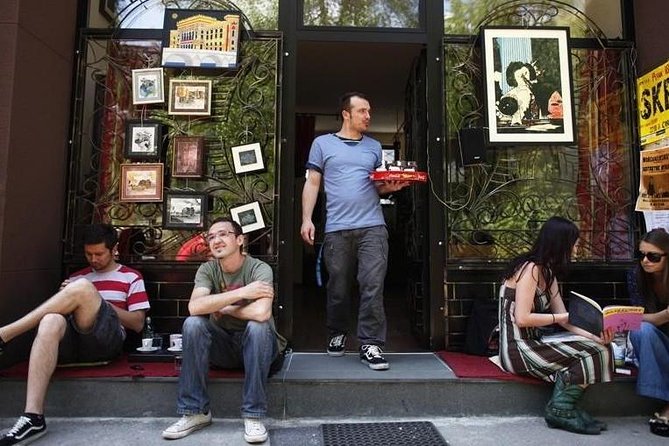
Galerija Java, at Titova 21, brings you back indoors. It sits in the center of town and has helped build Sarajevo’s contemporary art scene by giving artists a place to show their work.
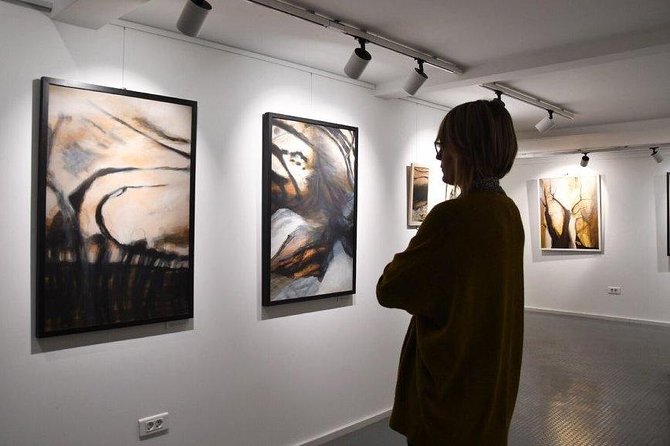
The gallery supports Bosnian and international artists and works with creators across different artistic mediums. That range is useful for a short tour because you are not limited to one style or one type of object.
I would give Java your full attention. Small contemporary galleries can be easy to rush through, especially after walking and discussing the Sarajevo Roses. The planned visit is about an hour, so this is the best chance to slow down and spend real time with the art.
The gallery’s importance is not only what is hanging on the walls. It also shows how a city’s art community grows. Artists need rooms where they can present new work, meet an audience, and take part in a wider exchange. Java represents that working side of the art scene.
Still, the exact exhibition will affect your experience. Temporary galleries change. You may find a show that immediately clicks with you, or one that takes more explanation. That uncertainty is normal for a contemporary art visit, and the guide’s role is useful here.
Same country, a completely different kind of day:
- Sarajevo: Mostar, Konjic, Blagaj Tekke, Pocitelj & Waterfall
★ 4.9 · 1,666 reviews - Sarajevo: Grand Walking Tour Through Time and Cultures
★ 4.8 · 1,236 reviews - Sarajevo: Mostar, Konjic, Sufi House, Pocitelj & Kravice Falls
★ 5.0 · 1,179 reviews - ROSES OF SARAJEVO (Official WAR + CITY tour)- Story of a Survivor
★ 5.0 · 770 reviews
Veliki Park and a memorial to Srebrenica
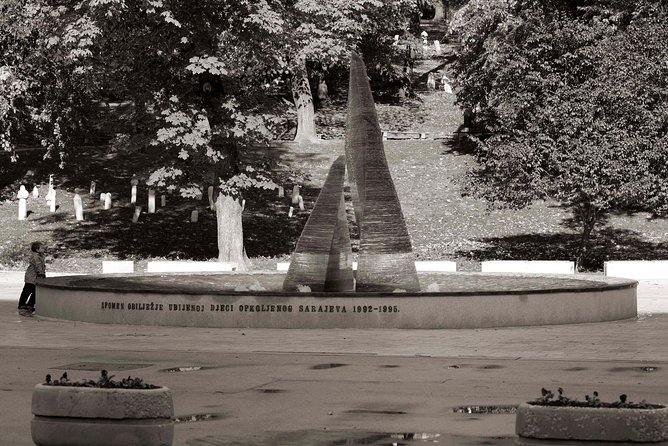
The next stop is Veliki Park, one of Sarajevo’s best-known parks. Here you see Nermine, dođi, a sculpture by Bosnian artist and sculptor Mensud Kečo.
The work is dedicated to the genocide in Srebrenica. It uses concrete, reinforcement bars, plastic, and silicon to represent the distressing documented photograph that inspired the artist.
The materials are blunt and industrial. They do not soften the subject. That directness is part of the sculpture’s force, and its public setting matters too. You encounter it in a park, not behind a museum entrance or inside a room reserved for memorials.
This is a brief, 30-minute stop, but it may stay with you longer than some of the gallery visits. The subject requires attention, and you may want a quiet moment before moving on.
The tour does not treat art as separate from Bosnia and Herzegovina’s recent past. That is one of its strongest qualities. You see how artists use public work to remember violence, mourn lives, and ask people not to look away.
If you are hoping for a cheerful art walk filled mostly with design and architecture, note the emotional balance here. The experience includes serious wartime and genocide-related material. For many people, that is precisely why it feels meaningful. You should book it knowing the tour asks for some reflection.
Gallery BORIS SMOJO and the walk to Festina Lente
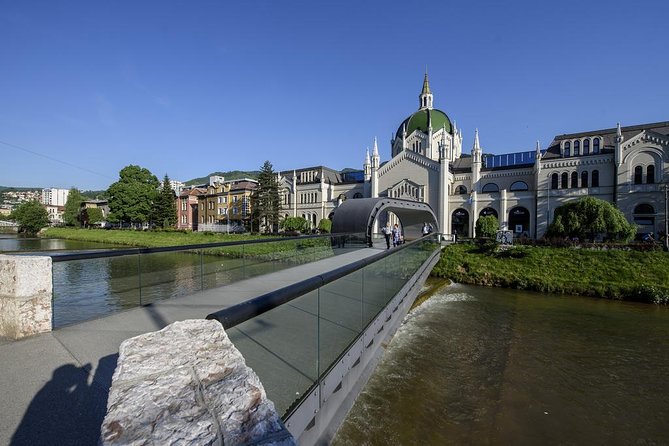
The final section takes you toward Skenderija Bridge. You stop at Gallery BORIS SMOJO for a café break, then continue to see the Festina Lente bridge.
The café break gives the route a change of rhythm. After several stops involving war memory and contemporary art, sitting down briefly can help you absorb what you have seen. The supplied details do not specify the length of the break or what you must purchase, so treat it as a planned pause rather than a full meal stop.
Festina Lente is a bridge with a distinctive design. Its name means hurry slowly, an apt idea for a tour that asks you to look at details rather than race between headline sights.
The bridge adds architecture to the experience. You have already seen art in galleries and memorials in public spaces. Here, the built environment becomes the final visual subject. It is a fitting end because Sarajevo’s identity is shaped by the way buildings, streets, bridges, and memories sit together.
The tour ends in Skenderija, at or near Skenderija Bridge. That makes the route useful if you want to continue exploring this part of the city afterward. The start and end points are different, so plan your later afternoon around finishing near Skenderija rather than returning to Đulagina 2.
What the $33.64 price gives you
At $33.64 per person, the price is reasonable if you value access and interpretation more than a long list of included admissions.
Several stops are public or free, including Ferhadija Street and Veliki Park. The paid value comes from the guide, the organized walking route, the gallery access, and the way the separate places are linked into one story.
You are also paying for time saved. Sarajevo’s center is walkable, but the smaller galleries are not necessarily obvious to someone visiting for the first time. The tour removes the guesswork and places Brodac, Java, BORIS SMOJO, the Sarajevo Roses, the Srebrenica memorial, and Festina Lente into a single afternoon.
The maximum group size is 15. That is small enough to make questions practical, though it is not a private tour. If the group reaches its limit, the gallery interiors may feel less intimate. The tradeoff is a lower price than a private guide and the chance to meet other people interested in art.
The tour becomes especially good value if you have already seen Sarajevo’s major historic sights and want another angle. It is less suited to someone seeking a standard overview of the city or a museum-heavy afternoon.
Guide Mak and the value of personal context
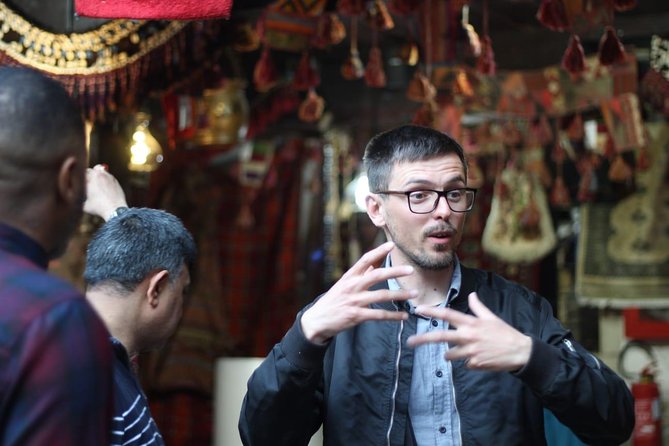
Guide Mak is an important part of the experience. The available feedback identifies him by name and describes him as helpful, friendly, and willing to answer questions. It also notes that he shares personal experiences from the war.
That personal element can change how you understand the Sarajevo Roses and the memorial at Veliki Park. Dates and facts matter, but first-person context can show how public memory works in ordinary streets and parks.
Mak also wrote a book and gave a copy as a personal gift during one experience. That is not something you should assume will happen on every booking, but it does suggest a guide who takes the subject personally and enjoys sharing more than a basic route.
The tour description does not provide a detailed professional biography, so I would not book it expecting a formal academic lecture. Instead, expect a guided conversation built around art, architecture, and Sarajevo’s wartime memory.
That is good news if you like asking questions. If you prefer to move silently and study each work alone, a self-guided gallery day may suit you better.
Timing, walking, and practical planning
The tour begins at 1 pm at Đulagina 2 in Sarajevo and finishes in Skenderija. It is offered in English and uses a mobile ticket.
The route includes several urban stops, pedestrian streets, galleries, a park, and a bridge. The supplied information does not state the exact walking distance or surface conditions, so you should wear comfortable shoes and be ready to walk between locations.
Most people can participate, and the tour is near public transportation. Because the route is spread across central Sarajevo, public transport may be useful for reaching the start or continuing from the end.
Admission is included at Brodac Gallery, Galerija Java, and Gallery BORIS SMOJO. Ferhadija Street, Veliki Park, and the public-art portions of the route do not require an admission fee.
You receive confirmation when booking. Free cancellation is available if you cancel at least 24 hours before the 1 pm start time. Changes or cancellations made within that final 24-hour period are not accepted for a refund. The experience also requires a minimum number of participants, so a cancellation by the operator for that reason results in an alternative date or experience, or a full refund.
Who should book this Sarajevo art walk
I would choose this tour if you want to see Sarajevo beyond its major historic attractions. It suits you especially well if you like contemporary art, public sculpture, architecture, and difficult subjects handled in a direct way.
It is also a smart pick for a first visit because the route introduces several art spaces without demanding a full day. You get a map of the city’s contemporary scene, then you can return to the gallery that interests you most.
The tour may suit you less if your main goal is Ottoman architecture, local food, or a broad city orientation. It does not promise a standard sightseeing circuit. Its focus is narrower and more thoughtful.
Families with older children and teenagers interested in art may find the mix engaging, but the war and genocide memorials require a level of maturity. The small group and English format also make it a good choice for people who want to ask questions rather than simply follow a guide from place to place.
Should you book it?
Book this tour if you want a compact, human look at Sarajevo’s contemporary art and public memory. The strongest reasons are the unusual Brodac setting, the Sarajevo Roses, the Srebrenica memorial sculpture, and Mak’s personal connection to the city’s wartime story.
Skip it if you want a relaxed gallery crawl with little historical weight. This is not only about attractive artwork. It asks you to think about how Sarajevo remembers, rebuilds, and expresses itself through concrete, galleries, bridges, and public space.
At $33.64, the experience offers good value for a small-group afternoon, especially if you would otherwise struggle to find these places on your own. Give yourself room afterward to process the heavier material, then continue exploring Skenderija from the tour’s final stop.
FAQ
Where does the Sarajevo Conceptual Art Tour begin?
The tour begins at Đulagina 2, Sarajevo 71000, Bosnia and Herzegovina.
Where does the tour end?
It ends in the Skenderija area of Sarajevo, at Skenderija, 71000 Sarajevo.
What time does the tour start?
The start time is 1 pm.
How long does the tour last?
The experience lasts approximately two to three hours.
What language is the tour offered in?
The tour is offered in English.
How many people can join the tour?
The maximum group size is 15 travelers.
Which places are included?
The route includes Brodac Gallery, Ferhadija Pedestrian Street and its Sarajevo Roses, Galerija Java, Veliki Park and the Nermine, dođi sculpture, Gallery BORIS SMOJO, and the Festina Lente bridge.
Can I cancel for a full refund?
Yes. You can cancel for a full refund up to 24 hours before the experience starts. Cancellations or changes made less than 24 hours before the start time are not refunded.
Just added around Sarajevo
- Sarajevo Under Siege: A War History Tour★ 5.0 · 10 reviews
- WAR TUNNEL – Sarajevo’s only way of a communication during the WAR – Top secret★ 5.0 · 12 reviews
- Private Full Day Safari Tour★ 5.0 · 8 reviews
- Ultimate Gastro Experience★ 4.5 · 14 reviews
- Mysterious Visoko Pyramids Driving and Walking Tour★ 5.0 · 7 reviews
- Secret Tito’s Bunker/Konjic Tour★ 5.0 · 4 reviews
- The Secret Lifeline: Sarajevo’s War Tunnel Tour★ 5.0 · 6 reviews
- Crossroads of Cultures – Sarajevo Walking Tour★ 5.0 · 8 reviews
Museums, compared.

Fall of Yugoslavia, Sarajevo War Tour with Tunnel of Hope Museum and Frontlines
Read our review →
Browse the lists this tour appears in