
Reviewed · SARAJEVO TOURS
Sarajevo for beginners
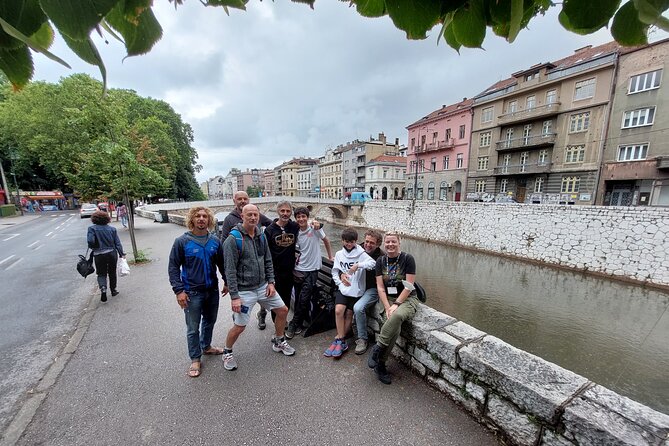
Sarajevo’s story is packed into a compact old center, and this two-hour walking tour gives you a useful first look at the city’s Ottoman, Austro-Hungarian, Jewish, and modern layers. You’ll see the spot linked to the 1914 assassination, sip Bosnian coffee or tea, and move from cathedral to mosque within a few minutes.
I like the strong mix of landmarks and local stories, especially the explanation of inat, the Bosnian idea of stubborn pride, at Inat kuća. I also like the guide’s practical role: Samra is praised for clear English, humor, personal insight, and tips that help you plan the rest of your visit.
The main drawback is pace. Seventeen stops in roughly two hours means most places receive a short explanation rather than a full visit, and admission tickets are not included. Think of this as a city orientation, not a museum tour.
Key points to know before you book
- Seventeen central stops in about two hours: You cover a remarkable amount of Sarajevo on foot, but the schedule moves quickly.
- A genuine meeting of cultures: The route links Catholic, Orthodox, Jewish, Muslim, Ottoman, and Austro-Hungarian landmarks.
- Bosnian coffee or tea included: This adds a small but welcome local touch to the morning.
- Samra is a major part of the appeal: She is praised for polished English, humor, historical accuracy, warmth, and useful advice for the rest of your trip.
- The assassination site gets proper context: The Latin Bridge area is treated as a place of political change, not just a quick photo stop.
- Good value at $34.92: For a small-group introduction with a maximum of 18 people, the cost is reasonable, especially early in a Sarajevo visit.
Why this Sarajevo walk works well for first-time visitors
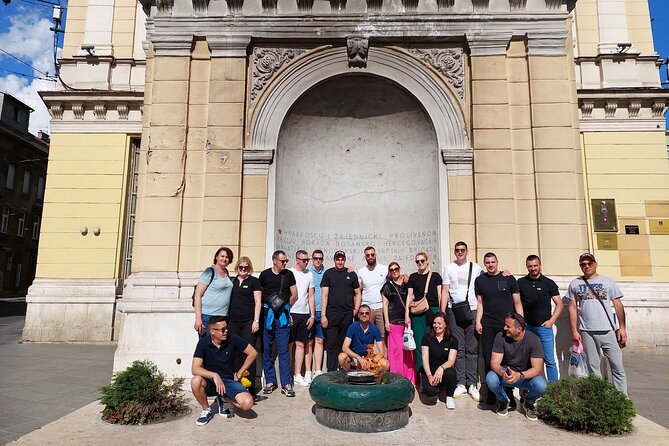
Sarajevo can feel confusing at first because its architectural and religious traditions change from one block to the next. A church, a former Ottoman market, a synagogue museum, and an Austro-Hungarian city hall can all appear within a short walk.
That is exactly what makes this tour useful. You are not simply checking off sights. You are learning how Sarajevo grew, how its communities lived beside one another, and why the city’s past still shapes the streets you see today.
The 9:00 am start is practical. You get your bearings before the day becomes busy, then have the rest of the morning for museums, coffee, shopping, or a second look at the places that caught your attention. Since the tour returns to its starting point, you are not left at an unfamiliar end point.
The group can reach 18 people. That is still manageable for a walking tour, though the experience may feel more personal with a smaller turnout. If you value questions and conversation, stay close to the guide.
Other Sarajevo days people book alongside this one:
- Sarajevo: Mostar, Konjic, Blagaj Tekke, Pocitelj & Waterfall
★ 4.9 · 1,666 reviews - Fall of Yugoslavia, Sarajevo War Tour with Tunnel of Hope Museum and Frontlines
★ 5.0 · 1,314 reviews - Sarajevo: Grand Walking Tour Through Time and Cultures
★ 4.8 · 1,236 reviews
From Sarajevo Cathedral to the Orthodox Church
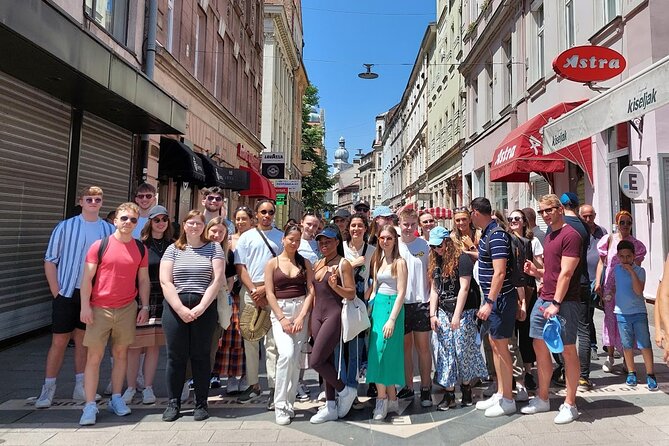
The walk begins at Trg fra Grge Martića, beside the Cathedral of the Sacred Heart of Jesus, known locally as Katedrala Srca Isusova. You get about ten minutes here, enough to admire the simple but attractive exterior and hear why this Catholic cathedral belongs in Sarajevo’s central story.
Next comes the Orthodox Church of the Nativity of the Theotokos, another ten-minute stop. The value here is not only the building itself. Placing the Catholic cathedral and Serbian Orthodox church near the opening of the tour immediately shows you that Sarajevo cannot be understood through one religious tradition alone.
Admission is not included at either church. The route appears designed mainly for exterior viewing and explanation, so you should not expect a long interior visit at every stop.
Austro-Hungarian elegance beside Ottoman trade
The next section shifts between Sarajevo’s later European character and its Ottoman commercial roots.
Hotel Europe receives a short stop of about five minutes. It is described as Sarajevo’s first hotel and the oldest in Southeast Europe, making it an important reminder of the city’s changing role under Austro-Hungarian rule. You will not spend long here, but the building helps explain how Sarajevo became a meeting point between eastern and western styles.
At Tašlihan, only remains survive. This former commercial complex once served the movement of merchants and goods. A five-minute explanation may sound brief, but the ruin works well as a quick visual clue to the trading city beneath modern Sarajevo.
Then comes Gazi-Husrev Beg’s Bezistan, described as the original shopping mall of Sarajevo. That comparison makes the site easy to understand. It was a covered commercial center, and it remains one of the clearest places to connect present-day shopping streets with the older Ottoman marketplace.
This is one of the tour’s strongest features: the guide can make a fragment or old building meaningful without asking you to spend an hour inside it.
The assassination site and the Latin Bridge
The stop called the Location of the Sarajevo Assassination gives the morning its most famous political moment. In 1914, the assassination of Archduke Franz Ferdinand and his wife, Sophie, helped set off the chain of events that led to the First World War.
The tour allows about 15 minutes here, more than at most other stops. That is sensible. The site needs context, and the story is easy to flatten into a single dramatic sentence. A good explanation should connect the location to the tensions of the Austro-Hungarian period and the way one event in Sarajevo altered world affairs.
You then see the Latin Bridge, with about ten minutes devoted to it. The bridge is known for having three names, an unusual detail that gives the guide an opening to explain how names and political periods have changed over time.
I would pay close attention here. The bridge and assassination location are close together, but they are not exactly the same point. The distinction matters, and a clear guide helps you understand what happened where.
Same country, a completely different kind of day:
- Sarajevo: Mostar, Konjic, Sufi House, Pocitelj & Kravice Falls
★ 5.0 · 1,179 reviews - Sarajevo: Tunnel Museum Yugoslavia War Tour with War Veteran
★ 5.0 · 1,111 reviews - ROSES OF SARAJEVO (Official WAR + CITY tour)- Story of a Survivor
★ 5.0 · 770 reviews - Sarajevo: Tunnel of Hope Tour – Survival and Resilience
★ 4.8 · 630 reviews
Crossing into Sarajevo’s Ottoman quarter
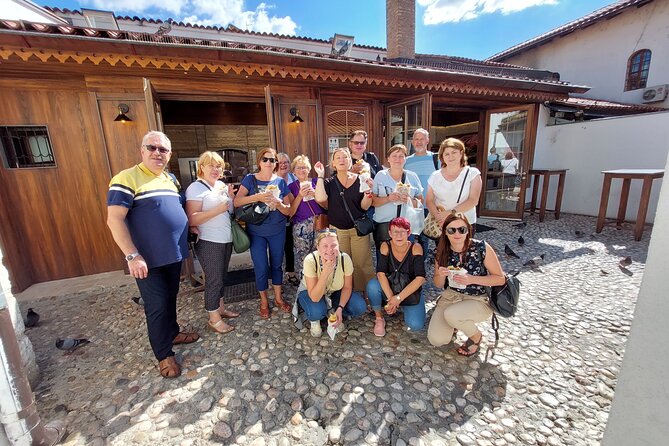
The Emperor’s Mosque introduces one of the city’s oldest Islamic landmarks. The stop lasts around ten minutes and helps place Sarajevo within the Ottoman period, when mosques, bridges, markets, and caravan facilities shaped daily life.
After that comes Inat kuća, or the House of Spite. This is where you learn what inat means. It is not merely spite in the narrow English sense. The idea suggests stubborn defiance, pride, and a refusal to be pushed around, all wrapped into one memorable local story.
The nearby Šeher-Ćehaja’s Bridge receives five minutes. It is described as Sarajevo’s oldest bridge, with the current structure being the second one built there. This is a short stop, but bridges are useful markers in Sarajevo because they connect the Ottoman city’s transport, trade, and river crossings.
The pace becomes clear in this part of the walk. You are collecting connected clues rather than entering every sight. If one location catches your eye, note it and return later at your own speed.
Sarajevo City Hall and the story of Bravadžiluk Street
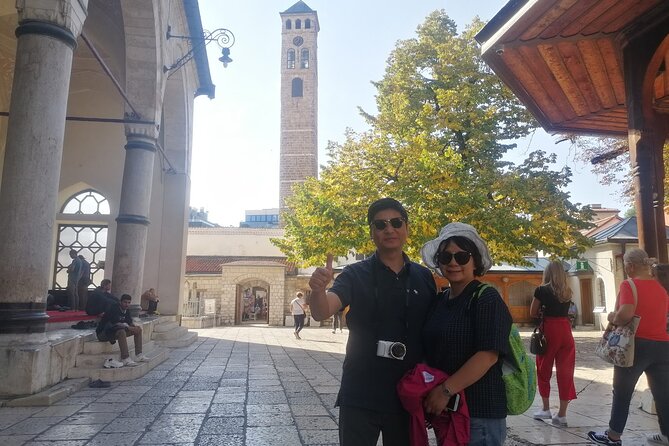
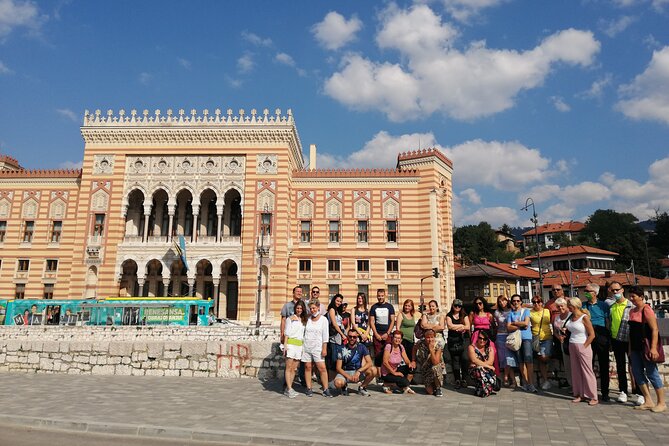
Sarajevo City Hall, or Vijećnica, gets about 15 minutes, making it one of the more substantial stops. Built during Austro-Hungarian rule, it was placed in the center of the old part of town and designed to fit beside Ottoman architecture.
That contrast is one of Sarajevo’s defining visual pleasures. City Hall represents imperial administration and European design, while the nearby old quarter carries the forms of Ottoman commerce and worship. Seeing the two together gives you a much clearer sense of the city than either one would provide alone.
You also hear the story of the development of Bravadžiluk Street. This is the sort of detail I value on a walking tour. A street name and a row of shops can seem ordinary until someone explains how the road developed and what kind of work or trade shaped it.
Admission to City Hall is not included. If the building interests you, treat the walking tour as a preview and decide later if you want to return for a longer visit.
Kazandžiluk, Sebilj, and Baščaršija
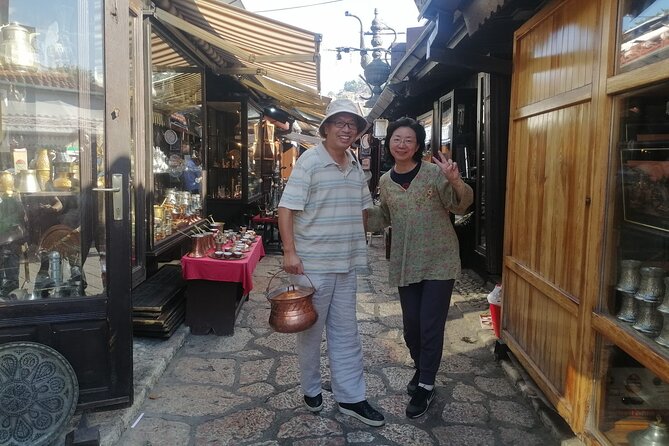
Kazandžiluk is one of the most authentic streets on the route, with about ten minutes to take in its traditional character. Its name is connected with coppersmithing, and the street helps you see Sarajevo’s old craft culture rather than only its major monuments.
The tour then reaches Sebilj, the famous wooden fountain at the heart of Baščaršija. You get five minutes here, enough to understand why it functions as a meeting place for so many people. It is also one of the easiest landmarks to use when finding your way back through the old quarter.
Baščaršija, Sarajevo’s main square, receives another ten minutes. This is the point where the Ottoman quarter becomes easiest to read as a whole: market lanes, religious buildings, craft streets, and gathering places all fit into one compact center.
Because the area is central and popular, the surroundings may feel more active than the quieter opening stops. Keep an eye on the guide and avoid falling behind while looking at shop fronts or taking photographs.
Morića Han and the Gazi Husrev-beg Mosque
Fotokopirnica Morića Han is introduced as one of the coolest places in Sarajevo. The name may look unusual, but the stop is memorable because it brings you to a caravanserai setting, a place associated with merchants and travelers moving through the Ottoman city.
The route gives you ten minutes here. That is enough to hear why the site matters and to absorb its atmosphere, though not necessarily enough for a slow exploration. The guide’s storytelling is especially important at stops like this because the setting alone may not explain its former purpose.
The Gazi Husrev-beg Mosque is another ten-minute stop and one of the key religious buildings in central Sarajevo. It is described as the central mosque in the city, and its position near the market quarter shows how worship, trade, and public life were closely linked.
The phrase different time, different story signals a shift in the way Sarajevo is presented. You move through several periods in one morning, and the guide connects them rather than treating the city as a collection of unrelated buildings.
The Jewish Museum and Sarajevo’s shared story
The final major stop is the Jewish Museum of Bosnia and Herzegovina, where you see the square and hear about the Jewish community in Bosnia and Herzegovina. The tour allows about 15 minutes, giving this subject more space than some of the smaller architectural stops.
That balance matters. Sarajevo’s story is not only Catholic, Orthodox, Muslim, Ottoman, or Austro-Hungarian. The Jewish presence is another essential part of the city’s identity, and including the museum keeps the tour from offering a narrow version of the past.
Admission tickets are not included, so the stop is best understood as an introduction. If you want to explore the museum in detail, you can return later with more time.
The route finishes back at the original meeting point. By then, you should have a mental map of the old center and a list of places worth revisiting.
What the guide adds to the walk
The guide can make or break a short city tour. Here, Samra is repeatedly praised for her passion, humor, personal perspective, strong English, and ability to answer questions. That combination matters because Sarajevo’s history includes sensitive subjects that need care as well as facts.
Her approach appears especially useful for visitors who want more than dates and building names. She explains how to drink Bosnian coffee, offers ideas for other places to visit, and shares local context that can help you make better choices during the rest of your stay.
The tone also seems relaxed. That helps during a route with many stops, since you are hearing a lot in a short time. Irfan is another guide connected with Cooltour Sarajevo, though the available details emphasize Samra most strongly.
The company’s tours have received a 5 rating, with 100 percent recommending the experience. The sample is only ten reviews, so I would not treat that figure as a guarantee. Still, the repeated praise for Samra’s warmth, humor, accuracy, and local insight points to a clear strength.
Is $34.92 a fair price?
At $34.92 per person, the tour is priced reasonably for a two-hour guided walk with a maximum group size of 18 and coffee or tea included.
The value depends on what you want. If you expect museum admission, long interior visits, or a full half-day outing, the price will not cover that. Tickets are not included, and the route gives most stops only five to 15 minutes.
If you want a strong introduction to Sarajevo, the calculation looks better. You receive a local guide, a carefully connected route, historical context, and practical suggestions for continuing on your own. Booking about 38 days ahead is the average, but the important point is to reserve early if you want a particular morning.
Free cancellation is available up to 24 hours before the 9:00 am start time. The tour requires a minimum number of participants, and if that minimum is not met, you are offered another date or experience, or a full refund.
Who should book Sarajevo for beginners?
I would choose this tour for a first morning in Sarajevo, especially if you want the city explained before exploring alone. It suits solo visitors, couples, and small groups who prefer walking and conversation to a bus tour.
It is also useful if you have limited time. The route covers the city’s main center without transport between stops, and you finish where you began.
You should be comfortable with a brisk schedule. Most people can participate, service animals are allowed, and the meeting point is near public transportation, but the information provided does not describe the exact walking distance or terrain.
I would not choose it as your only Sarajevo activity if you want lengthy museum visits or a slow architectural study. Use it to get oriented, then return to the Cathedral, City Hall, museums, mosques, or market streets that interest you most.
Should you book it?
Book this tour if you want Sarajevo to make sense quickly. The route links the city’s most important central landmarks, while the guide adds the human details that a map cannot provide.
The best reasons to book are Samra’s reported style, the mix of religious and political history, the Bosnian coffee or tea, and the chance to hear about local ideas such as inat. The main compromise is speed. You will see a lot, but you will not linger long.
For a first visit, $34.92 is a fair price for a thoughtful orientation walk. Book it early in your stay, keep a note of places you want to revisit, and let the rest of Sarajevo unfold at a slower pace afterward.
FAQ
How long does Sarajevo for beginners last?
The tour lasts approximately two hours.
What time and where does the tour begin?
It starts at 9:00 am at Trg fra Grge Martića, Trg Fra Grge Martića, 71000 Sarajevo, Bosnia and Herzegovina.
Where does the tour finish?
The activity ends back at the original meeting point.
Is coffee or tea included?
Yes. Coffee and/or tea is included.
Are admission tickets included?
No. Admission tickets are not included for the listed stops.
How many people can join the tour?
The maximum group size is 18 people.
Just added around Sarajevo
- Sarajevo Under Siege: A War History Tour★ 5.0 · 10 reviews
- WAR TUNNEL – Sarajevo’s only way of a communication during the WAR – Top secret★ 5.0 · 12 reviews
- Private Full Day Safari Tour★ 5.0 · 8 reviews
- Ultimate Gastro Experience★ 4.5 · 14 reviews
- Mysterious Visoko Pyramids Driving and Walking Tour★ 5.0 · 7 reviews
- Secret Tito’s Bunker/Konjic Tour★ 5.0 · 4 reviews
- The Secret Lifeline: Sarajevo’s War Tunnel Tour★ 5.0 · 6 reviews
- Crossroads of Cultures – Sarajevo Walking Tour★ 5.0 · 8 reviews
Sarajevo Tours, compared.

Fall of Yugoslavia, Sarajevo War Tour with Tunnel of Hope Museum and Frontlines
Read our review →
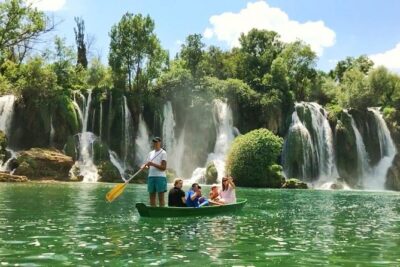
Mostar, Konjic, Sufi House, Pocitelj & Kravice Falls
Read our review →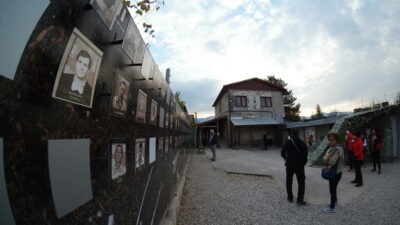
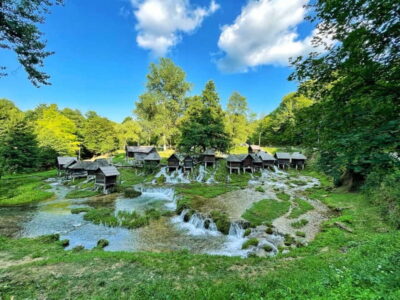
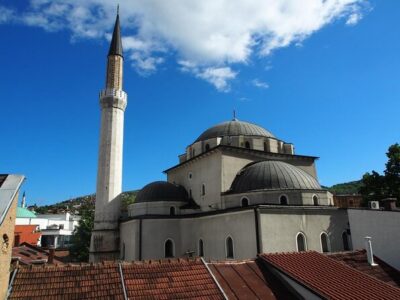
Mostar, Konjic, Dervish House, Pocitelj & Kravica Falls
Read our review →
Bosnian War & Fall of Yugoslavia Tour with Tunnel
Read our review →Browse the lists this tour appears in