
Reviewed · PRIVATE DRIVERS
Sarajevo to Belgrade: Transfer With East Bosnia Tour
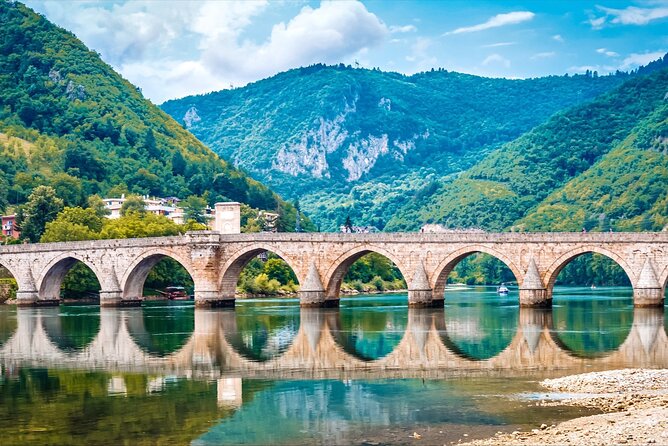
The best thing about this Sarajevo to Belgrade transfer is that it replaces a plain border-to-border ride with a full day of mountain scenery, Ottoman-era landmarks, film-set villages, and small cultural stops. The highlight is the Mehmed Paša Sokolović Bridge over the Drina, a graceful 16th-century bridge tied to Ivo Andrić’s famous novel.
I like the small group size, limited to eight people, and the fact that your driver is also your guide. Guides such as Senad, Kristijan, Adnan, Vedo, and Amer have been praised for clear English, local insight, good humor, and help at the border. I also like the practical value: your hotel pickup, vehicle, water, and luggage transfer are handled in one booking.
The main drawback is time. This is a 12 to 14-hour day, with many hours in the car. The Šargan Eight railway can also add cost and time, and its appeal depends greatly on your interest in old trains and scenic rides. You need to choose your stops carefully if you want to reach Belgrade without feeling rushed.
Key points to know before booking
- The Drina Bridge is the star stop: You get about 45 minutes at Višegrad’s UNESCO-listed Ottoman bridge.
- The route crosses two countries: You travel from Sarajevo through eastern Bosnia into western Serbia, arriving in Belgrade in the evening.
- Your guide makes the difference: The assigned driver may be Senad, Kristijan, Adnan, Vedo, Amer, or another member of the English-speaking team.
- The Šargan Eight train costs extra: You can decide on the day, but the ride may affect the schedule.
- This is a transfer first, sightseeing tour second: You get hotel drop-off in Belgrade, but there is no city tour there.
- Pack light enough for the vehicle: One cabin bag and one checked suitcase per person are included.
Turning a long transfer into a day in the Balkans
The direct trip between Sarajevo and Belgrade is not the easiest journey to arrange by public transport. This service solves the basic problem by taking you from one city to the other while showing you parts of Bosnia and Serbia that are hard to reach by ordinary bus or train.
The usual departure is at 8:00 a.m. from Meet Bosnia Agency at Gazi Husrev Begova 75 in Sarajevo. Pickup can be arranged from a Sarajevo hotel outside the Old Town. Hotels in the Old Town are close to the agency, so you meet there instead.
After a brief introduction and complimentary bottled water, you set out in an air-conditioned vehicle. The group can be as large as eight, though smaller groups are possible. That matters on a day this long. A compact group makes it easier to adjust the pace, ask questions, and agree on how much time to spend at optional stops.
The vehicle includes room for one cabin bag and one check-in suitcase per person. That is useful if you are changing hotels, but you should not treat this as a moving van. Keep your most important items close and pack within the stated luggage allowance.
A few more Sarajevo trips to weigh up
- Sarajevo to/from Dubrovnik Transfer Tour via Mostar & Herzegovina
★ 5.0 · 115 reviews - Sarajevo to/from Belgrade UNESCO Transfer Day Tour (Fees Incl.)
★ 5.0 · 54 reviews - Sarajevo to Split (or opposite): Transfer With Herzegovina Tour
★ 5.0 · 28 reviews
Višegrad and the 1577 bridge over the Drina
The first major stop is Višegrad, where the Mehmed Paša Sokolović Bridge crosses the Drina River. Built in 1577 by Ottoman architect Mimar Sinan for Grand Vizier Mehmed Paša Sokolović, the bridge is one of the finest surviving Ottoman monuments in the region.
You have roughly 45 minutes here, enough to walk along the bridge, look down at the river, and take in its long line of stone arches. The bridge entered UNESCO’s World Heritage List in 2007, but its importance is not only architectural. It is also closely linked with Ivo Andrić’s novel The Bridge on the Drina, which gives the place a literary pull for anyone who has read the book.
I would give this stop your full attention. It is the most meaningful part of the day, combining engineering, Ottoman-era history, Bosnian geography, and literature in one compact site. The river setting also gives you a welcome break after the first stretch of driving.
If you have not read Andrić’s novel, you can still appreciate the bridge. But a little preparation helps. Knowing that the bridge is more than a photo stop makes the visit feel less like a quick pause and more like a meeting point of several centuries of Balkan history.
Andrićgrad, a purpose-built town with a cinematic feel
Near the bridge is Andrićgrad, a planned village built by Serbian filmmaker Emir Kusturica. It extends toward the confluence of the Rzav River and was created as a setting connected with a film based on Andrić’s novel.
You get about 30 minutes to walk around. The design is intentionally theatrical, with buildings and streets meant to suggest different periods and regional styles. It is not an old town that grew naturally over centuries. It is a modern creation built to look and feel like one, and that distinction is worth keeping in mind.
I find Andrićgrad most interesting when approached as a film and architecture project rather than as an untouched historic settlement. You can compare it with Drvengrad later in the day, another Kusturica creation made from scratch. The two places show how a filmmaker has used architecture to build a particular idea of the Balkans.
This is also one stop you may want to keep short. If you prefer genuine old towns, working villages, or archaeological sites, Andrićgrad may feel decorative. The half-hour visit is sensible, since the main cultural weight of this part of the route belongs to the bridge.
Dobrun Monastery in the mountain valley
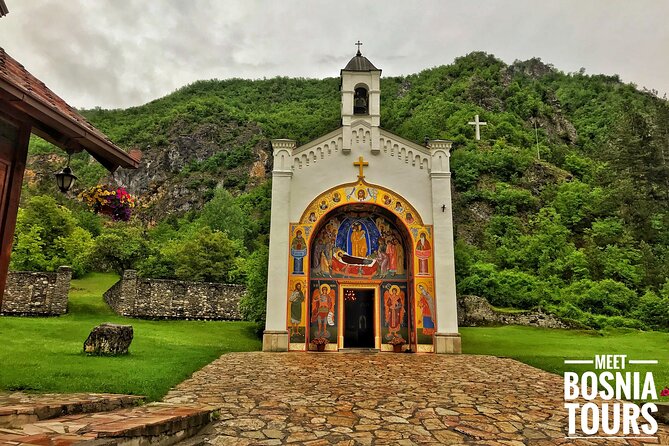
The route then reaches Dobrun Monastery, built in 1343 and described as one of the oldest monasteries in Bosnia and Herzegovina. It sits in a mountainous setting near Višegrad, giving you a quieter stop after the more public bridge and film village.
The planned visit lasts about 20 minutes. That is enough for a look around the monastery grounds and a short pause in the surrounding scenery. Do not expect a long guided museum visit or a large complex. The appeal here is the age of the site, its religious importance, and its setting in a narrow mountain region.
Because the stop is brief, it works best as a small change of pace. You move from Ottoman architecture and modern film design to a medieval Orthodox monastery. That variety is one of the route’s strengths. The day does not focus on one era or one national story.
Entrance fees are not included in the tour price, so you should confirm any on-site charges as you go. The listed stops themselves are presented as free admission, but the general terms place entrance costs outside the package.
Same country, a completely different kind of day:
- Sarajevo: Mostar, Konjic, Blagaj Tekke, Pocitelj & Waterfall
★ 4.9 · 1,666 reviews - Fall of Yugoslavia, Sarajevo War Tour with Tunnel of Hope Museum and Frontlines
★ 5.0 · 1,314 reviews - Sarajevo: Grand Walking Tour Through Time and Cultures
★ 4.8 · 1,236 reviews - Sarajevo: Mostar, Konjic, Sufi House, Pocitelj & Kravice Falls
★ 5.0 · 1,179 reviews
Crossing into Serbia and entering Mokra Gora
After eastern Bosnia, the route continues into Serbia toward Mokra Gora. Border formalities are part of the journey, and the time needed can vary. One of the strongest practical reasons to use a private transfer is having an English-speaking driver-guide manage the road plan and keep the day moving through this part of the trip.
The drive reaches the Mokra Gora area between the Tara and Zlatibor mountain ranges. The Šargan and Mokra Gora nature park covers a very large area, and the road provides changing views of wooded slopes, valleys, and mountain foothills.
You will spend a good part of the day looking through the vehicle windows. This is not dead time if you enjoy road journeys, but it is still time in a car. Bring water beyond the complimentary bottles if you need more, and wear comfortable clothes for repeated stops and a long ride.
The scenery is one of the most praised parts of the experience. The route is especially appealing if you want to see western Serbia without adding several nights to your schedule. It also offers a side of the country that is easy to miss if you fly directly into Belgrade.
Drvengrad and the wooden town of Mećavnik
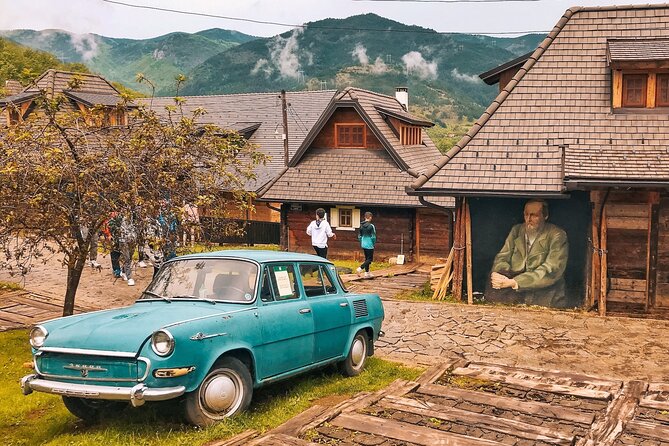
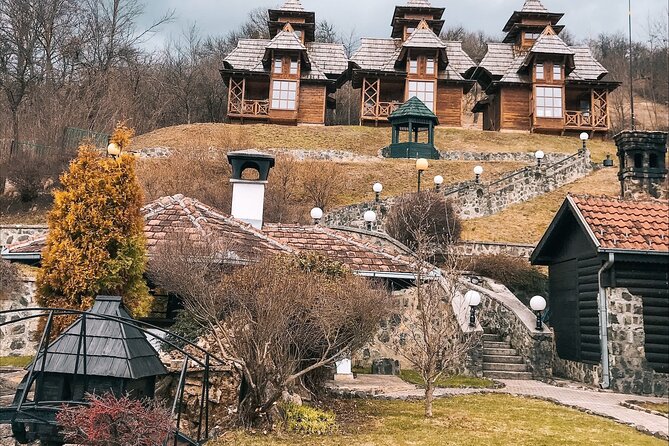
Drvengrad, also called Mećavnik or Wooden Town, is another project associated with Emir Kusturica. The village was built on Mećavnik hill using traditional log cabins brought from the surrounding region. Some of the cabins are said to be about 90 years old, though the settlement itself is modern.
You usually get about an hour here, with free time for lunch. The village is arranged somewhere between a traditional settlement and a small town. Cabins sit on stone bases, and the hillside layout gives the place a strong visual identity.
Drvengrad is more enjoyable if you like film, unusual architecture, and carefully designed cultural sites. It gives you room to walk, eat, and take a break from the road. It also makes a useful contrast with Andrićgrad. Andrićgrad is tied closely to the Drina and Ivo Andrić, while Drvengrad feels more like a filmmaker’s idealized mountain village.
Still, you should know what you are visiting. This is not an untouched village where daily rural life continues exactly as it did in the past. It is a built attraction with authentic regional materials and a modern artistic purpose. Some people find it charming; others may find it staged. The hour-long stop gives you enough time to decide for yourself without taking over the day.
Lunch is not included, so budget separately for food. Since the tour has no fixed meal included, you may want to ask your guide about the timing before choosing the optional train ride.
Should you take the Šargan Eight railway?
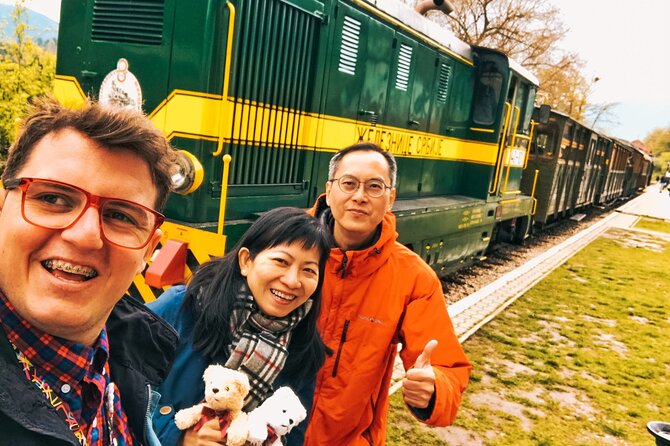
The Šargan Eight is a narrow-gauge railway known for its tight engineering and steep climb through the mountains. Its name refers to the unusual route, which loops and changes direction to gain height over a short distance. Old locomotives and wagons near the line help give the area the feel of an open-air railway collection.
The train ride is optional and costs extra. You can decide on the spot, which is helpful if the weather, timing, or your energy level changes. The scheduled stop is listed as 20 minutes, but a full ride may require more time, so ask your guide how it fits the day’s plan before paying.
I would choose the train if you enjoy railways, mountain views, and old transport systems. It gives the journey a different rhythm and can be a memorable way to see Mokra Gora. I would skip it if you are already tiring of the long drive, watching your budget, or more interested in reaching Belgrade at a comfortable hour.
The train is not universally appealing. Some people find it too tourist-oriented or not worth the additional charge. Children and railway enthusiasts may get the most from it, while adults looking for major historic sights may prefer more time at the bridge or monastery.
The guide is central to the experience
This is sold as a transfer with sightseeing, but the driver-guide shapes the quality of the day. You are with the same person for many hours, through winding roads, border procedures, waiting time, and several very different sites.
The assigned guide varies. Senad has been praised for excellent English, regional context, and calm handling of the border crossing. Kristijan is known for a friendly, outgoing manner. Adnan has been singled out for conversations about Bosnian and Serbian culture and geography, while Vedo is noted for punctuality and humor. Amer has been described as especially strong on both Bosnia and Belgrade, with polished English and wide-ranging information.
Those details matter because the route itself is long. A good guide can explain why a bridge matters, place the two Kusturica villages in context, and make the hours between stops useful. You should feel free to ask questions about the recent past, local customs, geography, and the differences between Bosnia and Serbia.
The tour is offered in English. Children must be accompanied by an adult, and most people can take part. No special fitness requirement is stated, but you should be comfortable with a full day of driving and short walks at several stops.
Is the $156.89 price good value?
At $156.89 per person, this is not the cheapest way to move between Sarajevo and Belgrade. It can be good value if you planned to pay separately for transport, sightseeing, and a private guide.
The price includes the driver-guide, hotel pickup and drop-off, an air-conditioned vehicle, bottled water, and the stated luggage allowance. It also saves you the work of arranging a complicated overland connection and gives you access to Višegrad, Dobrun, Mokra Gora, and Drvengrad in one day.
The value drops if you dislike long road journeys or would only use the service as a basic transfer. In that case, you are paying for stops you may not care about. Food and entrance fees are extra, and the Šargan Eight train requires another payment.
A small group helps justify the price. With a maximum of eight people, this is more personal than a large coach trip. If you book with friends or family, ask about the available group discount. The option to depart from either Sarajevo or Belgrade also makes the service useful for different Balkan itineraries.
Who should book this transfer?
I would recommend it to you if you want to move between Sarajevo and Belgrade overland and prefer a scenic day to a plain transfer. It is particularly well suited to first-time visitors who want context from a local guide, readers interested in Ivo Andrić, people who enjoy historic bridges and monasteries, and anyone curious about western Serbia.
It also works well if you have limited time. Instead of adding separate transport and sightseeing days, you combine them. The trade-off is a very full schedule, so it is not the right choice if you want slow meals, long walks, or a relaxed arrival in Belgrade.
The route is also a good fit for private groups and families with older children. The maximum of eight people keeps the vehicle manageable, and the stops break up the drive. Young children may find the long road portion tiring, even with the sights along the way.
Practical details that affect your day
The usual start is 8:00 a.m., with arrival in Belgrade in the evening. Hotel drop-off is organized in Belgrade, but the service does not include a tour of the city. Plan your Belgrade sightseeing for another day.
Pickup is available from Sarajevo hotels outside the Old Town. If you stay in the Old Town, meet at the agency on Gazi Husrev Begova 75, near the crossing of Mula Mustafe Bašeskije. Confirmation is provided when you book.
Free cancellation is available up to 24 hours before the start time. Changes or cancellations inside that window are not accepted for a refund. The experience also requires a minimum number of people, so a cancellation by the operator would result in another date or experience, or a full refund.
FAQ
How long does the Sarajevo to Belgrade transfer take?
The experience lasts approximately 12 to 14 hours. You usually leave Sarajevo at 8:00 a.m. and arrive in Belgrade in the evening.
Can I start the tour in Belgrade instead of Sarajevo?
Yes. The service can operate from Sarajevo to Belgrade or from Belgrade to Sarajevo.
Where does the Sarajevo departure begin?
The usual meeting point is Meet Bosnia Agency at Gazi Husrev Begova 75 in Sarajevo. Pickup can be arranged from hotels outside the Old Town area.
Is hotel drop-off included in Belgrade?
Yes. Hotel drop-off in Belgrade is organized. There is no sightseeing tour of Belgrade included after arrival.
Is the Šargan Eight train included?
No. The train ride is optional and the ticket costs extra. You can decide on the day if you want to take part.
What luggage can I bring?
The stated allowance is one cabin bag and one check-in suitcase per person.
Can I cancel for a full refund?
You can cancel up to 24 hours before the experience start time for a full refund. Cancellations or changes made less than 24 hours in advance are not refunded or accepted.
Should you book it?
Book this transfer if you want the journey itself to be part of your Balkan trip. The Drina Bridge, Dobrun Monastery, Mokra Gora, and the two purpose-built villages give you a useful look at eastern Bosnia and western Serbia, while a local English-speaking guide adds context along the way.
Skip it if you need the fastest possible connection, dislike spending most of a day in a car, or have little interest in the optional film and railway stops. For the right kind of itinerary, though, this is a smart way to turn a necessary transfer into one of the most memorable road days between Sarajevo and Belgrade.
Just added around Sarajevo
- Sarajevo Under Siege: A War History Tour★ 5.0 · 10 reviews
- WAR TUNNEL – Sarajevo’s only way of a communication during the WAR – Top secret★ 5.0 · 12 reviews
- Private Full Day Safari Tour★ 5.0 · 8 reviews
- Ultimate Gastro Experience★ 4.5 · 14 reviews
- Mysterious Visoko Pyramids Driving and Walking Tour★ 5.0 · 7 reviews
- Secret Tito’s Bunker/Konjic Tour★ 5.0 · 4 reviews
- The Secret Lifeline: Sarajevo’s War Tunnel Tour★ 5.0 · 6 reviews
- Crossroads of Cultures – Sarajevo Walking Tour★ 5.0 · 8 reviews
Private Drivers, compared.
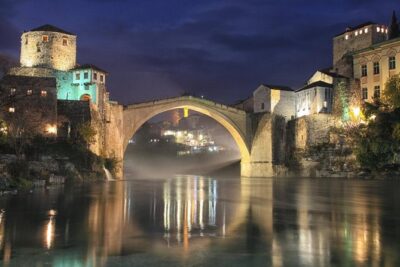
Sarajevo to/from Dubrovnik Transfer Tour via Mostar & Herzegovina
Read our review →
Sarajevo to/from Belgrade UNESCO Transfer Day Tour (Fees Incl.)
Read our review →
Sarajevo to Split (or opposite): Transfer With Herzegovina Tour
Read our review →
Transfer Mostar to Dubrovnik with Kravice Waterfalls, Blagaj and Počitelj tour
Read our review →
Sarajevo to Dubrovnik: Transfer With Herzegovina Tour
Read our review →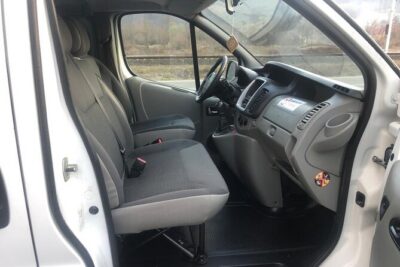
Transfer from Sarajevo to Kotor+Herzegovina tour
Read our review →Browse the lists this tour appears in