
Reviewed · WALKING TOURS
Discover Banja Luka: Guided Walking Tour
Banja Luka’s appeal lies in its contrasts: Ottoman mosques, Orthodox and Catholic churches, Austro-Hungarian traces, and bold Yugoslav buildings all fit into one walk. I like the Castel Fortress for its river views, and I like the slow riverside section, which gives the tour a welcome change of pace. The strongest praise goes to guide Jakša, whose clear explanations and easy conversation add real value.
The main consideration is that the 1969 earthquake destroyed much of the older city, so you will not find a fully preserved medieval center. Some sights are surviving fragments or later reconstructions, and three hours on foot calls for good shoes and water.
Key points at a glance
- A private three-hour walk: You get a guide focused on your group rather than a large crowd.
- Four major religious sights: Ferhadija Mosque, the Cathedral of Christ the Saviour, the Cathedral of Saint Bonaventure, and other religious landmarks show Banja Luka’s mixed traditions.
- Castel Fortress by the river: The fortress adds history, open views, and one of the tour’s best photo stops.
- A city shaped by loss and change: The earthquake, Austro-Hungarian rule, Yugoslav planning, and earlier Ottoman influence all help explain what you see.
- A guide with strong language coverage: Tours are offered in English, German, Italian, Bosnian, and Serbo-Croatian. Jakša has led tours in English and German.
- Practical local help: Depending on the day and guide, you may get advice on coffee, restaurants, and family or religious connections in the city.
Why Banja Luka works so well on foot
Banja Luka is a useful city for a walking tour because its main sights are tied together by a fairly compact central area and the river. You are not simply ticking off monuments. You are watching the city shift from one period to another as the streets change around you.
I find the mix especially helpful for understanding Bosnia and Herzegovina beyond the usual postcard view. An Ottoman mosque may be followed by an Orthodox church, then a Catholic cathedral, then a block of severe Yugoslav concrete. Those changes are not accidental decoration. They tell you who governed, worshipped, rebuilt, and planned the city at different points in time.
The walk also gives you a better feel for Banja Luka as a living place. The river is more than a scenic edge. It is described as the city’s artery of life, and the riverside section lets you slow down after the denser historical stops. You get time for photos, fresh air, and a clearer sense of why the city is often associated with greenery.
A few more Bosnia and Herzegovina trips to weigh up
- Sarajevo: Grand Walking Tour Through Time and Cultures
★ 4.8 · 1,236 reviews - Sarajevo: 2 Hours Old Town Walking Tour With Local Guide
★ 5.0 · 505 reviews - Private Walking Tour, Food Tasting and Bosnian Coffee in Sarajevo
★ 5.0 · 255 reviews
Starting in the center and reading the city’s layers
The tour begins in Banja Luka and stays on foot for roughly two to three hours. The exact order can vary, but the experience is built around sightseeing through the city rather than a single indoor attraction.
Your guide’s job here is to connect the buildings. Without that context, a church, mosque, fortress, and Brutalist block can feel like unrelated stops. With an explanation of Ottoman, Austro-Hungarian, and Yugoslav influence, the city becomes easier to read.
The earthquake is an important part of that story. Much of Banja Luka’s historic architecture was destroyed, so the city does not offer a continuous old-town setting. I would treat this as a point in the tour’s favor, provided you know what to expect. You are seeing a city that had to rebuild, not a preserved stage set.
That also means the walk may appeal more to you if you enjoy urban history and change than if you want uninterrupted old-world beauty. Some surviving structures are impressive, while others are modest remains. The interest comes from the contrast.
Ferhadija Mosque and Banja Luka’s Ottoman imprint
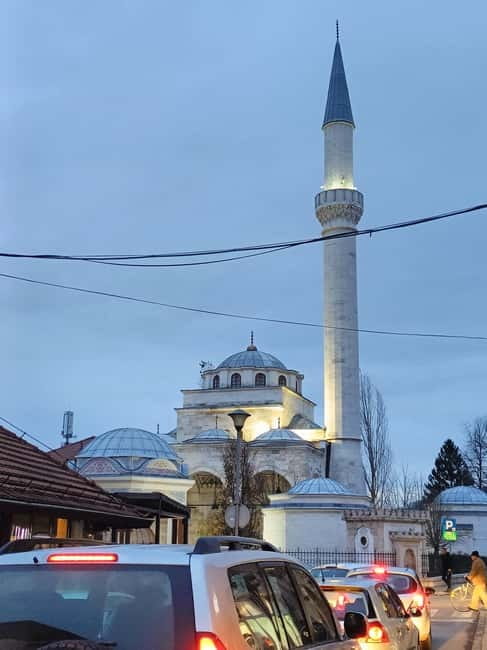
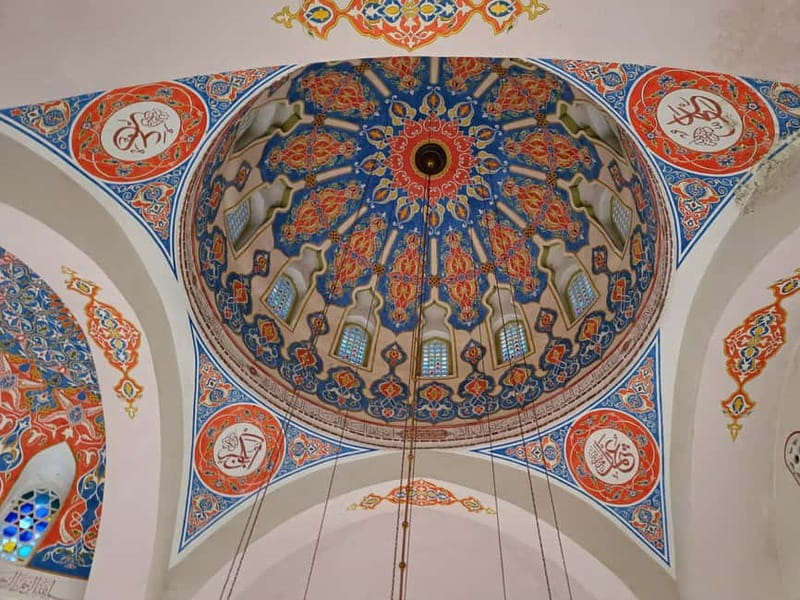
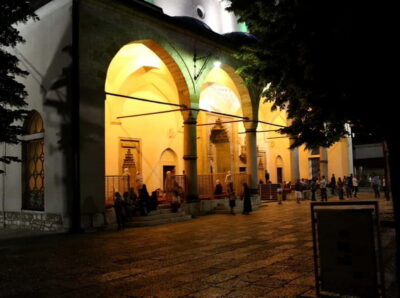
Ferhadija Mosque is one of the central cultural stops. Its presence helps explain the Ottoman period and the Muslim heritage of Banja Luka, while its place within the modern city shows how several religious traditions share the same urban space.
The mosque is best understood as part of the city’s wider story, not as an isolated photo stop. Your guide can help place it alongside the churches and other buildings you see later. That comparison is one of the tour’s most useful features because it gives religion a historical and civic context.
You should dress and behave respectfully at any religious site. The supplied details do not promise interior access, so plan on seeing the exterior and learning about the site unless your guide confirms otherwise. The same sensible approach applies to the churches.
Orthodox and Catholic landmarks in one walk
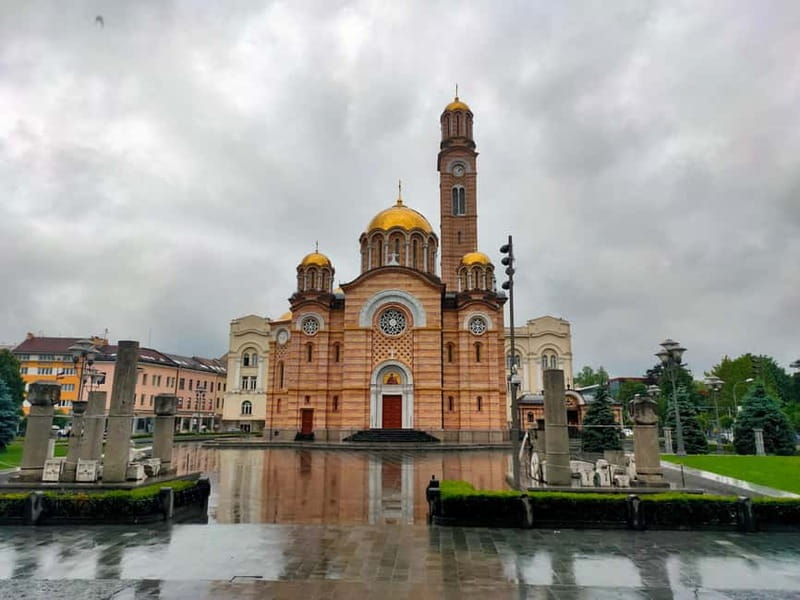
The Cathedral of Christ the Saviour gives the tour an important Orthodox landmark. Its place in the city helps you understand the Serbian Orthodox tradition that is central to Banja Luka’s identity and to the wider story of the Srpska Republic.
The Cathedral of Saint Bonaventure adds a Catholic point of view. Seeing both cathedrals, along with Ferhadija Mosque, makes the religious mix concrete rather than abstract. You do not have to be a specialist in theology or Balkan politics to appreciate the comparison.
I like this part of the tour because it avoids presenting Banja Luka as belonging to just one tradition. The buildings reflect different communities and different chapters of the city’s past. A good guide can also explain how war, government, and reconstruction affected religious sites, though the depth of that discussion will depend on your questions and the time available.
Caroline’s experience is useful here if you have a personal connection to the region. She received help locating information about her family church, which suggests that Jakša is willing to respond to a specific family or heritage question rather than stick rigidly to a script. If genealogy matters to you, bring the names and details you already have.
Same country, a completely different kind of day:
- Dubrovnik: Kravica Waterfalls, Mostar and Pocitelj Day Trip
★ 4.5 · 3,045 reviews - Sarajevo: Mostar, Konjic, Blagaj Tekke, Pocitelj & Waterfall
★ 4.9 · 1,666 reviews - Fall of Yugoslavia, Sarajevo War Tour with Tunnel of Hope Museum and Frontlines
★ 5.0 · 1,314 reviews - From Mostar: Blagaj, Počitelj & Kravice Waterfalls Day Tour
★ 5.0 · 1,310 reviews
Castel Fortress beside the river
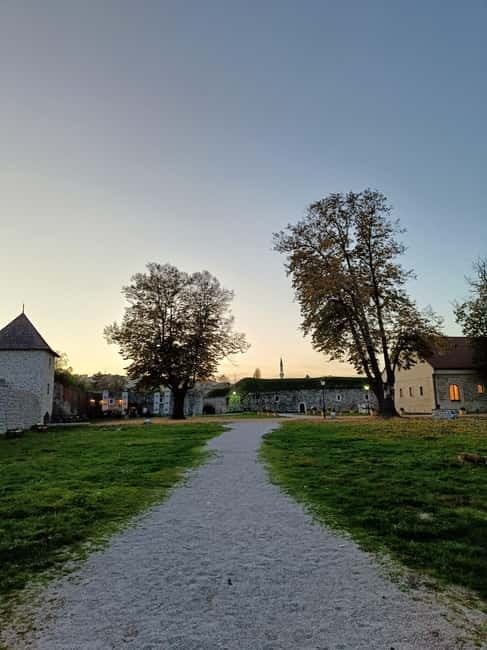
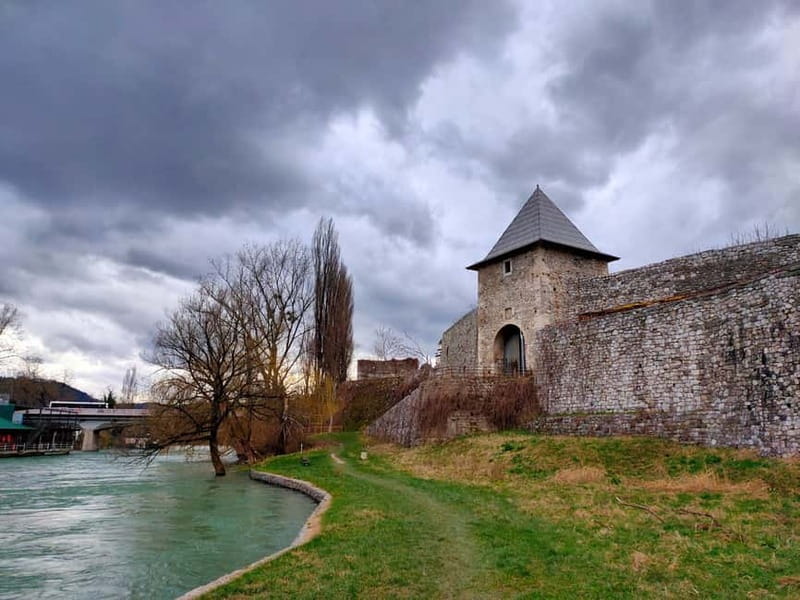
Castel Fortress is the tour’s most obvious historical centerpiece. Set beside the river, it offers a change from city streets and gives you a chance to look back across Banja Luka from a more open position.
I would save a little energy for this stop. The value is not only the fortress walls or the sense of earlier centuries. It is also the combination of structure, river, and city views. You can pause here and imagine how the position may have mattered for defense and control, while your guide fills in the historical background.
Do not expect a fully restored palace complex based on the information available. The appeal is the surviving fortress setting and the views. If photography matters to you, this is one of the places where a camera earns its place in your day bag.
A slower walk along the river
The riverside section balances the more serious historical material. After several churches, a mosque, and older structures, a quiet walk by the water lets you experience Banja Luka at a gentler pace.
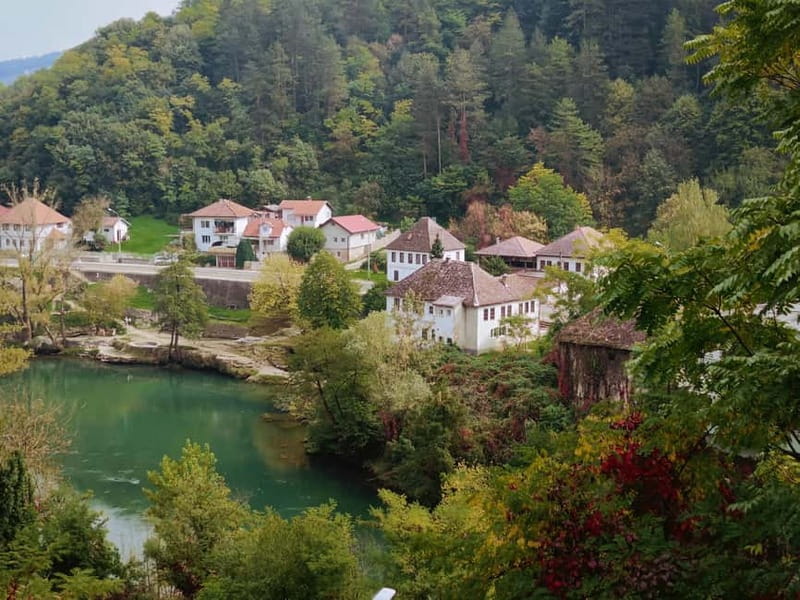
This is also where the city’s green reputation makes the most sense. The tour includes the idea of Banja Luka as one of the greenest cities of the former Yugoslavia, and the river walk gives you a direct feel for that claim without requiring a separate park visit.
I appreciate that the experience does not rush from monument to monument. You can ask questions, take in the scenery, and notice how the river fits into ordinary city life. At the same time, the tour is still a walking route, not a nature outing. The riverfront is one part of a broader city tour.
Brutalist buildings and the post-earthquake city
Banja Luka’s bold Brutalist buildings may be a surprise if you arrive expecting only Ottoman and Austro-Hungarian sights. Their hard lines and large concrete forms reflect Yugoslav planning and the need to rebuild after destruction.
For me, this is where the tour becomes more than a standard heritage walk. The newer structures are not treated as visual clutter. They are evidence of what happened to the city and how authorities reshaped it. You may find some of these buildings attractive, while others may seem stark. Either way, they help explain why Banja Luka looks different from a preserved European old town.
The tour can also touch on political and geographical issues, as well as the former Yugoslavia and the Balkan wars. That subject matter is serious, and the value depends on having a guide who can explain it clearly without turning the walk into a lecture. The feedback attached to this experience points strongly to Jakša’s ability to answer questions and make complex topics understandable.
The food and coffee pause
Food is not included in the $23 price, but the tour makes room for a break and local advice. That small detail matters. A walking tour that includes a pause can feel far more comfortable than three straight hours of monuments and dates.
The stop may be a coffee break, and Jakša has also helped people choose a restaurant and select lunch. You pay for anything you order, but the guidance can save you from choosing at random after the tour. If you want to try Banja Luka’s culinary traditions, ask for a recommendation that fits your budget and appetite.
This is also a good point to ask about daily life, local customs, and places to eat later. One private-tour experience included coffee and a restaurant recommendation, while another included a relaxed coffee stop. These details suggest a personal style, though you should not assume that a meal or drink is included.
Guide style and language choices
Guide quality matters more on a history-heavy walking tour than on a simple sightseeing loop. Jakša is the guide name associated with this experience, and the available comments repeatedly praise his friendly manner, clear explanations, and willingness to spend time on questions.
That praise is especially useful for a private tour. You can ask about religion, government, Yugoslavia, the war years, architecture, or your own family connection. In a large group, those questions may be difficult to fit in. Here, the format gives you more room to shape the conversation.
Language choice is another practical strength. You can book with live guiding in English, German, Italian, Serbo-Croatian, or Bosnian. If German is your preferred language, Jakša has been specifically noted for speaking it very well. Confirm your preferred language when booking so expectations are clear.
Is $23 good value for three hours?
At $23 per person, the tour is priced reasonably for a private three-hour walk, particularly if your group wants direct access to a guide. You are paying for more than a route between landmarks. The price includes the guide’s time, historical explanation, the fortress visit, the religious sights, and the river walk.
The value improves if you care about context. You could walk past Ferhadija Mosque, the cathedrals, the fortress, and Brutalist buildings on your own, but you would miss much of the connection between them. You might also spend time trying to work out where to eat or how the earthquake changed the center.
The price does not cover food, drinks, or personal expenses. Keep a little extra money available for coffee or lunch. Since the group is private, the per-person value depends partly on how many people are in your party. A solo visitor pays more per person than a family or small group, but also gets a more personal conversation.
The tour has a 4.9 rating from nine reviews, which is a very strong result, though the sample is small. I would read that as a clear sign that the guide-led side of the experience is its main strength, not as a guarantee that every departure will feel identical.
Who should book this walking tour?
I would recommend it to first-time visitors who want a fast but thoughtful introduction to Banja Luka. It suits people who enjoy history, religion, architecture, and local politics, especially when those subjects overlap.
It is also a good match for visitors with family roots in the area. Bring what you know about a church, neighborhood, or surname and ask whether the guide can point you in the right direction. The experience has shown flexibility in helping with that kind of question.
You should also consider it if you prefer a private group and want to use English, German, Italian, Bosnian, or Serbo-Croatian. The walking pace is manageable for most people who are comfortable on their feet, and the tour is listed as wheelchair accessible, but it is still wise to mention mobility needs when arranging the time.
This may not be your best choice if you want a preserved medieval center, a long food tasting, or a museum-heavy visit. The earthquake changed the city, food is not included, and the main format is outdoor walking. Wear comfortable shoes, bring water, and carry a camera for the fortress and river views.
Booking flexibility and practical preparation
The tour lasts about three hours, with starting times dependent on availability. Free cancellation is offered up to 24 hours in advance, and you can reserve now and pay later, which is useful when your schedule is still moving.
Bring comfortable walking shoes, water, and a camera. You may want modest clothing for religious sites, although specific dress rules are not provided. Since the walk covers several historical and religious locations, ask your guide about any access limits on the day.
The experience begins and ends in Banja Luka. It does not include transport between sights, so plan to meet ready for a walking tour rather than expecting a vehicle.
Should you book Discover Banja Luka?
Book this tour if you want Banja Luka explained by a local guide rather than simply photographed. The best reasons are the private format, the mix of Ottoman, Orthodox, Catholic, Austro-Hungarian, and Yugoslav material, and the chance to ask detailed questions as you go.
I would especially choose it early in a Banja Luka stay. The fortress, river walk, religious sites, and restaurant advice can help you understand where you are and decide what deserves a second look. Just set the right expectation: this is a city shaped by rebuilding, not a perfectly preserved old town.
At $23, it offers solid value for three hours, particularly for a couple, family, or small group that wants personal attention. Bring good shoes, water, and curiosity, then let the guide connect the city’s surviving buildings to the larger story.
FAQ
How long is the Discover Banja Luka walking tour?
The tour lasts about two to three hours, with the listed duration given as three hours.
What sights are included?
The walk includes Castel Fortress, Ferhadija Mosque, the Cathedral of Christ the Saviour, the Cathedral of Saint Bonaventure, and a riverside walk through Banja Luka.
Is the tour private?
Yes. The experience is offered as a private group tour.
Which languages are available?
Live guiding is available in English, German, Italian, Serbo-Croatian, and Bosnian.
Is food included in the price?
No. Food, drinks, and other personal expenses are not included. The tour may include a coffee or food break, but you pay for what you order.
Can I cancel or pay later?
You can cancel up to 24 hours before the tour for a full refund. You can also reserve your place and pay later.
Just added around Bosnia and Herzegovina
- Sarajevo Under Siege: A War History Tour★ 5.0 · 10 reviews
- WAR TUNNEL – Sarajevo’s only way of a communication during the WAR – Top secret★ 5.0 · 12 reviews
- Private Full Day Safari Tour★ 5.0 · 8 reviews
- Ultimate Gastro Experience★ 4.5 · 14 reviews
- Mysterious Visoko Pyramids Driving and Walking Tour★ 5.0 · 7 reviews
- Secret Tito’s Bunker/Konjic Tour★ 5.0 · 4 reviews
- The Secret Lifeline: Sarajevo’s War Tunnel Tour★ 5.0 · 6 reviews
- Crossroads of Cultures – Sarajevo Walking Tour★ 5.0 · 8 reviews
Walking Tours, compared.
Private Walking Tour, Food Tasting and Bosnian Coffee in Sarajevo
Read our review →
PROFESSIONAL SARAJEVO WALKING TOUR – With guide who guided STING!
Read our review →Browse the lists this tour appears in