
Reviewed · FOOD
Eat, Pray, Love Tour
Sarajevo’s story is best understood on foot, where an Ottoman mosque, Catholic church, Orthodox church, synagogue, brewery, and Austro-Hungarian building can appear within a few minutes of one another. This four-hour tour turns that compact old center into a readable story, with Bosnian coffee, baklava, and burek along the way.
I like the cross-cultural route, which moves from Latin Bridge and the Emperor’s Mosque to the Jewish Museum and Old Orthodox Church. I also like the local food stops, especially because the tastings are built into the walk rather than added as an afterthought. The main consideration is that this is a city and culture tour with two food tastings, not a full food walk, and some interior admission costs extra.
Key points to know before booking
- Four hours on foot: The route covers Sarajevo’s central sights at a steady sightseeing pace.
- Several faiths in one compact area: You visit Catholic, Islamic, Jewish, and Orthodox sites.
- Bosnian coffee and baklava included: The Baščaršija stop gives you time to sit and taste local tradition.
- Burek tasting included: Bravadžiluk Street adds a second food stop, focused on a classic Bosnian pastry.
- Three interior fees are extra: The Bey’s Mosque, synagogue, and Old Orthodox Church package costs 13 BAM, about €7, per person.
- Small-group format: The maximum group size is 20, and solo bookings may sometimes operate as a private tour.
Sarajevo in one walk, from bridge to bazaar
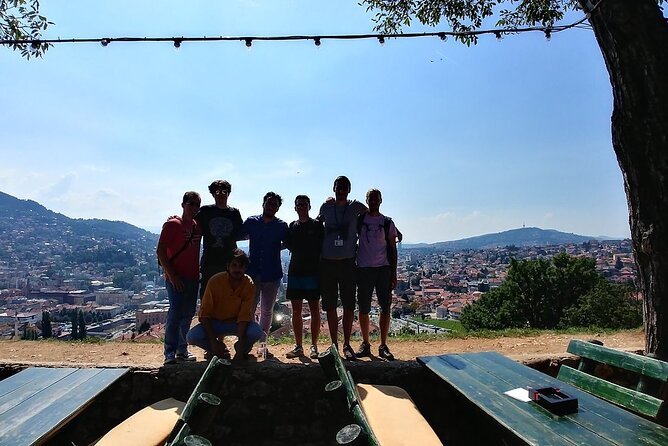
The Eat, Pray, Love Tour is a good introduction to Sarajevo because it does not treat the city as a collection of disconnected monuments. The route shows how different religious traditions, ruling powers, and everyday customs occupy the same few streets.
You begin at Insider City Tours & Excursions on Zelenih beretki 30 at 10 a.m. The tour ends at the same meeting point. Public transportation is nearby, but the main sightseeing is done on foot, so wear comfortable shoes and bring sunglasses, water, and a camera.
The advertised price is $36.97 per person. For a four-hour guided walk that includes a certified guide, a city map, coffee, baklava, and burek, that is a reasonable price. The value depends partly on whether you pay for the optional interior package. The added 13 BAM covers the Bey’s Mosque, synagogue, and Old Orthodox Church, according to the tour details.
The group can hold up to 20 people. That is still manageable, though the quality of a walking tour often depends on how easily you can hear the guide. A solo booking may occasionally become a private experience. One departure on December 31, 2024, had just one participant, with Suad leading the walk.
A few more Sarajevo trips to weigh up
- Private Walking Tour, Food Tasting and Bosnian Coffee in Sarajevo
★ 5.0 · 255 reviews - Sarajevo: 4-Hour Food And Craft Tour
★ 5.0 · 70 reviews - Sarajevo: Sarajevo City Market, Old Town Food Tasting Tour
★ 4.9 · 69 reviews
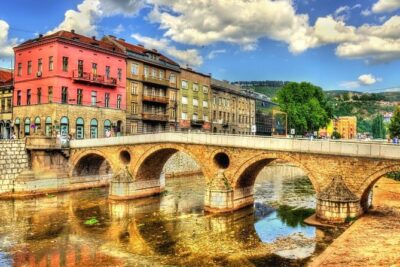
Latin Bridge and Sarajevo’s layered beginning
The first formal stop is Latin Bridge, reached after the meeting point. The bridge itself takes only a few minutes, but its importance is much greater than the short visit suggests. Your guide explains the story behind its name and its place in Sarajevo’s past.
This is a useful opening because it shows how much meaning can sit inside a small urban space. You are not spending half an hour staring at a bridge. Instead, you get a concise explanation before continuing through the old center.
Next comes Jedileri, known as the Tomb of the Seven Brothers. It is a quiet memorial shaped by local legend and historical memory. The brief stop gives the walk a different tone after the bridge, moving from a famous public landmark to a place with a more reflective feel.
The route then reaches Saint Anthony Catholic Church. Sarajevo’s identity cannot be reduced to one faith or one empire, and this church helps make that clear. The visit is short, but it adds Catholic heritage to a walk that soon turns toward Ottoman and Islamic landmarks.
Breweries, mosques, and the Ottoman chapter
Sarajevska Pivara offers a quick look at the first brewery in the Ottoman Empire. The stop lasts only about two minutes, so expect an explanation from outside or a very brief look rather than a brewery visit. It works as a reminder that Sarajevo’s food and drink culture includes more than coffee and pastries.
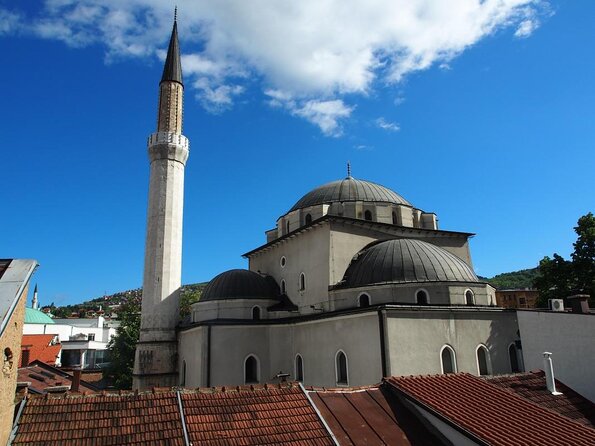
At the Emperor’s Mosque, your guide introduces what is described as Sarajevo’s oldest mosque. Its Ottoman design and spiritual importance help set up the longer visit to Gazi Husrev-beg Mosque.
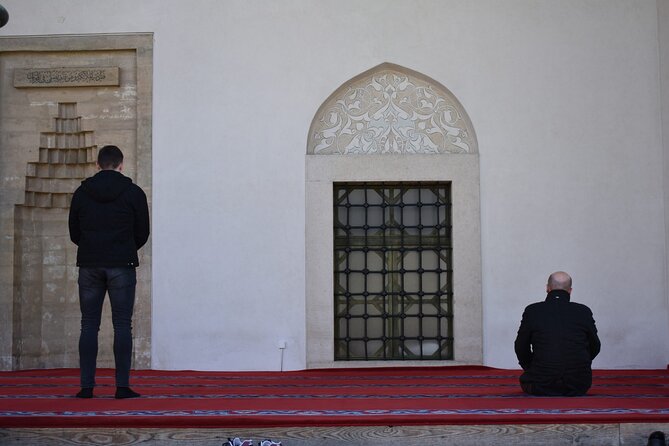
Gazi Husrev-beg Mosque receives about 30 minutes, making it one of the central stops. This is where the tour has time to explain more than the exterior. You can look closely at the building and hear about its place in Sarajevo’s Islamic life.
The admission fee is not included in the tour price. The listed entry package for the mosque, synagogue, and Old Orthodox Church is 13 BAM, about €7. If you want the full indoor portion of the tour, budget for this extra payment rather than assuming every stop is covered.
Gazi Husrev Begova Medresa follows for around five minutes. The medresa connects the city’s religious life with education and Islamic scholarship. It is a small stop, but it gives context to the mosque complex and shows that the area was more than a place of worship.
Where East meets West in Sarajevo
The Sarajevo Meeting of Culture is one of the route’s most useful orientation points. It marks a shift between the Ottoman character of Baščaršija and the Western architectural influence found farther along the center.
You do not need a long stop here. The value is visual and geographic. Your guide can help you understand that Sarajevo’s old center is not one uniform quarter. Its buildings and streets change quickly, and this point gives you a clear way to read that change.
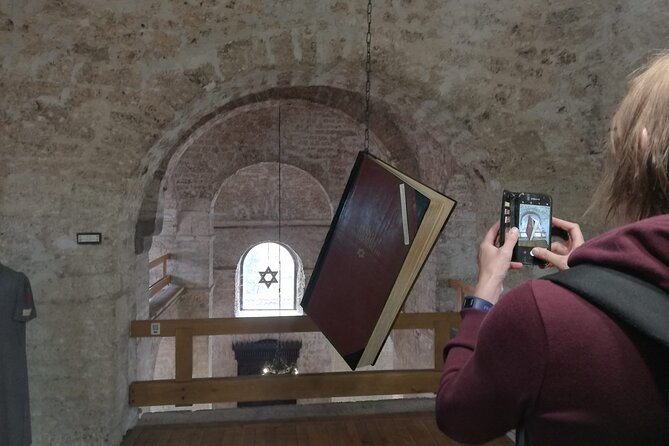
The Jewish Museum of Bosnia and Herzegovina adds another essential part of the city’s story. It is housed in one of the oldest synagogues in the Balkans, and the visit lasts about 20 minutes. The admission fee is not included unless you purchase the entry package.
This is one of the stops where the extra fee can make sense. The museum helps you understand Sarajevo as a meeting place for several communities, not simply as an Ottoman town with later European buildings. Your guide’s explanation is especially useful here because a short visit alone may not reveal the site’s full importance.
Same country, a completely different kind of day:
- Sarajevo: Mostar, Konjic, Blagaj Tekke, Pocitelj & Waterfall
★ 4.9 · 1,666 reviews - Fall of Yugoslavia, Sarajevo War Tour with Tunnel of Hope Museum and Frontlines
★ 5.0 · 1,314 reviews - Sarajevo: Grand Walking Tour Through Time and Cultures
★ 4.8 · 1,236 reviews - Sarajevo: Mostar, Konjic, Sufi House, Pocitelj & Kravice Falls
★ 5.0 · 1,179 reviews
Bosnian coffee, baklava, and a pause in Baščaršija
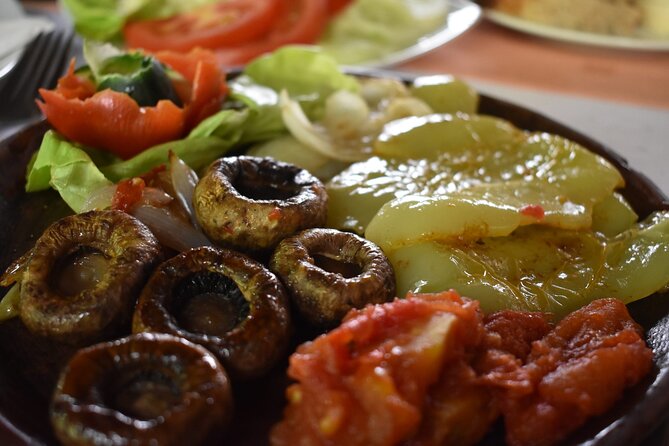
Baščaršija is the heart of the walking route, and the 30-minute coffee break is one of the tour’s most enjoyable practical features. You taste Bosnian coffee with baklava, both included in the price.
This is not just a snack stop. Bosnian coffee is part of the country’s social rhythm, and the pause gives you time to see how the tradition is served and enjoyed. You also get a break from walking, which matters on a four-hour route.
The food portion has a clear limit. There is one coffee and baklava tasting here, followed later by burek. If you are looking for a dedicated food tour with many dishes, this experience will probably feel too light. If you want a few carefully placed tastes while learning about the city, the balance works better.
The guide can also help you understand what you are tasting instead of leaving you to guess. That small amount of explanation often makes a local specialty more memorable.
Old Orthodox Church and the wooden Sebilj fountain
The Old Orthodox Church is scheduled for about 10 minutes. It is described as a site of Byzantine art and Christian heritage, offering another view of Sarajevo’s religious mix. Entry is not included in the basic price, but it is part of the 13 BAM package with the mosque and synagogue.
After the church, the route reaches Sebilj, the wooden fountain in Baščaršija. The stop is brief and gives you time for photographs. The fountain is one of the easiest symbols of the old bazaar to recognize, so it is a useful landmark if you return to the area independently.
The itinerary moves quickly at this point. You should expect short explanations and photo opportunities rather than long time at every building. That pace is helpful for a first look, but it may feel rushed if you prefer to study architecture or take many photographs.
Morica Han and Sarajevo’s working crafts
Morica Han is an Ottoman-era caravanserai that once offered lodging to merchants and other people moving through the city. The five-minute visit gives you a glimpse of the old travel network behind Sarajevo’s commercial life.
The next stop, Kazandžiluk, is more hands-on in spirit. This street is associated with traditional metal crafts that are still practiced in Sarajevo. You learn about the craft and see how old working traditions remain part of the old bazaar.
I like this part because it moves beyond grand buildings. A city is easier to understand when you see what people made, sold, and used. Kazandžiluk gives the tour an everyday focus after the religious and political landmarks.
You should not expect a workshop class or a long shopping session. The schedule allows about 20 minutes, enough to look around and learn, but not enough for an extended craft demonstration unless the guide and shopkeepers have time.
Burek on Bravadžiluk Street
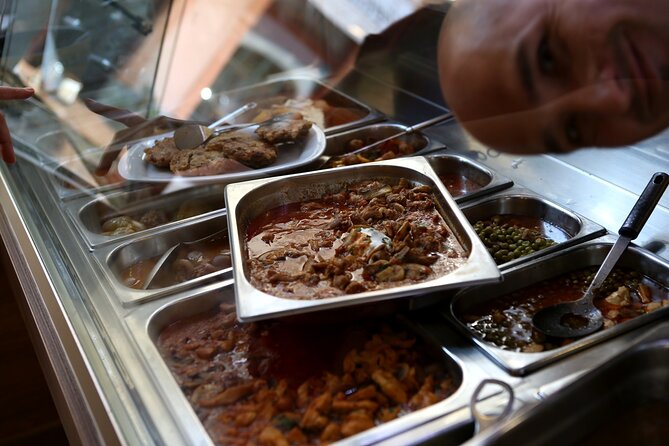
The second included tasting takes place on Bravadžiluk Street, where you try burek. The stop lasts about 30 minutes, so it is more than a quick bite.
Burek is one of Bosnia’s best-known savory pastries, and tasting it in the old center gives the food a proper setting. The tour details do not promise a full meal, so consider it a substantial snack rather than a guaranteed lunch replacement.
Food quality can vary from one departure to another, and one critical assessment found the included food disappointing. That is worth keeping in mind. Most of the experience’s appeal comes from the guide, the setting, and the chance to try local staples, not from a restaurant-style meal.
If you already know Sarajevo’s food scene or want to compare several burek shops, you may want to return on your own. The tour gives you a starting point and useful local context.
City Hall and the Spite House
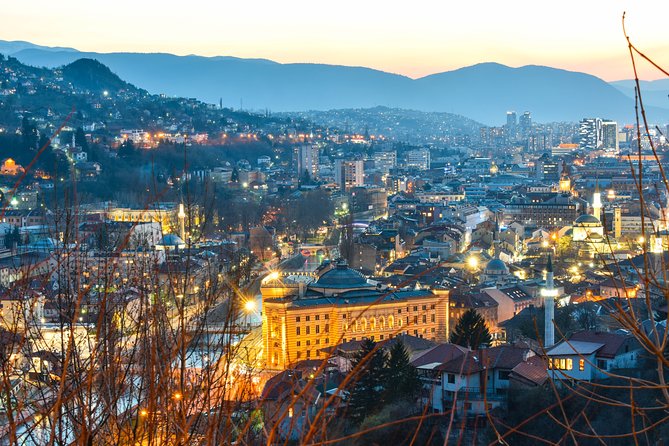
Sarajevo City Hall is one of the final major sights. Its neo-Moorish design reflects the city’s later Austro-Hungarian period and its continuing role as a cultural landmark. The scheduled 15 minutes is enough for an explanation and photographs.
Entry to City Hall is not listed as included, so you should treat this as an exterior visit unless your guide tells you otherwise. The building is worth seeing from outside, but anyone hoping to explore the interior should confirm the arrangement before booking.
Across the river is Inat kuća, the Spite House. Its story concerns a house moved across the river to resist an authority decision. The tale adds humor and personality to a route filled with major political and religious subjects.
This final section works well because it leaves you with a human-scale story. Sarajevo is not only defined by imperial buildings and painful events. It is also a place where stubbornness, pride, and local character become part of the city’s folklore.
The guide can shape the entire experience
The strongest part of this tour is the guide’s ability to connect the stops. Past departures have featured Suad, Irfan, Elsa, and Rijad, and the strongest praise has focused on clear explanations, personal stories, patience with questions, and an easy manner.
Irfan was especially praised for answering questions in detail, while Elsa was noted for combining solid background information with personal accounts of the region’s recent past. Rijad was described as patient with frequent photo stops, and Suad led a solo New Year’s Eve booking.
That range matters. Sarajevo has a complicated past, and a guide who only recites dates can make the city feel flat. A guide who can explain context, answer questions, and avoid overwhelming you will make the four hours much more useful.
The experience has also received one sharply negative assessment, focused on poor people skills and disappointing food. The overall score is 4.6 out of 5, with 91 percent recommending it, but those numbers should not make you ignore the basic tradeoff: the guide is central, and the food is tasting-sized rather than a polished culinary program.
Who will get the most from four hours
I would choose this tour if you are visiting Sarajevo for the first time and want a strong orientation before exploring alone. It gives you a map of the old center, introduces several faith traditions, and points out places you can revisit later.
It also suits solo visitors. A small group can make it easier to ask questions, and a very small departure may operate almost like a private walk. Couples and honeymooners may appreciate the mix of history, food, and personal guide stories.
You may want something else if your main goal is extensive museum time, shopping, or food. The route includes many stops, but several last only two to five minutes. The food component includes coffee, baklava, and burek, not a long list of dishes.
Comfortable shoes are important. The tour is approximately four hours, with most of the sightseeing done on foot. The activity is offered in English, uses a mobile ticket, and most people can participate.
Free cancellation is available if you cancel at least 24 hours before the 10 a.m. start time. Changes made within 24 hours are not accepted, and a minimum number of participants is required. If the operator cancels because that minimum is not reached, you are offered another date or experience, or a full refund.
Should you book the Eat, Pray, Love Tour?
Book it if you want a broad, human introduction to Sarajevo rather than a specialist tour. The route covers an impressive range of places in a compact area, and the combination of mosques, churches, synagogue, crafts, coffee, and burek gives you a useful first grasp of the city.
Pay the extra 13 BAM if seeing the three listed interiors matters to you. Skip the added fee only if you are satisfied with exterior views and guide commentary.
Do not book it expecting a full food crawl. Choose it for the city story, the guide’s local perspective, and the chance to taste a few Bosnian staples along the way. For most first-time visitors, the $36.97 price is fair, especially when the guide is as engaging and patient as Elsa, Irfan, Rijad, or Suad.
FAQ
How long does the Eat, Pray, Love Tour last?
The tour lasts approximately four hours, from the 10 a.m. start until it returns to the meeting point.
Where does the tour begin?
It begins at Zelenih beretki 30, Sarajevo 71000, Bosnia and Herzegovina.
Where does the tour end?
The activity ends back at the meeting point.
What food and drinks are included?
The tour includes a Bosnian coffee and baklava tasting in Baščaršija, plus a traditional burek tasting on Bravadžiluk Street.
Are admission fees included?
The basic tour includes the certified guide, food and drink tastings, and a city map. Entry to the Bey’s Mosque, synagogue, and Old Orthodox Church costs an additional 13 BAM, about €7, per person.
Is City Hall entry included?
City Hall admission is not listed as included. The itinerary provides about 15 minutes at the site.
What language is the tour offered in?
The tour is offered in English.
How large can the group be?
The maximum group size is 20 people.
What happens if I need to cancel?
You can cancel for a full refund up to 24 hours before the experience starts. Cancellations or changes made less than 24 hours before the start time are not accepted for a refund.
Just added around Sarajevo
- Sarajevo Under Siege: A War History Tour★ 5.0 · 10 reviews
- WAR TUNNEL – Sarajevo’s only way of a communication during the WAR – Top secret★ 5.0 · 12 reviews
- Private Full Day Safari Tour★ 5.0 · 8 reviews
- Ultimate Gastro Experience★ 4.5 · 14 reviews
- Mysterious Visoko Pyramids Driving and Walking Tour★ 5.0 · 7 reviews
- Secret Tito’s Bunker/Konjic Tour★ 5.0 · 4 reviews
- The Secret Lifeline: Sarajevo’s War Tunnel Tour★ 5.0 · 6 reviews
- Crossroads of Cultures – Sarajevo Walking Tour★ 5.0 · 8 reviews
Food, compared.
Private Walking Tour, Food Tasting and Bosnian Coffee in Sarajevo
Read our review →
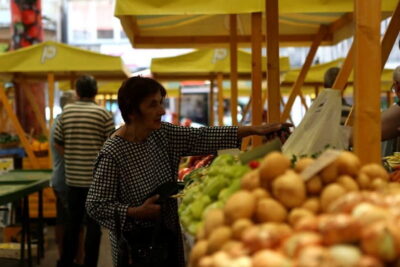
Sarajevo City Market, Old Town Food Tasting Tour
Read our review →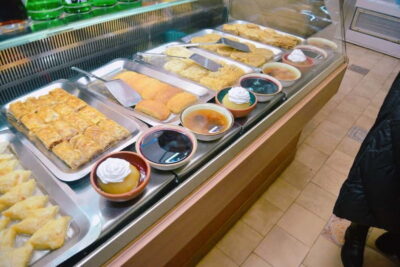
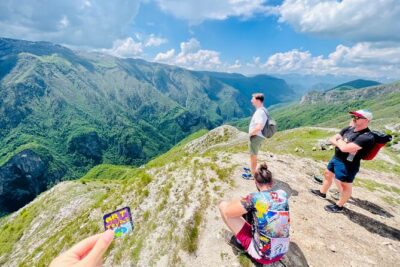
LUKOMIR VILLAGE HIKE & TREK TOUR (nature, hike, food & panorama)
Read our review →
Browse the lists this tour appears in