
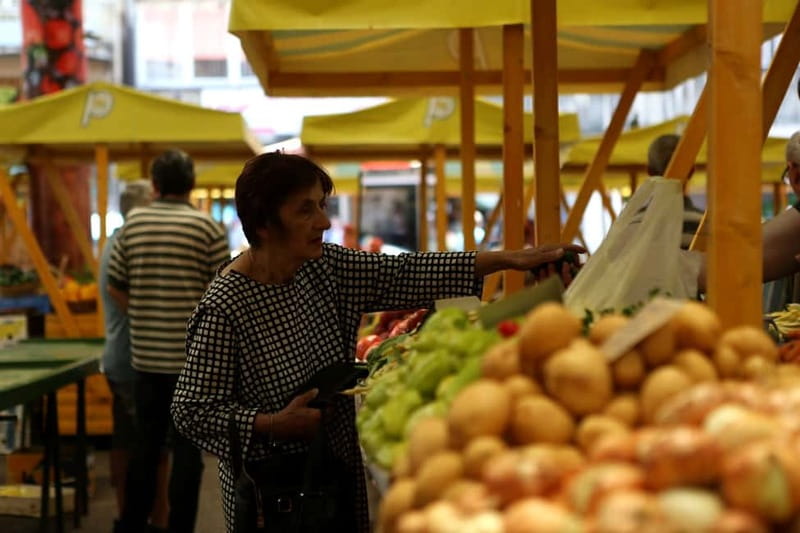
Reviewed · FOOD
Sarajevo: Eat, Pray, Love Tour – Local Life Experience
Sarajevo’s greatest surprise is how quickly a short walk can carry you from Ottoman market lanes to Austro-Hungarian buildings, a Catholic church, an Orthodox church, a synagogue museum, and a mosque. This Eat, Pray, Love Tour uses that compact city center to explain how different faiths and cultures have shared the same streets.
I like the mix of food and place, especially the chance to pair burek and Bosnian coffee with the buildings and traditions that give them meaning. I also like the human scale: the guide leads on foot, adds local legends, and gives you a useful first look at Baščaršija rather than leaving you to decode it alone.
The main drawback is pace. Four hours covers many stops, and several are walking visits rather than long, quiet explorations. You also need modest clothing, pay an additional 15 BAM, or about €8, for three entrance fees, and the route is not suited to people with limited mobility.
Key points to know before booking
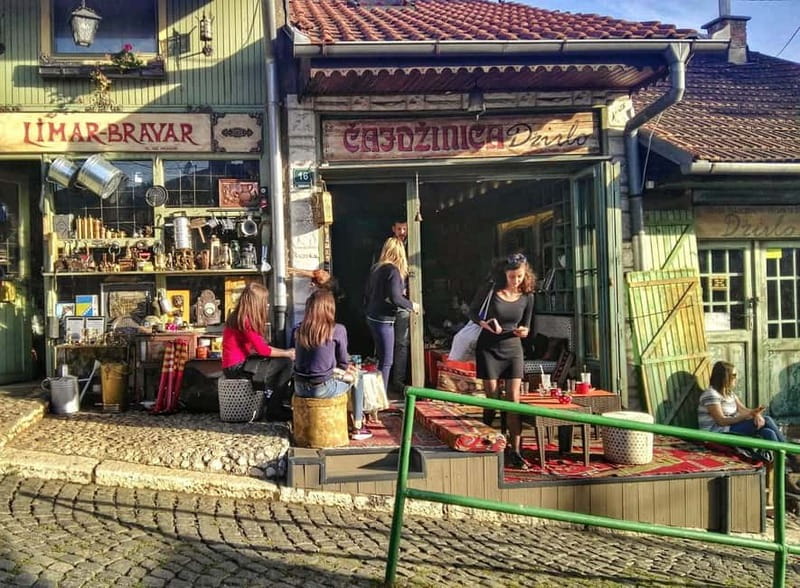
- Four hours on foot: The route links the Latin Bridge, Baščaršija, religious sites, city landmarks and the Yellow Bastion.
- Three included tastes: Your price covers a light burek lunch, Bosnian coffee and dessert.
- A clear look at Sarajevo’s faiths: The route includes Muslim, Catholic, Orthodox and Jewish sites.
- Local guides shape the experience: Guides named Adisa, Bojan, Denis, Admir and Suad have led this experience.
- Extra admission costs 15 BAM: The ticket package covers Gazi Husrev-beg Mosque, the Old Orthodox Church and the Museum of the Jews of Bosnia and Herzegovina.
- Dress for sacred places: Shorts, sleeveless shirts and skirts are not allowed.
Why this four-hour walk works so well in Sarajevo
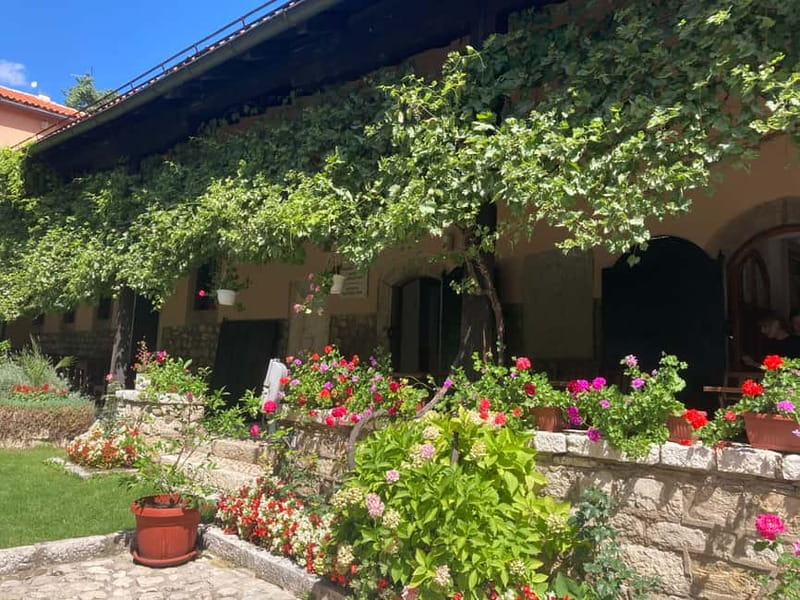
This is not a food crawl with a few monuments added on. It is a city introduction built around three useful ideas: what Sarajevo eats, how its people worship, and how its streets record the meeting of East and West.
That combination matters because Sarajevo can feel confusing on a first visit. The old Ottoman quarter has narrow lanes, small shops and cafés, while the streets near the river show grand Austro-Hungarian architecture. Religious buildings sit close together, making the city’s mixed character easy to see rather than something you only hear about in a lecture.
The tour begins at the Insider City Tours and Excursions office, across from the spot connected with the assassination of Archduke Franz Ferdinand. That location gives the walk an immediate historical setting, but the experience does not stay fixed on one event or on Sarajevo’s wartime past. It moves toward the city’s daily food, faith and street life.
The group size is not specified, so you should check at booking. Still, the experience has been led for very small groups on some days. That can make a real difference here, since narrow lanes and religious interiors are easier to handle when you are not part of a large crowd.
A few more Sarajevo trips to weigh up
- Private Walking Tour, Food Tasting and Bosnian Coffee in Sarajevo
★ 5.0 · 255 reviews - Sarajevo: 4-Hour Food And Craft Tour
★ 5.0 · 70 reviews - Sarajevo: Sarajevo City Market, Old Town Food Tasting Tour
★ 4.9 · 69 reviews
From the Latin Bridge to At Mejdan
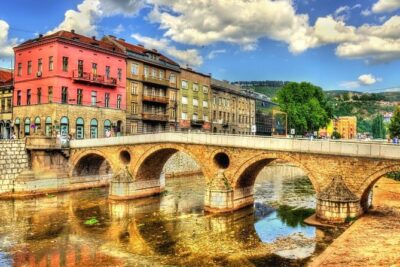
The first stop is the Latin Bridge, one of Sarajevo’s best-known landmarks. You get a guided explanation and time for photographs, then continue on foot to At Mejdan.
The bridge is important not only as a river crossing but also because of its place in the story of the 1914 assassination. Since the meeting point is nearby, the opening section gives you a quick frame for understanding why Sarajevo became a name known around the world.
At Mejdan adds a quieter riverside pause. The value of this part is not a long visit inside a major museum. It is the way the guide connects the river, old streets and nearby buildings into a readable city scene.
Saint Anthony Church and Sarajevo Brewery
The route next reaches Saint Anthony Catholic Church and the Sarajevo Brewery. These stops help show how Sarajevo’s religious and commercial life developed across different periods.
You should expect guided commentary and photo stops rather than extensive interior visits at every location. That is useful if you want a broad first orientation, but less useful if your main goal is detailed architectural study.
The brewery is a good reminder that Sarajevo’s food culture is not limited to pastry and coffee. It also brings you closer to the city’s long-running urban institutions. Your guide may use places like this to explain how different communities and outside influences shaped the city.
Emperor’s Mosque, City Hall and Inat Kuća
The Emperor’s Mosque introduces one of Sarajevo’s major Islamic landmarks. From there, the tour continues toward Sarajevo City Hall and Inat Kuća, a memorable trio for understanding the city’s Ottoman and Austro-Hungarian layers.
City Hall is known for its grand Austro-Hungarian design, while Inat Kuća carries a local story tied to the building’s position and the wishes of its former owner. This is exactly the sort of detail that makes a guided walk worthwhile. You can photograph a building on your own, but the story behind its location gives it character.
The route does not present Sarajevo as a simple split between East and West. Instead, you see the two influences sharing the same center. That is one of the most useful themes of the experience, especially if you have only a day or two in town.
Same country, a completely different kind of day:
- Sarajevo: Mostar, Konjic, Blagaj Tekke, Pocitelj & Waterfall
★ 4.9 · 1,666 reviews - Fall of Yugoslavia, Sarajevo War Tour with Tunnel of Hope Museum and Frontlines
★ 5.0 · 1,314 reviews - Sarajevo: Grand Walking Tour Through Time and Cultures
★ 4.8 · 1,236 reviews - Sarajevo: Mostar, Konjic, Sufi House, Pocitelj & Kravice Falls
★ 5.0 · 1,179 reviews
Baščaršija, Sebilj and the first food stop
Baščaršija is the heart of the walking route. Its Ottoman-era streets, market atmosphere and small food places give you the clearest sense of Sarajevo’s older character.
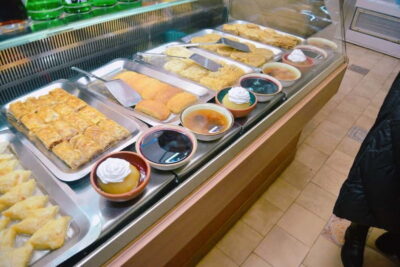
The itinerary includes two food-related moments in Baščaršija. The first is a tasting of traditional food, with a light lunch centered on burek. Burek is a savory filled pastry and one of the foods you should try early in Bosnia and Herzegovina. Since this is a tasting rather than a full restaurant meal, plan to eat breakfast and do not expect the tour to replace dinner.
Sebilj Fountain follows, or is visited nearby in the route. You can feed the pigeons, drink water and hear the local good-luck tradition connected with the fountain. It is a small ritual, but it makes the walk feel connected to ordinary Sarajevo rather than just its major monuments.
This section is likely to be one of the most enjoyable for food-minded visitors. You get to taste something local while standing in the quarter where the city’s old commercial life is most visible.
Yellow Bastion and the city from above
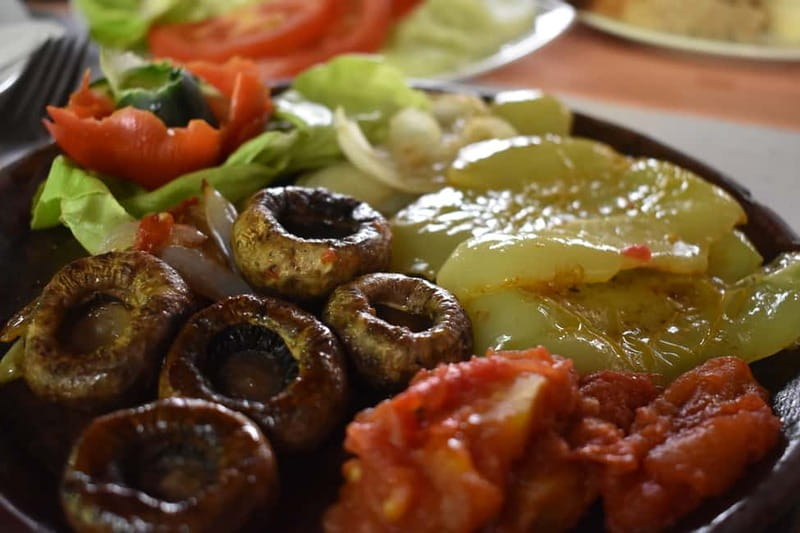
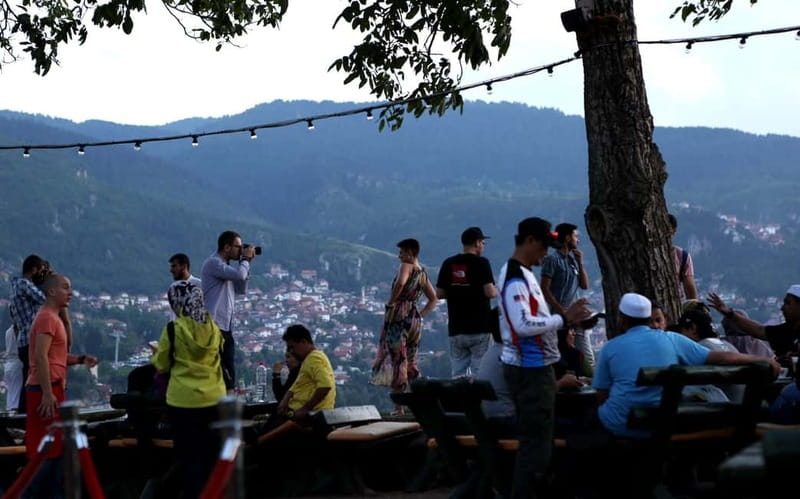
The walk continues to the Yellow Bastion. The stop adds a change of pace after the tight lanes of the market quarter and gives you a broader view of Sarajevo.
Because the route is on foot and includes an uphill section, this is where mobility becomes an important consideration. The activity specifically is not recommended for people with limited mobility. Comfortable shoes are sensible, and you should expect the four hours to feel active rather than like a slow café tour.
The Yellow Bastion also helps place Sarajevo geographically. After seeing the center at street level, you get a wider sense of the city’s setting and its connection to the surrounding hills. The itinerary lists a photo stop and guided visit, so allow time for views and explanation rather than expecting a long fortress tour.
The Old Orthodox Church and Gazi Husrev-beg Mosque
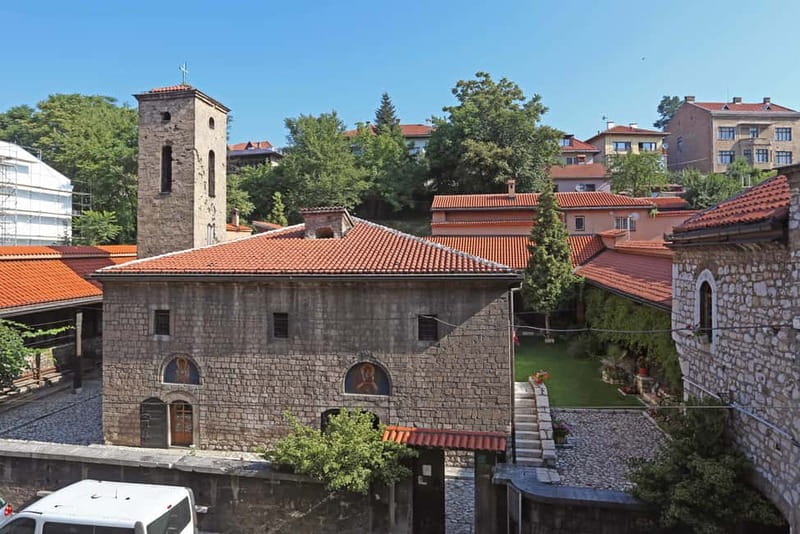
The Old Orthodox Church and Gazi Husrev-beg Mosque are among the most important stops for the spiritual side of the tour. Unlike a quick exterior photo, these are listed as visits, with guided commentary.
The Old Orthodox Church gives you a direct link to Sarajevo’s Serbian Orthodox community. Gazi Husrev-beg Mosque is one of the key Islamic monuments in the old center and an important part of the city’s Ottoman identity.
You must buy the 15 BAM ticket package for these two sites and the Jewish museum later in the route. That extra charge is not included in the €45 tour price, so include it when working out the real cost. In return, you get access to the interiors and a better chance to understand how these places function as living religious and cultural sites.
Dress carefully. Shorts, sleeveless shirts and skirts are not allowed on this activity. Modest clothing is the simplest approach, particularly because the route includes several sacred places.
Bosnian coffee, dessert and the Sarajevo Meeting of Cultures
A second Baščaršija stop brings the main food theme together with Bosnian coffee and dessert. Bosnian coffee is prepared and served in a distinctive traditional style, and the guide explains its preparation and place in local life.
The coffee is not simply a caffeine break. It is part of Sarajevo’s social rhythm, best understood as something shared slowly and with attention. The included dessert gives you a sweet counterpoint to the savory burek.
The Sarajevo Meeting of Cultures marker is another compact but useful stop. It signals the point where the city’s Ottoman and Austro-Hungarian sections meet. You do not need a long museum visit to grasp the idea. The contrast is visible in the street plan, buildings and atmosphere around you.
Jewish Museum, Sacred Heart Cathedral and the Orthodox cathedral
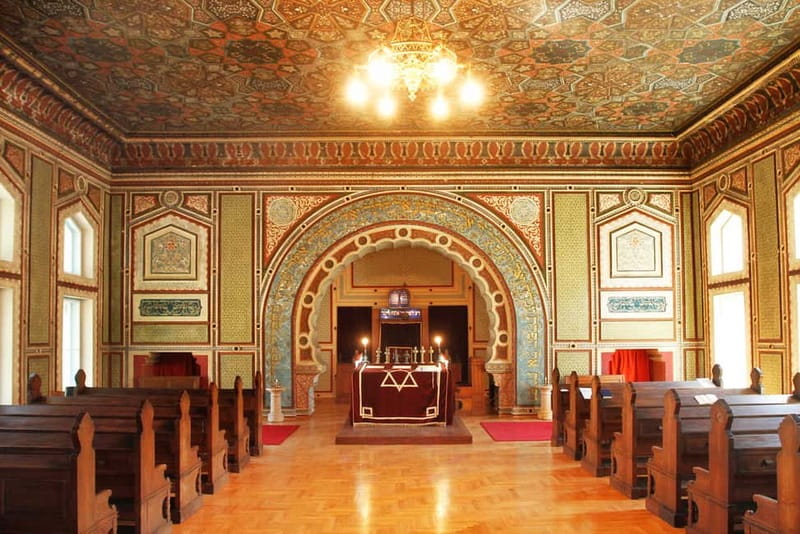
The Museum of the Jews of Bosnia and Herzegovina adds a Jewish perspective to the city’s story. The museum is included in the 15 BAM ticket package, along with the mosque and Old Orthodox Church.
This stop is especially valuable because it keeps the tour from reducing Sarajevo’s identity to only Ottoman and Austro-Hungarian influences. The city’s Jewish heritage is another essential part of its shared urban story.
The route then visits Sacred Heart Cathedral and the Cathedral Church of the Nativity of the Theotokos. These Catholic and Orthodox landmarks make the idea of Sarajevo’s close religious coexistence concrete. You are not just hearing that several communities lived in the same city. You are seeing their places of worship within one compact walking area.
The itinerary includes guided visits and photo stops, but the total number of locations means each one will receive limited time. If you have a strong interest in church architecture or Jewish history, you may want to return independently for a longer look.
The guides and the tone of the tour
The guide is central to the experience. The activity is conducted in English by a licensed local guide, and guides who have led it include Adisa, Bojan, Denis, Admir and Suad. Your specific guide depends on the date.
The strongest pattern in the guide feedback is personal energy and local storytelling. Bojan has been described as bringing local stories, legends and humor into the walk. Denis is known for showing genuine enthusiasm for Sarajevo and for encouraging you to look beyond the city’s war-torn past. Adisa has been praised for being personable and clear, while Admir has been described as a strong native host.
That tells you what to expect: not a silent march from monument to monument, but a talk-led city walk. The experience works best if you enjoy asking questions and listening to stories. It may feel less satisfying if you prefer long private visits at each site or a tightly timed architectural tour.
Is €45 a fair price?
At €45 per person, the tour is fairly priced if you want food, several admissions and a local guide in one package. The price includes the guide, burek tasting, Bosnian coffee and dessert. It does not include the 15 BAM ticket package, so the actual outlay is closer to €53 per person once the listed entrance fees are added.
For four hours, that gives you a lot of coverage. You see the Latin Bridge, At Mejdan, Saint Anthony Catholic Church, Sarajevo Brewery, Emperor’s Mosque, City Hall, Inat Kuća, Baščaršija, Sebilj, Yellow Bastion, three religious or cultural interiors, the Meeting of Cultures marker and the main cathedral sites.
The tradeoff is depth. You are paying for a broad introduction, not a specialist museum tour or a full meal. I think the value is strongest at the start of a Sarajevo stay, when the guide can help you understand the city’s layout and point you toward places to revisit later.
Free cancellation up to 24 hours before the activity and the option to reserve now and pay later also make it easier to fit into a changing schedule. Starting times vary, so you need to check availability when booking.
Who should book this Sarajevo experience?
I would choose this tour if you want one half-day to connect Sarajevo’s food, faith and old streets. It suits first-time visitors, culturally curious eaters, and anyone who wants context instead of a list of building names.
It is also a good match if you like small-group conversation and local anecdotes. The guides have been praised for energy, humor and personal connection to the city, which is important on a walking route with many short stops.
I would hesitate if you have limited mobility, dislike uphill walking, or want a relaxed meal with plenty of time at the table. The tour covers a lot, and its success depends on your willingness to walk, listen and move between locations.
FAQ
How long does the Eat, Pray, Love Tour last?
The tour lasts four hours. Starting times depend on availability when you book.
What food and drinks are included?
The price includes a light traditional lunch with a burek tasting, Bosnian coffee and dessert.
Are entrance fees included?
No. A 15 BAM, approximately €8, ticket package is paid separately. It covers Gazi Husrev-beg Mosque, the Old Orthodox Church and the Museum of the Jews of Bosnia and Herzegovina.
What language is the tour in?
The tour is conducted in English by a live licensed local guide.
Where does the tour meet?
You meet at the Insider City Tours and Excursions office, across from the Franz Ferdinand assassination spot.
What should I wear?
Shorts, sleeveless shirts and skirts are not allowed. Wear modest clothing suitable for visiting mosques, churches and other sacred places.
Should you book it?
Book this tour if you want Sarajevo explained through its everyday pleasures and shared religious spaces, not only through major historical events. The burek, coffee and dessert give the walk a pleasant local flavor, while the churches, mosque, synagogue museum and old streets show why Sarajevo feels so distinct.
Just budget the extra 15 BAM, wear proper clothing and bring comfortable shoes. If you can handle a brisk four-hour route and prefer stories, food and a broad first look over slow museum visits, this is a strong introduction to Sarajevo.
Just added around Sarajevo
- Sarajevo Under Siege: A War History Tour★ 5.0 · 10 reviews
- WAR TUNNEL – Sarajevo’s only way of a communication during the WAR – Top secret★ 5.0 · 12 reviews
- Private Full Day Safari Tour★ 5.0 · 8 reviews
- Ultimate Gastro Experience★ 4.5 · 14 reviews
- Mysterious Visoko Pyramids Driving and Walking Tour★ 5.0 · 7 reviews
- Secret Tito’s Bunker/Konjic Tour★ 5.0 · 4 reviews
- The Secret Lifeline: Sarajevo’s War Tunnel Tour★ 5.0 · 6 reviews
- Crossroads of Cultures – Sarajevo Walking Tour★ 5.0 · 8 reviews
Food, compared.
Private Walking Tour, Food Tasting and Bosnian Coffee in Sarajevo
Read our review →
Sarajevo City Market, Old Town Food Tasting Tour
Read our review →
LUKOMIR VILLAGE HIKE & TREK TOUR (nature, hike, food & panorama)
Read our review →
Browse the lists this tour appears in