
Reviewed · TOURS
Sarajevo: Islamic Traditions and Daily Life Tour
Sarajevo’s Islamic story is easiest to understand on foot, where mosques, fountains, courtyards, schools, and old homes still share the same compact streets. I like the way this two-hour walk connects grand Ottoman buildings with ordinary Muslim life, especially at Svrzo’s House. I also like the personal approach: guides such as Suad, Aid, Emina, and Alam explain both religious customs and modern Bosnian life, rather than treating the city as a collection of old stones.
The main consideration is pace. The route covers many stops in a short time, and you must pay extra entrance fees for the Gazi Husrev Bey Mosque and Madrasa, plus Svrzo’s House. Modest clothing is required, and the walk is not suitable for wheelchair users or people with limited mobility.
Key points to know before you book
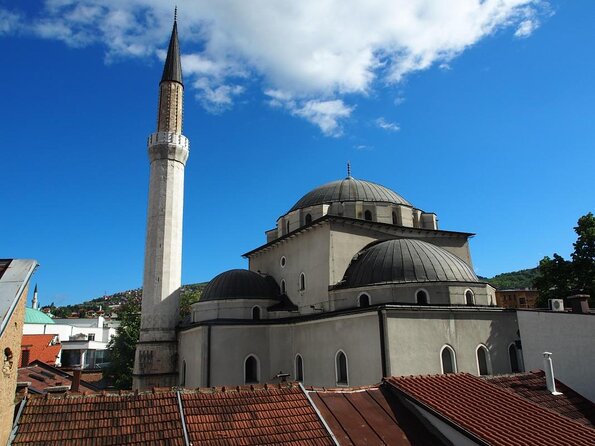
- See Sarajevo’s oldest mosque: The Emperor’s Mosque introduces the city’s early Islamic foundations and its place beside the Miljacka River.
- Read the lunar clock: Sarajevo’s Clock Tower follows Islamic lunar time, a curious detail that gives the old town a very different rhythm.
- Enter Svrzo’s House: This preserved 18th-century home shows how a Muslim household was arranged and used in daily life.
- Understand Gazi Husrev Bey’s legacy: His mosque, madrasa, library, and charitable works helped shape Sarajevo’s religious and civic center.
- Expect a personal guide-led walk: Suad is often praised for clear explanations and warm hospitality, while guides including Aid, Emina, Alam, and Hadiza have also led this experience.
- Budget for admissions: The tour costs $29 per person, with listed admission fees of 8 BAM for the Gazi Husrev Bey Mosque and Madrasa and 5 BAM for Svrzo’s House.
Sarajevo’s Islamic story begins at At Mejdan
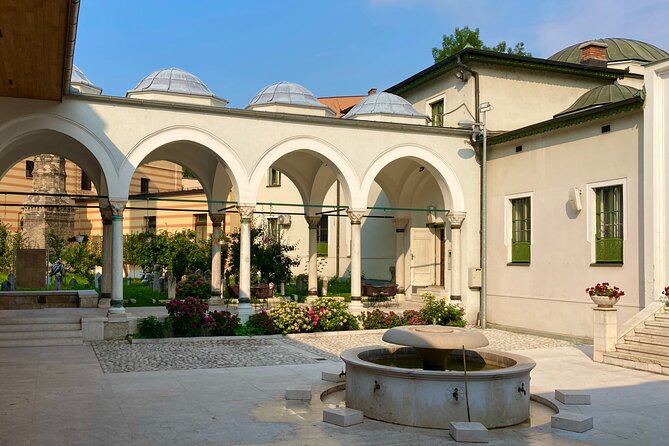
Meet at Sarajevo Insider Tour Agency on Zelenih beretki 30. From there, the walk heads toward At Mejdan, a pleasant starting point for understanding how Sarajevo developed around the river, market streets, religious buildings, and public gathering places.
At Mejdan is used for a photo stop and opening explanation. This is where your guide can set the wider scene: Islam arrived in Bosnia under Ottoman rule, then became part of Sarajevo’s architecture, education, charitable institutions, food customs, and family life.
I appreciate this kind of introduction because it keeps the tour from becoming a simple mosque checklist. You begin by seeing Islamic culture as part of the city’s daily structure. The guide also addresses Muslim life in Bosnia today, which gives the old buildings a human connection.
Other Sarajevo days people book alongside this one:
- Sarajevo: Mostar, Konjic, Blagaj Tekke, Pocitelj & Waterfall
★ 4.9 · 1,666 reviews - Fall of Yugoslavia, Sarajevo War Tour with Tunnel of Hope Museum and Frontlines
★ 5.0 · 1,314 reviews - Sarajevo: Grand Walking Tour Through Time and Cultures
★ 4.8 · 1,236 reviews
The Emperor’s Mosque and Sarajevo’s early Muslim center
The Emperor’s Mosque is one of the first major stops. It is described as Sarajevo’s oldest mosque and remains a key site in the city’s Islamic heritage.
Your guide explains the mosque’s religious and architectural importance, then gives you time for photographs and observation. The setting beside the river helps you see why this part of Sarajevo became important. The mosque is not isolated from city life. It belongs to the same urban fabric as the streets, bridges, homes, and commercial areas around it.
This visit is especially useful if you are new to Islamic architecture. Your guide can explain features such as the purpose of a mosque, the role of prayer, and the way religious buildings influenced the surrounding city. The information is presented in Bosnian or English.
Remember the clothing rules from the start. Bring long pants or a long skirt, a long-sleeved shirt, and a sarong if needed. Shorts, short skirts, and sleeveless shirts are not allowed.
Hotel Isa-begov hamam and the public side of Ottoman life
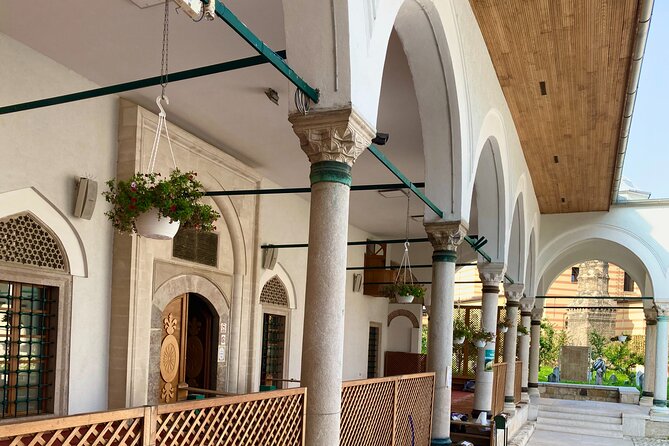
The route continues to Hotel Isa-begov hamam, where you stop for an explanation and photographs. The site points to the importance of public bathing in Ottoman-era Muslim society.
A hamam was more than a place to wash. It was part of public life and reflected the customs, hygiene practices, and social arrangements of the period. The stop is brief, but it helps connect religious traditions with everyday routines.
This is one of the tour’s useful habits: it moves beyond prayer spaces. You see how Islamic influence appeared in public buildings and ordinary customs, not only in religious monuments.
Gazi Husrev Bey’s Mosque, the heart of the old town
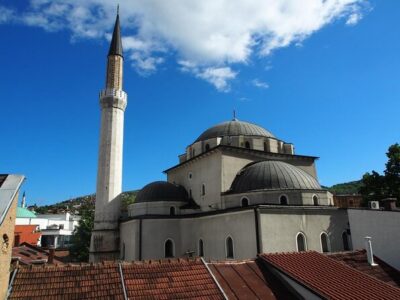
The tour’s central monument is Gazi Husrev Bey’s Mosque. This Ottoman building is closely tied to Sarajevo’s Muslim community and to the legacy of Gazi Husrev Bey, the 16th-century governor and benefactor whose religious and charitable projects helped shape the old town.
You visit the mosque with your guide, who explains its architecture, religious role, and place in Sarajevo’s development. The building is one of the clearest examples of how a mosque could serve as the center of a wider community. Around it grew educational, charitable, and cultural institutions.
The mosque requires a separate entrance payment. The listed price for the Gazi Husrev Bey Mosque and Madrasa is 8 BAM per person, given as about 4.50 euros. The tour price does not include this amount, so carry some local currency or confirm the accepted payment method before setting out.
I would not skip this admission simply to save a few marks. The guide’s explanations add much more than you would get from looking at the exterior alone. Still, if your budget is extremely tight, remember that the tour price is not the full cost.
Same country, a completely different kind of day:
- Sarajevo: Mostar, Konjic, Sufi House, Pocitelj & Kravice Falls
★ 5.0 · 1,179 reviews - Sarajevo: Tunnel Museum Yugoslavia War Tour with War Veteran
★ 5.0 · 1,111 reviews - ROSES OF SARAJEVO (Official WAR + CITY tour)- Story of a Survivor
★ 5.0 · 770 reviews - Sarajevo: Tunnel of Hope Tour – Survival and Resilience
★ 4.8 · 630 reviews
The Madrasa and Library show how learning shaped Sarajevo
Near the mosque, you visit the Gazi Husrev Bey Madrasa and learn about the educational side of the complex. A madrasa is an Islamic school, and this stop helps explain how religious learning, scholarship, and community life were organized.
The nearby Gazi Husrev Bey Library adds another layer. It represents the preservation and study of Islamic texts and knowledge. Together, the mosque, madrasa, and library show that Sarajevo’s Islamic center was designed around worship, education, and public service.
This section can be particularly rewarding if you enjoy history told through institutions rather than battles and rulers. Your guide links the buildings to Gazi Husrev Bey’s wider contribution to the city. The focus is not only on what you see, but on why these buildings were placed together.
The entrance arrangements make this part worth clarifying at the beginning. The listed fee covers the Gazi Husrev Bey Mosque and Madrasa, while the library is included as a guided stop rather than separately listed admission.
Sarajevo’s lunar Clock Tower
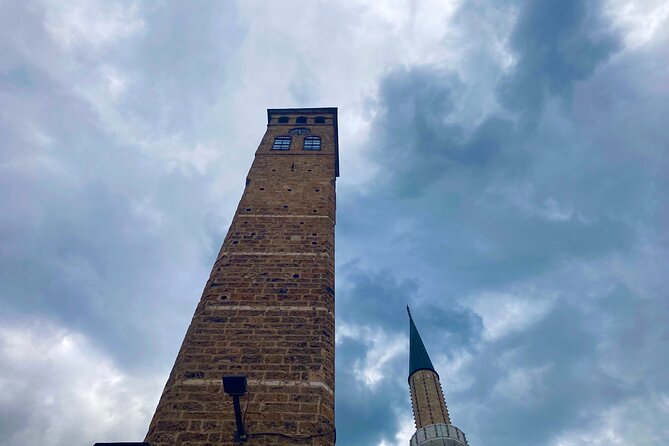
The Clock Tower offers one of the tour’s most unusual details. Its clock follows lunar time, reflecting Islamic tradition rather than the standard clock system used in most European cities.
Your guide explains how this system works and why it mattered for the timing of daily prayers and sunset. It is a small feature with a large payoff because it shows how religious practice shaped the way people read time.
You may find the tower more interesting after hearing the explanation than you would on your own. From the street, it can look like another old-town landmark. With context, it becomes evidence of a different rhythm of life.
This is also a good example of the tour’s approach. It uses a specific object to explain a broader idea, rather than asking you to memorize dates and names.
Svrzo’s House brings the subject into the home
Svrzo’s House is where the tour shifts from public institutions to private life. This preserved home presents daily Muslim life in 18th-century Sarajevo through its rooms, layout, and household arrangements.
You spend about 20 minutes here, including the museum visit and guided explanation. The house helps you picture how family life was organized, how different spaces were used, and how architecture reflected customs and social expectations.
For me, this is likely the most useful stop for anyone who wants to understand people rather than monuments. A mosque tells you about worship. A library tells you about learning. A home shows how beliefs and customs fitted into meals, family routines, hospitality, privacy, and domestic space.
Svrzo’s House requires a separate admission of 5 BAM per person, listed as about 3 euros. That extra cost is modest, but it matters when comparing this tour with a basic free walking route. The house is also a museum, so the visit depends on the site being open at the scheduled time.
Islamic studies and modern Muslim life
The walk continues to the Faculty of Islamic Sciences in Sarajevo. This stop brings the subject into the present and shows that Islamic education remains part of the city’s living institutions.
Your guide discusses traditions, rituals, and the Bosnian Muslim community in a modern context. That balance is important. Sarajevo’s Islamic identity is not frozen in the Ottoman period, and the tour makes room for contemporary daily life as well as old architecture.
The guides are the strongest part of this experience. Suad is repeatedly singled out for his warmth, clear history lessons, and ability to answer questions. Other guides named for the tour include Aid, Emina, Alam, Haris, Alem, and Hadiza. The exact guide depends on the date, but you can expect a live guide in Bosnian or English.
The personal tone can vary with the group. Some departures may be small enough for an extended question-and-answer session. One solo participant had the chance to ask many questions throughout the walk, while another couple enjoyed a relaxed coffee break arranged by the guide. These details cannot be guaranteed, but they show the sort of flexible, human contact the format can allow.
Baščaršija and the Sebilj Fountain
The route reaches Baščaršija, Sarajevo’s old market district. Here, Islamic architecture and Ottoman urban planning meet the practical life of the city: shops, workshops, food, fountains, and narrow pedestrian streets.
The Sebilj Fountain is the best-known landmark in this area. You stop for photographs and can drink from the fountain, a small but memorable part of the visit.
The fountain also gives your guide a chance to explain the role of public water in Muslim communities. In a city built around walking and shared public spaces, a fountain was useful as well as symbolic.
Baščaršija can be lively and crowded, particularly during busy periods. Stay close to your guide and keep your expectations realistic. This is not a quiet museum visit. It is an active old-town district where the historic setting remains part of everyday commerce.
The viewpoint ends the walk with a broader look at Sarajevo
The final visit is a viewpoint, where you spend about 15 minutes before returning to the agency. The view helps you place the old town within the wider city.
After walking through individual buildings and streets, you can see how Sarajevo’s religious and Ottoman core fits into the larger urban setting. The viewpoint is also a natural moment to ask final questions or note places you want to revisit later.
The walk returns to the original meeting point, so you are not left searching for transport at the end. The full experience lasts two hours, which makes it easy to fit into a short stay or pair with another Sarajevo activity.
Is $29 a fair price?
At $29 per person, this is a good-value specialist tour if you want interpretation rather than a quick look at landmarks. The fee includes a licensed local guide and a city map, but not food, drinks, or the listed admissions.
Add 13 BAM per person for the mosque, madrasa, and Svrzo’s House, using the prices provided. That brings the basic total to $29 plus those entrance fees. The value depends on how much you care about the subject. If you only want a general old-town orientation, a standard city walk may cover some of the same streets. If you want Islamic traditions, architecture, and daily life explained in one focused route, this tour gives you more direction for the money.
The guides are praised for making the history easy to follow, answering questions, and connecting the sites to Bosnian life. That personal interpretation is what justifies the price more than the number of stops.
Practical details for a comfortable visit
Wear sturdy shoes and clothing that meets mosque requirements. Long pants, a long-sleeved shirt, and a sarong are the safest choices. Do not arrive in shorts, a short skirt, or a sleeveless shirt.
The route includes repeated walking and is not recommended for people with limited mobility. It is not suitable for wheelchair users. The exact walking surface is not described, so anyone with balance or stamina concerns should ask the operator before booking.
The meeting point is Sarajevo Insider Tour Agency at Zelenih beretki 30. The tour is offered in Bosnian and English, and the booking terms allow cancellation up to 24 hours before departure for a full refund. You can also reserve now and pay later, which is useful when your Sarajevo schedule is still changing.
Food and drinks are not included. One guide offered a coffee break during a private-feeling departure, but you should not treat that as a standard inclusion.
Who should book this Sarajevo walk?
I would choose this tour if you want to understand why Islam is central to Sarajevo’s identity and how that identity appears in buildings, customs, education, and home life.
It suits Muslim visitors looking for a Bosnian perspective on Islamic tradition, but you do not need to be Muslim to benefit. The guides explain the subject in an approachable way, and the emphasis on daily life makes the tour useful for anyone interested in culture, architecture, or modern Sarajevo.
It is also a good choice if you have only one day in the city. The route covers major sites in two hours and gives you a clear foundation for exploring Baščaršija on your own afterward.
I would choose another activity if you want a slow architectural study, a long museum visit, or a route designed for limited walking. This is a compact walking tour with many stops, so the pace is purposeful rather than leisurely.
Should you book it?
Book this tour if you want Sarajevo explained through its Muslim heritage, not simply photographed. The Emperor’s Mosque, Gazi Husrev Bey’s complex, the lunar clock, Svrzo’s House, and Sebilj Fountain each reveal a different part of the story.
The best reason to go is the guide-led context, especially if you are fortunate to have Suad, Aid, Emina, Alam, or another guide who welcomes questions. Pay the modest admission fees, dress properly, and allow the route to challenge simple ideas about Muslim life in Bosnia. For $29, it offers a focused and personal introduction to one of Sarajevo’s defining traditions.
FAQ
How long does the Islamic Traditions and Daily Life Tour last?
The tour lasts two hours, including the walking route, guided visits, photo stops, and the final viewpoint.
Where does the tour begin?
The meeting point is Sarajevo Insider Tour Agency at Zelenih beretki 30 in Sarajevo.
What languages are available?
The tour is offered in Bosnian and English with a live local guide.
What sites are included?
The route includes At Mejdan, the Emperor’s Mosque, Hotel Isa-begov hamam, Gazi Husrev Bey’s Mosque, the Gazi Husrev Bey Madrasa and Library, the Clock Tower, Svrzo’s House, the Faculty of Islamic Sciences, Baščaršija, the Sebilj Fountain, and a viewpoint.
Are entrance fees included in the $29 price?
No. Admission to the Gazi Husrev Bey Mosque and Madrasa costs 8 BAM per person, and admission to Svrzo’s House costs 5 BAM per person. Food and drinks are also not included.
What should I wear?
Bring a long-sleeved shirt, long pants, and a sarong. Shorts, short skirts, and sleeveless shirts are not allowed.
Is the tour suitable for wheelchair users?
No. The tour is not suitable for wheelchair users or people with mobility impairments.
Can I cancel the booking?
Yes. You can cancel up to 24 hours in advance for a full refund. The tour also offers a reserve-now, pay-later option.
Just added around Sarajevo
- Sarajevo Under Siege: A War History Tour★ 5.0 · 10 reviews
- WAR TUNNEL – Sarajevo’s only way of a communication during the WAR – Top secret★ 5.0 · 12 reviews
- Private Full Day Safari Tour★ 5.0 · 8 reviews
- Ultimate Gastro Experience★ 4.5 · 14 reviews
- Mysterious Visoko Pyramids Driving and Walking Tour★ 5.0 · 7 reviews
- Secret Tito’s Bunker/Konjic Tour★ 5.0 · 4 reviews
- The Secret Lifeline: Sarajevo’s War Tunnel Tour★ 5.0 · 6 reviews
- Crossroads of Cultures – Sarajevo Walking Tour★ 5.0 · 8 reviews
Tours, compared.

Fall of Yugoslavia, Sarajevo War Tour with Tunnel of Hope Museum and Frontlines
Read our review →
Blagaj, Počitelj & Kravice Waterfalls Day Tour
Read our review →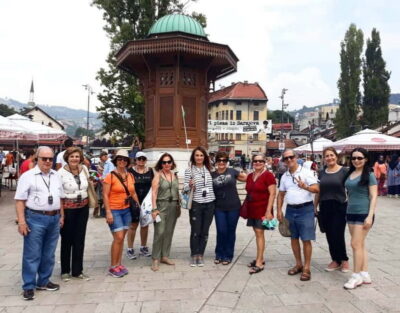
Bosnian War & Fall of Yugoslavia Tour with Tunnel
Read our review →
Herzegovina Day Tour from Mostar: Blagaj, Pocitej, Kravice falls (Join Us! :D)
Read our review →Browse the lists this tour appears in