
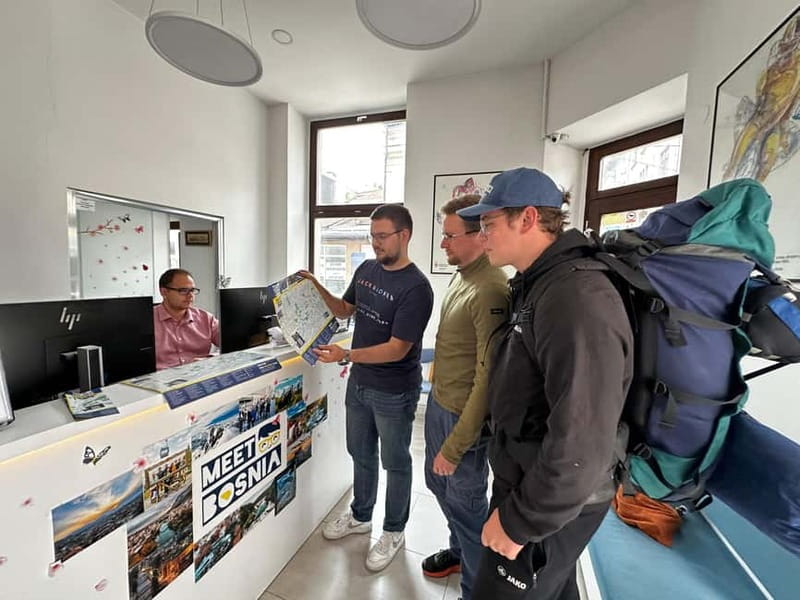
Reviewed · TOURS
Sarajevo: Start of The First World War Tour
The most striking part of this Sarajevo tour is how close the key events remain to one another. At the Latin Bridge, a street corner and a short walk connect you to the assassination of Archduke Franz Ferdinand and Sophie, an event that helped set Europe on fire. City Hall and the assassination site give the story a clear beginning and end.
I like the mix of walking and driving, since it reaches places beyond the central old town, including East Sarajevo and the Gavrilo Princip monument. I also like the small group limit of eight, which gives you room to ask about the Black Hand, Young Bosnia, and the competing views of Princip. The main drawback is that three hours is short for such a large subject, and the tour is not suitable for people with mobility problems.
Key points about Sarajevo’s 1914 tour
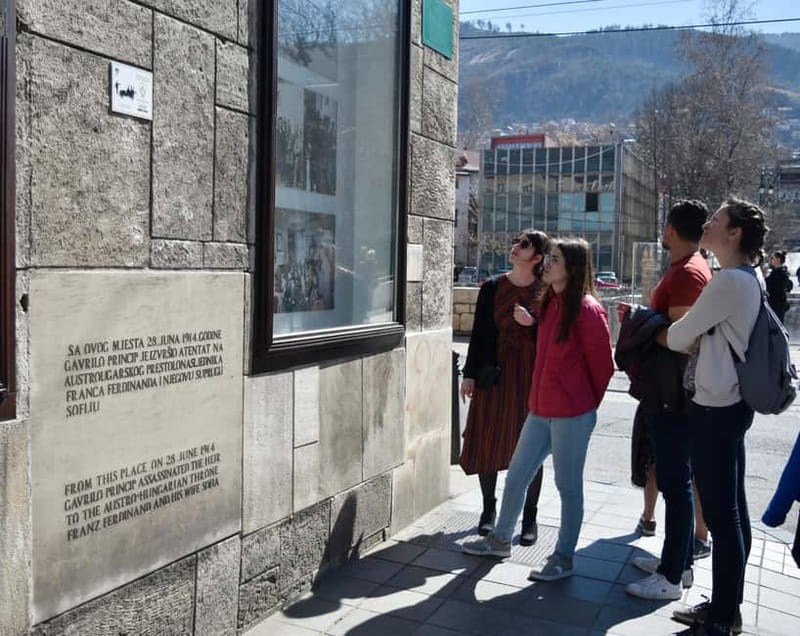
- The Latin Bridge connects the political crisis to the assassination itself, with the Sarajevo Museum nearby to fill in the details.
- Sarajevo City Hall was prepared to receive Franz Ferdinand and Sophie, making it one of the most meaningful places on the route.
- The tour crosses modern political boundaries, reaching East Sarajevo and the statue of Gavrilo Princip.
- Guides such as Ahmed Huseinović, Alan, and Arna explain both the event and its aftermath, with English as the tour language.
- A small group of up to eight people makes questions practical, especially when the subject turns toward Balkan identity and imperial rule.
- The $58 price covers three hours, a guide, and transport between spread-out sites, which is useful if you want more than a short old-town walk.
Why Sarajevo is the right place to study the First World War
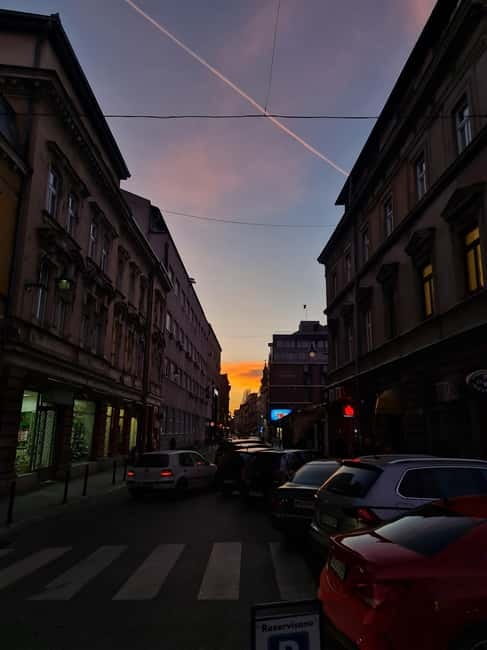
Many First World War tours begin with generals, treaties, and maps. This one begins with a city street and a political problem that had been building for years.
In 1914, Bosnia and Herzegovina was part of the Austro-Hungarian Empire. Sarajevo sat at the meeting point of imperial rule, South Slavic national hopes, Orthodox, Catholic, and Muslim communities, and the growing influence of neighboring Serbia. Franz Ferdinand came to inspect imperial armed forces in Bosnia and Herzegovina, but his visit carried more weight than a routine military inspection.
The date, June 28, also mattered. It was connected to the First Battle of Kosovo and was Franz Ferdinand’s wedding anniversary. The tour uses these details to show why the visit was loaded with political and personal meaning before the motorcade even moved through Sarajevo.
I value this sort of background because it keeps the assassination from becoming a simple tale of one gunman and one shot. You learn how imperial policy affected Bosnian society, why parts of the population resisted Austro-Hungarian rule, and how secret groups such as Young Bosnia and the Black Hand became part of the story.
The guide also helps separate what was planned from what happened by chance. That distinction matters here. The first attack failed, but a later wrong turn brought Franz Ferdinand and Sophie close to Gavrilo Princip. The result was not an instant world war, but a crisis that led Austria-Hungary to confront Serbia and drew major European powers into the conflict.
Other Sarajevo days people book alongside this one:
- Sarajevo: Mostar, Konjic, Blagaj Tekke, Pocitelj & Waterfall
★ 4.9 · 1,666 reviews - Fall of Yugoslavia, Sarajevo War Tour with Tunnel of Hope Museum and Frontlines
★ 5.0 · 1,314 reviews - Sarajevo: Grand Walking Tour Through Time and Cultures
★ 4.8 · 1,236 reviews
Hotel Austria and Bosna: a quieter start to the story
The route includes Hotel Austria and Hotel Bosna, where you have time for a break, photographs, and a closer look at the setting. These stops help place the imperial period in everyday Sarajevo rather than treating it as a string of famous political names.
You can expect some free time here, which is useful early in a three-hour tour. It gives you a chance to look around and ask the guide about how Austro-Hungarian rule changed the city.
The itinerary also passes through Ilidža and East Sarajevo. These are sightseeing and driving portions rather than long central-city visits, so do not expect every stop to be a full guided walk. Their value is in showing how the tour moves beyond the best-known old-town streets.
Gavrilo Princip Chapel and the changing memory of a young assassin
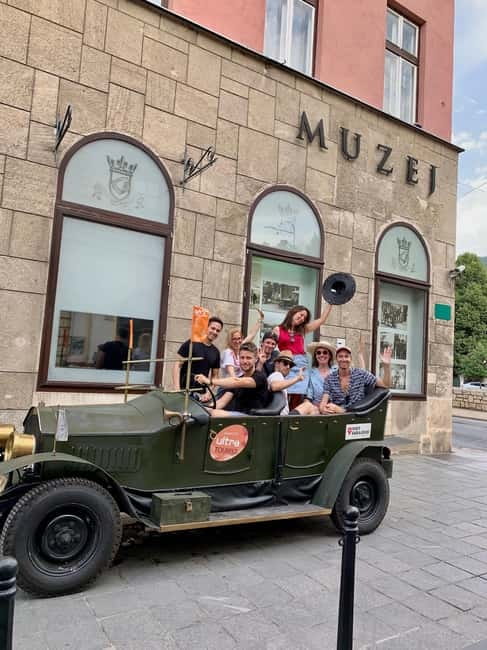
The Chapel of the Vidovdan Heroes, also called Gavrilo Princip’s Chapel, is one of the more unusual stops. It takes you beyond the event itself and toward the way Princip and the other conspirators have been remembered, honored, rejected, or politically reinterpreted.
That subject is especially important in Bosnia and the wider Balkan region. Princip is not viewed in one simple way. Some see him as a resistance figure who opposed imperial rule. Others focus on political violence and the human cost of the assassination. The route does not leave you with only one label.
This is where a good guide matters most. Ahmed Huseinović has been praised for handling both academic material and plain English, which suits a subject that can become tangled in names and competing national stories. Alan has also been able to adjust explanations for guests who were more comfortable discussing the subject in German. Guide assignments can vary, but the experience depends heavily on who leads your group and how willing you are to ask questions.
East Sarajevo and the Gavrilo Princip monument
The stop at Park Gavrilo Princip and the nearby monument adds a modern layer to the day. It shows that the memory of 1914 is still tied to politics, identity, and geography.
You visit the park, have time for photographs, and see the statue of Princip in East Sarajevo. This is not just another memorial stop. It lets you compare how Princip is presented in different parts of the region, and it makes clear that the assassination remains a subject of disagreement.
I like this part because it avoids presenting Sarajevo as a museum frozen in 1914. The city and its surrounding areas have continued to argue about the meaning of the event. If you ask questions, this is a good place to explore why the same person can be honored in one setting and condemned in another.
There is also a practical point. East Sarajevo is not simply another old-town corner that you can fit into a short walk. The vehicle portion saves time and makes this stop realistic within a three-hour schedule.
Same country, a completely different kind of day:
- Sarajevo: Mostar, Konjic, Sufi House, Pocitelj & Kravice Falls
★ 5.0 · 1,179 reviews - Sarajevo: Tunnel Museum Yugoslavia War Tour with War Veteran
★ 5.0 · 1,111 reviews - ROSES OF SARAJEVO (Official WAR + CITY tour)- Story of a Survivor
★ 5.0 · 770 reviews - Sarajevo: Tunnel of Hope Tour – Survival and Resilience
★ 4.8 · 630 reviews
Sarajevo City Hall and Franz Ferdinand’s planned visit
Sarajevo City Hall, known as Vijećnica, is one of the tour’s essential stops. The Austro-Hungarian building is visually impressive, but its real importance comes from the role it was supposed to play during Franz Ferdinand and Sophie’s visit.
They were meant to be received there. That planned visit links the building to the assassination before you reach the Latin Bridge. The guide explains the imperial setting and the official purpose of Franz Ferdinand’s trip, including his inspection of the armed forces in Bosnia and Herzegovina.
The guided walk through City Hall gives you a better sense of how imperial power presented itself. Austro-Hungarian rule was not only about soldiers and administration. It also reshaped public buildings, streets, institutions, and the image of Sarajevo.
You should allow yourself time to look at the building rather than treating it as a quick photo stop. This is one of the places where the political setting becomes easy to picture.
Ćumurija Bridge, Appel Quay, and the route of the motorcade
The tour continues along places linked to the route taken by the imperial motorcade. Ćumurija Bridge provides another photo and sightseeing stop, while Appel Quay helps you understand the movement of the cars along the river.
These locations make the failed first attack easier to follow. The guide recounts the sequence of events, including the unsuccessful attempt and the later turn that brought the couple within Princip’s reach.
A short guided explanation is more useful here than a long lecture. You are looking at ordinary urban spaces, and without context they may not seem special. With the sequence laid out clearly, you can see how timing, confusion, and the route itself shaped what happened.
This is also where the three-hour limit becomes noticeable. The story has many names, organizations, and political motives. You will get the main chain of events, but you may want to continue reading afterward if the subject catches your interest.
Latin Bridge and the Sarajevo Museum, 1878 to 1918
Latin Bridge is the emotional center of the tour. It is the site associated with Princip’s fatal encounter with Franz Ferdinand and Sophie, and it sits close to the Sarajevo Museum 1878 to 1918.
The bridge itself is not a grand monument to the scale of the war that followed. That contrast is part of its power. A small urban location became connected to an international crisis that changed borders, governments, and millions of lives.
At the museum, you have time to look around and consider the events in sequence. The museum helps anchor the tour in the period from the start of Austro-Hungarian rule through the assassination era. It is a useful counterweight to the outdoor stops because it gives you objects, dates, and a more focused setting for the story.
I would pay close attention to the guide before entering the museum. A clear explanation of the assassination route makes the displays easier to understand. If you have only a general idea of why World War I began, this combination of site visit and museum time is particularly helpful.
What the guide adds to the experience
The strongest part of this experience is the live explanation. The subject can quickly become confusing, with Austro-Hungary, Serbia, Bosnia, Young Bosnia, the Black Hand, and the European alliances all entering the story.
Ahmed Huseinović is one guide associated with the experience, and his explanations have covered both the assassination itself and wider Sarajevo and Bosnian history. His ability to shift between formal historical detail and everyday language is useful when you want more than a memorized timeline.
Alan has also shown flexibility with language, including German when guests needed it. Arna has led tours with a driver, taking time to answer questions while moving safely and comfortably between the sites. These names do not guarantee your guide, but they indicate the kind of personal, question-led format you can expect from the small-group setup.
Because the group is limited to eight, you should use the opportunity. Ask about the difference between Young Bosnia and the Black Hand, the role of Serbia, or why Princip’s memorial treatment changes across the region. A quiet group can make the tour feel close to private, though that depends on how many people book for your time.
Is $58 a fair price for three hours?
At $58 per person, this is not the cheapest way to see central Sarajevo. You can walk to the Latin Bridge and City Hall on your own. The value comes from the wider route, the live historical explanation, and the transport to sites that are harder to combine independently in three hours.
The price includes the guide and walking tour, while the itinerary also uses vehicle transfers between locations. That matters because the tour reaches Ilidža and East Sarajevo as well as the central sites. A group limit of eight adds value for anyone who prefers questions and conversation over a large coach presentation.
I would choose this tour if you want a focused history experience and have only a short time in Sarajevo. I would skip it if you already know the period well and mainly want unstructured time at the museums and bridges.
The reserve-now, pay-later option keeps your plans flexible, and cancellation is free up to 24 hours before the activity for a full refund. Starting times depend on availability, so check that before booking.
Who should book this Sarajevo experience?
This tour suits adults, students, and history-minded visitors who want the causes and consequences explained in one connected route. It is also useful on a first visit, since the driving portions cover more ground than a basic old-town walk.
You should be comfortable with some walking and with getting in and out of transport. The experience is not suitable for children under two, people with mobility impairments, or people with heart problems.
English is the stated tour language. If you only partly understand English, tell the guide at the beginning and ask for slower explanations. The small group makes that more practical than it would be on a large group tour.
Should you book the Shot that Changed the World Tour?
Book it if you want Sarajevo’s 1914 story explained at the actual places where it unfolded. The best reasons are the small group, the route beyond the center, the visit to City Hall and the museum, and the chance to compare the different ways Gavrilo Princip is remembered.
The main caution is pace. Three hours cannot cover every detail of Austro-Hungarian Bosnia, the Balkan political movements, and the First World War. Still, for $58, the combination of transport, a live English-speaking guide, and several difficult-to-reach sites makes this a strong choice for a focused Sarajevo history tour.
FAQ
How long does the tour last?
The tour lasts three hours.
How much does the tour cost?
The price is $58 per person.
What language is the tour conducted in?
The tour is conducted in English with a live guide.
How many people are in the group?
The group is limited to eight participants.
Where does the tour start?
Pickup is in Sarajevo.
Does the tour return to Sarajevo?
Yes, the tour arrives back in Sarajevo.
Which assassination site is visited?
The tour visits Latin Bridge, the site associated with the assassination of Archduke Franz Ferdinand and Sophie.
Does the tour visit Sarajevo City Hall?
Yes. You visit Sarajevo City Hall with a guided walk. It was intended to host Franz Ferdinand and Sophie during their Sarajevo visit.
Is transport included between the sites?
The route includes sightseeing and pass-by portions in Ilidža and East Sarajevo, along with visits and walks at several central locations. A driver is part of the experience.
Can I cancel the tour for a full refund?
Yes. You can cancel up to 24 hours in advance for a full refund.
Can I reserve the tour and pay later?
Yes. You can reserve your place and pay later, subject to the booking terms.
Who should not take this tour?
The tour is not suitable for children under two, people with mobility impairments, or people with heart problems.
Just added around Sarajevo
- Sarajevo Under Siege: A War History Tour★ 5.0 · 10 reviews
- WAR TUNNEL – Sarajevo’s only way of a communication during the WAR – Top secret★ 5.0 · 12 reviews
- Private Full Day Safari Tour★ 5.0 · 8 reviews
- Ultimate Gastro Experience★ 4.5 · 14 reviews
- Mysterious Visoko Pyramids Driving and Walking Tour★ 5.0 · 7 reviews
- Secret Tito’s Bunker/Konjic Tour★ 5.0 · 4 reviews
- The Secret Lifeline: Sarajevo’s War Tunnel Tour★ 5.0 · 6 reviews
- Crossroads of Cultures – Sarajevo Walking Tour★ 5.0 · 8 reviews
Tours, compared.

Fall of Yugoslavia, Sarajevo War Tour with Tunnel of Hope Museum and Frontlines
Read our review →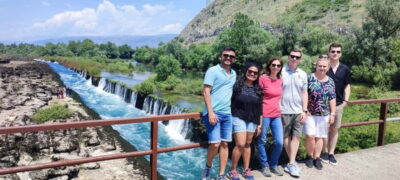
Blagaj, Počitelj & Kravice Waterfalls Day Tour
Read our review →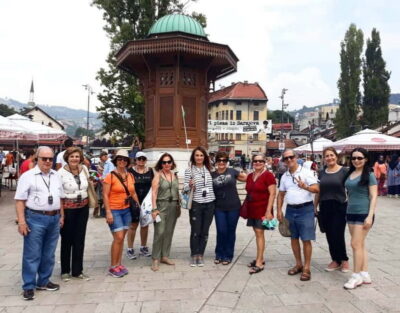
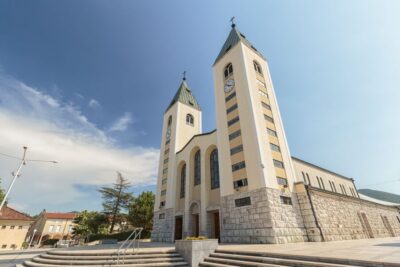
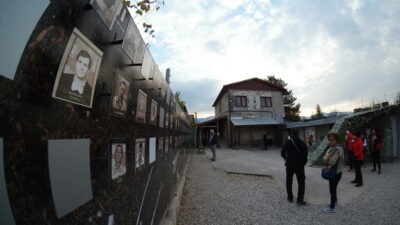
Bosnian War & Fall of Yugoslavia Tour with Tunnel
Read our review →
Herzegovina Day Tour from Mostar: Blagaj, Pocitej, Kravice falls (Join Us! :D)
Read our review →Browse the lists this tour appears in