
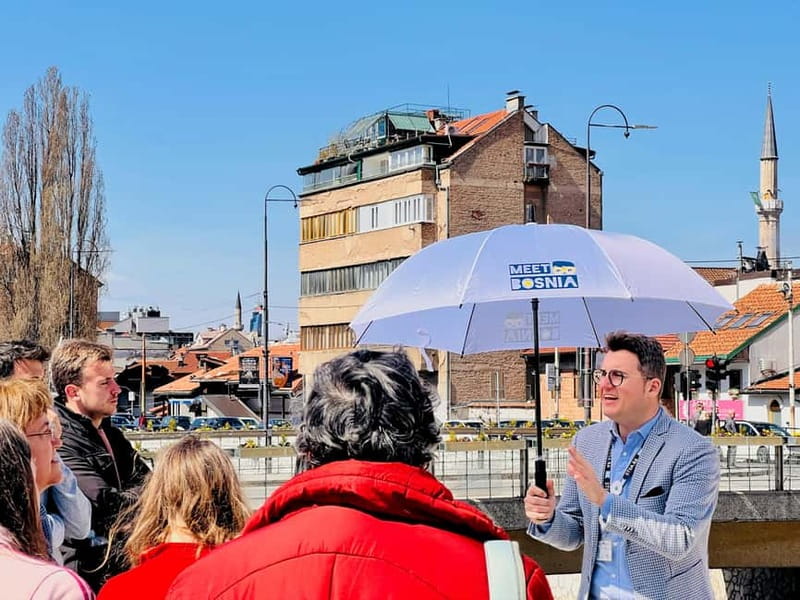
Reviewed · WALKING TOURS
Sarajevo: Old Town Walking Tour with Local Guide
Sarajevo’s Old Town puts Ottoman lanes, Austro-Hungarian grandeur, religious landmarks, and twentieth-century conflict within a compact walk. The most striking moment comes when you hear the calls to prayer and church bells near four religious buildings within roughly 100 meters. That is Sarajevo in miniature: close, layered, and impossible to reduce to one culture.
I like this tour for two clear reasons. First, it links famous sights to the events that shaped them, especially the assassination of Archduke Franz Ferdinand and the Siege of Sarajevo. Second, guides such as Arna, Kiki, Elma, and Benjamin are praised for clear English, personal stories, and practical advice about food, shops, and local life. The main consideration is pace: 150 minutes is enough for an introduction, not a detailed visit inside every building.
Key points at a glance
- Sebilj and Baščaršija: Begin among Sarajevo’s best-known Ottoman-era sights and the old outdoor market area.
- Four faiths in one small area: See how Islamic, Orthodox, Catholic, and other religious traditions meet in the city center.
- Latin Bridge and World War I: Learn why this modest bridge is tied to the assassination that changed Europe.
- Gazi Husrev-beg’s legacy: Explore the mosque, madrasa, and library connected to Sarajevo’s most important Ottoman benefactor.
- Local life beyond monuments: Guides may introduce you to craft shops, food merchants, and unusual trades such as handmade brush production.
- Small-group value: The group is limited to 10 people, and the tour may still operate with only one participant.
Why Sarajevo’s Old Town needs a guide
You can walk Baščaršija alone and enjoy its copperware, coffeehouses, fountains, and narrow lanes. What you cannot easily see on your own is how the pieces fit together.
Sarajevo has been shaped by the Ottoman Empire, Austria-Hungary, Communist Yugoslavia, and the modern independent state. The tour gives you a usable timeline rather than a pile of dates. You move from Ottoman foundations to imperial architecture, then to the assassination of 1914, Yugoslav memory, and the recent war.
That range is valuable because Sarajevo’s buildings do not explain themselves. A mosque may sit near a cathedral, but a guide can explain how religious communities lived beside one another, how power changed hands, and how local people remember those changes today.
The tone also appears to be conversational rather than a fixed speech. Guides are praised for welcoming questions and adapting to interests in architecture, politics, religion, and everyday life. Some have shared personal family stories connected to the Siege of Sarajevo, giving the modern period a human scale without turning the tour into a history lecture.
A few more Sarajevo trips to weigh up
- Sarajevo: Grand Walking Tour Through Time and Cultures
★ 4.8 · 1,236 reviews - Sarajevo: 2 Hours Old Town Walking Tour With Local Guide
★ 5.0 · 505 reviews - Private Walking Tour, Food Tasting and Bosnian Coffee in Sarajevo
★ 5.0 · 255 reviews
Starting at Baščaršija and Sebilj
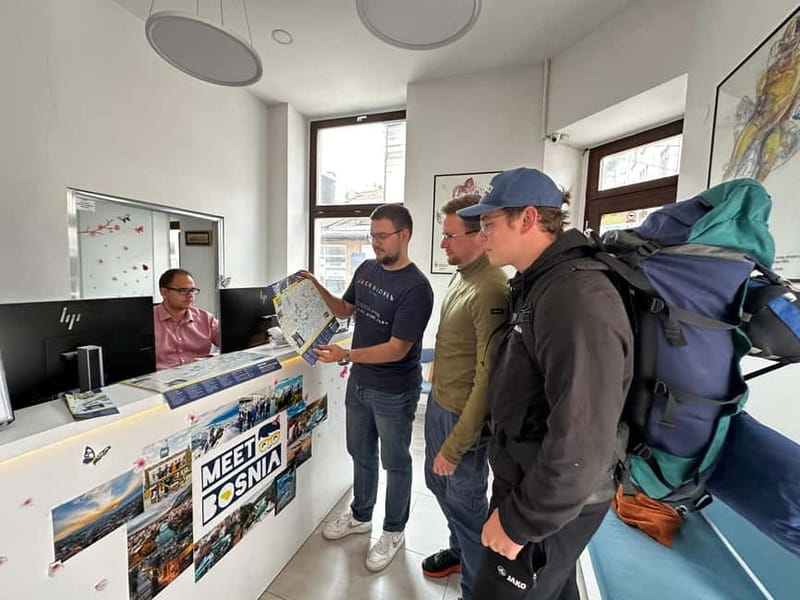
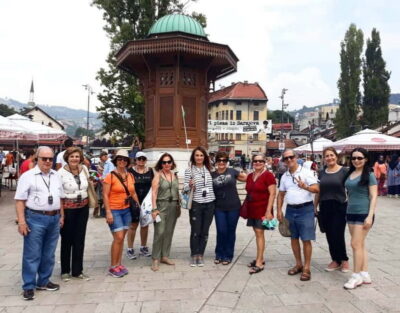
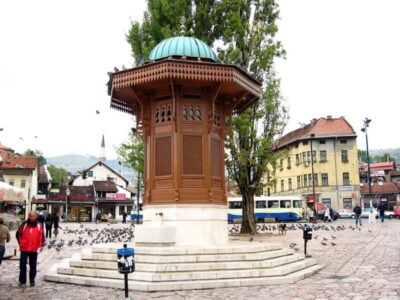
The walk begins at the Meet Bosnia Tours office and quickly reaches Sebilj, the wooden fountain that has become one of Sarajevo’s main symbols. It sits in Baščaršija, the historic market district founded in the fifteenth century.
Expect about 10 minutes here for a visit, photographs, and an introduction from your guide. Sebilj is an easy place to orient yourself. From this point, the Old Town spreads into a mix of small shops, craft stalls, food stops, and historic lanes.
This is also where a local guide can add useful texture. The area is not just a postcard setting. It remains tied to Sarajevo’s traditional trades and café culture. Guides have introduced visitors to local shops and artisans, including a brush-making workshop, while making clear that these visits are for seeing how things are made, not pressuring you to buy.
That distinction matters. A craft stop can feel worthwhile if you like the work and the story. If you prefer monuments only, it takes a few minutes from the route and may feel less important.
Sarajevo City Hall and the Austro-Hungarian chapter
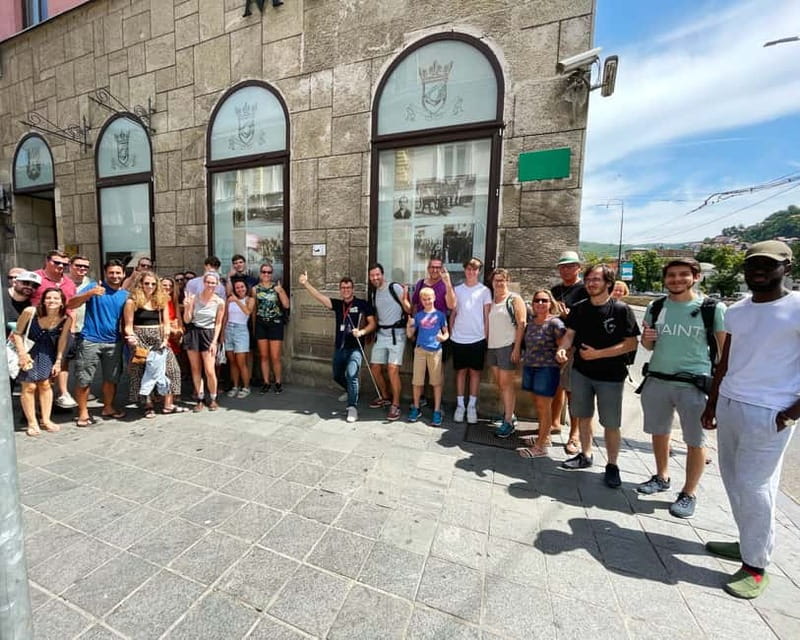
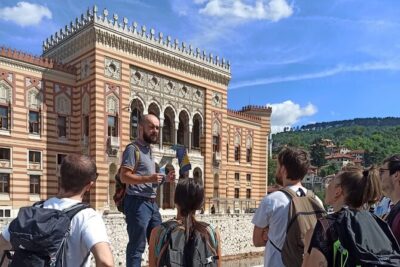
From Sebilj, the walk continues toward Sarajevo City Hall, known as Vijećnica. The building has been newly renovated and provides a sharp contrast to the Ottoman market streets.
The planned stop lasts about 15 minutes, including a guided look and views along the way. You should expect an exterior-focused introduction rather than a long, ticketed museum visit, since the listed tour includes a professional guide but does not include separate attraction tickets.
City Hall helps explain the Austro-Hungarian period, when Sarajevo received new public buildings, administrative structures, and architectural styles. The change is easy to grasp here: Ottoman commercial streets and Austro-Hungarian civic design sit close together, making the city’s political shifts visible in a short walk.
This stop also gives your guide a chance to explain Sarajevo’s place in European affairs. The city was not isolated from the continent’s major events. In 1914, the assassination of Archduke Franz Ferdinand near Latin Bridge helped trigger the chain of events that led to World War I.
Kazandžiluk and the value of craft stops
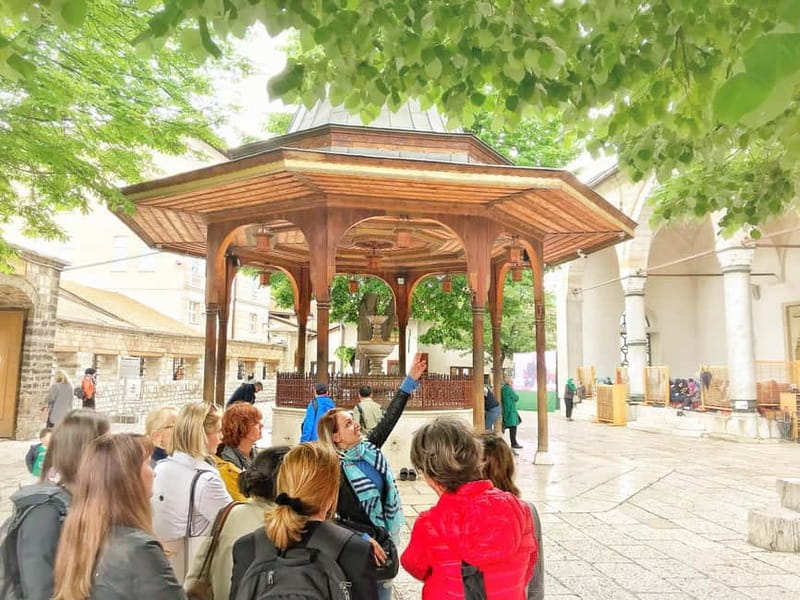
Kazandžiluk is Sarajevo’s traditional coppersmith street. The tour allows around 10 minutes for an arts and crafts market visit.
Look for the visual signs of working metal: coffee sets, trays, decorative pieces, and the tools and methods associated with copperware. The point is not simply to buy a souvenir. It is to see how an Ottoman-era commercial tradition remains part of the Old Town’s identity.
This is one of the better parts of the route for visitors who want local life mixed with history. Several guides, including Arnya, Vicky, and Emma, are praised for explaining local shops and artisans in a relaxed way. You can ask about what is handmade, what is decorative, and where residents shop or eat.
The stop is brief, so do not expect a full demonstration or extended shopping time. If a particular craft interests you, note the shop and return later. Your guide’s recommendations can help you spend that extra time sensibly.
Same country, a completely different kind of day:
- Sarajevo: Mostar, Konjic, Blagaj Tekke, Pocitelj & Waterfall
★ 4.9 · 1,666 reviews - Fall of Yugoslavia, Sarajevo War Tour with Tunnel of Hope Museum and Frontlines
★ 5.0 · 1,314 reviews - Sarajevo: Mostar, Konjic, Sufi House, Pocitelj & Kravice Falls
★ 5.0 · 1,179 reviews - Sarajevo: Tunnel Museum Yugoslavia War Tour with War Veteran
★ 5.0 · 1,111 reviews
Morića Han, an Ottoman caravanserai
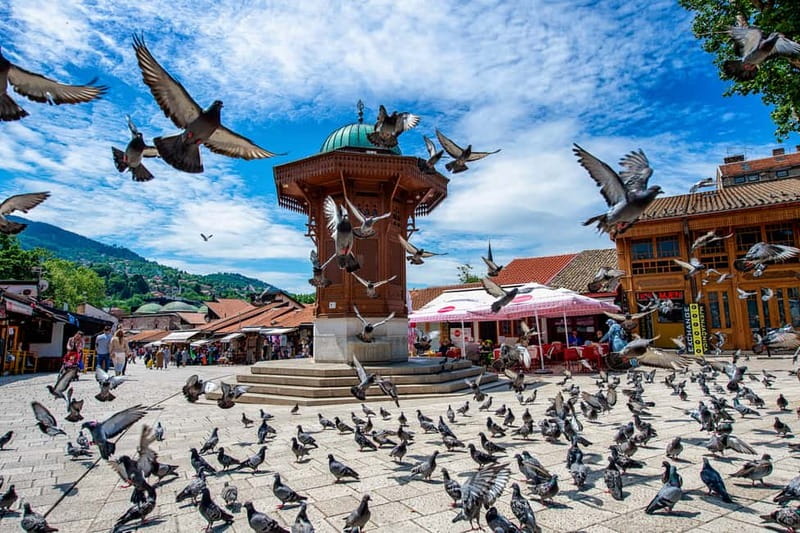
The walk then reaches Morića Han, with about 10 minutes allotted for the stop.
A han was a place where merchants and other visitors could rest, store goods, and conduct business. Morića Han gives you a glimpse of the commercial world that supported Sarajevo during the Ottoman period.
This is a useful pause in the route because it shifts attention from grand religious or government buildings to the practical machinery of city life. Markets need lodging, storage, trade, and transport. A place such as Morića Han helps you picture Sarajevo as a working center rather than merely a collection of old façades.
The visit is short, so your guide will likely focus on its role and setting rather than every architectural detail. I would pay attention to the explanation, then take a moment to look around before the group moves on.
Gazi Husrev-beg Mosque and its surrounding complex
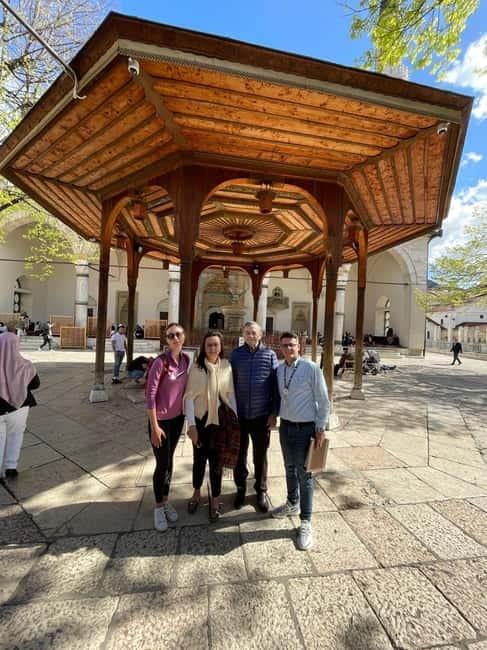
The tour spends several short sections around Gazi Husrev-beg’s legacy, the most important Ottoman-era heritage included on this walk.
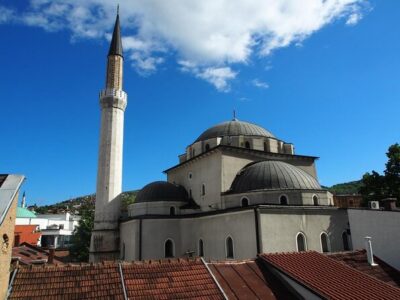
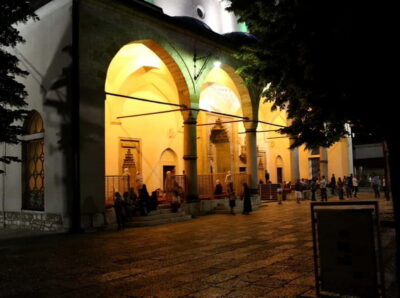
Gazi Husrev-beg Mosque receives around 10 minutes for a guided visit and walk. The mosque is central to Sarajevo’s Islamic heritage and to the structure of the Old Town. Your guide can explain Gazi Husrev-beg’s role and why his name appears across this part of the city.
The nearby Gazi Husrev-beg Madrasa gets roughly five minutes for a visit and photographs. The Gazi Husrev-beg Library also appears in the route for guided photo stops and visits. The schedule lists the library twice, so treat these as connected moments rather than two entirely different attractions.
This portion rewards visitors who want more than a quick architectural glance. The mosque, school, and library show how religious institutions also supported education, scholarship, and civic life.
The time allowance is tight. You will get useful context and photographs, but anyone with a strong interest in Islamic architecture, Ottoman urban planning, or the library’s collections may want to return independently.
Latin Bridge and the event that changed Europe
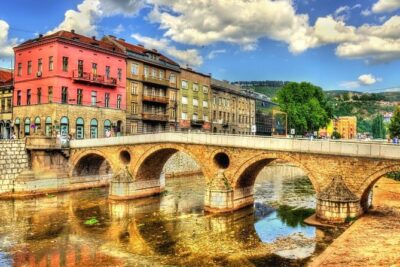
Latin Bridge receives around 15 minutes, making it one of the tour’s central history stops.
The bridge itself is not enormous, and its power comes from what happened nearby. Your guide explains the assassination of Archduke Franz Ferdinand and the connection between that event and World War I. This is a good example of why a walking guide helps: the location is simple, but the political consequences were enormous.
Expect a clear explanation rather than a full course in European diplomacy. You can ask questions about Bosnia, Austria-Hungary, Serbia, and the wider crisis if that period interests you. Several guides are praised for handling politics and complicated historical subjects in plain English.
Latin Bridge also serves as a transition point. The tour moves from Ottoman and imperial Sarajevo into the city’s broader multi-confessional and modern identity. Listen for the local perspective, not only the familiar textbook version of 1914.
Three religious buildings and one remarkable city block
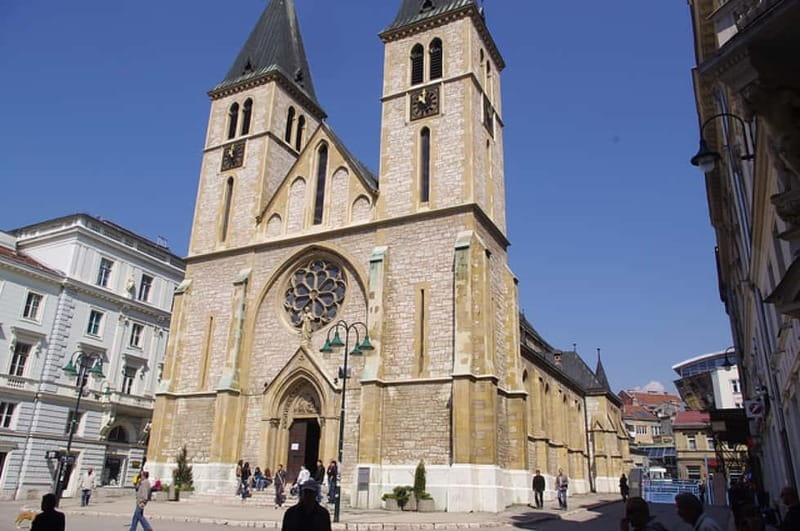
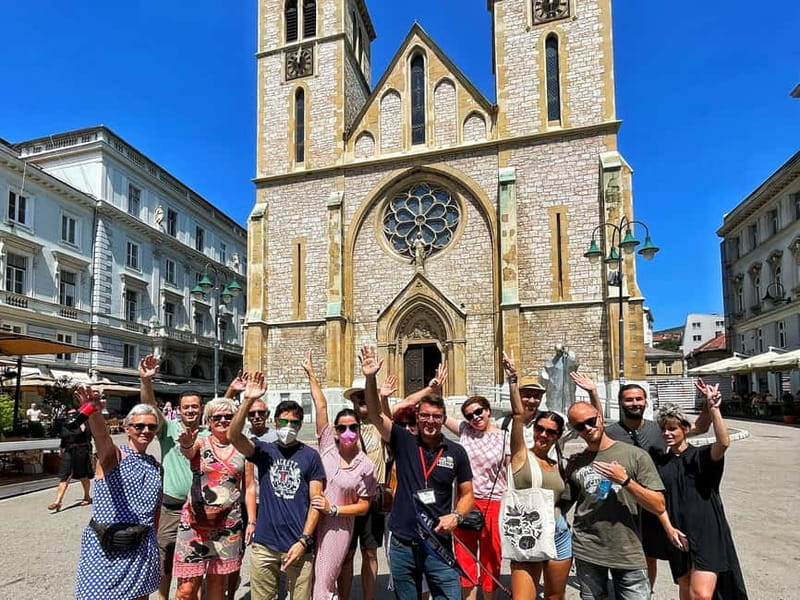
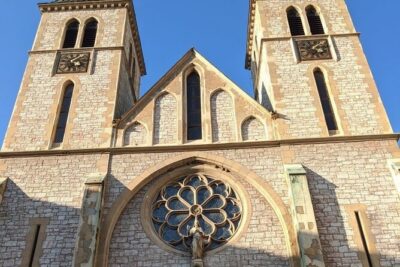
The route continues to the Cathedral Church of the Nativity of the Theotokos, with about 10 minutes for a visit, photographs, and explanation. It then reaches Sacred Heart Cathedral for another 10-minute guided stop.
Together with the Gazi Husrev-beg Mosque, these buildings show Sarajevo’s close mix of religious traditions. The city’s identity is not based on one landmark. It is found in the proximity of Islamic, Orthodox, and Catholic places of worship, along with the Jewish heritage that forms part of Sarajevo’s wider story.
The description of four religious monuments within a 100-meter radius is one of the tour’s strongest ideas. You do not need to travel across the city to understand Sarajevo’s cultural mix. A short walk gives you a physical sense of how different communities shaped the same urban center.
The tour presents these buildings as part of a living city, not as isolated museum pieces. You should dress comfortably and respectfully for the religious sites. The supplied information asks you to bring comfortable clothes and shoes, but it does not specify particular clothing rules for entry.
The Eternal Flame and Sarajevo’s twentieth century
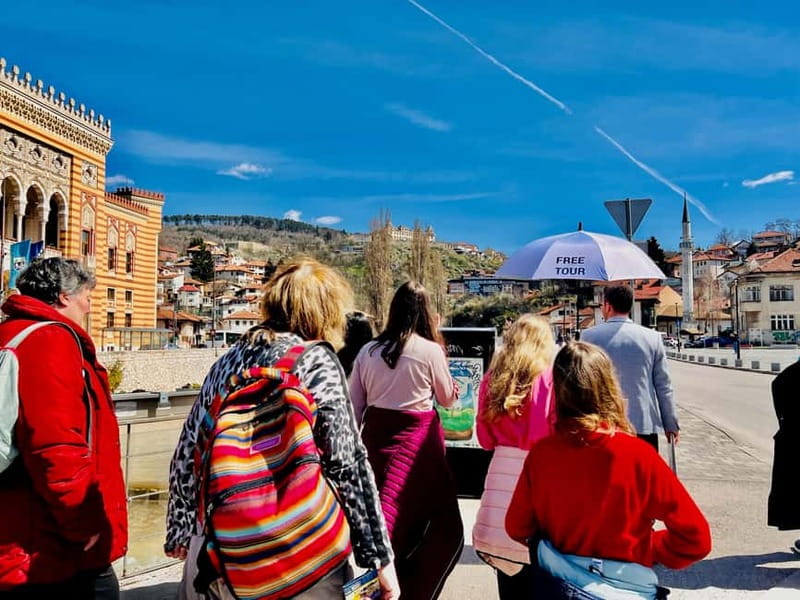
The route also includes the Eternal Flame Monument, dedicated to the Yugoslav People’s Army. This stop places Sarajevo’s Yugoslav period into the tour’s timeline.
The monument is useful because it widens the story beyond Ottoman and Austro-Hungarian Sarajevo. You will hear about the city under Communist Yugoslavia, the 1984 Winter Olympics, and the contrast between Sarajevo as an international sports center and Sarajevo as a war zone only eight years later.
That contrast is one of the hardest parts of the city’s story to absorb. In 1984, Sarajevo hosted the 14th Winter Olympic Games and drew worldwide attention. By the early 1990s, the city was a battlefield during the longest siege in modern history.
The tour cannot cover every detail of the war in a short city walk. Still, the stop helps you understand why modern Sarajevo’s public spaces, buildings, and personal memories carry such weight. Guides may also explain current life and politics, which makes the past easier to connect with the city you see today.
What the guides add
The strongest feature of this experience is the guide. Across different dates, visitors have been led by Arna, Kiki, Armina, Elma, Benjamin, Eddie, Masud, Hanan, Selma, Emma, Emina, and others. The consistent qualities are strong English, warmth, clear explanations, and a willingness to answer questions.
You are not guaranteed a particular guide, so book this for the format and company rather than one individual. Still, the range of praised guides gives you a good sense of the standard to expect.
The best guides add three layers:
- Historical context: Ottoman rule, Austria-Hungary, World War I, Yugoslavia, independence, and the Siege of Sarajevo.
- Personal perspective: Family memories and stories can show how national events affected ordinary people.
- Practical local advice: Places to eat, shops to revisit, local specialties, and craft businesses.
Some guides have even continued conversations over coffee after the walk, though that should not be treated as part of the scheduled tour. The practical advice is especially useful if you take the tour early in your stay. You can mark places to revisit and use the guide’s suggestions for the rest of your time in Sarajevo.
Is $20 a fair price?
At $20 per person, this is good value if you want a structured introduction to Sarajevo. The walk lasts 150 minutes, uses a small group limited to 10 people, and includes a professional English-speaking guide.
The value is strongest when you consider what the guide does beyond pointing at buildings. You receive a connected account of several empires, religions, political changes, World War I, the Olympics, and the recent war. You also get help understanding local shops and everyday customs.
A free walk may cost less upfront, but the paid format offers a fixed price, advance booking, and a small-group structure. One useful detail is that the walk may still go ahead with only one participant, even in a quiet season. That can turn the outing into a private-style experience without a private-tour price.
Meals and drinks are not included, though they can be arranged on request. Plan to pay separately for anything you eat or drink.
Timing, comfort, and access
You will be on foot for two and a half hours, so comfortable shoes are essential. Bring a camera and wear comfortable clothes. Sarajevo’s Old Town is best appreciated at walking speed, but the schedule includes several short stops, so you should be ready to keep moving between them.
The tour is wheelchair accessible according to the supplied information. If you need specific assistance at an individual religious site or along a particular section of the route, ask the provider before booking, since the details of each building are not provided.
The free-cancellation policy allows a full refund when you cancel at least 24 hours in advance. You can also reserve now and pay later, which helps if your Sarajevo schedule is still changing. Starting times vary, so check availability when you book.
Who should book this Sarajevo walking tour?
I would choose this tour for a first visit, especially if you want to understand the city before exploring alone. It suits history fans, architecture enthusiasts, and curious visitors who want local recommendations along with major sights.
It also works well for solo travelers and couples. The small group keeps the walk personal, and the operator’s willingness to run the tour with one participant can matter during quieter periods.
You may want something else if you prefer long museum visits, extensive time inside each religious building, or a narrowly focused tour of the Siege of Sarajevo. This walk covers a lot of ground in 150 minutes, so its job is to connect the city’s main chapters, not examine one chapter in detail.
Should you book it?
Book this tour if you want Sarajevo’s Old Town to make sense quickly. The route covers Sebilj, City Hall, Kazandžiluk, Morića Han, the Gazi Husrev-beg complex, Latin Bridge, major cathedrals, and the Eternal Flame, while the guide connects those places to Sarajevo’s Ottoman, Austro-Hungarian, Yugoslav, and modern periods.
The strongest reason to go is the human explanation. Guides are praised for clear English, thoughtful answers, personal stories, and useful tips about food and local shops. At $20, that is a sensible price for a small-group introduction.
Skip it only if you already know Sarajevo well or want a tour devoted to one narrow subject. For most first-time visitors, this is a smart way to get oriented, then return to the places that deserve more time.
FAQ
Where does the tour start?
The tour starts at the Meet Bosnia Tours office in Sarajevo.
How long does the walking tour last?
The tour lasts 150 minutes, or two and a half hours.
What is the price?
The listed price is $20 per person.
What language is the tour offered in?
The live guided tour is offered in English.
How large is the group?
The group is limited to 10 participants.
Is the tour wheelchair accessible?
Yes, the activity is listed as wheelchair accessible.
Which major Sarajevo sights are included?
The route includes Sebilj, Sarajevo City Hall, Kazandžiluk, Morića Han, Gazi Husrev-beg Mosque, the Gazi Husrev-beg Madrasa, the Gazi Husrev-beg Library, Latin Bridge, the Cathedral Church of the Nativity of the Theotokos, Sacred Heart Cathedral, and the Eternal Flame Monument.
Does the tour explain the assassination of Archduke Franz Ferdinand?
Yes. The tour includes Latin Bridge and explains the assassination and its connection to World War I.
Are food and drinks included?
No. Meals and drinks are not included, but they can be arranged on request.
What should you bring?
Bring comfortable shoes, a camera, and comfortable clothing.
Can you cancel the booking?
Yes. You can cancel up to 24 hours in advance for a full refund.
Can you pay later?
Yes. The reserve-now, pay-later option lets you book without paying immediately.
Just added around Sarajevo
- Sarajevo Under Siege: A War History Tour★ 5.0 · 10 reviews
- WAR TUNNEL – Sarajevo’s only way of a communication during the WAR – Top secret★ 5.0 · 12 reviews
- Private Full Day Safari Tour★ 5.0 · 8 reviews
- Ultimate Gastro Experience★ 4.5 · 14 reviews
- Mysterious Visoko Pyramids Driving and Walking Tour★ 5.0 · 7 reviews
- Secret Tito’s Bunker/Konjic Tour★ 5.0 · 4 reviews
- The Secret Lifeline: Sarajevo’s War Tunnel Tour★ 5.0 · 6 reviews
- Crossroads of Cultures – Sarajevo Walking Tour★ 5.0 · 8 reviews
Walking Tours, compared.
Private Walking Tour, Food Tasting and Bosnian Coffee in Sarajevo
Read our review →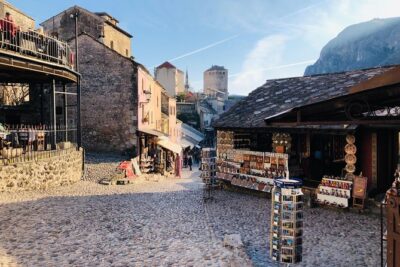
PROFESSIONAL SARAJEVO WALKING TOUR – With guide who guided STING!
Read our review →Browse the lists this tour appears in