
Reviewed · WALKING TOURS
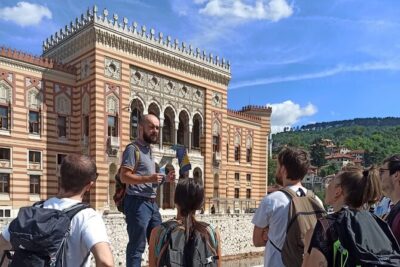
Sarajevo: Crossroads of Cultures – Sarajevo Walking Tour
Sarajevo’s story is packed into a walkable city center, where mosques, churches, synagogues, and the scars of recent war sit close together. This tour connects those pieces with the 1914 assassination of Franz Ferdinand, then adds the practical pleasures of coffee, food, and nightlife.
I like that the experience combines big historical questions with useful local advice. I also like the small group limit of 10, which should give you room to ask about Sarajevo’s languages, religions, and daily life. The main consideration is that food and drinks are not included, and the English commentary may feel fast or quiet if your listening skills are limited.
Key points
- The assassination site: Learn what led to the killing of Franz Ferdinand and why Sarajevo became tied to the start of the First World War.
- A city shaped by several faiths: Explore why Sarajevo is called the Jerusalem of Europe and how different empires influenced its streets and people.
- Bosnian coffee included as a lesson: Learn how to make and drink the local coffee, rather than simply stopping for a quick cup.
- Useful advice beyond history: Get suggestions for what to eat and where to go out after the walk.
- Small groups: The standard group is limited to 10 participants, with a private option also available.
- A flexible booking: You can cancel up to 24 hours before the tour for a full refund and reserve without paying immediately.
Sarajevo in Three Hours: A City Where Histories Meet
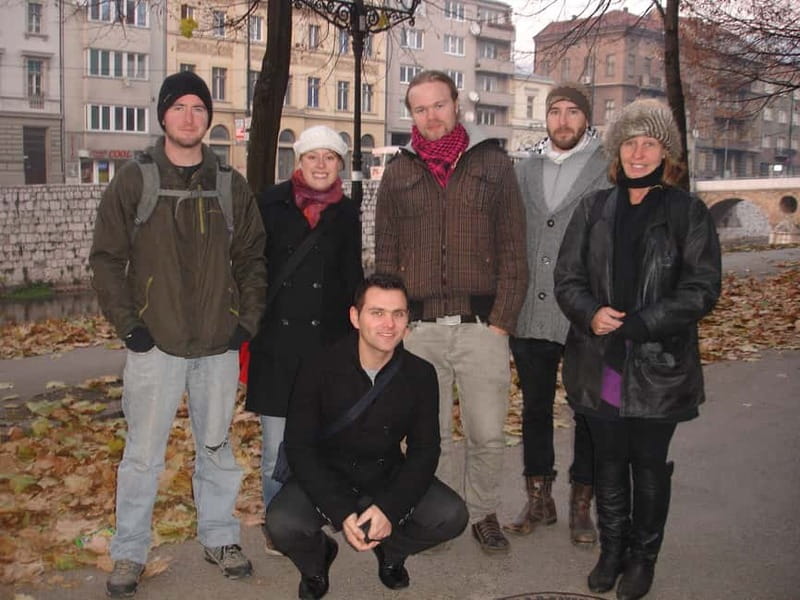
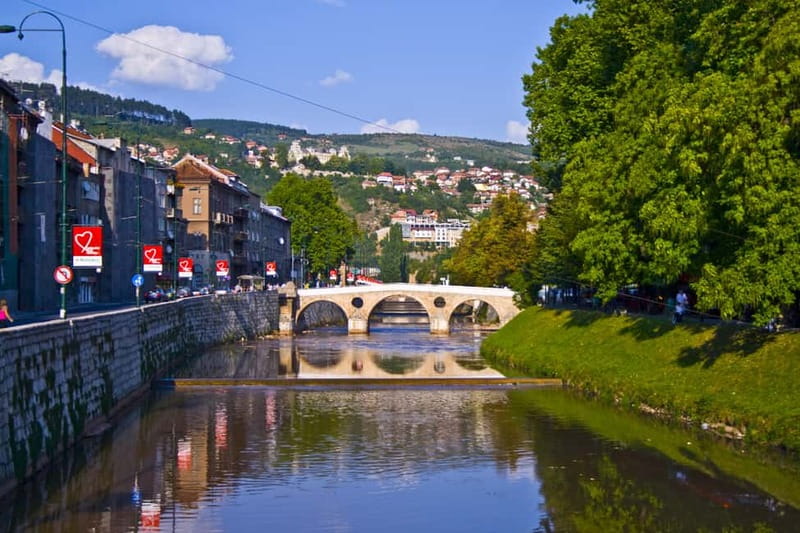
Sarajevo is one of Europe’s most useful cities for understanding how cultures can share a small space without becoming simple or tidy. The tour presents Sarajevo as a meeting point of religions and empires, which helps you read the city with more care than a quick stroll through the old center would allow.
The phrase Jerusalem of Europe points to Sarajevo’s religious mix. On this walk, you learn how different faiths and ruling powers shaped the city, rather than treating its mosques, churches, and synagogues as isolated sights. That context matters because Sarajevo’s identity is not just about buildings. It is about how communities lived alongside one another, and how politics, religion, and outside power repeatedly changed the city.
Plan for three hours. That is long enough to move beyond a basic orientation walk, but short enough to fit into a morning or afternoon without taking over your day. I would place it near the start of a Sarajevo visit, since the guide’s advice about food, nightlife, and local customs can help with the rest of your stay.
The group size is limited to 10. That is a useful middle ground: small enough for questions, but still less expensive than booking a private guide. If you prefer a more personal pace, the private group option gives you that choice.
A few more Sarajevo trips to weigh up
- Sarajevo: Grand Walking Tour Through Time and Cultures
★ 4.8 · 1,236 reviews - Sarajevo: 2 Hours Old Town Walking Tour With Local Guide
★ 5.0 · 505 reviews - Private Walking Tour, Food Tasting and Bosnian Coffee in Sarajevo
★ 5.0 · 255 reviews
The 1914 Assassination Site and Sarajevo’s Place in World History
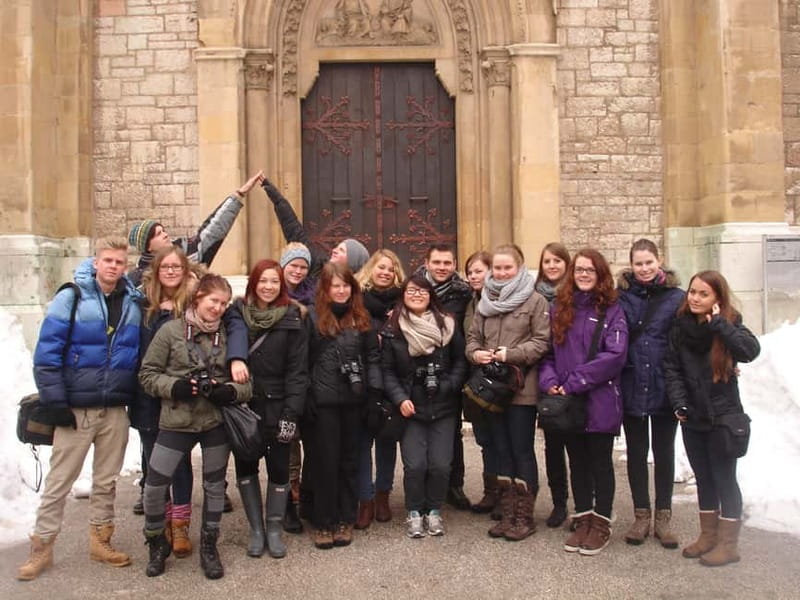
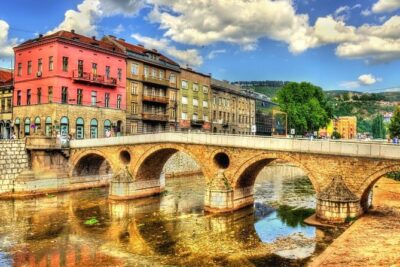
The most important historical section focuses on the assassination of Franz Ferdinand in 1914. You visit the place connected with the killing and learn what caused the event, rather than receiving only the familiar shorthand that it started the First World War.
That distinction is important. The assassination was one event in a tense political setting, and the guide explains how it changed the course of world history. A good explanation here should help you connect local Sarajevo politics with the larger decisions that followed across Europe.
The location itself is powerful because it is an ordinary city space tied to an event with extraordinary consequences. You are not simply looking at an old building or taking a photograph. You are being asked to consider how one moment in Sarajevo became part of a chain that affected countries far beyond Bosnia and Herzegovina.
This part may be especially worthwhile if you know the basic story but have never understood the local setting. It also gives the rest of the walking tour a strong frame. Sarajevo is presented not as a backdrop to European history, but as a city where international forces repeatedly arrived at street level.
Expect the subject to become emotional at points. The guide also discusses Sarajevo’s recent war, and that can give the walk a serious tone. One useful strength of the experience is its effort to keep the discussion clear and human instead of turning painful events into a list of dates.
Why Sarajevo Is Called the Jerusalem of Europe
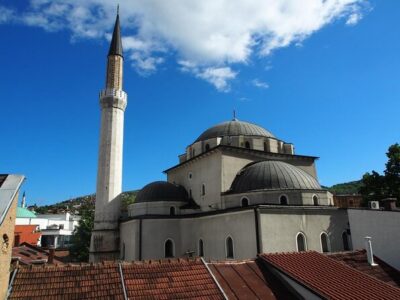
The religious side of the tour helps explain why Sarajevo feels different from many European capitals. You learn how several religions and empires shaped the city, and why that mixture earned Sarajevo its famous comparison with Jerusalem.
The value here is in the connection between place and people. You are not only told that different faiths exist in Sarajevo. You get a sense of how the city’s identity was formed through contact among them. That makes the walk more than a sightseeing route through attractive streets.
The tour also provides a chance to ask how Sarajevo changed under different rulers and political systems. The supplied details do not promise entry into particular religious buildings, so you should think of this as an outdoor history walk rather than a guaranteed interior tour. Entrance fees are not included, and the exact stops inside the route can depend on the guide and the day.
That limitation is worth knowing before you book. If you want a detailed visit inside every major place of worship, you may need separate entrance tickets and extra time. If you want a clear introduction to the forces that shaped Sarajevo, the walk offers better value than trying to piece the story together from signs and guidebooks.
Bosnian Coffee as a Local Lesson
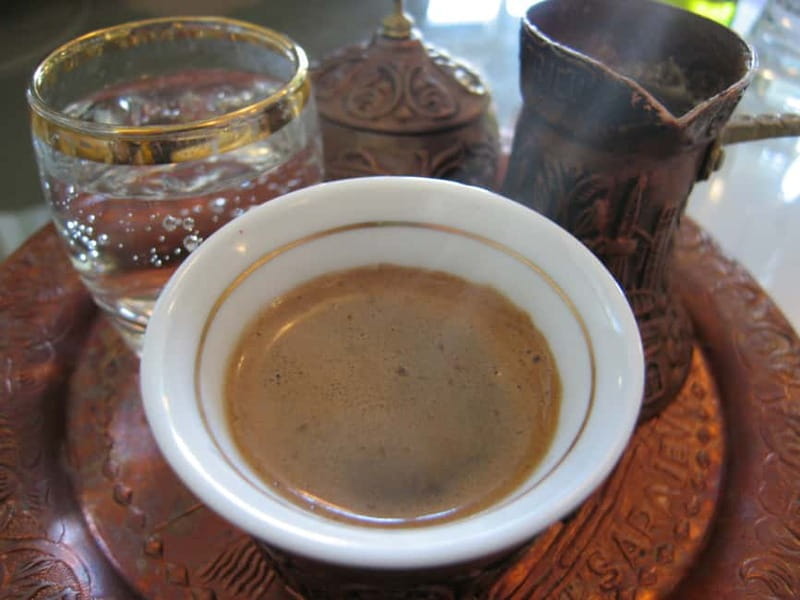
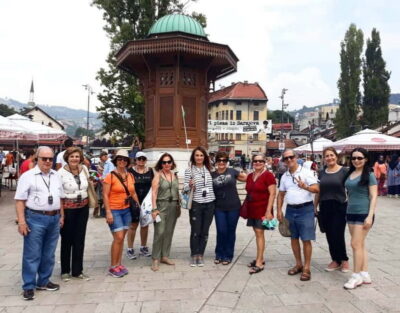
The coffee section gives the tour a welcome change of pace. You learn how to make and drink authentic Bosnian coffee, an experience that treats coffee as part of local culture rather than a basic refreshment.
This is also the one highlight where the tour becomes hands-on in spirit. You are introduced to the method and the way the coffee is consumed, which can help you recognize the custom when you visit a café later. It is a small detail, but these are often the things that make a city feel less like a set of sights and more like a place with its own habits.
Do not assume that all food and drinks are included. The tour information specifically excludes food and drinks, so the coffee component should be understood as a tasting or coffee lesson arranged within the experience, not as an open-ended meal. If you want to order more afterward, budget separately.
The coffee stop may also be a good moment to ask practical questions. You can use the guide’s local knowledge to learn what to eat during your visit, which dishes to seek out, and where to spend an evening. Those recommendations can be more useful than a long restaurant list because they come within a conversation about how Sarajevo works.
Same country, a completely different kind of day:
- Sarajevo: Mostar, Konjic, Blagaj Tekke, Pocitelj & Waterfall
★ 4.9 · 1,666 reviews - Fall of Yugoslavia, Sarajevo War Tour with Tunnel of Hope Museum and Frontlines
★ 5.0 · 1,314 reviews - Sarajevo: Mostar, Konjic, Sufi House, Pocitelj & Kravice Falls
★ 5.0 · 1,179 reviews - Sarajevo: Tunnel Museum Yugoslavia War Tour with War Veteran
★ 5.0 · 1,111 reviews
Food, Nightlife, and Advice You Can Use Later
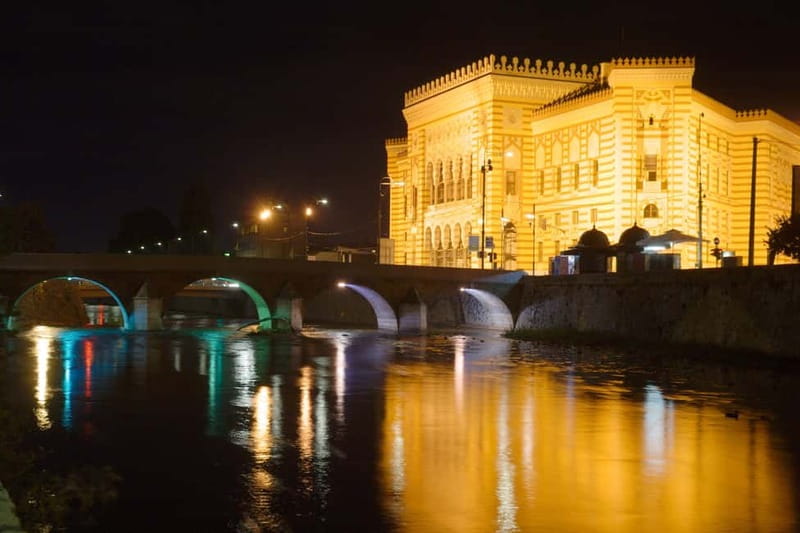
Many city walks tell you what you are looking at and then leave you on your own. This one also covers what to eat and where to party during your Sarajevo stay. That makes it particularly useful for first-time visitors who want help planning the hours after the tour.
The advice is not a substitute for a full food tour. Food is not included, and the experience does not promise a series of tastings. Instead, you get guidance that can shape your own choices. I would take notes or save recommendations on your phone, especially if you are staying more than one night.
The nightlife discussion may be just as useful. Sarajevo’s evening scene is part of the city’s modern character, but a short walking tour cannot cover every bar or venue. The strength here is knowing that you can ask a local guide where to go after the walk, rather than relying only on a generic list.
This practical material also helps balance the heavier history. Sarajevo is not presented only through assassination, empire, and war. You also get a sense of how to eat, drink, and spend time in the city today.
Bosnian, Croatian, and Serbian: Three Languages, One Conversation?
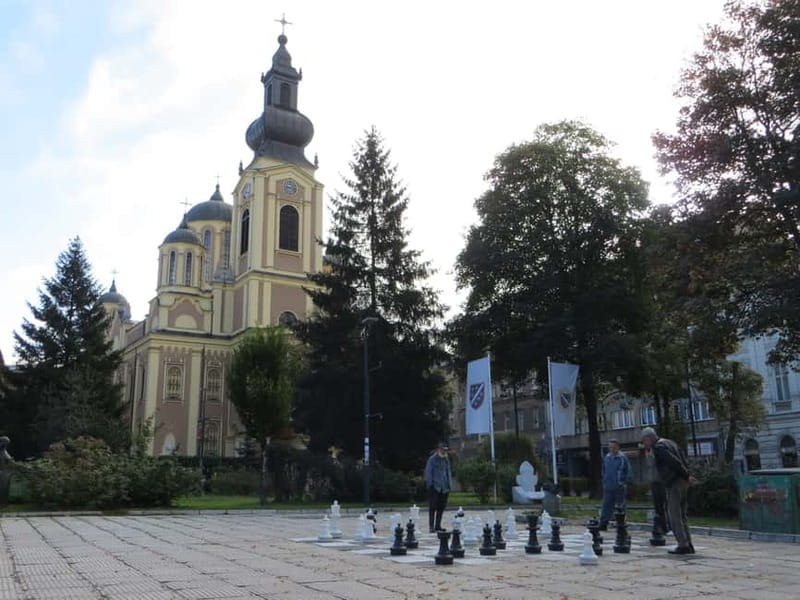
The language portion tackles a question many visitors have: how different are Bosnian, Croatian, and Serbian, and do speakers need a translator to understand one another?
You receive an explanation of the differences among the languages and the degree to which people can communicate across borders. This is valuable because language in the region is tied to identity as well as grammar and vocabulary. A short explanation can help you avoid treating the subject as a simple joke about accents or flags.
The tour does not promise a formal language class. Think of it as cultural orientation that explains how language, nationality, and history overlap. If you are curious about daily communication in Bosnia and Herzegovina, this is one of the more distinctive parts of the walk.
The official tour language is English. Several guides have led this experience, including Alan, Harris, Mohammed, and Adi. A booking with Alan was praised for its clear and human treatment of the city, though the guide was sometimes described as speaking softly and quickly. That is a useful warning if English is not your strongest language. Stay near the guide and ask for repetition when needed.
One family booking also involved a change because a German-speaking guide was not available at the original time. The adjustment was handled through WhatsApp, but you should not assume German is offered as a standard language. The listed language is English.
Guides, Group Size, and the Feel of the Walk
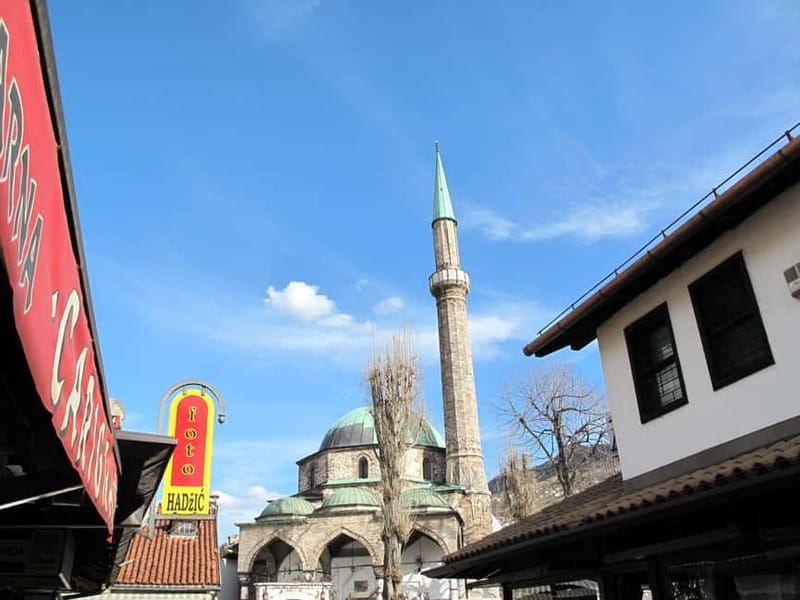
The quality of a history walk depends heavily on the guide. Here, the strongest descriptions point to guides who can explain both historical facts and current events, while also adjusting to questions and the needs of the group.
Adi was described as a strong storyteller who could discuss history, numbers, and present-day events. Mohammed was praised for adapting the walk to a family with a nine-year-old child. Alan was noted for explaining the city’s cultural crossroads in a clear and human way. These details suggest that the experience can work for different kinds of visitors, though your exact guide will depend on the date.
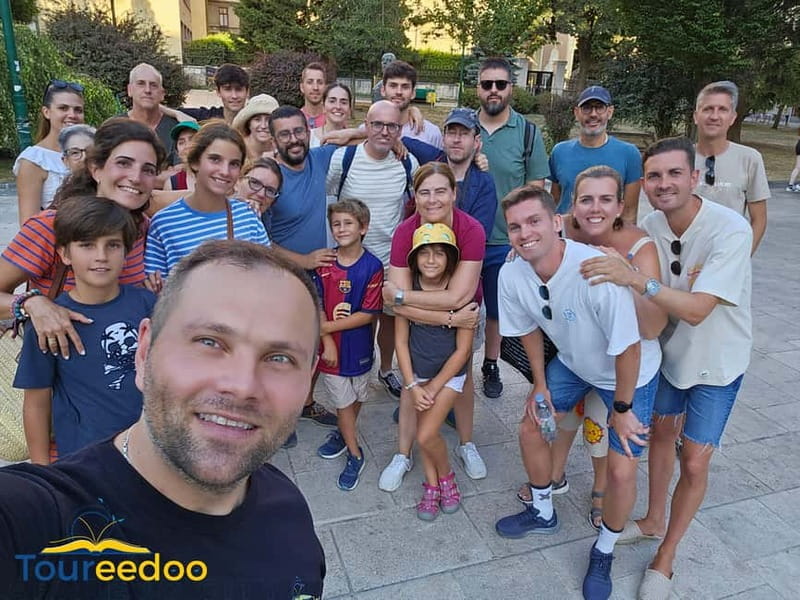
The small group limit of 10 is important. You should have a better chance of hearing the explanation and asking questions than on a large coach-style tour. It also keeps the experience more personal without the price of a fully private guide.
A private group is available if you want greater control over the pace or discussion. That could suit families, couples, or anyone who wants to spend more time on the war, religious history, or language. The standard format is likely the better value if you are comfortable meeting other visitors.
The tour is wheelchair accessible, which makes it more broadly usable. Still, the provided information does not describe the exact pavement, slopes, or restroom arrangements, so you may want to confirm route details before booking if you have specific mobility needs.
Is $23 a Good Price for Sarajevo?
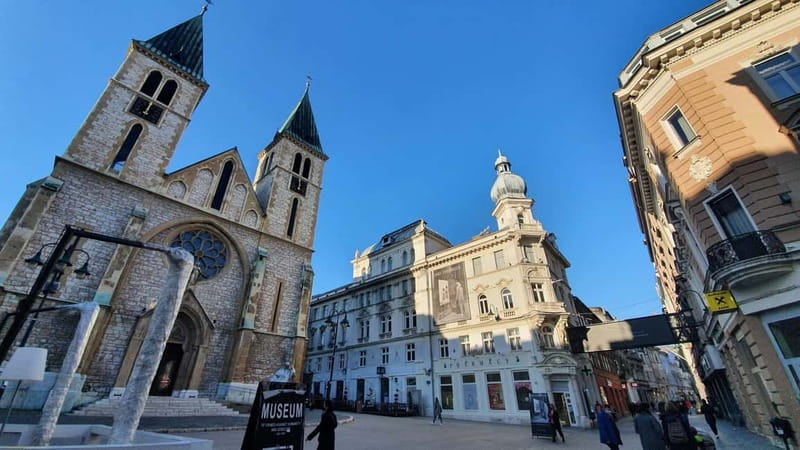
At $23 per person, this is a fair price for a three-hour guided introduction, especially when the group is capped at 10. You are paying for a local English-speaking guide, historical interpretation, the assassination site, a coffee lesson, and practical advice about food and nightlife.
The value is strongest if you are new to Sarajevo. A guide can give you the framework to understand what you see for the rest of your trip. Without that framework, the city’s religious mix and political history can feel scattered.
The price is less compelling if you already know Sarajevo well or want a food tour with several included tastings. Food and drinks are extra, and entrance fees are not included. There is also no pickup, so you need to reach the meeting point yourself.
The tour offers free cancellation up to 24 hours before the start and a reserve-now, pay-later option. Those terms are helpful if your Balkan itinerary is still shifting. Check the available start times before you commit, since the tour lasts three hours and no fixed departure time is provided here.
Who Should Book This Walking Tour?
I would recommend it to first-time visitors, history-minded adults, couples, and families who want a serious introduction without spending a full day indoors. The family experience with a nine-year-old suggests that the guide can adjust the conversation, though the subject matter includes assassination and war and may not suit every child.
It is also a good fit if you want your first Sarajevo walk to answer practical questions. You learn what to eat, where to go out, how coffee works, and how the region’s languages relate to one another.
You may want another option if you require a guide in a language other than English, want every entrance fee included, or expect a full meal and repeated tastings. You should also consider a private booking if you need a slower pace or have a long list of detailed questions.
FAQ
How long does the Sarajevo walking tour last?
The advertised duration is three hours. Starting times vary, so check availability for the date you want.
What language is the tour offered in?
The tour is offered with a live English-speaking guide. German was not available for one booking, so do not assume that language is offered as standard.
Is the assassination site included?
Yes. The tour visits the place where Franz Ferdinand was assassinated and explains the causes and wider effects of the 1914 event.
Are food and drinks included?
No. Food and drinks are not included in the ticket price. The experience does include learning how to make and drink Bosnian coffee, but you should budget separately for anything you order.
Are entrance fees included?
No. Any entrance fees are paid separately. The tour information does not specify which additional sites may require payment.
Can I cancel or pay later?
Yes. You can cancel up to 24 hours in advance for a full refund. You can also reserve now and pay later, subject to the booking terms.
Should You Book It?
Book this tour if you want Sarajevo’s major themes explained in one compact walk: religious coexistence, imperial influence, the 1914 assassination, recent war, coffee, language, food, and nightlife. At $23, the small group format makes it a sensible first-day purchase.
Skip it if you want a dedicated food experience, a full set of interior visits, or a non-English guide. For most first-time visitors, though, this is a practical way to get your bearings fast and begin seeing Sarajevo as a living city rather than only a page in European history.
Just added around Sarajevo
- Sarajevo Under Siege: A War History Tour★ 5.0 · 10 reviews
- WAR TUNNEL – Sarajevo’s only way of a communication during the WAR – Top secret★ 5.0 · 12 reviews
- Private Full Day Safari Tour★ 5.0 · 8 reviews
- Ultimate Gastro Experience★ 4.5 · 14 reviews
- Mysterious Visoko Pyramids Driving and Walking Tour★ 5.0 · 7 reviews
- Secret Tito’s Bunker/Konjic Tour★ 5.0 · 4 reviews
- The Secret Lifeline: Sarajevo’s War Tunnel Tour★ 5.0 · 6 reviews
- Crossroads of Cultures – Sarajevo Walking Tour★ 5.0 · 8 reviews
Walking Tours, compared.
Private Walking Tour, Food Tasting and Bosnian Coffee in Sarajevo
Read our review →
PROFESSIONAL SARAJEVO WALKING TOUR – With guide who guided STING!
Read our review →Browse the lists this tour appears in