
Reviewed · CITY TOURS
Sarajevo: Nighttime City Highlights Walking Tour
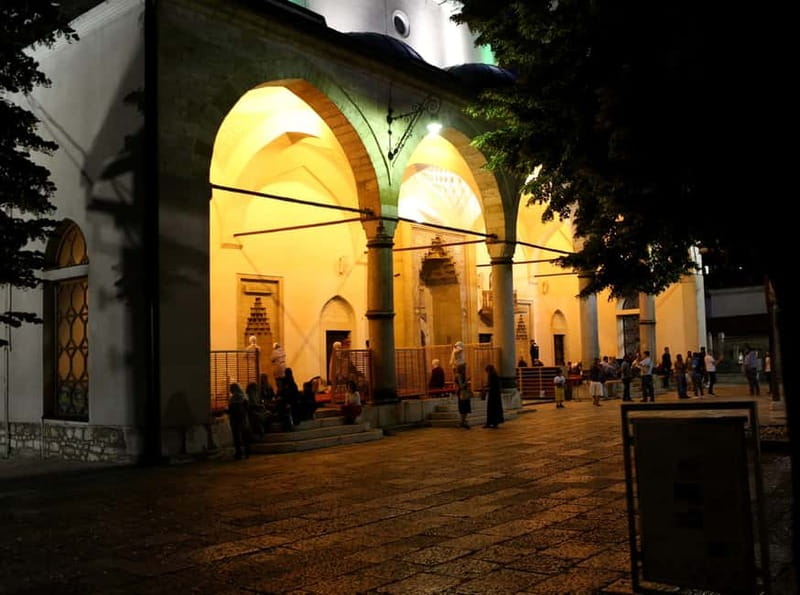
Sarajevo after dark tells its story in a different key. The city’s narrow lanes, illuminated mosques, stone bridges, and grand Austro-Hungarian buildings give this two-hour evening walk a strong sense of place, while your guide connects the sights to the wars, faiths, and empires that shaped Sarajevo.
I like the small group limit of 10, which gives you a better chance to ask questions, and I like the route’s broad sweep from the Latin Bridge to the city’s mosques, markets, synagogues, and cathedrals. The main consideration is pace: this is a packed historical walk, so you’ll see many places from outside rather than make long interior visits.
- A compact route through Sarajevo’s Ottoman and Austro-Hungarian centers
- Evening views of the Latin Bridge, City Hall, Sebilj, and Sarajevo’s religious landmarks
- English-speaking licensed guides including Nedim, Dennis, Suad, and Kenan
- A maximum of 10 participants, with private-tour potential if bookings are light
- Personal stories and clear historical context, not just a list of buildings
- $23 price point with food and drinks left to you
Why Sarajevo Works So Well After Dark
This tour is less about checking off monuments and more about learning how Sarajevo fits together. In a short distance, you move from the site linked with the 1914 assassination of Archduke Franz Ferdinand to Ottoman courtyards, market lanes, Orthodox and Catholic churches, and the traces of a city caught in modern European conflict.
The evening setting helps. Sarajevo’s summer nights can be hot, and walking after sunset is more comfortable than doing the same route in the afternoon. Artificial light also changes the mood of the old center. Stonework, domes, fountains, and narrow shopfronts become easier to appreciate without the glare of midday.
Your guide supplies the thread. Guides such as Nedim, Dennis, Suad, Kenan, Fariz, Hana, Mirza, and others have been praised for clear explanations, humor, warmth, and personal insight. The strongest guides on this route do not treat history as a string of dates. They explain how different communities lived side by side, how Sarajevo’s buildings reflect those layers, and how the city’s past still affects daily life.
The route is full, though. Fifteen listed stops in two hours means some visits are photo stops and short explanations. If you want long time inside museums or mosques, this is not that kind of outing. Think of it as a lively orientation walk that gives you the framework to explore more on your own.
Starting at the Franz Ferdinand Assassination Site
The meeting point is across from the location associated with the assassination of Franz Ferdinand and beside the Sarajevo Museum 1878-1918. This is a useful place to begin because it immediately puts Sarajevo into a European context.
The 1914 assassination is often presented as a single dramatic event that led to the First World War. In Sarajevo, the site carries a more local meaning too. It sits in a city where Ottoman traditions, Austro-Hungarian rule, South Slavic identity, and religious variety all meet within a walkable center.
You should arrive with a sense of where the meeting point is before the tour begins. The location is described clearly, but Sarajevo’s central streets can feel confusing at first, especially where older lanes meet newer roads. Starting here also means you begin close to the Latin Bridge rather than spending part of the tour reaching the old center.
A few more Sarajevo trips to weigh up
- Sarajevo: Grand Walking Tour Through Time and Cultures
★ 4.8 · 1,236 reviews - Sarajevo: 2 Hours Old Town Walking Tour With Local Guide
★ 5.0 · 505 reviews - Private Walking Tour, Food Tasting and Bosnian Coffee in Sarajevo
★ 5.0 · 255 reviews
Latin Bridge and the First Historical Layers
The Latin Bridge is one of Sarajevo’s best-known landmarks, and the tour uses it as an early stop. You get a photo opportunity and a guided explanation before continuing on foot.
The bridge itself helps set up the city’s geography. It links areas near the Miljacka River and sits close to the assassination location, but its importance goes beyond that famous event. It is part of the older urban structure that leads you toward the Ottoman quarter.
I like beginning here because it prevents the assassination story from floating free of the city around it. You see the river, the bridge, the museum, and the streets together. That physical setting makes the political story easier to understand.
The Emperor’s Mosque and Sarajevo City Hall
The Emperor’s Mosque brings you into Sarajevo’s Ottoman chapter. It is one of the route’s religious landmarks, and the guide explains its place in the city rather than treating it as a quick architectural backdrop.
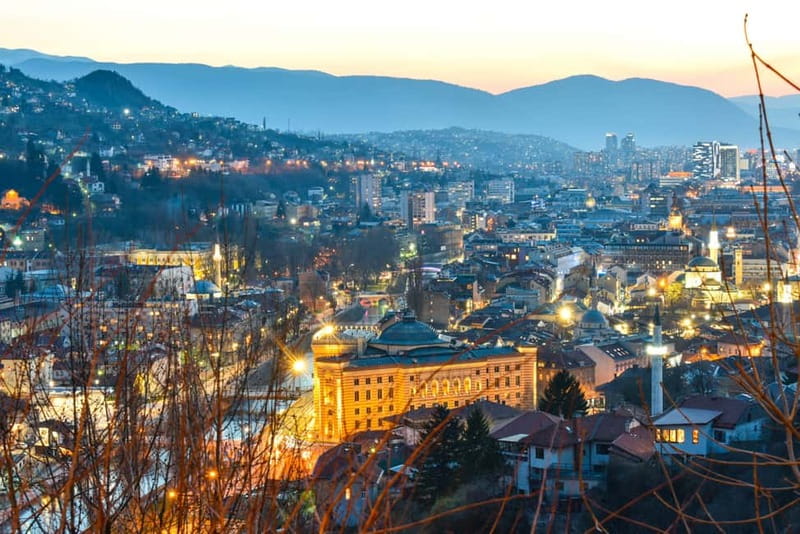
The tour then moves to Sarajevo City Hall, known locally as Vijećnica. Its grand Austro-Hungarian design gives you a sharp contrast with the Ottoman forms nearby. This change in architecture is one of the pleasures of Sarajevo. You do not need a long bus ride to move between different periods. A few minutes on foot can take you from one visual language to another.
City Hall is also important because Sarajevo’s story is not only about attractive buildings. Its history includes destruction, loss, and reconstruction. Your guide’s job here is to connect the building to the city’s wider experience, not simply point out its colorful facade.
The contrast between the Emperor’s Mosque and City Hall is especially useful for first-time visitors. It shows why Sarajevo is often described as a meeting point between East and West, though that phrase only becomes meaningful when you see the buildings side by side.
Inat Kuća and the Riverfront Story
Across from City Hall, Inat Kuća adds one of Sarajevo’s most memorable local stories. The name is commonly translated as House of Spite, and the building is tied to a tale of resistance during the Austro-Hungarian period.
The story gives the walk some humor and personality after the heavier political material. It also shows how Sarajevo’s past survives through local legends and stubborn civic pride, not just through official monuments.
This is the kind of stop where a good guide matters. Dennis has been praised for energetic storytelling, while guides such as Admir and Ilma brought humor and warmth to their walks. You should expect the tone to shift between serious history and more human stories about the people who lived through it.
Same country, a completely different kind of day:
- Sarajevo: Mostar, Konjic, Blagaj Tekke, Pocitelj & Waterfall
★ 4.9 · 1,666 reviews - Fall of Yugoslavia, Sarajevo War Tour with Tunnel of Hope Museum and Frontlines
★ 5.0 · 1,314 reviews - Sarajevo: Mostar, Konjic, Sufi House, Pocitelj & Kravice Falls
★ 5.0 · 1,179 reviews - Sarajevo: Tunnel Museum Yugoslavia War Tour with War Veteran
★ 5.0 · 1,111 reviews
Bravadžiluk, Kazandžiluk, and the Crafts of Baščaršija
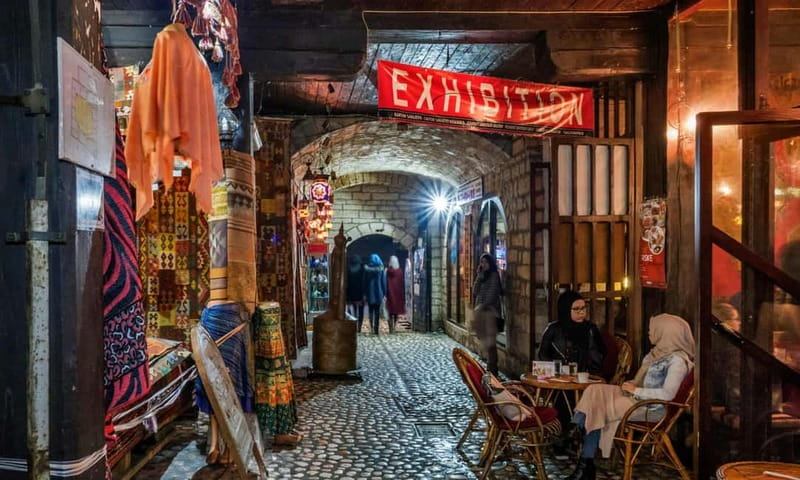
The route continues through Bravadžiluk and Kazandžiluk, streets associated with the old market district and traditional crafts. These lanes offer a closer look at Sarajevo’s everyday character.
Bravadžiluk is linked with food and market life, while Kazandžiluk is known for coppersmiths and metalwork. You may hear the guide explain how these trades fit into the Ottoman-era commercial center. At night, the lanes feel more intimate than they do on a hurried daytime pass.
This section is valuable because it moves the tour away from famous events and into ordinary urban life. Sarajevo is not just a collection of monuments. It is also a place of coffee, craft, food, conversation, and small streets shaped by commerce.
Food and drinks are not included, so you will not be stopping for a meal as part of the $23 price. That is a limitation if you hoped for a food tour, but it also leaves you free to choose a café or restaurant afterward. Bravadžiluk is a useful area to remember for that reason.
Luledžina and Sebilj in Baščaršija
Luledžina continues the walk through the old center before you reach Sebilj, the famous wooden fountain in Baščaršija. Sebilj is one of the easiest meeting points to recognize in Sarajevo and makes a natural photo stop.
The square around it gives you a stronger feel for the city’s social side. It is a place to pause, look around, and watch the old quarter operate after sunset. The tour does not promise a long free period here, so you should take your photos as the guide explains the site.
Sebilj also gives you a visual marker for returning later. If you are new to Sarajevo, a guided walk that includes this area can help you get your bearings quickly. One guide, Suad, was specifically appreciated for helping with orientation on a first day in the city.
Morića Han and the Ottoman Caravanserai
Morića Han is one of the route’s most atmospheric stops. This former caravanserai recalls the period when merchants and visitors stayed in Sarajevo while moving through the Ottoman trading network.
The courtyard layout helps you picture a different kind of city life. Instead of a modern hotel or private home, this was a place built around trade, temporary lodging, and shared space. Your guide can explain how it fitted into the old market district.
It is also a good point to slow down mentally. The tour covers many landmarks, but Morića Han rewards attention to scale and atmosphere. Look at the courtyard, entrances, and surrounding lanes rather than rushing straight to the next name on the route.
Gazi Husrev-beg Mosque and Sarajevo’s Muslim Heritage
Gazi Husrev-beg Mosque is among the most important stops on the walk. It gives the guide a chance to explain Sarajevo’s Muslim heritage, Ottoman urban planning, and the role of religious buildings in the old center.
The tour lists a photo stop and guided visit, but the supplied details do not promise a full interior tour or a specific prayer schedule. Dress and behavior should be respectful, and you should follow your guide’s instructions if worship is taking place.
One useful detail comes through in the experience itself: a guide was willing to wait while a participant finished prayer at a mosque. That suggests the walk can be handled with basic courtesy toward religious practice, though you should still allow for the possibility that a short stop changes pace around prayer times.
This is also where Sarajevo’s mix of cultures needs careful explanation. The city’s religious variety is not a decorative theme. It is part of the way people understand their home, memory, and identity.
The Sarajevo Meeting of Cultures
The Sarajevo Meeting of Cultures marker offers one of the clearest visual lessons on the route. It points to the point where the Ottoman-influenced old town meets the Austro-Hungarian part of the city.
You can turn in one direction and see the forms of Baščaršija, then turn the other way toward broader streets and European-style buildings. This is a small stop, but it gives you a useful mental map.
I consider it one of the best orientation moments on the tour. Instead of hearing that Sarajevo combines East and West as a general slogan, you can see the transition under your feet.
Jewish Museum, Sacred Heart Cathedral, and the Orthodox Cathedral
The next section broadens the story beyond the city’s Muslim and Austro-Hungarian layers. The Museum of the Jews of Bosnia and Herzegovina introduces the Jewish presence in Sarajevo and the wider history of Jewish life in Bosnia.
The stop is listed as a photo stop and guided explanation, not a guaranteed extended museum visit. If you want to study exhibits inside, set aside separate time. On the walking tour, the value is in understanding the community’s place within Sarajevo’s wider story.
Sacred Heart Cathedral then adds a Catholic landmark to the route. Its architecture and position in the central city help show how different religious traditions occupy the same urban space.
The Cathedral Church of the Nativity of the Theotokos completes the religious sequence with an Orthodox landmark. Taken together, these three stops make the tour especially useful for anyone who wants to understand Sarajevo as a city shaped by several faith communities.
This final stretch can feel dense. You are moving from one major site to another, and the two-hour limit means explanations may be concise. Still, the sequence gives the tour a clear purpose: Sarajevo’s identity cannot be explained through one religion, one empire, or one war.
What the Guides Add
The guide is the main reason this tour earns its price. A route like this can be walked independently, but the meaning of the buildings is much harder to assemble on your own in two hours.
Nedim has been singled out for storytelling and for setting out a clear historical framework. Dennis is known for friendly energy and making complex material approachable. Suad adds humor and practical orientation, while Kenan has been praised for broad knowledge and a welcoming manner.
Other named guides include Fariz, Hana, Mirza, Admir, and Ilma. The consistent pattern is a personal, conversational approach rather than a dry lecture. You should expect the exact tone to depend on who leads your departure, but the guide is licensed and the activity is offered in English.
The strongest benefit is context. You can ask why a building matters, how different periods connect, or how Sarajevo’s wartime past affects the way the city is understood. That is far more useful than simply collecting photographs.
Is Two Hours Enough?
Two hours is enough for an introduction, not enough for a complete study of Sarajevo. The route covers a remarkable number of landmarks in a compact area, but most stops are short.
That format suits you if this is your first evening in the city and you want a clear map for the days ahead. It also works well if you have limited time or prefer a broad story over detailed museum visits.
You should not book it expecting a slow photography walk, a food experience, or long periods inside every religious building. Food and drinks are not included, and the itinerary emphasizes walking, explanations, and photo stops.
The route is listed as wheelchair accessible, but the details do not describe surfaces, slopes, or restroom access. If you use a wheelchair, confirm the practical route conditions before booking, especially since the walk includes narrow historic streets.
Price, Group Size, and Practical Value
At $23 per person, the tour offers good value if you use it as your Sarajevo orientation. You get a licensed English-speaking guide, a two-hour route, and a small group capped at 10 people.
The group size matters. Ten people is small enough for questions and easier movement through narrow streets, while still keeping the price below a private tour. If only one booking is made, the experience may operate as a private walk, as happened for one participant.
You can cancel up to 24 hours before departure for a full refund, and you can reserve now and pay later. Starting times vary, so check availability for your date. The meeting point is central, and the tour returns to Insider City Tours and Excursions.
I would book this early in your Sarajevo stay, ideally on your first day or evening. You will learn the names and layout of the central landmarks, then have a better idea of where to return for food, photos, prayer, or museum time.
Who Should Book This Sarajevo Walk?
I recommend it most strongly to first-time visitors, history-minded couples, solo explorers, and anyone who wants a useful introduction without committing to a full-day excursion.
It is also a good choice if you want to approach Sarajevo’s wartime past through a broader story of culture, architecture, religion, and daily life. The tour does not reduce the city to conflict, yet it does not ignore the wars that shaped modern Europe.
Families with older children may appreciate the short duration and the storytelling, though the historical material can be serious. People seeking nightlife, food tasting, or extensive interior access should choose a different activity or add those experiences afterward.
Should You Book It?
Book this tour if you want Sarajevo explained as a living city, not just a set of landmarks. The route is compact, the price is fair, and the small group format gives you a better chance to connect with the guide.
The best reason to go is the combination of contrasts: Latin Bridge and City Hall, Ottoman market lanes and Austro-Hungarian facades, mosque and cathedral, legend and documented history. Just keep your expectations realistic. In two hours, you will receive a strong framework and a memorable evening walk, not an exhaustive tour of every site.
If your schedule allows only one guided introduction to Sarajevo, this is a sensible pick. If you already know the center well or want long visits inside museums, spend your $23 elsewhere.
FAQ
How long is the Sarajevo Nighttime City Highlights Walking Tour?
The tour lasts two hours.
What is the price?
The listed price is $23 per person.
What language is the tour conducted in?
The tour is conducted in English with a live licensed guide.
How many people can join the group?
The group is limited to 10 participants.
Where is the meeting point?
Meet across from the Franz Ferdinand assassination location and next to the Sarajevo Museum 1878-1918, at the starting point for Insider City Tours and Excursions.
What sights are included?
The route includes the Latin Bridge, Emperor’s Mosque, Sarajevo City Hall, Inat Kuća, Bravadžiluk, Kazandžiluk, Luledžina, Sebilj, Morića Han, Gazi Husrev-beg Mosque, Sarajevo Meeting of Cultures, the Museum of the Jews of Bosnia and Herzegovina, Sacred Heart Cathedral, and the Cathedral Church of the Nativity of the Theotokos.
Are food and drinks included?
No. Food and drinks are not included in the tour price.
Can I cancel the booking?
Yes. You can cancel up to 24 hours in advance for a full refund, and you can reserve the activity and pay later.
Just added around Sarajevo
- Sarajevo Under Siege: A War History Tour★ 5.0 · 10 reviews
- WAR TUNNEL – Sarajevo’s only way of a communication during the WAR – Top secret★ 5.0 · 12 reviews
- Private Full Day Safari Tour★ 5.0 · 8 reviews
- Ultimate Gastro Experience★ 4.5 · 14 reviews
- Mysterious Visoko Pyramids Driving and Walking Tour★ 5.0 · 7 reviews
- Secret Tito’s Bunker/Konjic Tour★ 5.0 · 4 reviews
- The Secret Lifeline: Sarajevo’s War Tunnel Tour★ 5.0 · 6 reviews
- Crossroads of Cultures – Sarajevo Walking Tour★ 5.0 · 8 reviews
City Tours, compared.
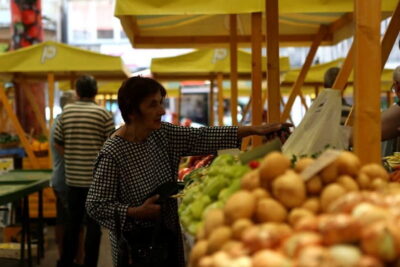
Sarajevo City Market, Old Town Food Tasting Tour
Read our review →
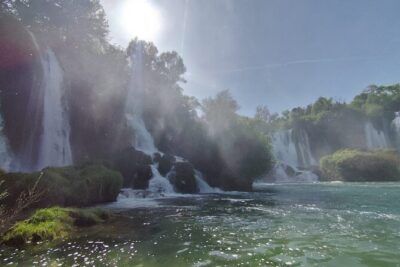
Half Day Trip to Kravice Waterfalls From Mostar with City Voucher
Read our review →
Banja Luka City Tour & A magical journey on Dayak boat
Read our review →
Browse the lists this tour appears in