
Reviewed · SARAJEVO SIEGE TOURS
Inside the Siege: Sarajevo’s Story of Survival
Sarajevo’s siege becomes easier to understand when you see the city from Yellow Fortress, trace the roads where civilians faced sniper fire, and walk through the Tunnel of Hope. This three-hour tour connects the military story with ordinary life: getting food, crossing a street, finding shelter, and burying loved ones.
I like the clear route and the mix of driving, short stops, and one substantial visit inside the tunnel. I also like that local guide Adis Hamzic puts the war into the wider story of Yugoslavia, rather than treating each site as an isolated tragedy. The main consideration is the subject matter: Markale Market, the Memorial to Murdered Children, and the cemetery stops can be emotionally heavy.
Key points to know before you go
- Yellow Fortress gives you the city’s crucial viewpoint: You can see how Sarajevo was surrounded by hills during the siege.
- Adis Hamzic leads with personal, local context: He explains the political background and answers questions about Sarajevo’s war and post-war life.
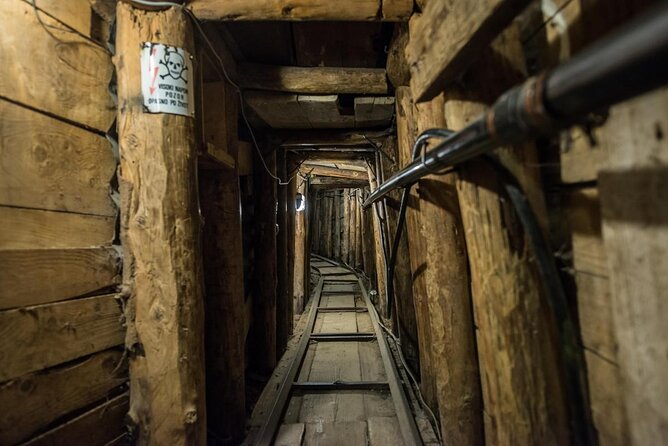
- The Tunnel of Hope is the tour’s central experience: You walk through a preserved section of the passage that carried food, medicine, and supplies into the besieged city.
- Sniper Alley is seen from the vehicle: The drive helps you understand the danger of the street, but it is not a long walking stop.
- The 1984 Olympics and the war are placed side by side: The Olympic Stadium shows how quickly Sarajevo changed from a proud host city to a place struggling for burial space.
- The price is $41, plus a separate €10 tunnel fee: That is a fair cost for transport, a local guide, and three hours of focused interpretation, but remember to carry euros for the museum.
Seeing Sarajevo from Yellow Fortress
The tour begins at Mula Mustafe Bašeskije 65, near Sarajevo’s main square and beside Pekara Edin. Look for the Bosnian flag outside the office. Searching for Sarajevo Tours with Adis on Google Maps can help you find the exact spot.
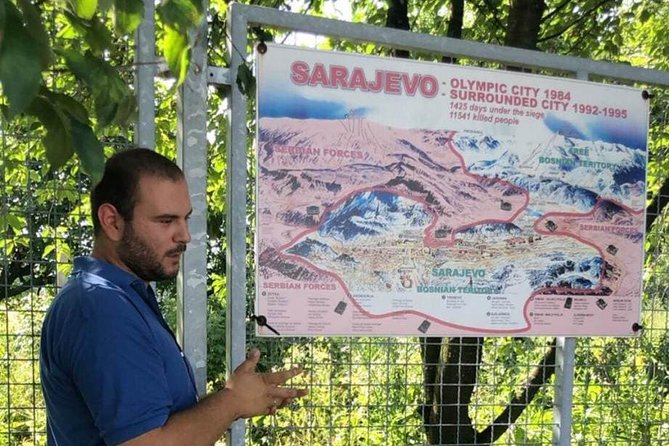
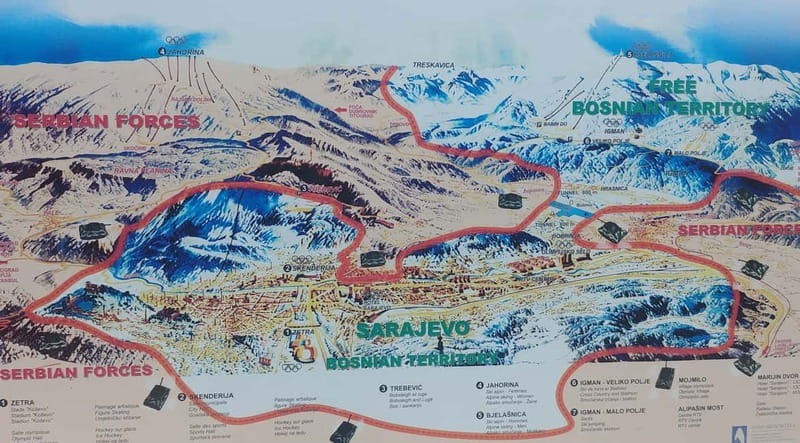
From the Old Town, you ride uphill to Yellow Fortress. The stop lasts about 10 minutes, but it does important work. Sarajevo is long and enclosed by hills, and from this height you can see why the city was so exposed during the siege.
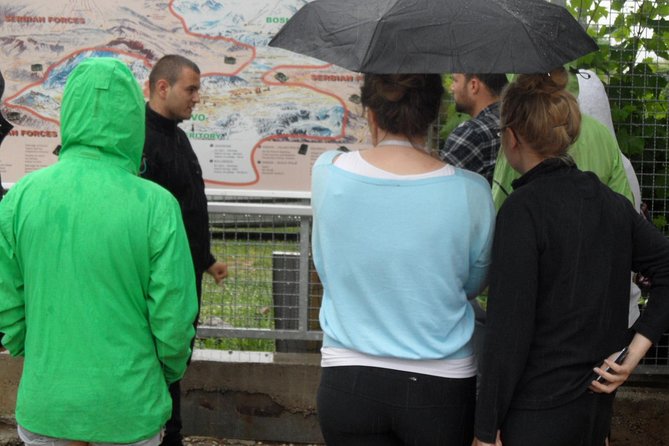
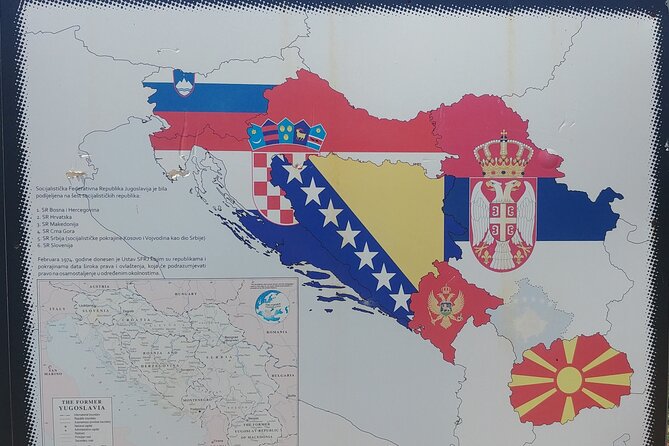
Adis explains the breakup of Yugoslavia, the political pressures that led to war, and the way Sarajevo became trapped. This overview matters. Without it, the later stops can feel like a list of grim places. With it, you begin to see the city as a confined urban space, surrounded by positions from which roads, buildings, and daily routines could be watched and attacked.
You will not spend a long time at the fortress, so use the stop well. Look across the rooftops and up toward the hills. The view is scenic, but here it is also a practical map. You can picture why roads were dangerous, why supplies became scarce, and why the city’s only connection to the outside world had to run underground.
More sarajevo siege tours in Sarajevo:
- Fall of Yugoslavia, Sarajevo War Tour with Tunnel of Hope Museum and Frontlines
★ 5.0 · 1,314 reviews - Sarajevo: Tunnel Museum Yugoslavia War Tour with War Veteran
★ 5.0 · 1,111 reviews - Tunnel Museum: Bosnian & Yugoslav Wars Tour with War Veteran
★ 5.0 · 551 reviews
From the Old Town to Markale Market
The vehicle then descends through Sarajevo, passing several places that connect the city’s peaceful identity with its wartime reality. You pass City Market Hall and the Eternal Flame, both near the center, before reaching areas tied directly to the siege.
Markale Market is remembered for two mortar attacks that killed civilian shoppers. The attacks shocked the world and helped shape international action. You pass the market rather than spending a long period inside it, so the value here comes from Adis’s explanation and from seeing how ordinary the setting remains.
That contrast can be difficult. This was not a remote battlefield. It was a market in the middle of town, a place where people went for basic food during a time of shortage. I find this stop useful because it puts the word civilian into clear view. The siege was not only about armies and political decisions. It reached markets, homes, schools, roads, and family routines.
The tour’s tone is serious, but it does not reduce Sarajevo to suffering. The point is to understand how people continued to live in a city where everyday errands could become life-threatening.
The Olympic Stadium and the cost of war
The drive continues past the Olympic Stadium, associated with Sarajevo’s 1984 Winter Olympics. Just eight years after the Games, part of the stadium area had become a cemetery because existing burial grounds could no longer handle the number of dead.
This is one of the tour’s most striking contrasts. The Olympics represented Sarajevo’s international welcome and civic pride. The cemetery represented a city running out of safe places to bury its people. You stop for photographs and pass by for roughly 10 minutes, giving you enough time to take in the change without turning the site into a rushed photo stop.
The stadium is especially useful for anyone who knows Sarajevo mainly through the Olympics. It shows how quickly a city can shift from celebration to survival. I would not expect an elaborate stadium visit here. The value is the explanation of what happened to the site and what that change tells you about the siege.
You also pass the Sarajevo Jewish Cemetery, where defenders are buried. This is another brief stop from the vehicle, but it helps you understand the city’s layered past and the scale of the fighting around Sarajevo.
Driving through Sniper Alley
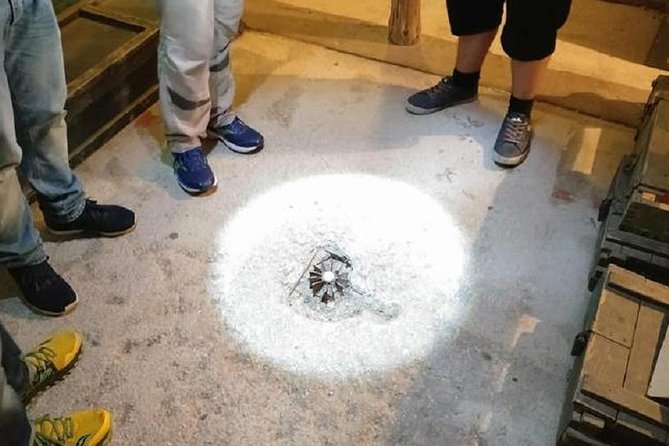
Sniper Alley was the wartime name for one of Sarajevo’s most dangerous streets. Snipers positioned in the hills fired at civilians below, making ordinary acts such as crossing the road or reaching a tram stop deadly risks.
You see this area from the air-conditioned vehicle. That is both a strength and a limit. Staying inside lets the tour cover more ground and gives Adis time to explain how the road functioned during the siege. But you should not expect a long walk or a dramatic viewing platform. The street is a working part of the city, and its meaning depends on the story being told.
This is where the tour’s format makes sense. Sarajevo is spread across a long valley, and walking between all the major sites would take far longer than three hours. The vehicle allows you to connect the market, stadium, cemetery, memorial, and tunnel without losing the thread.
The Memorial to Murdered Children is also passed along the route. It honors 1,601 children killed during the siege. You may not have time for a lengthy visit, so listen closely as Adis explains what the memorial represents. The number is not an abstract wartime figure. It points to children who should have been at school, playing, or growing up in the city.
Same country, a completely different kind of day:
- Sarajevo: Mostar, Konjic, Blagaj Tekke, Pocitelj & Waterfall
★ 4.9 · 1,666 reviews - Sarajevo: Grand Walking Tour Through Time and Cultures
★ 4.8 · 1,236 reviews - Sarajevo: Mostar, Konjic, Sufi House, Pocitelj & Kravice Falls
★ 5.0 · 1,179 reviews - ROSES OF SARAJEVO (Official WAR + CITY tour)- Story of a Survivor
★ 5.0 · 770 reviews
Walking through the Tunnel of Hope
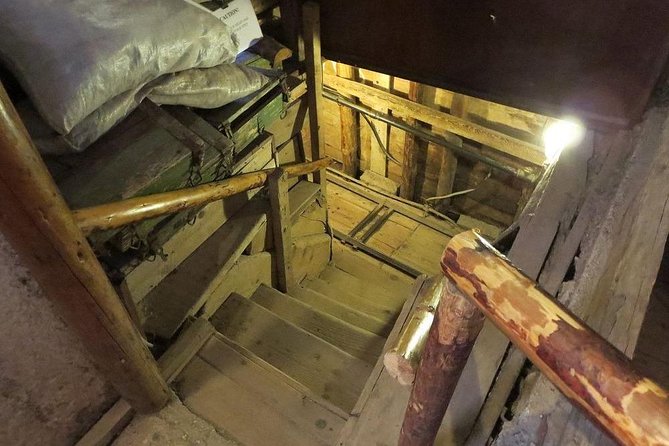
The Tunnel of Hope Museum is the heart of the experience. You spend about an hour here with a guided visit, and you walk through a preserved section of the underground passage.
During the siege, the tunnel provided Sarajevo’s only connection to the outside world. It carried food, medicine, and other supplies into the city. Building and using it required extraordinary effort under dangerous conditions, and the tunnel became a physical link between survival inside Sarajevo and support beyond the siege lines.
The preserved section is not a grand museum space. Its power comes from its narrow, practical character. You are not simply looking at a map or reading a summary. You are walking through part of the route that made movement and supply possible when normal roads were blocked or exposed.
The museum entrance costs €10 and is not included in the $41 tour price. You pay on-site in local currency, so confirm the current payment arrangement when you book and carry the required cash. This extra cost is easy to overlook, but the tunnel is the stop that gives the tour its strongest physical connection to the siege.
Wear comfortable shoes. The tour does not call for a long hike, but some walking is required at the stops, and the tunnel visit is more enjoyable when you are not worrying about footwear.
Adis’s approach to Sarajevo’s wartime story
Adis Hamzic is the named local guide for this experience, and his role is more than transportation and dates. He explains the fall of Yugoslavia, the political tensions before the war, the mechanics of the siege, and the hard questions Sarajevo faces today.
That range is important. A tour focused only on military events can leave you knowing where shells landed but not how people lived. Adis brings the story back to civilians, supply lines, burial grounds, children, and the practical problem of surviving in a closed city.
His explanations are also useful if you arrive with limited background on the breakup of Yugoslavia. The tour is in English, and the information is presented live, so you can ask questions as the route unfolds. That makes this a better choice than a self-guided drive if you want to understand cause and effect rather than simply photograph locations.
The published feedback about Adis is consistently strong on two points: his passion for Sarajevo and his ability to answer questions. One person specifically described him as committed to his work, while another praised the way he explains the wider Yugoslav war. Those are the qualities I would value most here, because the subject needs care as well as facts.
What the three-hour format does well
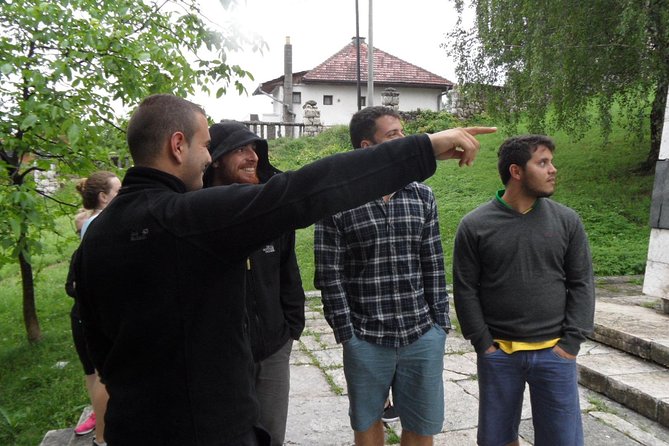
Three hours is enough to cover a lot, but not enough to linger at every stop. The tour gives you a broad view of Sarajevo’s wartime geography and a focused visit to the Tunnel of Hope.
The pattern is generally:
- Start near the Old Town.
- Visit Yellow Fortress for the city view.
- Pass central sites such as City Market Hall and the Eternal Flame.
- Pass Markale Market and the Sarajevo Jewish Cemetery.
- Stop near the Olympic Stadium.
- Pass the Memorial to Murdered Children.
- Drive through Sniper Alley.
- Spend about an hour at the Tunnel of Hope Museum.
- Return to the Old Town with discussion of the war’s end and Sarajevo today.
Traffic or other unexpected conditions can change the order slightly. That is normal for a city tour, especially one covering different parts of Sarajevo Canton.
You travel in a comfortable, air-conditioned vehicle. The vehicle is not just a convenience. It makes it possible to reach the hillside viewpoint and the tunnel while still returning to the center within half a day.
Price, extra costs, and practical value
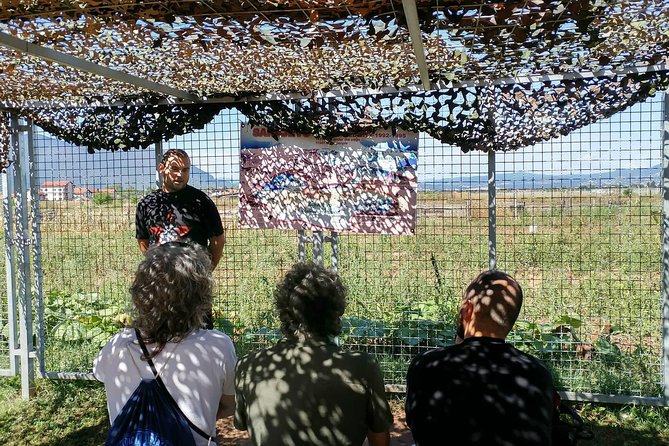
At $41 per person, the tour offers a reasonable package for three hours of transport and a specialist local guide. You also get the Yellow Fortress viewpoint, the drive through Sniper Alley, the Olympic Stadium stop, and the tunnel visit.
The €10 entrance fee raises the real cost, so plan for roughly $41 plus the museum charge, along with anything you want to eat or drink. Food and drinks are not included, but you can bring water or a snack.
I consider the price worthwhile if you want context. You could visit some of these places independently, but you would have to work out the route and find reliable explanations for sites that are easy to misunderstand. The guide is the main value, especially at Yellow Fortress, Markale Market, Sniper Alley, and the stadium.
This is not the right choice if you want a relaxed sightseeing loop with only light historical commentary. The subject is painful, and the tour treats it seriously. It suits you best if you want to understand how Sarajevo’s geography, politics, and civilian life came together during the siege.
Weather, clothing, and booking details
The tour operates in all weather, so dress for the forecast. Comfortable shoes are the key item, and a light layer or rain protection can help if conditions change during the day.
A minimum of two participants is required for the group tour to operate. The tour is conducted in English, and you can reserve now and pay later if that option is offered at booking. Cancellation is free up to 24 hours in advance for a full refund.
Audio recording is not allowed. You may bring water or snacks, but personal purchases are your responsibility. Since the tunnel fee is separate and paid on-site, prepare for that cost before leaving the meeting point.
Who should book this Sarajevo siege tour
I would recommend this experience to first-time visitors who want a clear introduction to the Siege of Sarajevo. It is also a strong choice if you have already seen the Old Town and want to understand the recent events that shaped the modern city.
It suits history-minded adults, students, and anyone interested in the breakup of Yugoslavia. The personal stories make the subject more human, while the driving route gives you a useful sense of distance and terrain.
Families with older children may find it meaningful, but the material is not light. The memorial to murdered children, civilian massacres, cemeteries, and sniper attacks require maturity and preparation.
You may want a different activity if your main goal is architecture, food, or scenic views. There are some good views, especially from Yellow Fortress, but this is first a war history tour. The beauty of Sarajevo is present in the background, not the main subject.
Should you book Inside the Siege: Sarajevo’s Story of Survival?
Book it if you want Sarajevo explained by someone who knows the city and can connect its major wartime sites. The best parts are the Yellow Fortress view, Adis Hamzic’s local storytelling, the drive through Sniper Alley, and the hour spent at the Tunnel of Hope.
Keep the extra €10 museum fee in mind, wear comfortable shoes, and allow for a serious emotional experience. If you are prepared for that, $41 is a fair price for a focused introduction to Sarajevo’s siege, its civilian cost, and the city’s continuing effort to recover.
FAQ
How long does the Sarajevo siege tour last?
The tour lasts three hours.
What language is the tour conducted in?
The live tour guide speaks English.
Who is the guide?
The experience is led by local guide Adis Hamzic.
Where does the tour start?
It starts at Mula Mustafe Bašeskije 65, near Sarajevo’s main square and next to Pekara Edin. A Bosnian flag marks the office.
Where does the tour finish?
The tour returns to Mula Mustafe Bašeskije 65.
Is the Tunnel of Hope entrance included?
No. The museum entrance costs €10 and is paid separately on-site in local currency.
How much does the tour cost?
The listed price is $41 per person, not including the Tunnel of Hope entrance fee or personal expenses.
Will I walk through the Tunnel of Hope?
Yes. The tour includes a guided visit and walking through a preserved section of the tunnel.
Does the tour run in bad weather?
Yes. The tour operates in all weather conditions, so bring suitable clothing.
Can I cancel the booking?
Yes. You can cancel up to 24 hours in advance for a full refund.
Just added around Sarajevo
- Sarajevo Under Siege: A War History Tour★ 5.0 · 10 reviews
- WAR TUNNEL – Sarajevo’s only way of a communication during the WAR – Top secret★ 5.0 · 12 reviews
- Private Full Day Safari Tour★ 5.0 · 8 reviews
- Ultimate Gastro Experience★ 4.5 · 14 reviews
- Mysterious Visoko Pyramids Driving and Walking Tour★ 5.0 · 7 reviews
- Secret Tito’s Bunker/Konjic Tour★ 5.0 · 4 reviews
- The Secret Lifeline: Sarajevo’s War Tunnel Tour★ 5.0 · 6 reviews
- Crossroads of Cultures – Sarajevo Walking Tour★ 5.0 · 8 reviews
Sarajevo Siege Tours, compared.

Fall of Yugoslavia, Sarajevo War Tour with Tunnel of Hope Museum and Frontlines
Read our review →
Bosnian War & Fall of Yugoslavia Tour with Tunnel
Read our review →
Sarajevo War Tour: A Veteran’s Story of the Siege (fees included)
Read our review →
Srebrenica Genocide Study Tour with War Veteran
Read our review →
Break-up of Yugoslavia & The War in Mostar: Life Under Siege
Read our review →
Sarajevo to Srebrenica: Genocide Study Tour with War Veteran
Read our review →
Browse the lists this tour appears in