
Reviewed · WALKING TOURS
Sarajevo Grand Walking Tour
Sarajevo’s story is written in a few compact streets. On this walk, you can stand at the Latin Bridge, where the assassination of Franz Ferdinand helped trigger World War I, then pass mosques, churches, a synagogue, an Ottoman inn, and memorials tied to the 1990s war. The city’s mix of faiths and empires is the real attraction.
I like two things here. First, the route gives you a useful map of central Sarajevo in about three hours, including places you could easily miss on your own. Second, the guide adds personal context, practical food advice, and clear explanations of Ottoman, Austro-Hungarian, Yugoslav, and modern Bosnian history. The main drawback is the pace: you cover a lot of ground, and some stops last only two or three minutes.
Key points to know before booking
- The Latin Bridge puts Sarajevo on the world-history map, with the 1914 assassination site explained on location.
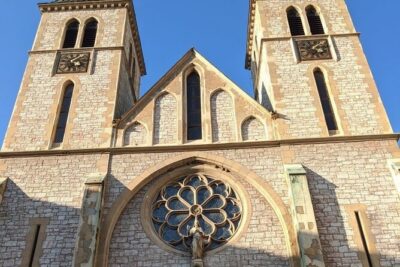
- The route crosses several religious traditions, including the Emperor’s Mosque, Catholic churches, the Old Jewish Temple, and the Serbian Orthodox Cathedral.
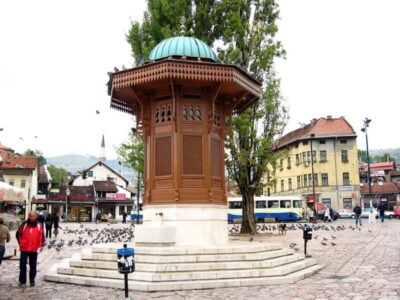
- Baščaršija receives plenty of attention, with time for Kazandžiluk, Bravadžiluk, the Sebilj Fountain, and Morića Han.
- You also confront 20th-century Sarajevo, from the Markale Market and Eternal Flame to Kovači Cemetery.
- The walk is guided in English, with a maximum group size of 30 and possible private-tour upgrades.
- Book it early in your stay if you want restaurant, coffee, and sightseeing suggestions from the guide.
Why Sarajevo makes such a good walking tour
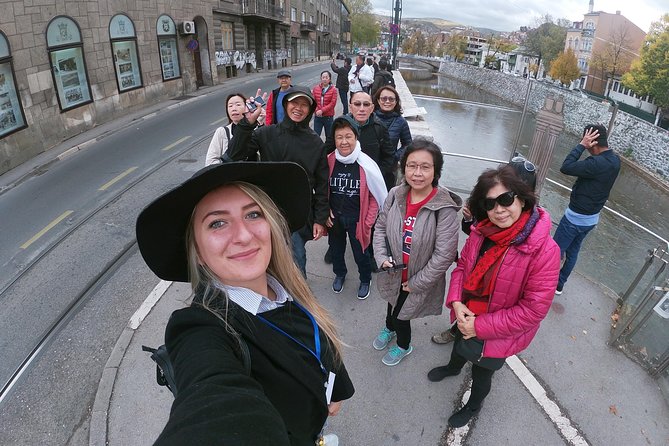
Sarajevo is unusually rewarding on foot because major chapters of its past sit close together. You do not need a bus ride between the Ottoman center, Austro-Hungarian avenues, religious buildings, and riverfront landmarks. The result is a walk through changing architecture and ideas, not just a parade of monuments.
The guide’s job matters here. Sarajevo’s past includes Ottoman rule, Austro-Hungarian administration, two world wars, Yugoslavia, the breakup of that country, and the 1992 to 1995 war. Dates alone can leave you lost. A good guide connects them to streets, buildings, families, faith, food, and daily life.
The experience is offered in English, and past guides have included Ilma, Masha, Merjim, Emina, Hana, Suad, Fariz, Denis, Haris, Alex, Alem, Kenan, and Elvis. You cannot select a particular guide from the information provided, but the range of names reflects a local guiding team rather than a recorded audio route.
The advertised duration is about three hours. Some walks have lasted closer to three and a half hours, depending on questions, weather, and the guide’s approach. That flexibility can be useful, though you should not schedule a tight appointment immediately afterward.
A few more Sarajevo trips to weigh up
- Sarajevo: Grand Walking Tour Through Time and Cultures
★ 4.8 · 1,236 reviews - Sarajevo: 2 Hours Old Town Walking Tour With Local Guide
★ 5.0 · 505 reviews - Private Walking Tour, Food Tasting and Bosnian Coffee in Sarajevo
★ 5.0 · 255 reviews
From the Latin Bridge to At Mejdan Park
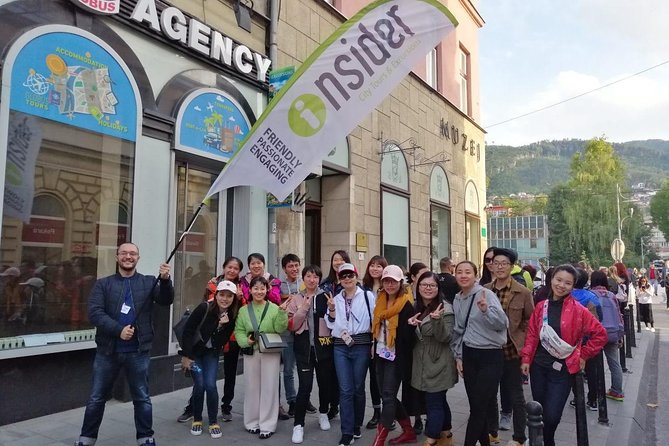
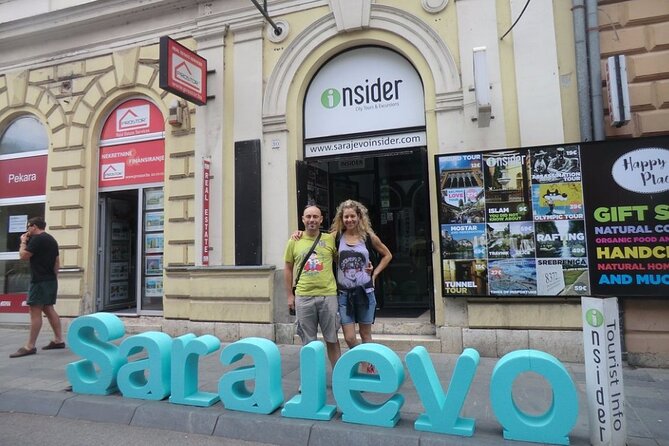
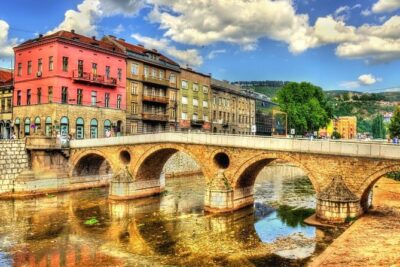
The starting point is Sarajevo Insider at Zelenih beretki 30. The opening stop is the Latin Bridge, one of the city’s most important historical locations.
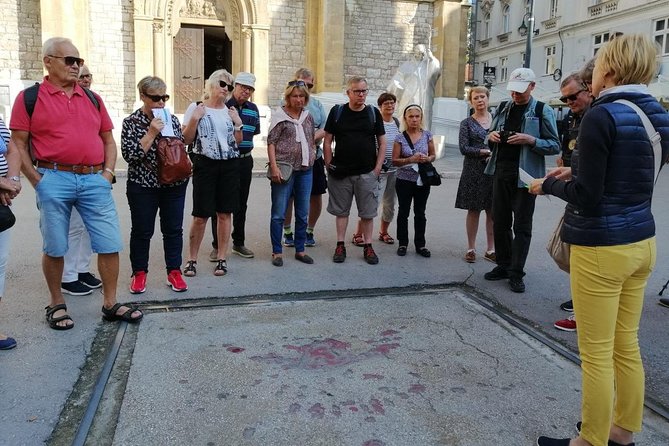
Near the bridge is the place associated with the assassination of Archduke Franz Ferdinand and his wife Sophie in 1914. The guide explains how the event fit into the tensions of the era and why one shooting had consequences far beyond Sarajevo. This is not just a photograph-and-go stop. It gives you a framework for understanding how local events can become part of global history.
You spend about 12 minutes here, enough for an explanation and a look around. Do not expect a museum visit or a long indoor presentation. The value comes from being on the site and hearing the story tied to the street beneath your feet.
The walk continues to At Mejdan Park beside the Miljacka River. The stop is short, around three minutes, but the park offers a pause from the denser streets. The guide may use this area to explain Sarajevo’s river corridor and the way public spaces have changed over time.
Mosques, churches, and the Sarajevo Brewery
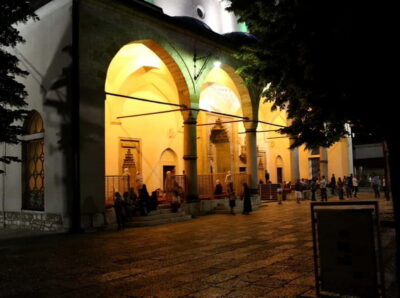
The Emperor’s Mosque is an early reminder that Sarajevo cannot be understood through one tradition alone. It is described as the city’s oldest mosque and represents centuries of Islamic life in the capital.
The stop is brief, about two minutes, so think of it as an introduction rather than a full religious-site visit. Dress and behave respectfully around any place of worship, and follow the guide’s instructions about entering.
Next comes the Franciscan Church of Saint Anthony, a neo-Gothic Catholic building that adds another architectural style to the route. Sarajevo’s religious buildings are close enough together that you can compare forms and histories within a short walk.
You then pass the Sarajevo Brewery, one of Bosnia’s oldest industrial complexes. Its presence helps widen the story beyond rulers and battles. Industrial buildings show how the city developed as a working place, not only as an imperial or religious center. The stop is listed at about two minutes, so the guide will likely provide a concise explanation rather than a brewery tour or tasting.
The route also includes the Bosnian House Bicakcic-Hadzisabanovic, described as a modernist architectural site with a connection to Sarajevo’s past. This is the sort of stop that can disappear from a standard sightseeing list, which is one reason a guided walk earns its price.
The Spite House and City Hall
The House of Spite has one of Sarajevo’s best small stories. The building was reconstructed brick by brick after its owner refused to give way during the construction of City Hall. The exact details are more useful when explained on site, where you can see the relationship between the two buildings.
You spend only about three minutes here, but the story is memorable because it turns architecture into character. Sarajevo’s buildings often reveal arguments between citizens, authorities, faiths, and empires.
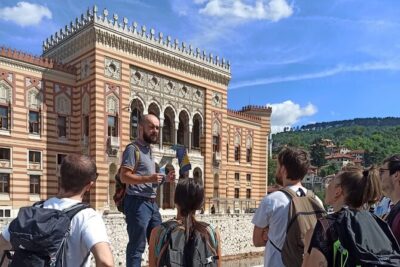
Across the river, Sarajevo City Hall is the grand counterpoint. Its neo-Moorish design reflects the Austro-Hungarian effort to create an official style that looked local while serving a European administration. The building’s forms blend Islamic references with imperial ambition.
The City Hall stop lasts around 10 minutes, one of the longer pauses on the first half of the walk. It is a good place to ask questions about the Austro-Hungarian period and the building’s role in Sarajevo’s cultural life. The tour does not include admission fees, so do not assume an interior visit is part of the price.
Same country, a completely different kind of day:
- Sarajevo: Mostar, Konjic, Blagaj Tekke, Pocitelj & Waterfall
★ 4.9 · 1,666 reviews - Fall of Yugoslavia, Sarajevo War Tour with Tunnel of Hope Museum and Frontlines
★ 5.0 · 1,314 reviews - Sarajevo: Mostar, Konjic, Sufi House, Pocitelj & Kravice Falls
★ 5.0 · 1,179 reviews - Sarajevo: Tunnel Museum Yugoslavia War Tour with War Veteran
★ 5.0 · 1,111 reviews
Kovači Cemetery and the climb into the old town
Kovači Cemetery is a national memorial connected with Bosnia’s defenders during the 1992 to 1995 war. This section changes the tone of the walk. After the lighter tale of the Spite House and the grand style of City Hall, you are asked to reflect on a much more recent and painful chapter.
The stop lasts about three minutes. That may feel short, especially if you want to ask detailed questions about the war, but the guide can provide context as the route continues. Personal accounts can make this period easier to understand, though they can also make the experience emotionally heavy.
Kovači Street leads toward the old town, with Ottoman-era character and local shops. The route is described as an easy walk on mostly flat ground, though you should still wear sensible shoes and prepare for the normal uneven surfaces of an old city.
A useful clothing tip comes from the tour experience itself: bring warm layers, especially in cool weather. One guide handled sudden rain by adjusting the route, but weather remains a condition of the activity. If poor weather forces cancellation, you are offered another date or a full refund.
Baščaršija, Kazandžiluk, and the Sebilj Fountain
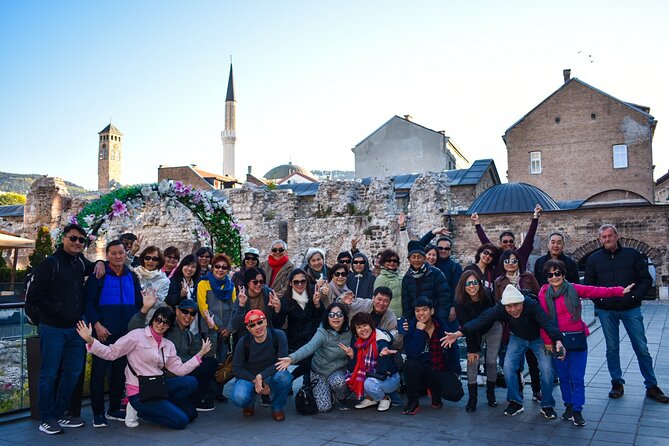
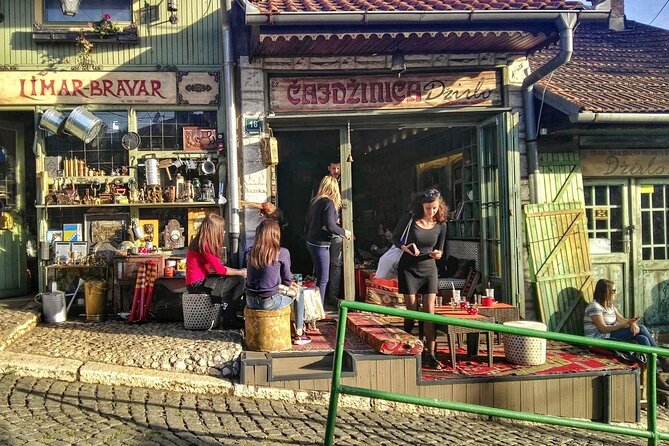
Baščaršija is the heart of old Sarajevo. Here, the walk shifts from broad historical explanation to street-level details: small shops, traditional crafts, food, fountains, and the layout of the Ottoman marketplace.
You have about 15 minutes in Baščaršija, followed by around 10 minutes on Bravadžiluk and Kazandžiluk Streets. Kazandžiluk is associated with traditional copperware, while Bravadžiluk is known for food. The names and trades help you see the old town as a living commercial district rather than a preserved stage set.
This is a good part of the walk for questions about Bosnian food. Several guides have given useful recommendations for ćevapi, coffee, and local places to eat. Treat those suggestions as a valuable bonus, especially if you take the tour early in your stay and still need to choose where to dine.
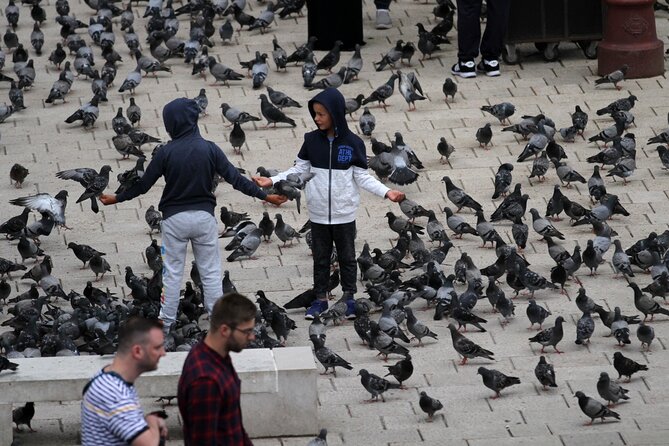
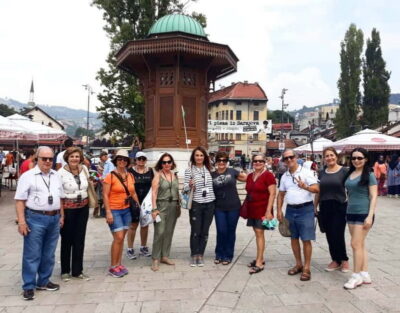
The Sebilj Fountain is one of Sarajevo’s best-known meeting points. The traditional legend says that anyone who drinks its water will return to Sarajevo. You have about five minutes here, enough to hear the story and orient yourself among the surrounding streets.
The fountain is also a practical landmark. After the tour, you can use it as a reference point while exploring the old market on your own.
Morića Han and Gazi Husrev Bey’s Mosque
Morića Han is Sarajevo’s last surviving Ottoman inn. Inns like this once served merchants and their animals, providing a place to sleep, trade, and exchange news. The stop lasts about five minutes and offers a quick sense of how commerce worked before modern hotels and transport.
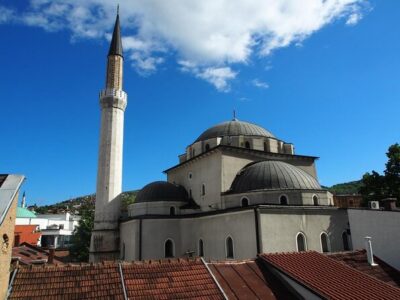
The Gazi Husrev Bey’s Mosque receives around 10 minutes, making it one of the more substantial religious stops. Built in the 16th century, it is a central work of Ottoman Sarajevo and an important place of worship.
Your guide can help you read the building’s role in the wider city. The mosque is not an isolated monument. It sits among markets, streets, fountains, and public buildings that formed a connected urban system.
Again, remember that all listed admission tickets are free, but the tour price does not include all fees and taxes. The walk is primarily an outdoor orientation tour, not a package of paid interior admissions.
The Meeting of Cultures and Sarajevo’s religious mosaic
At the Sarajevo Meeting of Cultures, the route reaches a symbolic line between the Ottoman and Austro-Hungarian parts of the city. It is a simple but useful way to understand Sarajevo’s unusual urban character.
Within minutes, you can move from the forms of the old market into streets shaped by European planning. The point is not that East and West are perfectly separate. The point is that Sarajevo lets you see their overlap in a very small area.
The Old Jewish Temple, now home to the Museum of the Jews of Bosnia and Herzegovina, introduces the city’s Sephardic Jewish heritage. The Sarajevo Haggadah is closely tied to this story. The stop lasts about five minutes, and the guide provides context rather than a full museum tour.
You then reach the Cathedral of the Sacred Heart, often called Sarajevo’s Notre Dame. Its scale and style contrast with the Ottoman buildings nearby. The route also includes the Serbian Orthodox Cathedral, known for its domes and interior murals.
These stops are especially valuable if you want more than a narrow account of Sarajevo as a place shaped by one faith or one war. The walk presents the city as a meeting place of Muslim, Catholic, Orthodox, and Jewish communities. It also gives you a chance to ask how that diversity has shaped ordinary life.
Markale Market and the Eternal Flame
Markale City Market brings you back to daily Sarajevo. Markets are useful places to understand a city because they connect history to food, shopping, conversation, and routine.
The stop lasts about five minutes. You may want to return later with more time, since the walking tour cannot pause for extended browsing or lunch. Food is not included, and neither are coffee or tea, so plan a separate meal in Baščaršija or near the market.
The final major stop is the Eternal Flame, a World War II memorial dedicated to remembrance and resilience. It provides a fitting end to a route that has moved from imperial politics to occupation, religious coexistence, war, rebuilding, and modern city life.
The activity ends back at the starting point. That makes the route easy to plan around, and your guide may also offer ideas for what to see or eat next. If you receive a city map, keep it handy. The central area becomes much easier to explore after you have walked it once with an explanation.
What the $20.57 price gets you
At $20.57 per person, this is a strong value if you want orientation and context rather than private transport or admission-packed sightseeing. The price includes a guide and a city map. It does not include lunch, coffee, tea, or all fees and taxes.
The real value is the number of themes covered in three hours. You get the assassination site, old Ottoman streets, major religious buildings, City Hall, the market district, and memorials linked to both world wars and the 1990s conflict.
A group can include up to 30 people, which is worth considering. A larger group may make it harder to hear in crowded streets and may leave less room for personal questions. On the other hand, some departures have been small, even down to one person. That can create a very personal walk, but the quality then depends heavily on whether the guide adapts the presentation.
A private upgrade is available as an option. If you care about setting the pace, focusing on a particular era, or asking many questions, private touring may be worth comparing with the standard price.
Practical advice for making the most of the walk
Book this near the beginning of your Sarajevo stay. A good guide can point you toward food, coffee, museums, and streets you might otherwise overlook.
Wear comfortable shoes and bring warm clothing. The route is generally easy and flat, but you are on foot for about three hours. A rain layer is sensible because the activity depends on good weather.
Give yourself time to ask questions. The best parts of the walk come when the guide connects the monuments to personal experience and current life. Guides such as Suad, Hana, Haris, Fariz, Denis, and Alem have been praised for clear storytelling, personal insight, and an ability to explain difficult history without losing the group.
The tour is open to most people, and service animals are allowed. It operates near public transportation. Confirmation arrives when you book, and cancellation is free up to 24 hours before the start time. If you cancel later, changes and refunds are not accepted under the stated policy.
Should you book the Sarajevo Grand Walking Tour?
I would book it if this is your first visit and you want a strong introduction to Sarajevo’s many layers. The route covers more than the postcard center, and the combination of local stories, religious landmarks, Ottoman streets, and wartime sites gives you useful footing for the rest of your stay.
You may want something else if you dislike group walks, need long visits inside each building, or prefer a slow food-focused tour. The schedule is busy, and several stops are brief.
For most people, the price is modest for three hours of guiding across the city center. Book early, wear proper shoes, keep an open mind around difficult history, and use the guide’s local advice to shape the rest of your Sarajevo visit.
FAQ
How long does the Sarajevo Grand Walking Tour last?
The advertised duration is approximately three hours. Some tours may run closer to three and a half hours depending on questions, weather, and the guide.
What language is the tour offered in?
The tour is offered in English.
Where does the tour begin and end?
It begins at Sarajevo Insider, City Tours and Excursions, Zelenih beretki 30, Sarajevo 71000, Bosnia and Herzegovina. The activity ends back at the meeting point.
What is included in the price?
The price includes a guide and a city map.
Are meals and drinks included?
No. Lunch, coffee, and tea are not included. All fees and taxes are also listed as excluded.
How large can the group be?
The maximum group size is 30 people. A private-tour upgrade may also be available.
Can I cancel for a full refund?
Yes. You can cancel at least 24 hours before the start time for a full refund. If poor weather or an insufficient number of participants causes cancellation, you are offered another date or a full refund.
Just added around Sarajevo
- Sarajevo Under Siege: A War History Tour★ 5.0 · 10 reviews
- WAR TUNNEL – Sarajevo’s only way of a communication during the WAR – Top secret★ 5.0 · 12 reviews
- Private Full Day Safari Tour★ 5.0 · 8 reviews
- Ultimate Gastro Experience★ 4.5 · 14 reviews
- Mysterious Visoko Pyramids Driving and Walking Tour★ 5.0 · 7 reviews
- Secret Tito’s Bunker/Konjic Tour★ 5.0 · 4 reviews
- The Secret Lifeline: Sarajevo’s War Tunnel Tour★ 5.0 · 6 reviews
- Crossroads of Cultures – Sarajevo Walking Tour★ 5.0 · 8 reviews
Walking Tours, compared.
Private Walking Tour, Food Tasting and Bosnian Coffee in Sarajevo
Read our review →
PROFESSIONAL SARAJEVO WALKING TOUR – With guide who guided STING!
Read our review →Browse the lists this tour appears in