
Reviewed · WALKING TOURS
Sarajevo: Grand Walking Tour Through Time and Cultures
Sarajevo’s story is written in a few compact streets. On this three-hour walk, you move from Ottoman courtyards and copper workshops to grand Austro-Hungarian buildings, then pause at the Latin Bridge, where one event helped set off the First World War. I like that the route shows Sarajevo as a meeting place of cultures, not just as the setting for one famous assassination. I also like the local guides’ personal touch. Guides such as Elma, Kenan, Bojan, and Masha have been praised for clear storytelling, humor, and useful food advice.
The $21 price is strong value if you want a broad first look at central Sarajevo without arranging several separate visits. The trade-off is pace: three hours covers many places, but several are photo stops or exterior visits rather than full museum tours. You should also be ready for steady walking, comfortable shoes, and a route that may not suit people with mobility impairments.
Key points to know before you book
- Three eras in one walk: See Ottoman Baščaršija, Austro-Hungarian architecture, and modern Sarajevo in a single route.
- The assassination site: Pause at the Latin Bridge and learn how Sarajevo became tied to the outbreak of World War I.
- A multicultural center: Visit mosques, Orthodox and Catholic cathedrals, the Jewish museum, and the Sarajevo Meeting of Cultures.
- Local guides make the difference: Elma, Kenan, Bojan, Masha, and other guides are praised for warmth, humor, personal stories, and helpful city tips.
- A useful first-day tour: The route gives you a map of central Sarajevo and ideas for places to revisit on your own.
- Good value at $21: You get three hours with a licensed guide and a city map, while food, drinks, and most admission costs are separate.
Why Sarajevo works so well as a walking lesson
Sarajevo is unusually easy to read on foot. Its central streets compress several centuries into a short distance, so you do not need a bus ride between each major chapter. One moment you are beside a mosque courtyard or a small market lane. A few minutes later, you are looking at an ornate Austro-Hungarian facade or a cathedral.
That physical change gives the tour its main strength. Instead of hearing a list of dates, you can connect architecture, religion, trade, and political power to the streets around you. The guide’s job is to explain how Ottoman rule, Austro-Hungarian administration, Yugoslav life, and the war of 1992 to 1995 shaped the city you see today.
The guides also seem to adjust well to different groups. Solo participants may end up with a private walk if no one else books the same time. Small groups can ask more questions, while larger groups may benefit from the clear route and regular photo stops. English is available, along with German, French, Italian, Spanish, Croatian, and Serbian.
A few more Sarajevo trips to weigh up
- Sarajevo: 2 Hours Old Town Walking Tour With Local Guide
★ 5.0 · 505 reviews - Private Walking Tour, Food Tasting and Bosnian Coffee in Sarajevo
★ 5.0 · 255 reviews - Sarajevo Grand Walking Tour
★ 5.0 · 232 reviews
Latin Bridge and the event that changed Europe
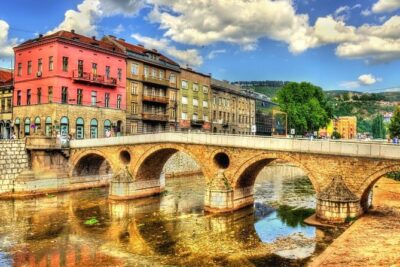
The route begins at the Latin Bridge, one of Sarajevo’s best-known historic sites. Here, the guide explains the assassination of Archduke Franz Ferdinand and his wife, Sophie, in 1914. The location matters because it connects an ordinary city street with the political chain reaction that led to World War I.
This part can be especially useful if you came to Sarajevo mainly for its First World War connection. You get the setting, the route through the city, and the wider political context rather than a single isolated fact. One participant who had come specifically to follow Ferdinand’s route found that the tour added much more about Sarajevo beyond the assassination.
The Latin Bridge is a photo stop and guided walk, not a long museum visit. If you want extensive military history or a detailed study of the July 1914 plot, this tour will only provide an introduction. Its purpose is to place the event within Sarajevo’s larger story.
Ottoman Sarajevo beside the Miljacka River
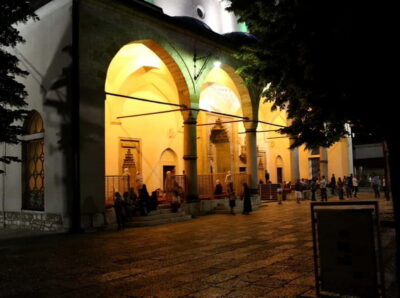
The walk continues to the Emperor’s Mosque, one of the important Ottoman-era landmarks in the city. The guide uses places like this to explain how Sarajevo developed as an Islamic center while remaining home to other religious communities.
Nearby, you pass a monastery and the Sarajevo Brewery. These stops help broaden the picture. Sarajevo was never only one tradition or one style of building. Religious sites, commercial buildings, homes, and public works grew together around the Miljacka River.
The brewery is also a practical reminder that Sarajevo’s past includes everyday production and urban life, not just rulers and wars. The tour generally pauses for photographs and explanation, with a brief stop of about five minutes at some locations. Do not expect a full brewery tasting or a long interior tour, since food and drinks are not included.
City Hall and the House of Spite
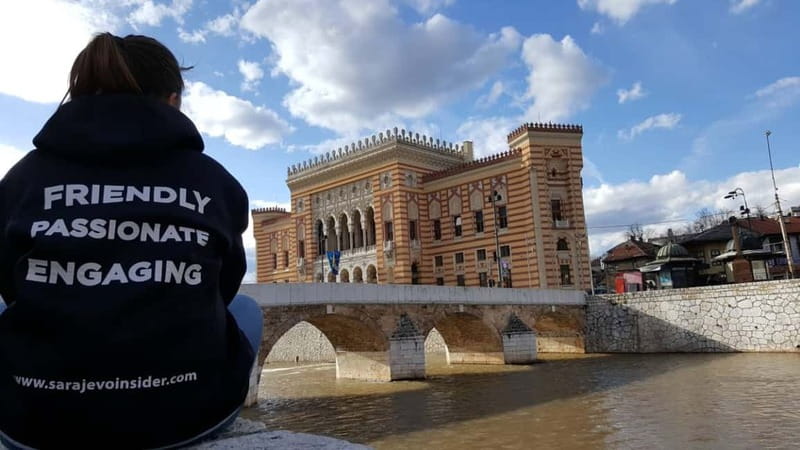
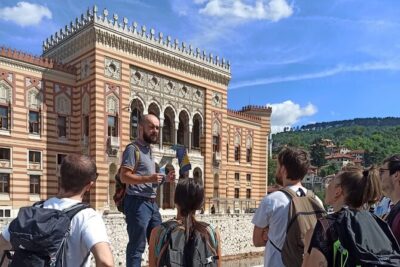
Sarajevo City Hall, also known as Vijećnica, is one of the most striking buildings on the route. Its neo-Moorish design reflects the Austro-Hungarian period and the administration’s effort to create a grand civic image while drawing on regional visual traditions.
You visit City Hall with the guide, rather than simply passing it at a distance. This gives you time to look at the architecture and understand why the building matters to Sarajevo’s public life. The stop is one of the route’s visual highlights, so keep your camera ready.
Across the river, the House of Spite adds a lighter local story. Its name comes from a well-known tale of resistance connected with the construction of City Hall. The tour passes by and explains the story rather than treating the house as a major interior visit.
This is a good example of the tour’s tone. Serious history is mixed with small stories, local humor, and urban legends. Guides such as Kenan have been praised for adding these details with a wink while keeping documented events clear.
Same country, a completely different kind of day:
- Sarajevo: Mostar, Konjic, Blagaj Tekke, Pocitelj & Waterfall
★ 4.9 · 1,666 reviews - Fall of Yugoslavia, Sarajevo War Tour with Tunnel of Hope Museum and Frontlines
★ 5.0 · 1,314 reviews - Sarajevo: Mostar, Konjic, Sufi House, Pocitelj & Kravice Falls
★ 5.0 · 1,179 reviews - Sarajevo: Tunnel Museum Yugoslavia War Tour with War Veteran
★ 5.0 · 1,111 reviews
A viewpoint over central Sarajevo
The viewpoint stop lasts about 15 minutes and gives you a chance to pause after the early sequence of landmarks. From here, you can take in the arrangement of the old city, the river, and the surrounding hills.
The view adds useful perspective. Sarajevo’s position between hills helps explain its compact shape and its sense of enclosure. It also gives you a break from close street-level details before the route returns to the markets and lanes of Baščaršija.
The viewpoint is a photo stop and guided visit. Since the exact starting option and route details can vary, ask the operator if a particular view matters to you. The tour description lists two possible starting points and two drop-off options connected with UPN BiH and Insider City Tours and Excursions.
Baščaršija, Sebilj, and the market streets
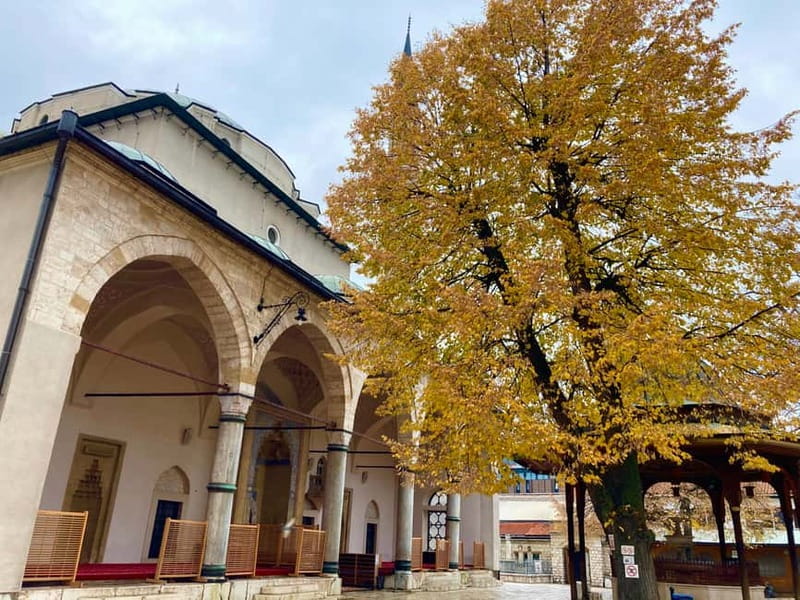
Baščaršija is the heart of old Sarajevo, and this is where the walking tour becomes most atmospheric. The lanes around Bravadžiluk and Kazandžiluk show the commercial and craft traditions that have shaped the district for centuries.
Bravadžiluk is associated with food and market life, so it is a useful place to ask your guide what to eat later. Food and drinks are not part of the tour, but guides regularly give restaurant and snack suggestions. That advice can be worth as much as the map, especially if you have only a short stay.
Kazandžiluk is the coppersmith street. You can look at handmade metal goods and see how a traditional craft remains part of the character of the Old Town. The tour does not pressure you to shop, which is helpful. You can browse, take photographs, or return later if a particular piece catches your eye.
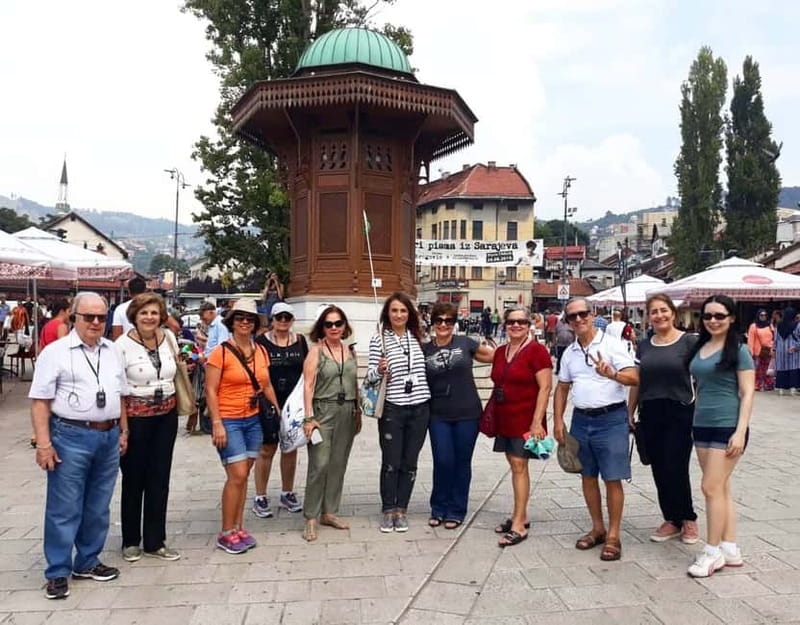
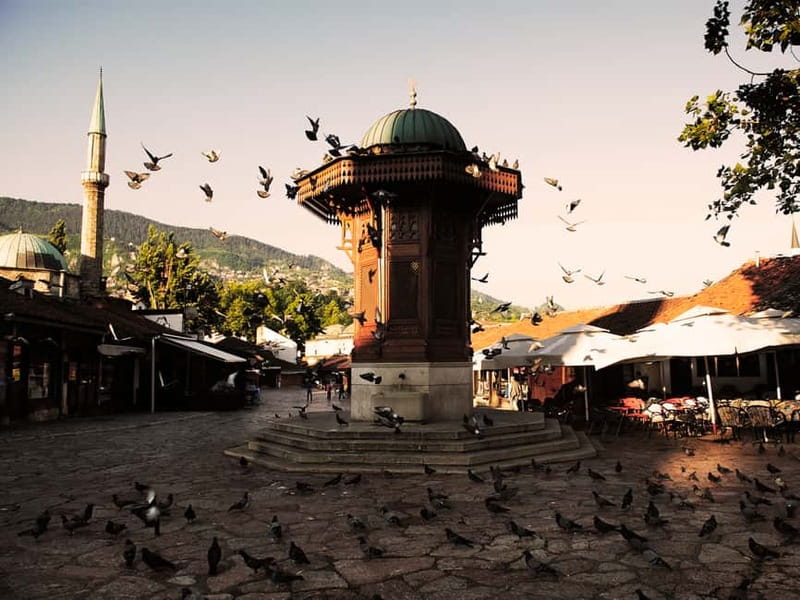
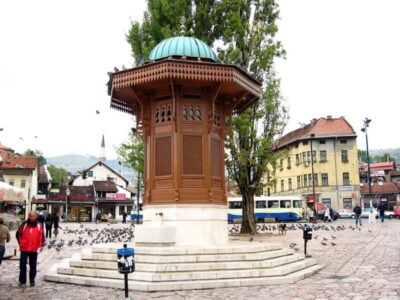
Then comes Sebilj, the wooden fountain in the center of Baščaršija. It is one of Sarajevo’s most recognizable landmarks and a natural meeting point. The guide explains its place in local tradition and city life, while you get the classic Old Town photograph.
Expect crowds and active street life here, especially at popular times. Stay close to the guide, since narrow lanes and market traffic can make it easy to lose sight of a group.
Morića Han and Bosnian sweets
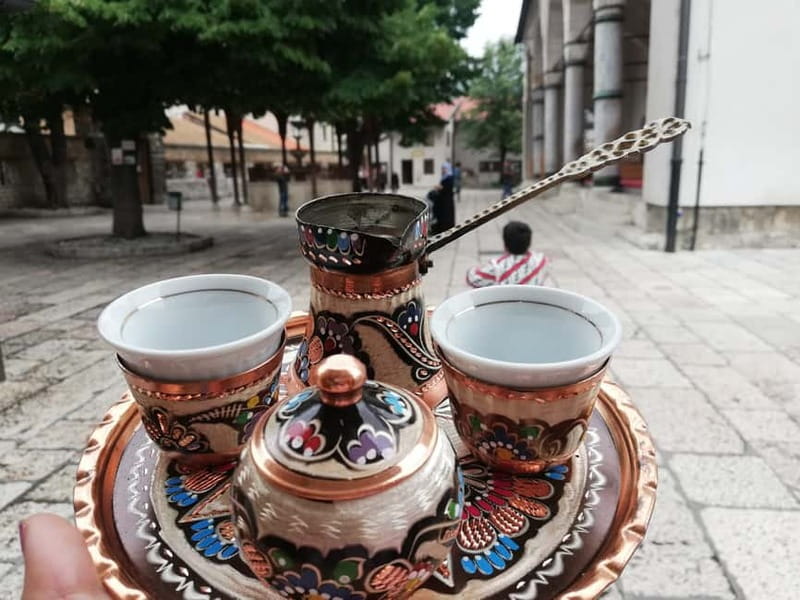
Morića Han offers a look at the old caravanserai tradition. These roadside inns once gave merchants a place to rest, trade, and care for their animals. Today, the courtyard helps you picture Sarajevo as a stop on routes linking the Ottoman world with other parts of Europe.
The visit to a Sarajevo baklava shop adds a taste of local food culture, although your purchase is separate. This is a useful pause for anyone interested in Bosnian cuisine. Ask about baklava, Bosnian coffee, and other local specialties, then decide where to return after the walk.
One participant finished a similar tour with Bosnian coffee and sweets at a cafe called Dibek. That stop is not listed as a guaranteed part of this experience, so treat it as an example of the kind of local recommendation your guide may offer rather than part of the booked route.
Gazi Husrev-beg Mosque and Sarajevo’s religious mix
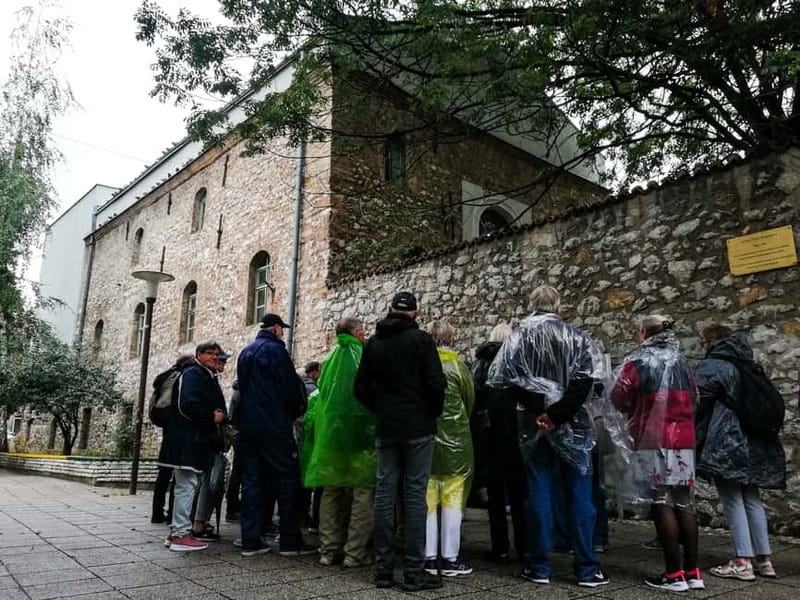
Gazi Husrev-beg Mosque is among the central landmarks of Ottoman Sarajevo. The guide explains its role in the city and points out details of the surrounding religious and commercial quarter.
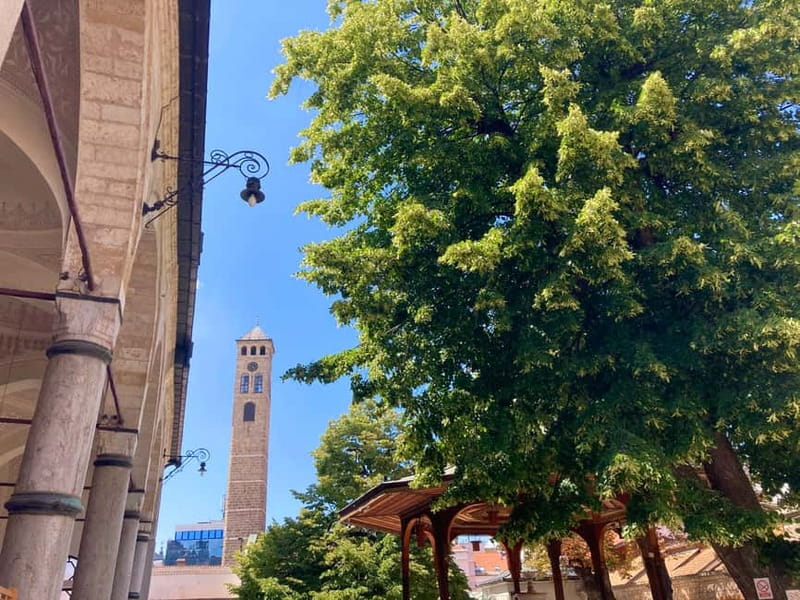
The value here is not only architectural. This area helps you understand how worship, education, trade, and public life were tied together in the Ottoman city. Dress respectfully and follow any instructions about entering religious spaces.
The tour then reaches the Sarajevo Meeting of Cultures, a marked point where the Ottoman and Austro-Hungarian parts of the center come together. It is a simple but effective orientation device. You can literally see how the city changes from low market lanes to more formal European-style streets.
This transition is one of the strongest teaching moments on the walk. It turns the broad idea of East meeting West into something you can observe in a few steps.
Jewish, Catholic, and Orthodox Sarajevo
The Museum of the Jews of Bosnia and Herzegovina adds another part of the city’s story. The stop introduces the Jewish community’s place in Sarajevo and supports the larger theme of coexistence among different faiths.
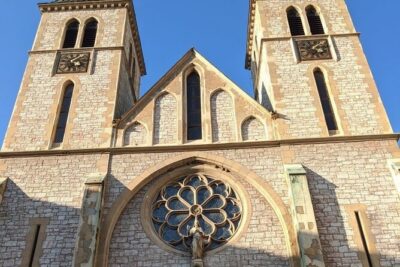
The Sacred Heart Cathedral follows, representing Sarajevo’s Catholic community. You also visit the Cathedral Church of the Nativity of the Theotokos, an important Orthodox landmark. Seeing these sites in one walk makes the city’s religious variety concrete.
The itinerary lists these as guided photo stops and walks. You should not assume that every stop includes a full interior tour or museum admission. The guide’s explanation is the main feature, while the exact access may depend on opening conditions and the option booked.
The subject can be sensitive, especially when the tour moves from coexistence to the city’s later conflicts. The strongest guides handle that balance carefully. Several have been praised for presenting the difficult history in a factual way, without turning the experience into a sales pitch or a one-sided political speech.
Market Hall and the Eternal Flame
The City Market Hall provides another look at daily Sarajevo. The visit lasts about five minutes, enough to see the setting and hear how market culture fits into city life. It is a short stop, but useful if you want more than monuments and battle dates.
The walk ends at the Eternal Flame, a memorial that has become one of the city’s central symbols. Here, the guide brings together several periods of Sarajevo’s past and its continuing life after war.
That ending gives the route a clear shape. You begin with an event linked to World War I, pass through Ottoman and Austro-Hungarian Sarajevo, consider the city’s religious communities, and finish with a modern memorial. The tour does not cover every part of the Yugoslav period or the 1990s siege in detail, but guides may explain how those years affected Sarajevo and their own families.
If the war period is your main reason for visiting, you may want a separate tour devoted to the siege. This walk gives context and personal insight, but its goal is the whole city rather than one era.
The guide matters more than the script
The route is well chosen, but the guide will shape your experience. Names praised in recent bookings include Kenan, Elma, Bojan, Masha, Tarek, Muhamed, Emina, Suad, Hamza, Lejla, and others.
The best qualities are consistent: clear English, patience with questions, local stories, a relaxed pace, and practical advice about food and places to visit later. One guide handled an awkward interruption from a passerby calmly and professionally. Another explained how the war affected her family, adding a personal layer without losing the wider context.
You should feel free to ask questions. Small groups and private departures are especially useful if you want to discuss architecture, religion, World War I, or the recent past in more detail. If you book a larger group, you may get less time for one-to-one conversation, but the three-hour route still covers the major central sights.
Price, pace, and practical details
At $21 per person, this is a good buy for a first visit. A licensed guide leads the walk, and a city map is included. You are paying for orientation, local interpretation, and a structured route through places that might otherwise blur together.
Food, drinks, and separate admissions are not included. Bring money if you want baklava, copper goods, coffee, or anything else along the way.
Wear comfortable shoes and light, comfortable clothes. The walk is three hours, and several sections involve standing while the guide explains a site. The activity is advertised as wheelchair accessible, but the information also says it is not suitable for people with mobility impairments. If you have specific mobility needs, confirm the route and access arrangements before booking.
You can cancel up to 24 hours in advance for a full refund, and the reserve-now, pay-later option keeps your plans flexible. Starting times depend on availability, and the meeting point may vary by booking option, so check those details carefully.
Who should book this Sarajevo walking tour?
I would choose this tour on a first day in Sarajevo. It gives you a clear mental map, introduces the key districts, and leaves you with practical ideas for where to eat and what to revisit.
It suits history fans, architecture lovers, solo visitors, couples, and small groups. It is also a good choice if you have only a short stay and want one organized walk to cover the central sights.
I would look elsewhere if you want a slow food tour, a dedicated war-history experience, or long interior visits at every monument. The route is broad by design. You see many sites, but the explanations and atmosphere matter more than extended time inside any one building.
Should you book it?
Book it if you want Sarajevo explained as a connected city rather than a collection of attractions. The combination of Latin Bridge, City Hall, Baščaršija, Sebilj, the religious landmarks, and the Eternal Flame gives you an unusually useful first picture for $21.
Choose a private or small-group option if you care about questions and personal stories. I would also try to schedule it early in your stay, then use the map and guide’s suggestions to plan your next meals, museum visits, and walks. For most first-time visitors, this is a practical and fairly priced introduction to Sarajevo’s many layers.
FAQ
How long does the Sarajevo Grand Walking Tour last?
The tour lasts three hours.
How much does the tour cost?
The listed price is $21 per person.
What language can the guide speak?
Guides are available in German, French, Italian, Spanish, English, Croatian, and Serbian.
Is the tour private or shared?
Private and small-group options are available.
What landmarks are included?
The route includes the Latin Bridge, Emperor’s Mosque, Sarajevo Brewery, City Hall, House of Spite, a viewpoint, Bravadžiluk, Kazandžiluk, Sebilj, Morića Han, Gazi Husrev-beg Mosque, the Sarajevo Meeting of Cultures, the Museum of the Jews of Bosnia and Herzegovina, Sacred Heart Cathedral, the Orthodox Cathedral, City Market Hall, and the Eternal Flame.
Is food included?
No. Food and drinks are not included.
Is a city map included?
Yes. A city map and a licensed tour guide are included.
What should I bring?
Bring comfortable shoes and comfortable clothes.
Is the walking tour wheelchair accessible?
The activity information lists it as wheelchair accessible, but also says it is not suitable for people with mobility impairments. Confirm the route details before booking if accessibility is important for you.
Can I cancel the booking?
You can cancel up to 24 hours in advance for a full refund. A reserve-now, pay-later option is also available.
Just added around Sarajevo
- Sarajevo Under Siege: A War History Tour★ 5.0 · 10 reviews
- WAR TUNNEL – Sarajevo’s only way of a communication during the WAR – Top secret★ 5.0 · 12 reviews
- Private Full Day Safari Tour★ 5.0 · 8 reviews
- Ultimate Gastro Experience★ 4.5 · 14 reviews
- Mysterious Visoko Pyramids Driving and Walking Tour★ 5.0 · 7 reviews
- Secret Tito’s Bunker/Konjic Tour★ 5.0 · 4 reviews
- The Secret Lifeline: Sarajevo’s War Tunnel Tour★ 5.0 · 6 reviews
- Crossroads of Cultures – Sarajevo Walking Tour★ 5.0 · 8 reviews
Walking Tours, compared.
Private Walking Tour, Food Tasting and Bosnian Coffee in Sarajevo
Read our review →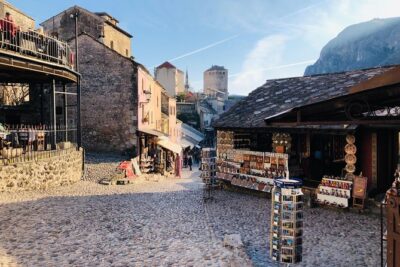
PROFESSIONAL SARAJEVO WALKING TOUR – With guide who guided STING!
Read our review →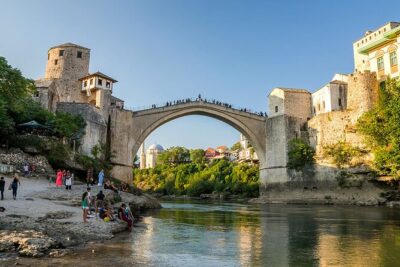
Browse the lists this tour appears in