
Reviewed · SARAJEVO SIEGE TOURS
The Death of Yugoslavia Tour in Mostar
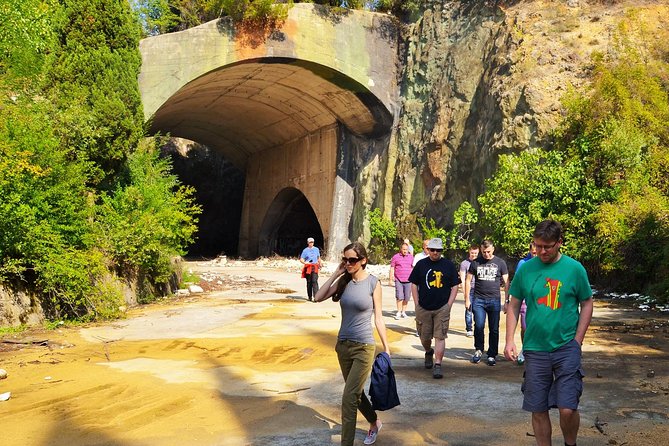
Mostar’s Death of Yugoslavia Tour skips the usual postcard stops and takes you to abandoned, decaying places tied to Tito’s Yugoslavia, the Cold War, and the war that broke the country apart. The locations are kept secret until you arrive, which gives the outing a sense of discovery without turning it into a treasure hunt.
I like two things right away: the route is built around four clear chapters, and the guides connect each place to ordinary life, not just political dates. Marko, Marco, Miran, Dario, and Marin are praised for strong storytelling, humor, personal memories, and music chosen to match each period. The main drawback is also clear: some sites look rough and neglected, so you are paying for the interpretation more than polished attractions.
Four things to know before you book
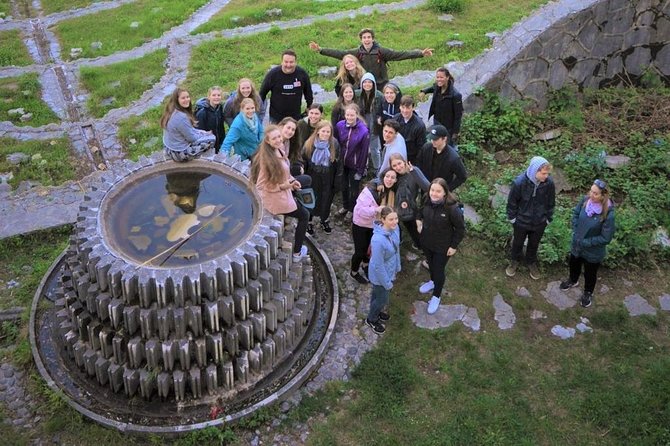
- Secret locations beyond central Mostar: You visit Gornje Gnojnice, Rodoč, Španski trg, and the Partisan Cemetery, with the precise sites revealed during the tour.
- A local guide carries the experience: Guides including Marko, Marco, Miran, Dario, and Marin explain politics, daily life, war, and family memories in plain language.
- Music adds a human touch: Songs and musical examples help show changing moods during Yugoslavia’s rise, golden years, and collapse.
- The tour lasts about 150 minutes: It begins at 5:00 pm at iHouse Travel and returns there after the final stop.
- Small-group transport is included: The maximum group size is 16, and the driver-guide takes you between the out-of-the-way locations.
- The sites are intentionally raw: Expect abandoned or decaying places, not restored museums or glamorous monuments.
Why this Mostar tour tells a bigger story
Mostar is often sold through its famous bridge, river views, and nearby natural attractions. Those are worthwhile, but they can leave you with only a partial sense of the city. To understand present-day Mostar, you need some grasp of the country that existed before Bosnia and Herzegovina became an independent state.
This tour gives you that missing frame. It explains how Yugoslavia was formed after the Second World War, how Josip Broz Tito built a socialist state independent of Moscow, and how that system later weakened under economic strain and rising nationalism.
I like the structure because it does not begin with the war alone. You first learn about the hopes and fears of Yugoslavia, then the routines of everyday life, and only afterward the political collapse and its consequences. That order matters. It helps you see that Yugoslavia was not simply a failed dictatorship waiting to fall apart.
The guide’s role is central. Marko, Marco, Miran, Dario, and Marin are all singled out for making difficult material easier to follow. Their personal or family connections to the period can give the story a human scale, though the exact guide depends on the departure.
More sarajevo siege tours in Mostar:
- Break-up of Yugoslavia & The War in Mostar: Life Under Siege
★ 5.0 · 136 reviews - The Death of Yugoslavia: Unique thematic Tour in Mostar
★ 5.0 · 22 reviews - Fall of Yugoslavia, Sarajevo War Tour with Tunnel of Hope Museum and Frontlines
★ 5.0 · 1,314 reviews
Chapter one at Gornje Gnojnice: paranoia after the Soviet break
The tour starts with a drive toward Gornje Gnojnice. During the ride, the guide sets up the Second World War and the creation of Socialist Yugoslavia, so you are not dropped into Cold War politics without context.
The first site focuses on the Informbiro period. After Tito’s break with Stalin and the Soviet Union, Yugoslavia faced pressure from the Eastern Bloc and turned toward heavy militarization. The guide uses this period to explain how fear shaped the state and why secrecy became such a strong part of political life.
This is where the tour’s unusual format begins to make sense. You are not visiting a neat exhibit with labels and glass cases. You are taken to a place connected with the defensive and secretive side of the old system, then asked to picture what it represented during the 1950s.
The site itself may not impress you visually. It is important to set expectations: the locations are abandoned or worn, and their value comes from the events and ideas attached to them. If you want restored Cold War museums, you may find this stop underwhelming. If you prefer real places with visible signs of neglect, the rough edges are part of the point.
The first chapter takes about 30 minutes, including the drive and explanation. That pace keeps the politics manageable and gives the guide room to answer questions without turning the outing into a lecture.
Chapter two at Rodoč: how people lived under Tito
The second drive turns from state anxiety to everyday life. Here you learn about Tito’s personal life, his political achievements, and his attempt to create a form of socialism suited to Yugoslavia rather than copied directly from the Soviet model.
The stop at Rodoč looks at the expectations and dreams of ordinary people. The discussion begins with Youth Work Actions, a major part of the civic culture of the period, then moves into industrialization during the 1950s and 1960s.
This section is especially useful because it resists a simple good-versus-bad account. Yugoslav socialism brought restrictions and political control, but it also offered many people a sense of social order, work, education, and shared purpose. The guide helps you consider why some people remember the Tito years with genuine warmth, even while later generations point to the system’s faults.
The chapter also covers popular culture in the 1970s and 1980s. You hear about local brands, music, cars, and lifestyle, subjects that make the period easier to picture than political speeches alone. A song or familiar consumer product can explain daily life faster than a page of dates.
I particularly like the music presentation here. The guides use music to mark shifts in mood and identity, showing how entertainment and popular culture reflected the changing country. It is a small detail, but it makes the story feel less remote.
Again, allow about 30 minutes. Since the location is not presented as a conventional attraction, you should listen closely. The guide’s explanation is the main reason this stop works.
Chapter three at Španski trg: from golden years to war
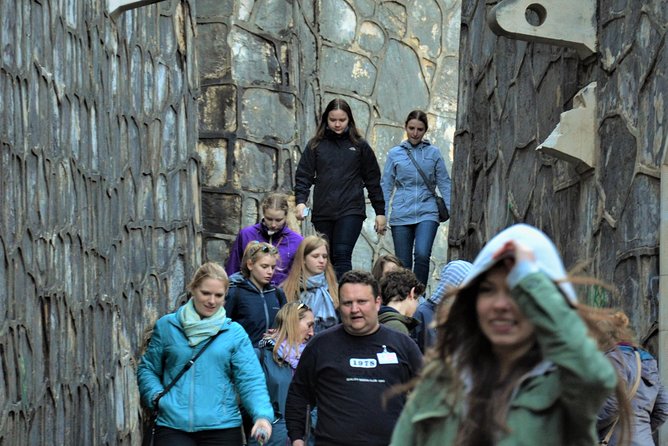
The third chapter begins on the road with the 1980s, including the 1984 Sarajevo Winter Olympics. The guide uses the Olympics to explain why many people saw that decade as a high point for Yugoslav socialism.
That sense of confidence did not last. The discussion then turns to economic depression, political tension, and growing nationalisms. You learn how the crisis first led to war in Slovenia and Croatia, then reached Bosnia and Herzegovina a year later with far more devastating results.
This is the most emotionally demanding part of the outing. The guide explains how a shared political project dissolved and how the resulting conflict brought destruction and loss of life. You are not given a quick timeline and sent on your way. The aim is to connect the political breakdown with the human cost.
Španski trg adds a direct link to Mostar’s own wartime experience. The tour does not treat the Yugoslav wars as a distant regional story. It places Bosnia and Herzegovina at the center of the explanation, which is essential if you want to understand why Mostar remains politically and socially complicated.
The guide’s tone matters here. The best parts of this tour come from people who can explain painful subjects without making the experience either cold or theatrical. Marko and Marco are noted for clear communication and humor when appropriate, while Miran and Marin are praised for their passion and ability to make the subject relatable.
The third chapter lasts about 30 minutes. You may want to leave extra emotional space afterward rather than schedule another serious activity immediately.
Same country, a completely different kind of day:
- Dubrovnik: Kravica Waterfalls, Mostar and Pocitelj Day Trip
★ 4.5 · 3,045 reviews - From Mostar: Blagaj, Počitelj & Kravice Waterfalls Day Tour
★ 5.0 · 1,310 reviews - From Mostar: Kravice Waterfalls, Blagaj, & Počitelj
★ 5.0 · 565 reviews - Herzegovina Day Tour from Mostar: Blagaj, Pocitej, Kravice falls (Join Us! :D)
★ 5.0 · 372 reviews
The Partisan Cemetery and Bosnia today
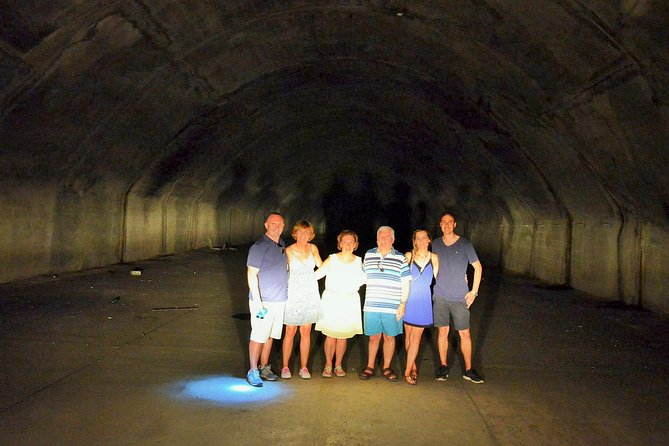
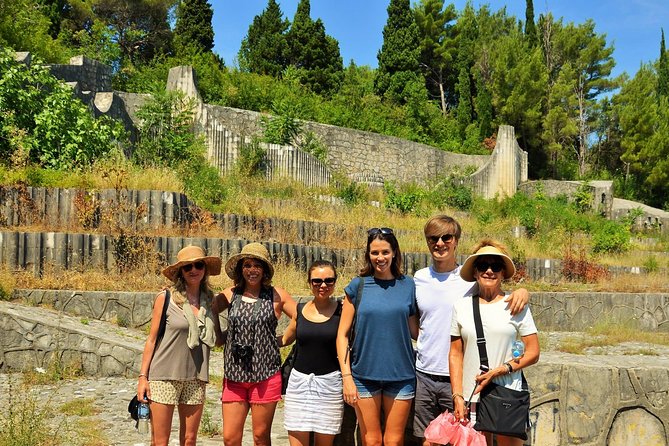
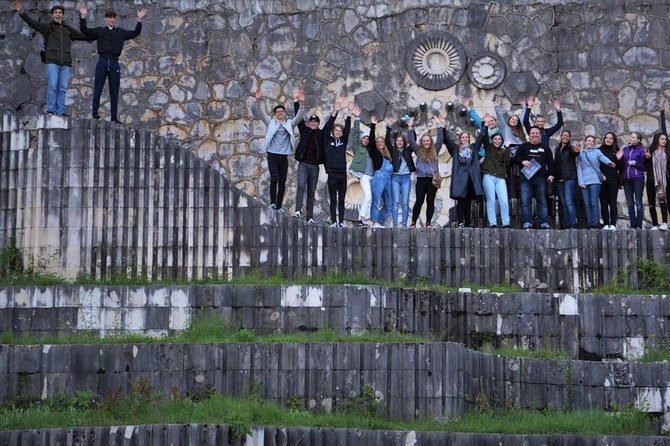
The final stop is the Partisan Cemetery, a fitting place to consider both the ideals and failures of Yugoslavia. The cemetery is linked to the Partisan past, and the guide uses it to return to the older story of resistance, unity, and a shared future.
From there, the conversation moves to Bosnia and Herzegovina today. You learn about the country’s political structure, its ongoing problems, and the challenges it faces in the early 21st century. The guide also discusses the possibility of European Union membership and the economic, cultural, and political recovery still needed.
This final chapter is valuable because it avoids treating the war as a closed historical event. Bosnia and Herzegovina is still shaped by the institutions and divisions that followed the conflict. The final stop asks you to connect the relics of a former ideal with the practical needs of a modern country.
The cemetery itself may feel stark. That is not a flaw, but it is worth knowing before you reserve. The tour asks you to look at neglected places and think about what they say about memory, politics, and public care. You will get more from the visit if you are willing to slow down and consider the setting rather than expect a polished monument.
After roughly 30 minutes, the vehicle returns you to iHouse Travel in central Mostar.
What the guides do best
This experience rises or falls on the guide. The route is not packed with major monuments, and several sites are deliberately kept secret. The storytelling must connect them.
Marko and Marco receive repeated praise for their ability to make a complicated subject understandable. Miran is praised for linking each place to the wider story of Yugoslavia, while Dario is noted for his enthusiasm and clear explanations of Balkan history. Marin is described as especially passionate and relatable.
You may also hear family stories or memories from the period. These can help explain what political change felt like at home, at work, or in popular culture. They do not replace a formal academic account, but they give the tour a local voice that a standard museum display cannot provide.
The music presentation is another strong feature. It shows the changing attitudes of different decades and gives the tour a welcome break from names, dates, and political terms. If you have only a passing interest in Yugoslavia, this mix of sound, place, and storytelling should keep the subject approachable.
The practical shape of the afternoon
The tour starts at 5:00 pm at iHouse Travel, Onešćukova 25, Mostar. It ends at the same meeting point, so you do not need to arrange a separate return from an outlying site.
Round-trip transport is included, along with the driver-guide, taxes, and local charges. Hotel pickup and drop-off are not included unless you select that option, so check your booking details and plan to reach the listed starting point.
The group maximum is 16 people. That is small enough for a more personal explanation than a large coach outing, while still keeping the price below what a private tour would usually cost. Children must be accompanied by an adult, and most people can take part.
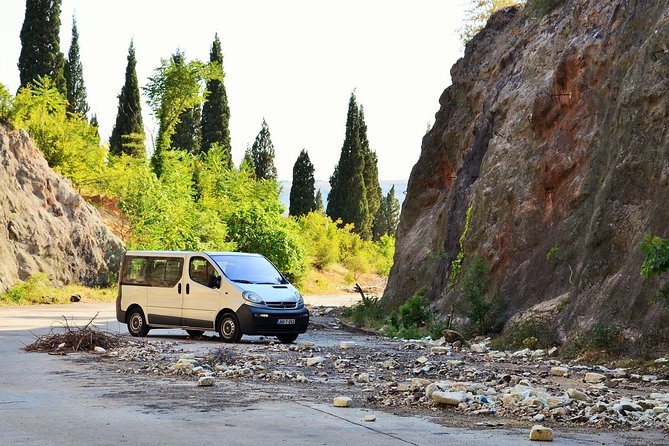
At about 2 hours and 30 minutes, the tour fits neatly into a Mostar evening. You visit four sites, but much of the learning happens during the drives. Wear sensible shoes and expect locations that may be uneven or run-down, although the supplied information does not specify detailed accessibility conditions.
Booking tends to happen about 19 days ahead on average. I would not treat that as a strict requirement, but it suggests you should not leave this until the last moment during a busy visit.
Is $47.17 a fair price?
At $47.17 per person, this is not the cheapest way to spend an afternoon in Mostar. You are not paying admission to grand monuments, and the stops themselves are free. The value rests in transportation, access to places you would be unlikely to find alone, and about 150 minutes of guided interpretation.
That makes the price fair for the right audience. If you already know the history of Yugoslavia and only want attractive sights, you may feel the cost is high. One dissatisfied customer considered the locations poor value, even while praising the guide. That criticism is useful because it identifies the central trade-off clearly.
I think the tour earns its price if you want context and local explanation. The guide takes you beyond the familiar center of Mostar and provides a connected account of Tito, Cold War fear, daily life, popular culture, the war, and modern Bosnia and Herzegovina. A self-guided outing would be cheaper, but you would likely miss the meaning of the sites and spend time locating them.
The group format also helps keep the cost reasonable. Private transport and a private guide would offer more flexibility, but this small-group option provides a good middle ground.
Who should book this experience?
I would choose this tour if you have any real interest in:
- Yugoslavia and Tito
- The Cold War outside the usual Western European story
- The causes and effects of the Yugoslav wars
- Bosnia and Herzegovina’s current political challenges
- Local stories, music, and personal memories
- Less polished places with historical meaning
It is a particularly useful choice early in your Mostar stay. The tour can give you context for other places you visit in the city, especially sites connected to the 1990s war.
I would skip it if your ideal outing means beautiful scenery, famous landmarks, or a relaxed history talk with little emotional weight. This is not a sightseeing drive built around photo stops. It is a serious cultural tour with humor and music, but its subject includes repression, nationalism, destruction, and loss.
The hidden locations also mean you cannot judge the route from a standard list of attractions. That is part of the appeal, but it requires trust in the guide and the concept.
Cancellation and final booking advice
You can cancel up to 24 hours before the 5:00 pm start for a full refund. Changes or cancellations made less than 24 hours before departure are not accepted for a refund.
I would book the Death of Yugoslavia Tour if you want Mostar to be more than a pretty stop on a Balkan itinerary. Its strongest asset is the guide, supported by a smart four-part structure and places that carry real political weight. Just remember what you are buying: not polished attractions, but a thoughtful explanation of how one country was built, lived in, and broken apart.
FAQ
Where does the Death of Yugoslavia Tour start?
It starts at iHouse Travel, Onešćukova 25, Mostar 88000, Bosnia and Herzegovina.
What time does the tour begin?
The tour begins at 5:00 pm local time.
How long does the experience last?
It lasts about 2 hours and 30 minutes, or approximately 150 minutes.
Where does the tour end?
The activity ends back at the iHouse Travel meeting point.
How many places do you visit?
You visit four sites connected with Yugoslavia, the Cold War, the Yugoslav wars, and Bosnia and Herzegovina today.
Are the exact locations listed in advance?
The tour locations are kept secret until the experience to create a more immersive and unusual outing.
Is transport included?
Round-trip transport between the sites is included. Hotel pickup and drop-off are not included unless you select that option.
What is the maximum group size?
The tour can include a maximum of 16 people.
Just added around Mostar
- Mostar Old Town Walking Tour – Best Seller★ 5.0 · 4 reviews
- Stolac, the crossroads of civilisations, private walking tour.★ 5.0 · 9 reviews
- Neretva kayak canoe safari★ 5.0 · 12 reviews
- Private Transfer from Mostar to Split★ 5.0 · 3 reviews
- Mystical Sutjeska National Park★ 5.0 · 3 reviews
- Private Transfer Mostar–Dubrovnik English Speaking Local Driver★ 5.0 · 13 reviews
- Mostar War Heritage Walking Tour★ 5.0 · 6 reviews
- Mostar gastro and historical treasures★ 5.0 · 6 reviews
Sarajevo Siege Tours, compared.

Fall of Yugoslavia, Sarajevo War Tour with Tunnel of Hope Museum and Frontlines
Read our review →
Bosnian War & Fall of Yugoslavia Tour with Tunnel
Read our review →
Sarajevo War Tour: A Veteran’s Story of the Siege (fees included)
Read our review →
Srebrenica Genocide Study Tour with War Veteran
Read our review →
Break-up of Yugoslavia & The War in Mostar: Life Under Siege
Read our review →
Sarajevo to Srebrenica: Genocide Study Tour with War Veteran
Read our review →
Times of Misfortune – Life Under Siege and the Tunnel of Hope
Read our review →Browse the lists this tour appears in