
Reviewed · SARAJEVO WAR TUNNEL TOURS
Times of Misfortune – Life Under Siege and the Tunnel of Hope
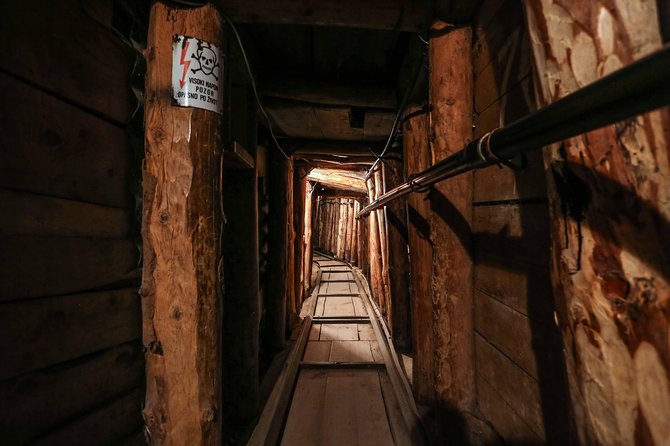
The most powerful part of this Sarajevo tour comes underground, inside the Tunnel of Hope, the narrow wartime passage that linked the besieged city with the outside world. Before you reach it, the route gives you the setting: hills, cemeteries, damaged landmarks, Olympic sites, and streets that became front lines during the 1992 to 1995 war.
I like the way the tour combines personal stories with real places, rather than leaving the siege as a chapter in a textbook. I also like the practical format: transport is included, the group is capped at 20 people, and the guide covers a lot in three and a half hours. The main drawback is that the Tunnel of Hope admission is not included, and the subject matter is painful throughout.
Key points at a glance
- Personal wartime accounts: Guides such as Nermin, a former police officer who lived through the war, can add first-hand context to Sarajevo’s recent past.
- The Tunnel of Hope is the centerpiece: You spend about 1 hour and 15 minutes at the museum, including stories and a film about the tunnel.
- A strong citywide route: The tour links the Yellow Fortress, Kovači Cemetery, Olympic venues, the maternity hospital, Sniper Alley, and major government buildings.
- Good value for a half-day: The $32.58 price includes a licensed guide and transportation, but not the museum ticket.
- A small group helps: With a maximum of 20 people, you should have a reasonable chance to hear the guide clearly.
- Plan for serious subject matter: This is a war history tour, not a light sightseeing ride. The stories can be emotionally difficult.
Why Sarajevo’s siege is best understood on the ground
Sarajevo’s war cannot be understood from one museum room alone. The city’s buildings, roads, hills, and public spaces help explain how daily life was shaped by danger, isolation, and shortages.
The Times of Misfortune tour begins in central Sarajevo and then moves through locations tied to the siege and the city’s earlier identity as an Olympic host. That contrast matters. You see a city built for international sport and civic life, then learn how the same city was cut off and attacked only a few years later.
The guide is central to the experience. If Nermin leads your tour, you may hear from someone who lived through the war and worked as a police officer. His personal memories were especially useful to people who already knew the siege from television or books but wanted to understand what life felt like inside Sarajevo.
That kind of explanation can make the difference between seeing a damaged building and understanding why it mattered. Still, the quality of the experience will depend partly on the guide assigned that day, since personal accounts naturally vary.
More sarajevo war tunnel tours in Sarajevo:
- Fall of Yugoslavia, Sarajevo War Tour with Tunnel of Hope Museum and Frontlines
★ 5.0 · 1,314 reviews - Sarajevo: Tunnel Museum Yugoslavia War Tour with War Veteran
★ 5.0 · 1,111 reviews - Sarajevo: Tunnel of Hope Tour – Survival and Resilience
★ 4.8 · 630 reviews
Yellow Fortress and Kovači Cemetery
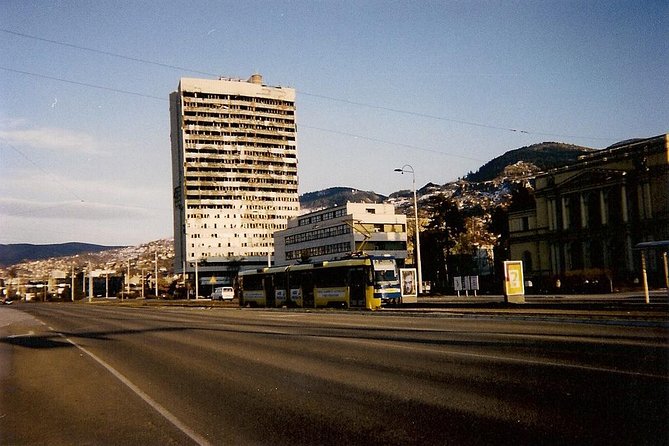
The first major stop is the Yellow Fortress, where you get broad views over Sarajevo. It is a useful place to begin because the city’s bowl-shaped setting becomes clear from above. The surrounding hills help explain why the siege was so severe: Sarajevo was surrounded, and high ground played a major role in the wartime defense and attack.
You spend about 20 minutes here. That is enough for the guide to establish the geography and point out the city below, but not so long that the tour turns into a long photo stop.
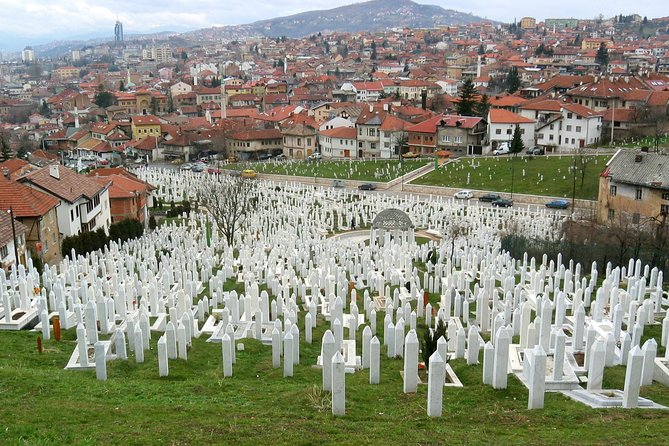
From the fortress, the route continues to Kovači Cemetery, a national memorial for Bosnia’s defenders from the 1992 to 1995 war. The stop is brief, around five minutes, but it carries real weight. You should treat it as a place for quiet attention, not simply another sightseeing point.
The cemetery also gives the tour a human scale. Military events can feel remote when presented as dates and movements. Rows of graves bring the cost of the war into view without needing a long lecture.
City Hall, Markale, and the central war story
Much of the central route is seen from the vehicle rather than explored on foot. You pass Sarajevo City Hall, the Markale City Market, Trg Djece Sarajeva, and the Presidency Building.
City Hall is important both for its wartime destruction and its later restoration. It represents the damage done to Sarajevo’s cultural institutions, as well as the effort to repair them. The building’s role is not limited to architecture. It helps show how attacks on public places also threatened the city’s memory and identity.
The Markale Market is tied to some of the most painful events of the siege. From the vehicle, you get context rather than a long visit. That means the tour is efficient, but you will not have much time to pause at each central landmark.
Trg Djece Sarajeva, or the Square of Sarajevo’s Children, points to the effect of the war on civilians. The Presidency Building brings the political side into view, since it was central to Bosnia and Herzegovina’s wartime government.
This section works best if you listen closely while looking out the window. You are not getting a full walking tour of each site. You are building a connected picture of the city as the vehicle moves between places.
Olympic Sarajevo at Asim Ferhatović Hase Stadium
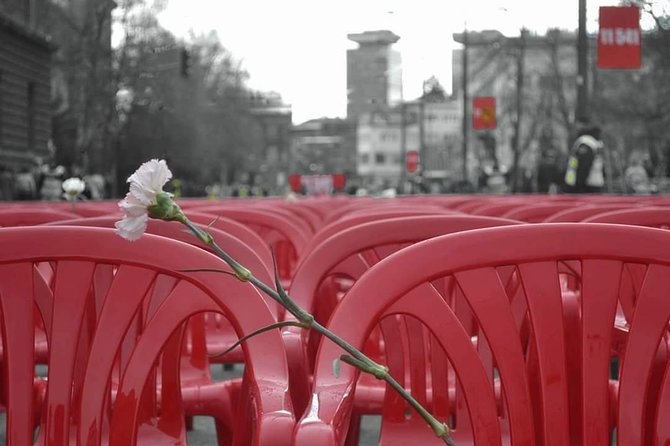
The stop at Asim Ferhatović Hase Stadium lasts about 10 minutes. Along with Hall Zetra, it recalls Sarajevo’s role as host of the 1984 Winter Olympics.
The Olympic sites add a needed contrast to the war story. Sarajevo was once presented to the world as a modern international city, and then became known worldwide for siege coverage. Seeing the sports venues in this context helps you grasp how quickly the city’s public identity changed.
The stop is short, so expect an introduction rather than a full stadium visit. For me, its value comes from the connection between the city’s peaceful ambitions and its wartime reality.
More sarajevo siege tours in Sarajevo:
- Tunnel Museum: Bosnian & Yugoslav Wars Tour with War Veteran
★ 5.0 · 551 reviews - Sarajevo: Bosnian War & Fall of Yugoslavia Tour with Tunnel
★ 4.9 · 398 reviews - Sarajevo War Tour: A Veteran’s Story of the Siege (fees included)
★ 5.0 · 326 reviews - Sarajevo: Srebrenica Genocide Study Tour with War Veteran
★ 5.0 · 263 reviews
Sarajevo’s maternity hospital and the civilian cost
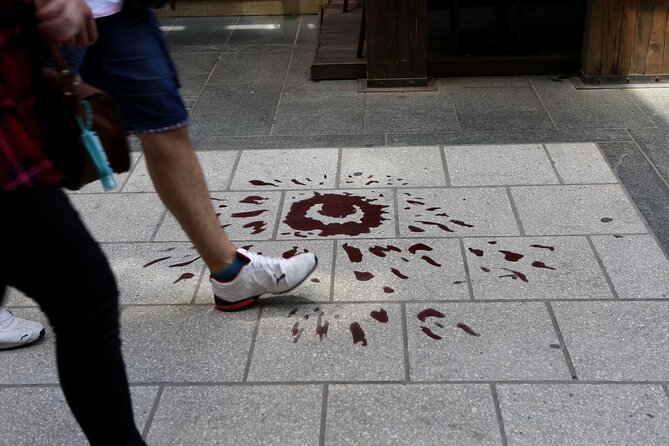
The Sarajevo Maternity Hospital, officially listed as Klinika za ginekologiju i akušerstvo, is another 10-minute stop. Here, the guide explains the efforts of medical staff who continued working during the siege.
This is one of the most affecting parts of the route because it shifts attention away from military sites and government buildings. Hospitals represent the ordinary needs that continued despite bombardment, shortages, and danger. Births still took place, medical care still had to be provided, and staff still had to report for duty.
The visit is not presented as a long museum session. You are stopping to hear the story and understand the building’s place in Sarajevo’s wartime life.
From there, you pass the Parliament and Holiday Inn Hotel. These buildings were connected to political decisions and international journalism during the war. The Holiday Inn became a familiar base for reporters covering Sarajevo, while the Parliament was tied to the country’s political struggle.
Sniper Alley and RTV Dom
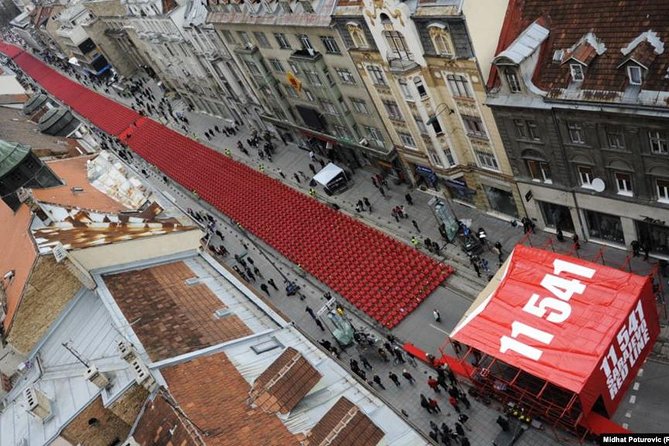
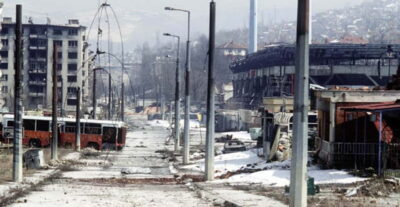
The route then takes you along Sniper Alley, the name given to one of Sarajevo’s most dangerous streets during the siege. Driving through it gives you a direct sense of distance and urban exposure, although the modern city around you may look far removed from wartime footage.
That contrast can be unsettling in a useful way. A normal road can carry a terrible memory, and the guide’s explanation helps connect the present-day street with the risks faced by people who had to cross it.
You also pass RTV Dom, the television building that broadcast during key moments of the war. News coverage shaped how the outside world understood Sarajevo, while local broadcasting helped maintain communication inside the city.
Because these stops are viewed from the vehicle, you should not expect long photo opportunities or interior access. Their purpose is to connect the route’s larger themes: government, media, civilians, and the daily danger of moving through town.
Inside the Tunnel of Hope Museum
The tour’s longest stop is the Tunnel of Hope Museum, with about 1 hour and 15 minutes set aside for the visit. This is where the earlier stops come together.
During the siege, the tunnel provided a link between Sarajevo and the outside world. Its construction and use show the practical ingenuity needed to keep a cut-off city supplied and connected. The passage was not a grand engineering project. Its importance came from what it made possible.
At the museum, you learn how the tunnel was built, why it mattered, and how it supported Sarajevo during the siege. You also hear more stories and watch a film about the period. The museum ticket costs 20 BAM, listed as about €10.50, for adults. Students pay 8 BAM, about €4.50.
The ticket being separate is worth noting when you compare the total cost. At $32.58, the tour already includes transport and a licensed guide, so the added museum charge is not unreasonable, but your actual spend will be higher than the headline tour price.
The tunnel itself may be difficult for anyone uncomfortable in enclosed spaces. The visit is also emotionally heavy. I would not choose this excursion as a casual sightseeing activity, but I would choose it if you want a serious explanation of Sarajevo’s siege.
What the guide and group size mean
A good guide matters more here than on a standard city highlights tour. Dates, names, and locations only take you so far. You need someone who can explain how the siege affected ordinary movement, medical care, public life, and family survival.
Nermin has been singled out for his personal experiences, his work as a former police officer, and his ability to explain the region’s wider story. If he is assigned to your group, his first-hand perspective may give the tour unusual force. The experience is also suitable for a solo booking, since the tour can operate with very few participants. One booking was effectively a private outing with Nermin as both driver and guide.
The maximum group size is 20. That is not an intimate private tour, but it is small enough to be manageable in a vehicle and at the museum. A smaller group can also make it easier to ask questions, though the supplied information does not promise a specific vehicle type or exact group size on your date.
The tour is offered in English. Confirmation is provided at booking, and the meeting point is Sarajevo Insider, at Zelenih beretki 30. The tour returns there at the end.
Is $32.58 a fair price?
I consider the price fair for a guided half-day experience, especially because transportation is included. The route covers widely separated sites, and arranging the same sequence independently would require more planning and a separate visit to the Tunnel of Hope.
The value comes from the explanation, not from the number of stops alone. Several landmarks are passed rather than visited, so you are paying for the guide’s context and the convenience of the route. If you want long walks, interior visits, or free time at each place, this may feel too compressed.
Remember to add the museum ticket:
- Adult admission: 20 BAM, about €10.50
- Student admission: 8 BAM, about €4.50
- Tour price: $32.58 per person
- Guide and transportation: included
The tour is commonly booked about 10 days ahead, so I would avoid leaving it until the last day if it is important to your Sarajevo plans. Free cancellation is available up to 24 hours before the start time. Poor weather or failure to reach the minimum number of participants can lead to a new date, another experience, or a full refund.
Who should book this Sarajevo tour?
I would recommend it to you if you want a structured introduction to the Siege of Sarajevo and prefer to learn through places rather than only through a museum display. It is also a strong choice if you have limited time in the city and want to combine the central sights with the Tunnel of Hope.
The tour suits adults and older children who can handle difficult war subject matter. The information says most people can participate, but it does not provide detailed accessibility information for every stop. If mobility or enclosed spaces are a concern, ask the operator before booking.
I would skip it if you want a cheerful orientation tour, a food-focused outing, or a slow architectural walk. The mood is serious, the route is tightly timed, and the subject is often painful.
Final verdict: book it for context, not just sightseeing
Book the Times of Misfortune tour if you want Sarajevo’s wartime past explained by someone who can connect the locations to real human experience. The Yellow Fortress gives you the city’s geography, the cemetery and maternity hospital show the human cost, and the Tunnel of Hope provides the clearest physical link to life under siege.
The extra museum fee and the number of drive-by stops are fair considerations. Still, the combination of transport, a licensed English-speaking guide, a manageable group size, and 1 hour and 15 minutes at the Tunnel of Hope makes this a worthwhile use of a half-day. If you have only one Sarajevo tour on your schedule, choose this one for understanding the city, not for checking off monuments.
FAQ
How long does the Times of Misfortune tour last?
The experience lasts approximately 3 hours and 30 minutes.
Where does the tour start and finish?
It starts at Sarajevo Insider, City Tours and Excursions, at Zelenih beretki 30 in Sarajevo. The tour ends back at the same meeting point.
Is transportation included?
Yes. Transportation and a licensed guide are included in the tour price.
Is the Tunnel of Hope Museum ticket included?
No. Adults pay 20 BAM, about €10.50, and students pay 8 BAM, about €4.50.
What language is the tour offered in?
The tour is offered in English.
What is the cancellation policy?
You can cancel at least 24 hours before the start time for a full refund. Cancellations or changes made less than 24 hours before the start time are not accepted for a refund. If poor weather or the minimum participant requirement causes cancellation, you are offered another date, another experience, or a full refund.
Just added around Sarajevo
- Sarajevo Under Siege: A War History Tour★ 5.0 · 10 reviews
- Private Full Day Safari Tour★ 5.0 · 8 reviews
- WAR TUNNEL – Sarajevo’s only way of a communication during the WAR – Top secret★ 5.0 · 12 reviews
- Ultimate Gastro Experience★ 4.5 · 14 reviews
- Mysterious Visoko Pyramids Driving and Walking Tour★ 5.0 · 7 reviews
- Secret Tito’s Bunker/Konjic Tour★ 5.0 · 4 reviews
- The Secret Lifeline: Sarajevo’s War Tunnel Tour★ 5.0 · 6 reviews
- Crossroads of Cultures – Sarajevo Walking Tour★ 5.0 · 8 reviews
Sarajevo War Tunnel Tours, compared.

Fall of Yugoslavia, Sarajevo War Tour with Tunnel of Hope Museum and Frontlines
Read our review →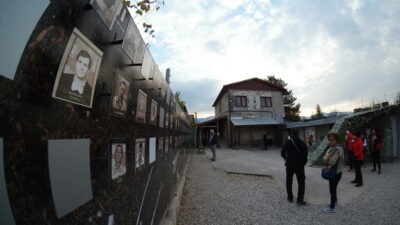
Sarajevo Grand Tour: Old Town, War Tunnel, Olympic Sites & More
Read our review →
Sarajevo Grand Tour: 5 Hours Old Town, War Tunnel, Olympics
Read our review →
WAR TUNNEL – Sarajevo’s only way of a communication during the WAR – Top secret
Read our review →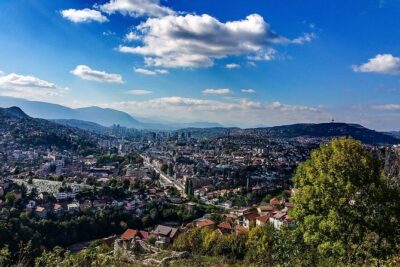
SARAJEVO SIEGE TIMES ’92-’95 / Sarajevo Roses & Tunnel of Hope /
Read our review →Browse the lists this tour appears in