
Reviewed · SARAJEVO SIEGE TOURS
Break-up of Yugoslavia & The War in Mostar: Life Under Siege
Mostar’s famous bridge tells only part of the story. This tour takes you from Tito’s secret aircraft hangar to bomb-damaged buildings, wartime bunkers, and the former front line that still quietly divides the city. Guides such as Esmer, Harun, and Vedad explain the breakup of Yugoslavia in clear, human terms.
I especially like two things here: the small group size, capped at eight, and the personal approach. Your guide may draw a map of Yugoslavia and military movements on a board, then connect that big political story to family life in Mostar. You may also get practical local touches, such as advice on Bosnian coffee, ćevapi, or a good bakery.
The main consideration is emotional weight. This is not a light sightseeing outing, and the stops are mostly historic rather than scenic. If you want to understand modern Mostar, though, the difficult subject matter is precisely the point.
Key points to know before booking
- Tito’s hidden aircraft hangar: Enter an abandoned military facility built inside the mountain south of Mostar.
- Personal local storytelling: Esmer and other guides explain how the siege affected their families and neighborhoods.
- Former front line in the city center: Walk along streets where Bosnian and Croatian forces fought at close range.
- Useful three-hour format: Hotel pickup, air-conditioned transport, and three main stops make this easy to fit into a Mostar stay.
- A serious but balanced history lesson: The tour addresses suffering on all sides and connects the war to present-day Mostar.
- Strong value at $42.33: For a small group, transportation, museum entry, and expert explanation are included.
Why this tour matters in Mostar
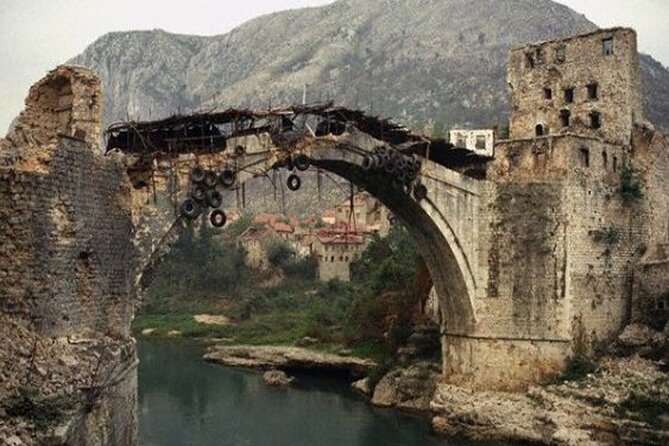
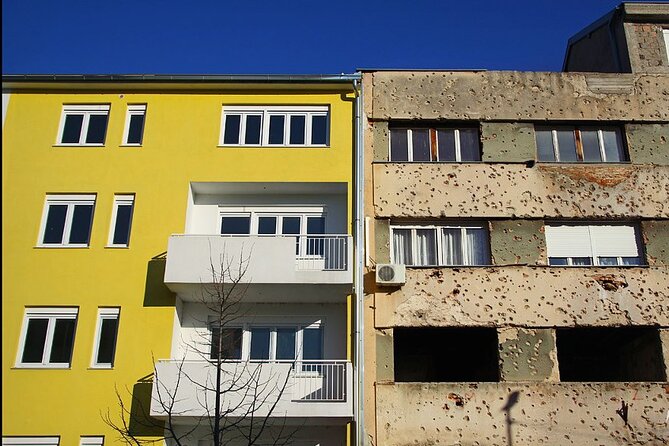
Mostar can be easy to misread. You see the rebuilt Old Bridge, polished stone lanes, restaurants, and souvenir stalls. Then you notice a shell-scarred wall or an abandoned building and realize that the war is not distant here. It is part of the city’s current shape.
This experience gives you the background needed to read those signs. It covers the breakup of Yugoslavia and the Bosnian War from 1992 to 1995, but it does not stop at dates and political names. The guide explains what happened in Mostar, how civilians lived under attack, and why the city remains divided in social and political ways.
I find that local testimony makes the subject easier to grasp. The guides do not present the conflict as a simple story with one clean villain and one clean hero. They explain the actions and suffering of different communities, while also sharing personal and family memories. That balance matters in a place where the past can still shape everyday life.
The tour is also useful if you have already seen the Old Bridge. The bridge is beautiful and important, but it cannot explain the nearby Boulevard, Spanish Square, or the damaged buildings around the city. After this outing, you will look at Mostar with a more informed eye.
More sarajevo siege tours in Mostar:
- The Death of Yugoslavia Tour in Mostar
★ 5.0 · 102 reviews - The Death of Yugoslavia: Unique thematic Tour in Mostar
★ 5.0 · 22 reviews - Fall of Yugoslavia, Sarajevo War Tour with Tunnel of Hope Museum and Frontlines
★ 5.0 · 1,314 reviews
The hidden Yugoslavian aircraft hangar south of Mostar
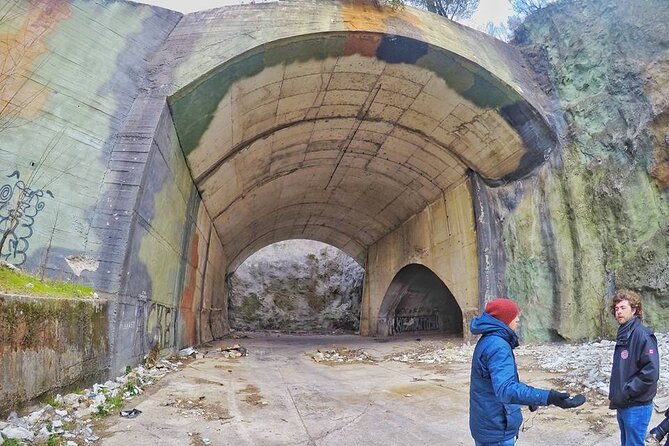
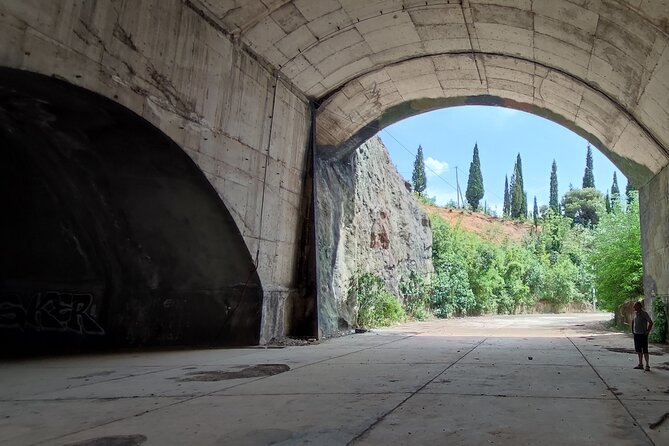
The first stop is an abandoned aircraft hangar about five minutes south of Mostar. It was built during the Yugoslav period, when Josip Broz Tito ordered a military aircraft facility to be placed deep inside a mountain.
The setting explains the design. The rock protected fighter jets from air attack and kept the base out of public view. You enter a place that feels stark and functional rather than polished for tourism. Its value lies in seeing how Yugoslavia prepared for a possible external threat before the country later broke apart from within.
You spend about 50 minutes here. The admission charge is included, and your guide supplies the context that the empty hangar cannot provide on its own. Without explanation, you would see a cold military tunnel and a few traces of an abandoned base. With the history attached, the place becomes a window into Yugoslavia’s military thinking and the secrecy of the period.
This is not the kind of stop where you should expect grand displays or a restored museum. It is an abandoned site, so the appeal is atmospheric and historical. Wear sensible shoes and expect an austere place rather than a polished attraction. The provided details do not specify ground conditions, so asking your guide about footwear before entering is sensible.
The drive also breaks up the history lesson. Instead of sitting in one museum for three hours, you move through the area and see how military planning used the mountains around Mostar.
Making sense of Yugoslavia at the Mostar War Museum
The second stop is the Mostar War Museum on Gojka Vukovića. You spend roughly 50 minutes here, with entrance included in the tour price.
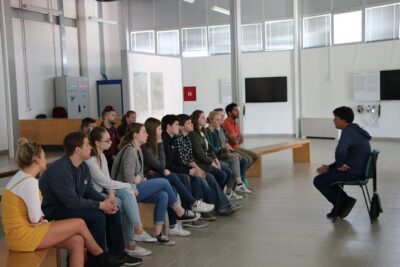
This is where the complicated regional story gets organized. Your guide may use a board to draw a map of the former Yugoslavia and explain the sequence of events that led to war. That simple visual tool is one of the most useful parts of the experience. Borders, alliances, armies, and political changes are difficult to follow when presented only as spoken names. A map gives you something solid to follow.
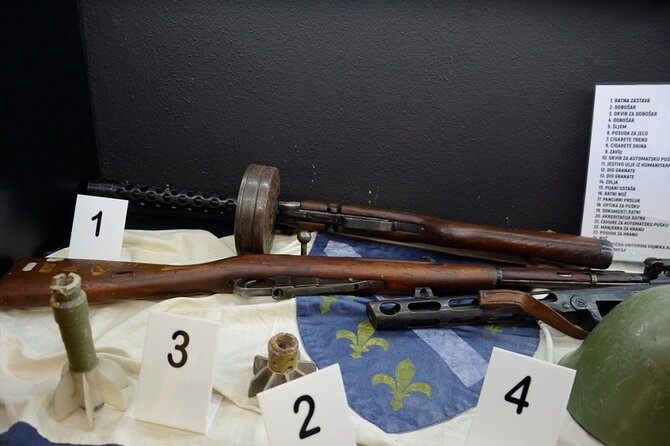
The museum focuses on Mostar’s wartime experience. It includes accounts connected to local families and Bosnian soldiers, along with material that helps explain what civilians endured. The emphasis is not just on military movements. You learn what it meant to live in a divided city, what happened between the lines, and how ordinary people dealt with danger and loss.
The personal side can be intense. Esmer, one of the guides frequently associated with this tour, shares stories about his family and his youth during the siege. It is important to understand the limits of that phrase personal stories. He was a child during the war, so he is not presenting himself as a combatant or as someone who witnessed every event directly. His value comes from lived local experience, family memory, careful study, and the ability to place those memories within the wider conflict.
I appreciate that the guides leave room for questions. The subject is complex, and you may want to ask about the breakup of Yugoslavia, the different forces involved, or how Mostar functions today. The guides are described as open to difficult questions and willing to discuss current political problems as well as the past.
You may also get a small cultural lesson here or elsewhere during the outing. Past groups have learned how to drink Bosnian coffee properly and received suggestions for ćevapi, bakeries, cafés, documentaries, and local sights. These touches are not guaranteed on every departure, but they show how the tour can connect wartime history with present-day life.
Walking the former front line near Šantića Street
The final section takes you through the city, including Šantića Street, toward Spanish Square and Boulevard Street. This was one of the closest combat areas between Bosnian and Croatian forces. The route places the war in the middle of modern Mostar rather than keeping it in a remote memorial or museum.
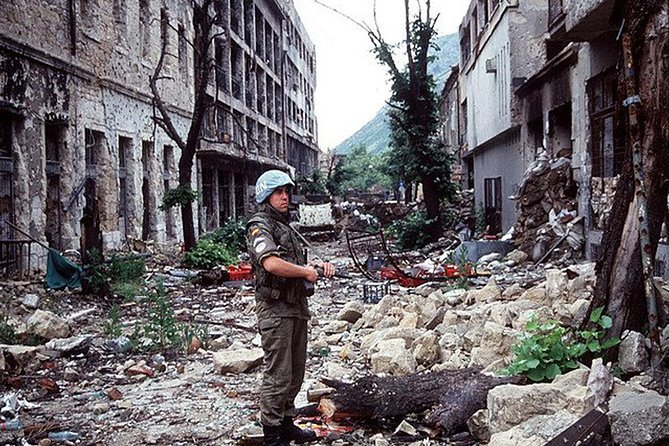
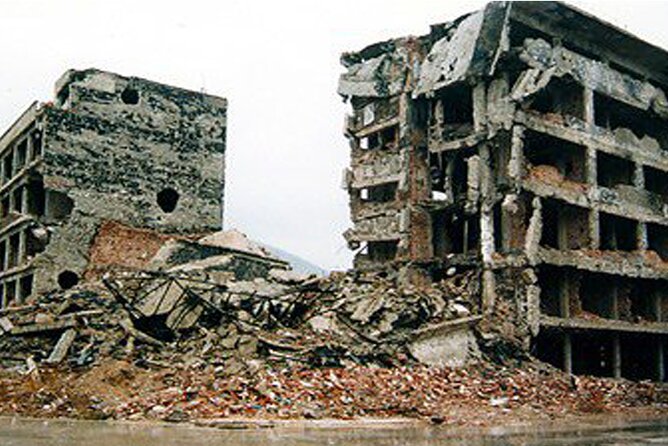
You can still see bunkers and defensive positions in or near damaged buildings. Some remain close to the city center, where people now walk, shop, and live. The physical traces may be rough and visually subdued, but that is part of their force. A destroyed building is not only a ruin. It shows how quickly a normal urban street can become a battlefield.
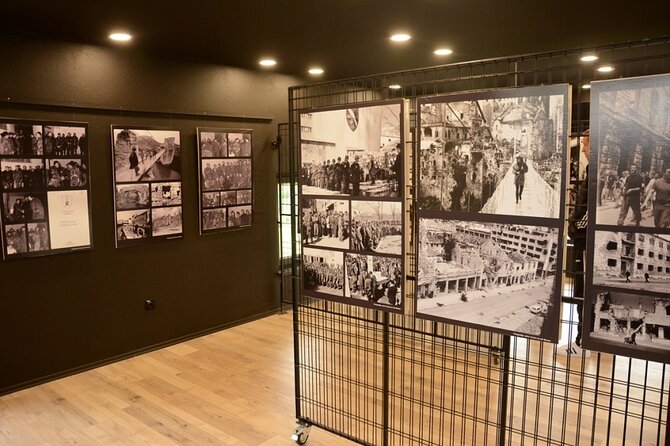
Your guide uses wartime photographs to compare places such as Spanish Square and the Boulevard with their present appearance. This before-and-after approach is especially helpful. Buildings can be repaired, roads can be cleared, and daily life can return, but the photographs show what the city paid for that recovery.
The route also explains the invisible line between the two parts of Mostar. You may not see a fence or checkpoint, yet the division remains meaningful. The tour does not pretend that rebuilding stonework has solved every political or social issue. Instead, it helps you understand why the city can feel both united and divided at the same time.
This portion involves walking through the city, so the experience is not entirely vehicle-based. The exact walking conditions and length are not specified, but comfortable shoes make sense. Ask for the route details if mobility is a concern.
Same country, a completely different kind of day:
- Dubrovnik: Kravica Waterfalls, Mostar and Pocitelj Day Trip
★ 4.5 · 3,045 reviews - From Mostar: Blagaj, Počitelj & Kravice Waterfalls Day Tour
★ 5.0 · 1,310 reviews - From Mostar: Kravice Waterfalls, Blagaj, & Počitelj
★ 5.0 · 565 reviews - Herzegovina Day Tour from Mostar: Blagaj, Pocitej, Kravice falls (Join Us! :D)
★ 5.0 · 372 reviews
The guides are the heart of the experience
The strongest part of this outing is the guide’s ability to make a complicated subject understandable without flattening it. Esmer is repeatedly described as passionate, calm, humble, and fair-minded. Harun or Haron is praised for explaining the Balkan conflict in a clear order, while Vedad is noted for teaching the background and showing the city from a wider viewpoint.
Guide assignments can vary, so you should not assume a particular person will lead your departure. Still, the style of guiding appears consistent: a local perspective, a clear timeline, personal memories, and time for questions.
The best guides also discuss what happened after the war. Esmer has spoken about forgiveness, coexistence, and his hopes for raising a family in Bosnia and Herzegovina. That forward-looking tone keeps the tour from becoming a memorial to despair. You hear about damage and grief, but also about the effort to live together and build a future.
At times, the storytelling may run longer than planned. One outing lasted about four hours instead of three because the guide continued answering questions and explaining the subject. That can be a bonus if you have room in your schedule. It can be a problem if you have a bus, border crossing, or fixed lunch reservation immediately afterward.
The group limit of eight is another real advantage. A small group makes it easier to hear the guide, ask sensitive questions, and keep the discussion personal. It also gives the outing a quieter feel than a large coach tour.
What $42.33 buys you
At $42.33 per person, this is priced above a basic walking tour but offers more than a short historical stroll. The fee includes a professional guide, transport in an air-conditioned vehicle, entry to the Mostar War Museum, and hotel pickup and drop-off if that option is selected.
The value depends on how much you want context. If you only want to photograph the bridge and browse the Old Town, this may feel like too much history for your day. If you want to understand the city beyond its postcard image, the price is reasonable for a three-hour small-group outing with transport to a military site outside the center.
Pickup is offered from your hotel in Mostar. If your accommodation is not on the listed pickup points, you need to provide its address. That is useful if you are staying outside the immediate Old Town, since the hangar is south of the city and the air-conditioned vehicle saves you from arranging separate transport.
The tour is offered in English and comes with a mobile ticket. Confirmation is sent within 48 hours, subject to availability. It is often booked well ahead, with an average booking time of 67 days, so reserving early makes sense if your dates are fixed.
Who will appreciate this tour most
I would choose this experience if you have already allowed time for Mostar’s Old Bridge and Old Town, and you want the missing context. It suits adults, older teenagers, history students, journalists, and anyone interested in how modern borders and political divisions affect daily life.
It is also a good choice for a short stop between Croatia and Bosnia and Herzegovina. A morning outing can add substance to a route from Split to Mostar to Dubrovnik, especially if you would otherwise see only the center and move on.
The tour is less suitable if you want a relaxed sightseeing morning, dramatic viewpoints, or lots of free time for photographs. It is information-heavy. The sites are meaningful, but they are not designed mainly for beautiful pictures.
The emotional tone deserves honest attention. Stories about civilians under siege, destroyed homes, and family suffering can be upsetting. The guide’s balanced and hopeful approach helps, but it does not make the subject easy. I would avoid placing this tour directly before a rushed transfer or a celebratory event.
Children can participate, but they must be accompanied by an adult. Most people can take part, and the group size is limited to eight.
How to get more from the three hours
Leave room to ask questions. The map lesson and personal stories are more useful when you stop the guide to clarify names, dates, or military movements.
Do not judge the tour by the hangar or bunkers as photo stops. Their importance comes from the explanation around them. Listen for how the guide links Yugoslav military planning, the breakup of the country, the siege, and the city’s current division.
If you have more time afterward, use the guide’s local suggestions. Several guides have pointed people toward Bosnian coffee, ćevapi, small cafés, bakeries, documentaries, and other Mostar activities. These recommendations can help you shift from learning about Mostar’s suffering to experiencing its living culture.
You can cancel for a full refund if you do so at least 24 hours before the local start time. Changes or cancellations inside that period are not refunded, so keep your schedule firm once the deadline passes.
Should you book the Mostar war tour?
Yes, if your aim is to understand Mostar rather than simply see it. The hidden aircraft hangar, War Museum, and former front line form a strong three-part route, and the small group lets the guide address questions with care.
Book it early if you are visiting on fixed dates, and allow a little extra time in case the discussion runs long. I would not choose it for a purely scenic day, but I would choose it for an honest account of the city’s recent past, especially with a local guide such as Esmer, Harun, or Vedad.
The bridge may be Mostar’s symbol. This tour explains the people and events that give the city its deeper meaning.
FAQ
How long does the Mostar war tour last?
The scheduled duration is approximately three hours. Some departures may run longer if the guide spends extra time answering questions and discussing the war.
What places are visited?
The tour visits an abandoned Yugoslavian aircraft hangar south of Mostar, the Mostar War Museum on Gojka Vukovića, and former front-line areas around Šantića Street, Spanish Square, and Boulevard Street.
Is hotel pickup available?
Yes. Hotel pickup and drop-off are available in Mostar if that option is selected. If your accommodation is not listed, provide its address.
Is admission to the museum included?
Yes. The Mostar War Museum entrance fee is included in the tour.
How many people can join the tour?
The activity has a maximum of eight participants.
What is the cancellation policy?
You can receive a full refund if you cancel at least 24 hours before the experience start time. Cancellations or changes made less than 24 hours in advance are not accepted for a refund.
Just added around Mostar
- Mostar Old Town Walking Tour – Best Seller★ 5.0 · 4 reviews
- Stolac, the crossroads of civilisations, private walking tour.★ 5.0 · 9 reviews
- Neretva kayak canoe safari★ 5.0 · 12 reviews
- Private Transfer from Mostar to Split★ 5.0 · 3 reviews
- Private Transfer Mostar–Dubrovnik English Speaking Local Driver★ 5.0 · 13 reviews
- Mystical Sutjeska National Park★ 5.0 · 3 reviews
- Mostar gastro and historical treasures★ 5.0 · 6 reviews
- Mostar War Heritage Walking Tour★ 5.0 · 6 reviews
Sarajevo Siege Tours, compared.

Fall of Yugoslavia, Sarajevo War Tour with Tunnel of Hope Museum and Frontlines
Read our review →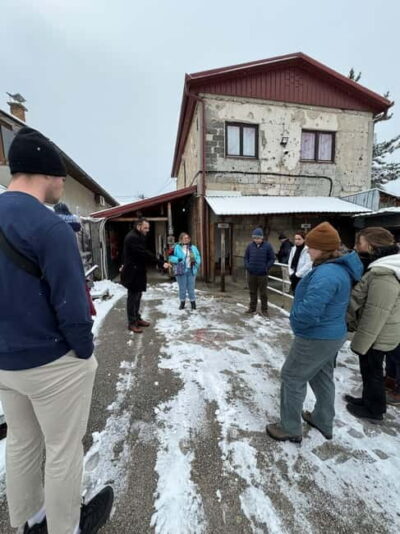
Bosnian War & Fall of Yugoslavia Tour with Tunnel
Read our review →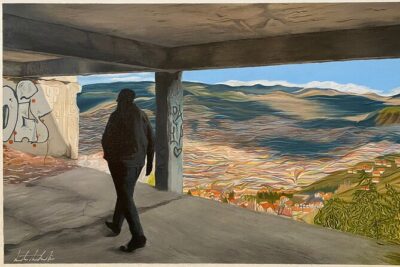
Sarajevo War Tour: A Veteran’s Story of the Siege (fees included)
Read our review →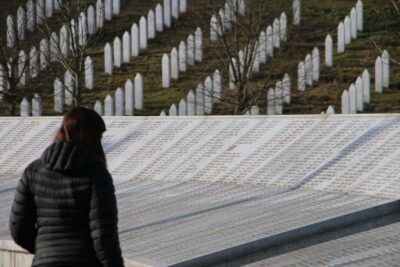
Srebrenica Genocide Study Tour with War Veteran
Read our review →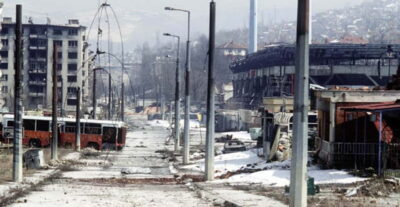
Sarajevo to Srebrenica: Genocide Study Tour with War Veteran
Read our review →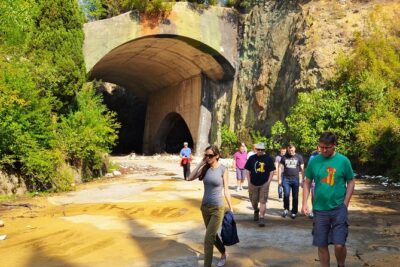
Times of Misfortune – Life Under Siege and the Tunnel of Hope
Read our review →Browse the lists this tour appears in