
Reviewed · SARAJEVO WAR TUNNEL TOURS
Sarajevo Grand Tour: Old Town, War Tunnel, Olympic Sites & More
Sarajevo’s story is packed into one half-day here: Ottoman markets, Austro-Hungarian streets, war sites, Olympic relics, and mountain views. The most powerful stop is the Sarajevo War Tunnel, where you walk through a surviving section of the passage that kept the city supplied during the siege.
I like the mix of walking and private-car sightseeing. You get the close-up feel of Baščaršija, then ride to places such as the tunnel and Olympic bobsleigh track that would take more effort to reach alone. I also like the human touch from guides including Elvis, Enes, Edis, and Zulfo, who add family stories, food advice, humor, and help with small practical matters.
The main caution is timing. The plan is listed at about five hours, and many tours run five to five and a half hours, but one experience lasted only three hours. The number of stops can also make the day feel brisk, especially if you want to enter more buildings rather than view them from outside.
Key points at a glance
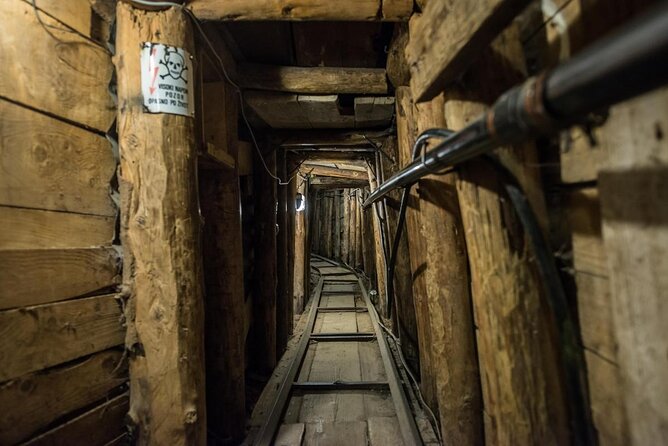
- Walk through part of the War Tunnel: Allow about an hour for the museum presentation, a short film, and the surviving tunnel section. The entrance fee is €10.50 per booking.
- See Sarajevo from Trebević: The old Olympic bobsleigh and luge track makes an unusual photo stop, with former wartime front lines nearby.
- Taste Bosnian traditions: Bottled water and Bosnian coffee are included, with time for coffee in the old Ottoman caravanserai of Morića Han.
- Cover east and west in Baščaršija: You pass mosques, a synagogue, an Orthodox cathedral, a Catholic cathedral, covered markets, bridges, and old trading streets.
- Ride in a private vehicle: Hotel pickup in Sarajevo saves time and makes the distant war and Olympic sites practical in one morning.
- Expect a small group: The maximum is 15 people, though some departures may operate with only one booking or as a private outing.
Why this tour gives you Sarajevo in one morning
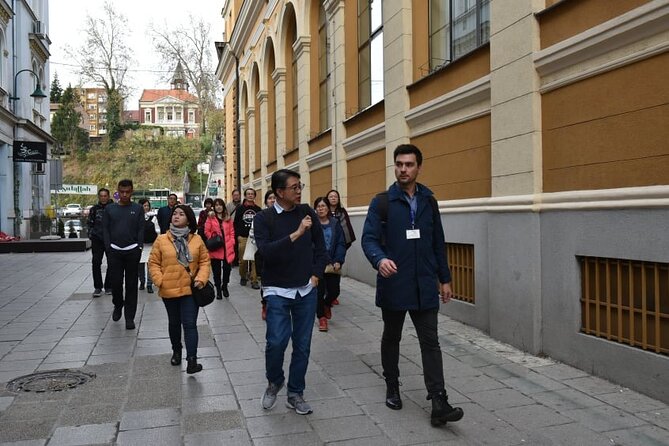
Sarajevo is not a city you understand from one postcard view. Its Ottoman core, Austro-Hungarian center, religious buildings, Olympic mountains, and siege sites all tell different parts of the story.
This tour works because it links them. You begin with a walking tour through the old center, then use a private vehicle for the hills and outlying sights. That saves you from spending your short stay working out transport or climbing to viewpoints on your own.
At $47.06 per person, the price is sensible if you want both city orientation and transport to the War Tunnel and Trebević. A simple old-town walk would cost less, but it would not cover nearly as much ground. The value is strongest on a first visit, when you want the basic map of Sarajevo before exploring favorite neighborhoods at your own pace.
The tour is offered in English and includes hotel pickup, a local guide, private-vehicle transport, bottled water, and Bosnian coffee. Tips and the War Tunnel entrance are extra. The tunnel charge is €10.50 per booking, so include that in your budget.
More sarajevo war tunnel tours in Sarajevo:
- Fall of Yugoslavia, Sarajevo War Tour with Tunnel of Hope Museum and Frontlines
★ 5.0 · 1,314 reviews - Sarajevo: Tunnel Museum Yugoslavia War Tour with War Veteran
★ 5.0 · 1,111 reviews - Sarajevo: Tunnel of Hope Tour – Survival and Resilience
★ 4.8 · 630 reviews
Starting at City Hall and the Miljacka River
Pickup begins at 9:00 a.m. from your hotel lobby or another location in Sarajevo. The first part is on foot near Sarajevo City Hall, known locally as Vijećnica.
You view the grand building from outside, then hear an introduction to Sarajevo’s position, people, climate, and past. That opening matters because the city’s location helps explain its mixed identity. East and west meet within a short walk, and the tour keeps returning to that idea.
Across the Miljacka River sits Inat Kuća, or the Spite House. The name comes from a local story of stubbornness during the construction of City Hall. From there, you cross the river near Šeher-Ćehaja Bridge, a short stop with no admission charge.
I like this beginning because it starts with Sarajevo as a living city rather than a list of monuments. You get the river, the street pattern, and a quick sense of how the old city sits against the hills.
Baščaršija, copperware, and a proper Bosnian coffee
Cross into the pedestrian streets around Kazandžiluk, the coppersmith quarter. The sound and look of hand-worked copper give this part of Baščaršija a clear trade tradition, and the tour includes a short presentation inside a coppersmith’s shop.
You then pass Locksmith Street, now known for food. This is the place to think about ćevapi, burek, pita, sweets, and coffee. Food tasting is not listed as a separate included item, so bring some convertible marks if you want to buy something. A guide may point you toward a good option, but the supplied tour details do not promise a full meal.
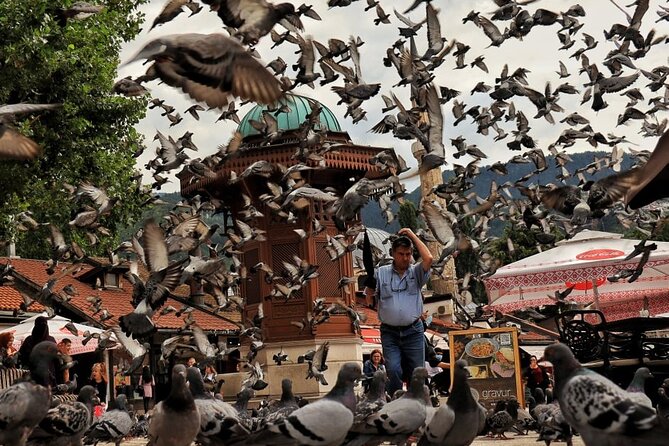
Baščaršija’s central square is marked by the Sebilj fountain. For centuries, its water has been offered to people passing through. It is a quick stop, but it helps you understand why this area remains the symbolic heart of Sarajevo.
The old market streets continue to Morića Han, a 16th-century Ottoman caravanserai. Merchants and traders once used places like this as roadside hotels, and the courtyard now offers a quiet break from the main promenade.
Here, traditional Bosnian coffee is included. It is not simply a caffeine stop. Your guide shows you the local way of serving and drinking it, while explaining customs and everyday traditions. Several guides, especially Elvis and Enes, are praised for adding warmth and personal stories to this part of the tour.
The coffee experience can vary. One guest found it missing on a shortened outing, so I would confirm at the start that it is part of your day. If it happens as planned, it is one of the tour’s best small moments.
Gazi Husrev-beg Mosque and Sarajevo’s religious mix
The next stop is the garden of Gazi Husrev-beg Mosque, built in the 16th century. You see the mosque, minaret, fountain, Islamic school, and lunar clock tower, while the guide explains the role of Gazi Husrev-beg in Sarajevo’s development.
The listed plan gives you an outside look at the mosque complex. An entrance ticket is not included, and the tour details do not promise an interior visit. If entering matters to you, ask your guide early in the day. You may need to return later on your own, depending on the group’s wishes and timing.
That limitation is worth knowing. The mosque is one of Sarajevo’s key sights, and some people will want more than a garden and exterior visit. Others will appreciate keeping the tour moving, especially with so many other stops ahead.
The tour then shows how close Sarajevo’s different religious communities are to one another. At the Latin Bridge, you hear the story of the 1914 assassination that helped trigger the First World War. You also pass an old public toilet dating from the 16th century that is still in use, a wonderfully ordinary detail beside a major historical site.
At Gazi Husrev-beg’s Bezistan, a covered market, you see the ruins of Tašlihan, once the largest caravanserai in the city, along with Hotel Europe. The stop at Sarajevo Meeting of Culture marks the point where Ottoman and Austro-Hungarian architectural zones meet. In a few steps, the street changes character.
Same country, a completely different kind of day:
- Sarajevo: Mostar, Konjic, Blagaj Tekke, Pocitelj & Waterfall
★ 4.9 · 1,666 reviews - Sarajevo: Grand Walking Tour Through Time and Cultures
★ 4.8 · 1,236 reviews - Sarajevo: Mostar, Konjic, Sufi House, Pocitelj & Kravice Falls
★ 5.0 · 1,179 reviews - ROSES OF SARAJEVO (Official WAR + CITY tour)- Story of a Survivor
★ 5.0 · 770 reviews
Synagogue, cathedral, marketplace, and war memory
The Jewish Museum area brings another layer to the city. You view a 16th-century synagogue from outside and hear about the Sarajevo Haggadah, as well as the long story of different communities living alongside one another.
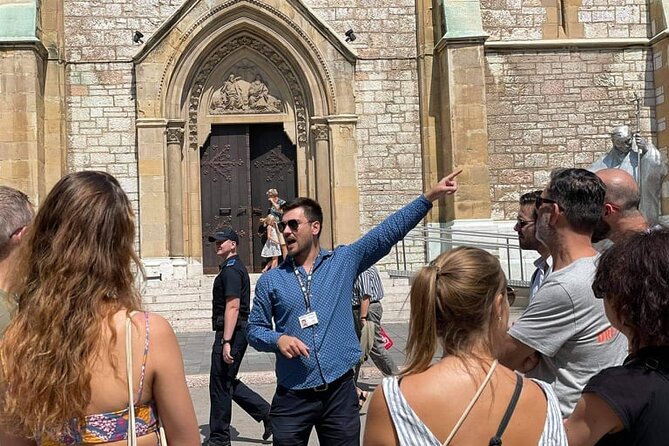
From there, walk along Ferhadija promenade to the Sacred Heart Cathedral. The exterior visit includes Sarajevo Roses, the red markings left where mortar explosions killed people during the 1992 to 1995 war, and the statue of Pope John Paul II.
At Markale Market, the tour pauses at a site connected to a wartime massacre. This is a brief stop, but it is not light sightseeing. The guide’s explanation helps connect Sarajevo’s daily routines, its marketplace, and the violence that struck ordinary people.
You also pass a hamam and the Serbian Orthodox Cathedral from outside. Taken together, these stops give you a useful picture of Sarajevo’s religious and cultural range. The old center is not a single-style museum district. It is a place where mosques, synagogues, Orthodox churches, Catholic churches, shops, cafes, and markets share the same compact streets.
The War Tunnel and the reality of the siege
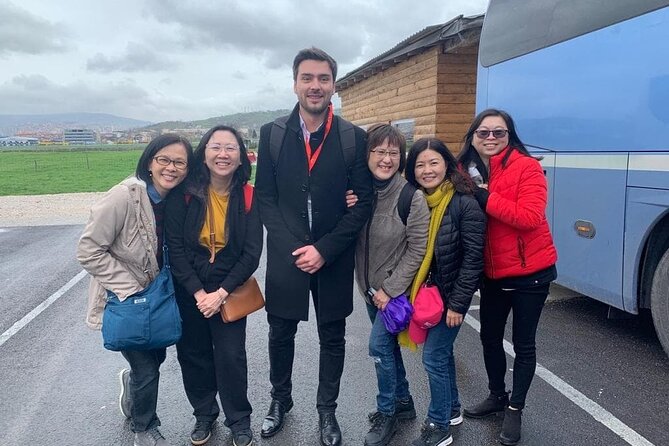
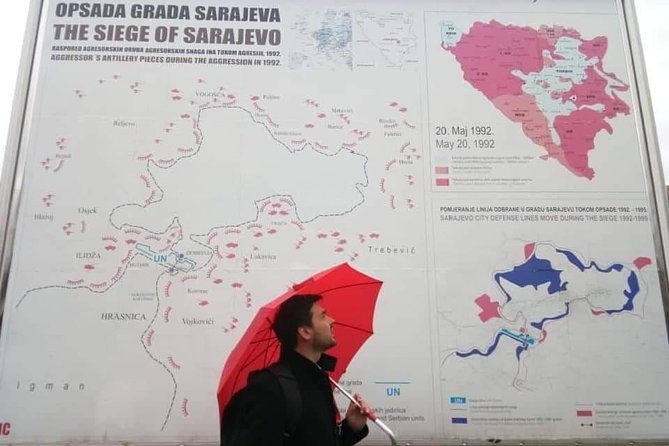
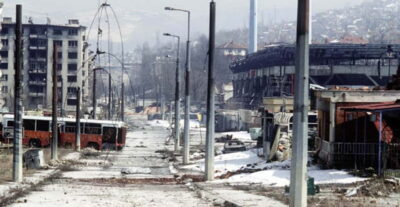
After the old-town walk, your guide drives past Sniper Alley toward Sarajevo Airport and the War Tunnel. The route crosses into the Republika Srpska entity, a reminder that Bosnia and Herzegovina’s political divisions remain part of the geography you see.
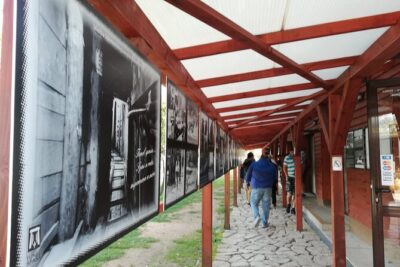
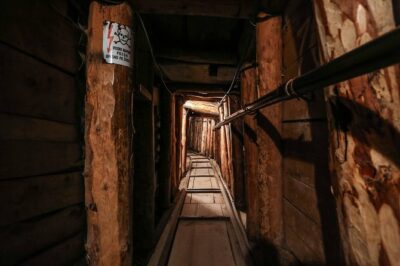
The tunnel museum visit lasts about an hour. It includes a presentation, a short film about the siege, and a walk through part of the tunnel itself. The passage is narrow and gives you a physical sense of the conditions that words and photographs cannot fully explain.
The entrance fee is not included and costs €10.50 per booking. That is a small extra compared with the importance of the stop, but you should carry the needed money or ask your guide how payment works.
This is the emotional center of the tour for many people. Guides such as Enes have personal connections with families involved in the tunnel story, and some departures may include especially personal explanations or traditional food and coffee. Those extras are not guaranteed, so treat them as a possible bonus, not part of the formal package.
The tunnel visit also changes how you see Sarajevo’s hills. From the center, they can look peaceful. At the museum, you learn how those same slopes affected movement, supplies, and daily life during the siege.
Trebević and the abandoned Olympic bobsleigh track
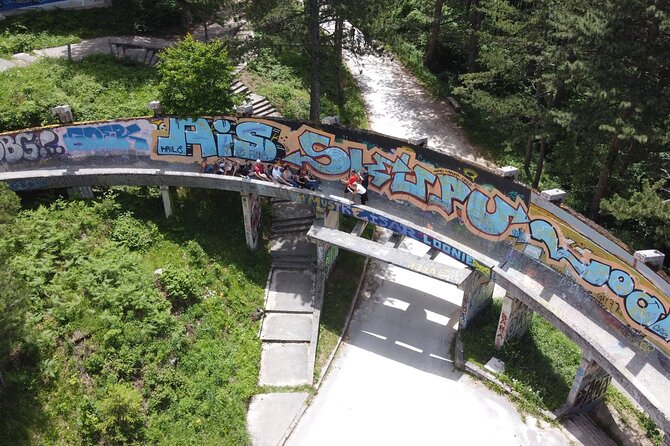
From the tunnel, drive about 15 to 20 minutes toward Trebević Mountain. The road takes you up from the city to former Olympic terrain and wartime front lines.
The Sarajevo Olympic bobsleigh and luge track opened for the 1984 Winter Olympics. Today, the concrete curves carry a different mood. Trees and graffiti surround sections of the old track, and you take a short walk for photographs.
You get about 30 minutes here. That is enough for pictures and an explanation, but not for a long mountain outing. The tour is not a hiking trip, and the exact amount of walking can change with weather and road conditions. In wet weather, the vehicle may drive farther up rather than leave you to walk through the forest.
This stop is a welcome change after the dense old-town history. It combines sport, architecture, mountain air, and the marks of war. If you enjoy unusual historical places, it may be your favorite stop. If you want polished Olympic facilities, adjust your expectations. This is a worn and atmospheric remnant, not a restored sports complex.
The Jewish Cemetery and Yellow Fortress view
The drive down Trebević passes through Sarajevo’s mahalas, or hillside neighborhoods. At the Jewish Cemetery, you see a former sniper position looking down toward the city center and Sniper Alley, as well as the so-called War Hotel.
This stop puts the siege into physical perspective. From above, you can see how the city lies in a long valley surrounded by slopes. The view is striking, but the subject is grim, and your guide’s explanation is important.
The final major stop is the Yellow Fortress. Along the way, you pass Skenderija Olympic Hall and the Ashkenazi Synagogue. From the fortress, Sarajevo spreads below you in one of the city’s best views.
The tour then drops you back in the Old Town. That is convenient. You can continue lunch, shopping, or another museum without arranging a separate ride back to your hotel.
Guides, group size, and the pace of the day
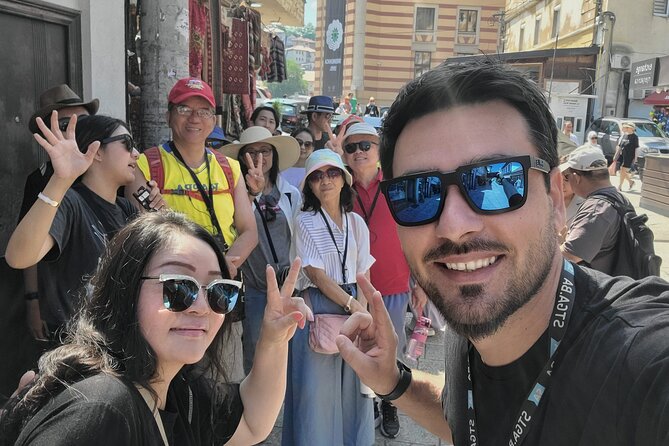
The company uses several guides, including Elvis, Enes, Edis, Adnan, and Zulfo. The strongest part of the guiding is the personal delivery. Elvis is repeatedly praised for clear explanations, humor, careful driving, and enthusiasm for Sarajevo. Enes is known for using photographs on an iPad, family connections, and lively stories. Zulfo has been especially good at helping older people and keeping a six-year-old engaged.
That does not mean every departure will feel identical. Your guide shapes the experience, and storytelling style can change from one day to the next. Still, the repeated pattern is clear: the tour depends heavily on a friendly local guide who can connect buildings and events to real life.
The maximum group size is 15. That is small enough for a more personal feel than a large bus tour, though a full group may move more slowly through narrow streets. Some dates may have only one booking, giving you a private-tour feel without a private-tour price.
Plan for a lot of walking in the Old Town, plus steps and uneven surfaces at some historic areas. Most people can take part, and the activity is near public transport, but the day combines pavement, hills, a tunnel, and mountain stops. Comfortable shoes are a sensible choice.
Is $47.06 good value?
For $47.06, you are paying for more than a guided walk. The price covers hotel pickup, private transport, a local English-speaking guide, bottled water, and Bosnian coffee, while joining together sights that are spread across the city and hills.
The value is strongest if you have limited time or are visiting Sarajevo for the first time. You get the old center, the siege story, the Olympic site, hillside views, and a basic cultural introduction without needing to arrange taxis.
The price is less attractive if you prefer slow museum visits, long meals, or independent wandering. The schedule has sixteen stops, so most are short. City Hall, Baščaršija, the mosque complex, Latin Bridge, the cathedral area, and the market are mainly exterior or brief visits.
One important practical point is duration. The intended experience is about five hours, and several outings have run about five to five and a half hours. One shortened tour lasted three hours, with the coffee experience missed. If your day depends on the full schedule, confirm the pickup and expected finish time with the operator.
Free cancellation is available up to 24 hours before the 9:00 a.m. start. If the minimum number is not reached, the company offers another date or experience, or a full refund.
Who should book this Sarajevo tour?
I would choose it for a first visit, a short stay, or a morning when you want Sarajevo’s main themes explained in one clear route. It suits people who like history but also want food, coffee, city views, and an unusual site such as an abandoned Olympic track.
Families can consider it too. A guide such as Zulfo has kept a young child involved, and private transport reduces the strain of moving between distant stops. Older participants may appreciate the driving, though the old-town section still involves plenty of walking.
I would hesitate if your priority is entering every major religious building or spending a long time inside museums. This tour favors range over depth. Ask at the start about the mosque, coffee, and tunnel timing so your expectations match the day.
FAQ
How long does the Sarajevo Grand Tour last?
The scheduled duration is approximately five hours. Some departures have lasted about five and a half hours, while one shortened outing lasted three hours.
What time does the tour start?
Pickup starts at 9:00 a.m.
Where can I be picked up?
Pickup is offered from the lobby of your hotel or another location in Sarajevo.
Is transport included?
Yes. Transport by private vehicle is included, along with hotel pickup.
Is the tour offered in English?
Yes. The experience is offered in English.
How many people can join the tour?
The maximum group size is 15 people. Some departures may operate with only one booking.
Is the Sarajevo War Tunnel admission included?
No. The tunnel museum entrance costs €10.50 per booking and is paid separately.
Is Bosnian coffee included?
Yes. Bosnian coffee is listed as included, with the planned coffee experience taking place at Morića Han. Confirm the timing with your guide, since one shortened outing did not include it.
Do you visit inside the Gazi Husrev-beg Mosque?
The planned stop focuses on the garden and exterior features, including the mosque, minaret, fountain, Islamic school, and lunar clock tower. An interior visit is not included as a guaranteed part of the tour.
Can I cancel for a full refund?
Yes, if you cancel at least 24 hours before the experience starts. Changes or cancellations made less than 24 hours before the start are not accepted for a refund.
Should you book it?
Book this tour if you want a fast but meaningful introduction to Sarajevo and value private transport to the War Tunnel, Trebević, the bobsleigh track, and the Yellow Fortress. The mix of Ottoman streets, religious landmarks, war sites, and mountain views is hard to arrange as neatly on your own.
Before paying, remember the two tradeoffs: the tunnel fee is extra, and the packed schedule may feel rushed. Confirm that the tour will run close to five hours and that the coffee stop is planned. If those details suit you, this is a strong-value way to get your bearings and understand why Sarajevo is far more than a pretty old town.
Just added around Sarajevo
- Sarajevo Under Siege: A War History Tour★ 5.0 · 10 reviews
- WAR TUNNEL – Sarajevo’s only way of a communication during the WAR – Top secret★ 5.0 · 12 reviews
- Private Full Day Safari Tour★ 5.0 · 8 reviews
- Ultimate Gastro Experience★ 4.5 · 14 reviews
- Mysterious Visoko Pyramids Driving and Walking Tour★ 5.0 · 7 reviews
- Secret Tito’s Bunker/Konjic Tour★ 5.0 · 4 reviews
- The Secret Lifeline: Sarajevo’s War Tunnel Tour★ 5.0 · 6 reviews
- Crossroads of Cultures – Sarajevo Walking Tour★ 5.0 · 8 reviews
Sarajevo War Tunnel Tours, compared.

Fall of Yugoslavia, Sarajevo War Tour with Tunnel of Hope Museum and Frontlines
Read our review →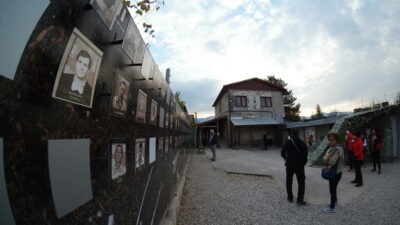
Times of Misfortune – Life Under Siege and the Tunnel of Hope
Read our review →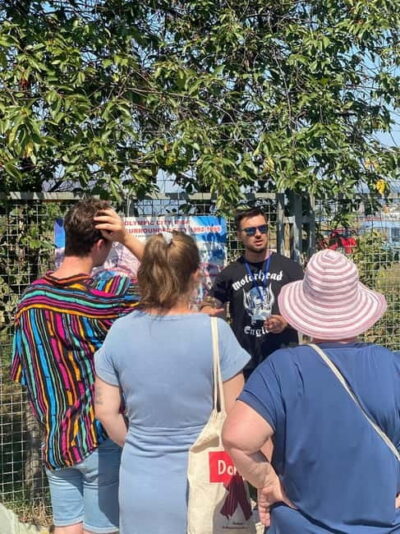
Sarajevo Grand Tour: 5 Hours Old Town, War Tunnel, Olympics
Read our review →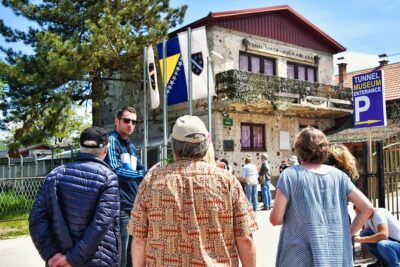
WAR TUNNEL – Sarajevo’s only way of a communication during the WAR – Top secret
Read our review →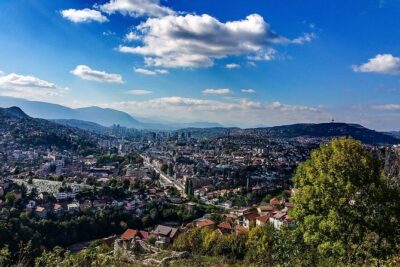
SARAJEVO SIEGE TIMES ’92-’95 / Sarajevo Roses & Tunnel of Hope /
Read our review →Browse the lists this tour appears in