
Reviewed · SARAJEVO WAR TUNNEL TOURS
Sarajevo Grand Tour: 5 Hours Old Town, War Tunnel, Olympics
Sarajevo’s story changes block by block on this five-hour tour. You move from Ottoman lanes and market stalls to Austro-Hungarian streets, Yugoslav concrete, war sites, and the mountain setting of the 1984 Winter Olympics. It is a useful way to understand how several very different Sarajevos fit into one city.
I like the mix of walking and driving, since you cover far more ground without spending five straight hours on foot. I also like the chance to connect the Siege of Sarajevo with ordinary city life, then pause for Bosnian coffee. The main drawback is pace: with many stops in five hours, some places receive only a short introduction, and the War Tunnel museum entrance fee is extra.
Key points at a glance
- Ottoman to Yugoslav Sarajevo: Follow the city’s change from Baščaršija and its mosques to Austro-Hungarian landmarks and later brutalist architecture.
- War Tunnel visit: Spend about an hour learning how Sarajevo endured the longest siege in modern world history.
- Trebević Olympic stop: Reach the abandoned bobsleigh and luge track for a striking reminder of the 1984 Winter Olympics.
- Private vehicle pickup: Hotel pickup and drop-off make the tour practical when you want to see distant sites without arranging transport.
- Bosnian coffee included: Take a short cultural pause with a traditional local drink.
- Strong guide record: Guides named in feedback include Elvis, Edis, and Enes, with particular praise for clear explanations, friendly service, and careful driving.
Why this five-hour route works
Sarajevo can feel compact on a map, but its sights are spread across a valley and surrounding hills. The old market, war museums, Jewish cemetery, and Olympic sites do not naturally fit into one easy walk. This tour solves that problem with a private vehicle and guided walks.
The route is also arranged as a story. You begin in the Ottoman heart of the city, cross into the Austro-Hungarian center, confront the war years, and then climb toward the Olympic facilities above town. That sequence gives you more than a checklist of sights. It shows how Sarajevo’s buildings, streets, and religious landmarks reflect different political eras.
The tour is described as small-group, but no fixed group size is given. That matters because the experience may feel more personal than a large coach outing, yet you should not assume a private tour unless your booking says so.
Pickup is included from Sarajevo hotels. You are asked to wait in the lobby 10 minutes before the scheduled time. The vehicle is especially useful for the uphill portions and for anyone with only one free day in the city.
More sarajevo war tunnel tours in Sarajevo:
- Fall of Yugoslavia, Sarajevo War Tour with Tunnel of Hope Museum and Frontlines
★ 5.0 · 1,314 reviews - Sarajevo: Tunnel Museum Yugoslavia War Tour with War Veteran
★ 5.0 · 1,111 reviews - Sarajevo: Tunnel of Hope Tour – Survival and Resilience
★ 4.8 · 630 reviews
Baščaršija: Sarajevo’s Ottoman opening chapter
The tour begins in Baščaršija, the old market district, with about 30 minutes of guided walking. This is the right place to start because Sarajevo’s Ottoman identity is still easy to read in its lanes, shops, courtyards, and religious buildings.
You will see the old quarter as more than a picturesque shopping area. Its layout reflects a traditional market town, with streets and craft quarters shaped around trade. Kazandžiluk, the coppersmith street, receives its own 10-minute stop later in the walk. Its name points to the metalworking trade that helped define this part of town.
The short Baščaršija visit should help you get your bearings, but it will not cover every lane or shop. If you enjoy browsing, save time before or after the tour to return on your own. The guided portion is mainly about orientation and context.
Gazi Husrev-beg Mosque and Bezistan
The Gazi Husrev-beg Mosque receives about 15 minutes, followed by another 15 minutes at Gazi Husrev-beg’s Bezistan. Together, these stops show the religious and commercial foundations of Ottoman Sarajevo.
The mosque is one of the central landmarks of the old town, while the covered market adds a different angle. One explains the role of faith and public life. The other points to trade, movement, and the daily business of the city.
These are guided visits rather than long independent explorations. Dress respectfully for the mosque, and be prepared for the guide to keep the group moving. The value here is the connection between the sites, not simply taking photographs of two attractive buildings.
Latin Bridge and the Meeting of Cultures
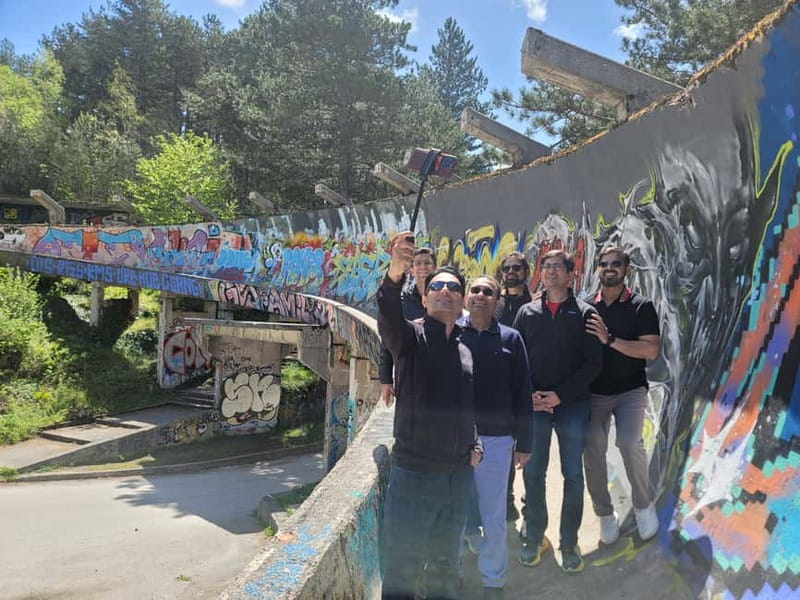
At Latin Bridge, the guide spends about 15 minutes. The bridge is an important point in Sarajevo’s modern story, and its location helps connect the old quarter with the city center.
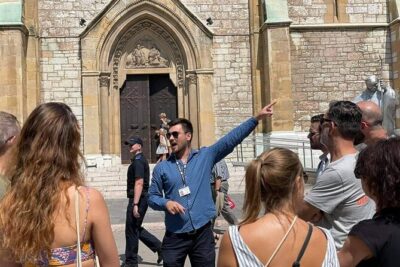
The Sarajevo Meeting of Cultures marker receives about 10 minutes. It marks the point where the Ottoman character of the old town gives way to the Austro-Hungarian part of Sarajevo. This is one of the most useful stops for first-time visitors because you can see the transition with your own feet rather than treating the city as one uniform old quarter.
The short timing works well here. You do not need a long stop to understand the basic shift, but a good guide can make the change in architecture and street plan clear. Guides such as Elvis, Edis, and Enes have been singled out for making Sarajevo’s past easy to follow, though the guide assigned to your departure may differ.
Same country, a completely different kind of day:
- Sarajevo: Mostar, Konjic, Blagaj Tekke, Pocitelj & Waterfall
★ 4.9 · 1,666 reviews - Sarajevo: Grand Walking Tour Through Time and Cultures
★ 4.8 · 1,236 reviews - Sarajevo: Mostar, Konjic, Sufi House, Pocitelj & Kravice Falls
★ 5.0 · 1,179 reviews - ROSES OF SARAJEVO (Official WAR + CITY tour)- Story of a Survivor
★ 5.0 · 770 reviews
Sacred Heart Cathedral and Sarajevo’s mixed identity
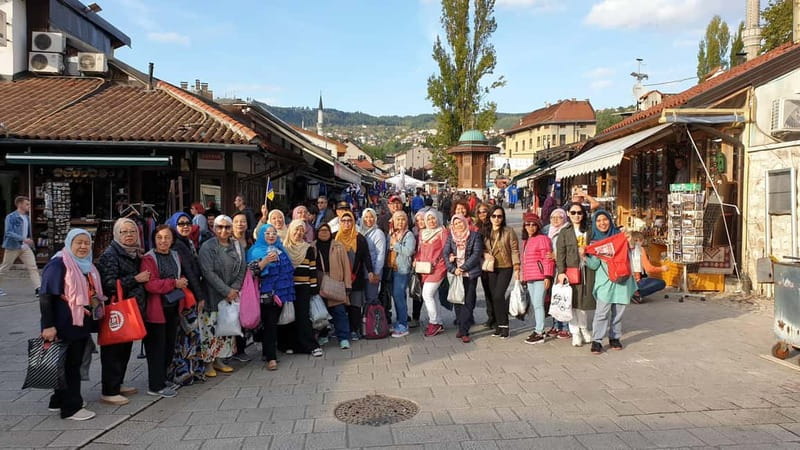
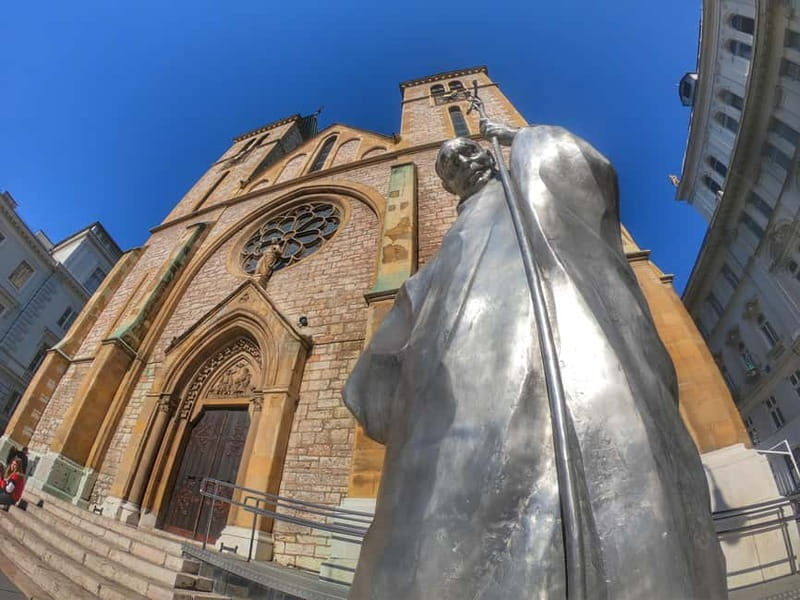
The Sacred Heart Cathedral is another 10-minute stop. Along with the mosque, market, and Jewish cemetery later in the tour, it helps explain Sarajevo as a city shaped by several faiths and communities.
The cathedral is in the Austro-Hungarian part of the center, so its setting also reinforces the city’s change in style. The point is not to treat each religious site as an isolated attraction. Taken together, they show why Sarajevo has long been described through its mixture of religious and cultural traditions.
Ten minutes is enough for an exterior explanation and a quick look, but it may feel brief if you want a detailed interior visit. This tour favors range over long stays. That is a fair trade if you have limited time, less so if you prefer slow museum visits.
The War Tunnel: the tour’s most serious stop
The visit to the Sarajevo Tunnel lasts about an hour, making it the longest single stop. An entrance fee to the War Tunnel Museum is not included, so budget for that separately.
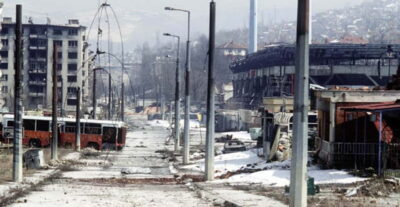
This is where the tour turns from city development to survival. The tunnel is associated with the Siege of Sarajevo, described in the tour material as the longest siege in modern world history. You learn how the city was cut off and how the tunnel became a vital route during the war.
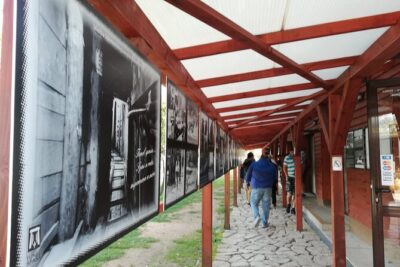
The subject is painful, and the visit deserves more than a quick photo stop. Your guide’s explanation can help place the museum displays and remaining tunnel section into the wider story of Sarajevo. John from Australia specifically praised the way his guide explained the war, while other feedback highlights guides who made difficult material understandable without losing its seriousness.
Allow yourself some emotional space here. The tour continues afterward, but this stop may be the part you remember most. The one-hour allocation is useful because it gives the subject proper weight, though the exact amount of time inside may depend on the group and museum conditions.
Sarajevo Jewish Cemetery and the hills above town
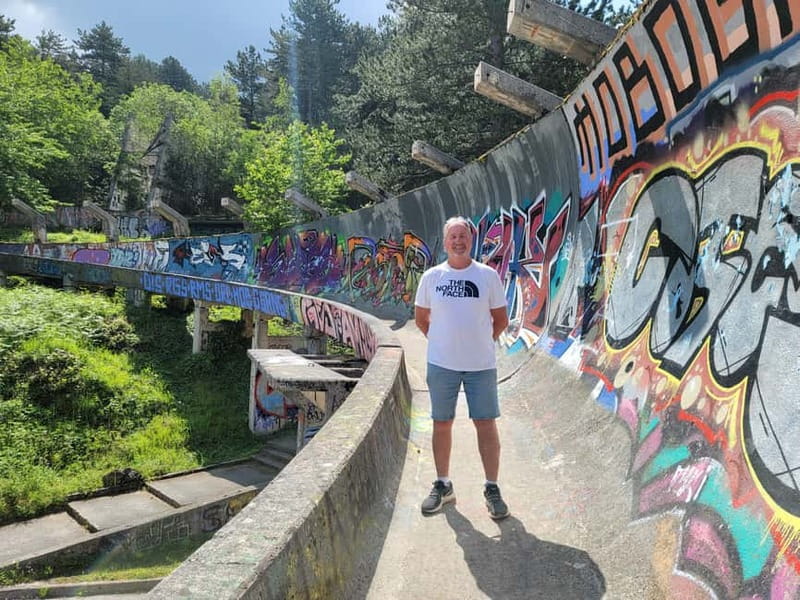
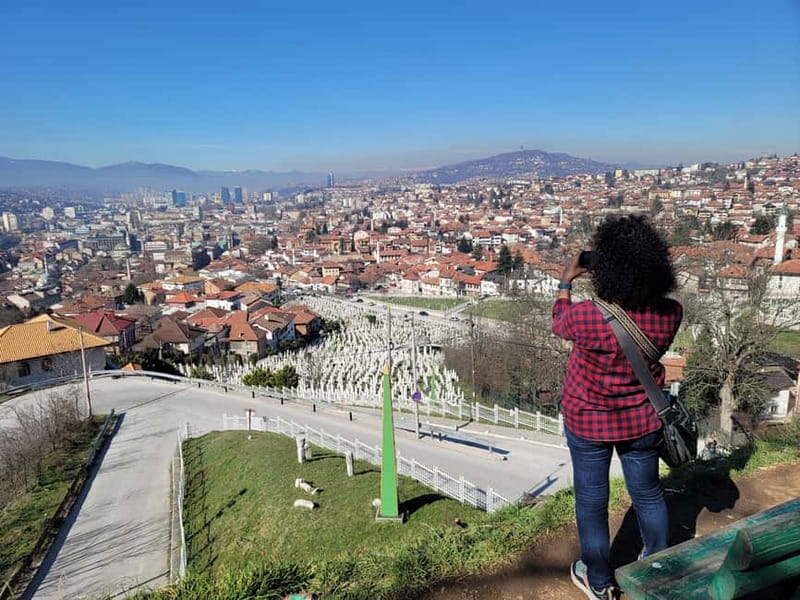
The Sarajevo Jewish Cemetery receives about 30 minutes. This is another place where the tour adds context beyond the main tourist center. It is linked to Sarajevo’s Jewish community and also to the city’s wartime geography.
The cemetery’s hillside position matters. From this part of Sarajevo, you begin to understand how the surrounding elevations affected the city during the siege. The visit pairs naturally with the War Tunnel because one stop explains the enclosed city below, while the other helps you read the hills around it.
This is not a light sightseeing stop, and you should expect the tone to remain reflective. Comfortable shoes will help, since the day includes several walks and uneven historic surfaces, although no specific accessibility information is provided.
Trebević and the 1984 Olympic bobsleigh track
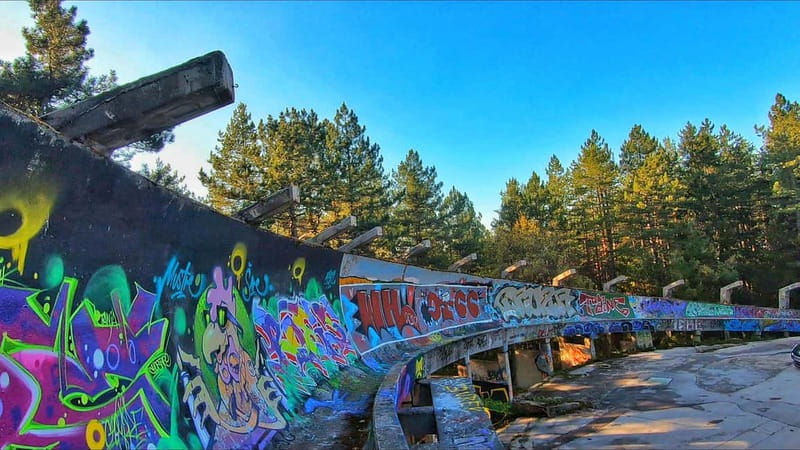
The final major stop is the Sarajevo Olympic Bobsleigh and Luge Track, with about 40 minutes of guided time. Reaching Trebević by vehicle gives you a change of setting after the dense streets and serious war sites.
The track connects Sarajevo to the 1984 Winter Olympics, when the city hosted a major international sporting event. Its later condition also reflects the disruption caused by war. You see both the ambition of socialist Yugoslavia and the marks left by conflict.
The stop is valuable because it keeps the city’s story from being defined only by tragedy. Sarajevo was also a place of sport, public celebration, and international attention. The Olympic site adds that missing chapter.
The tour description mentions views from Trebević Mountain. Weather and visibility will affect what you see, so do not treat the mountain outlook as guaranteed scenery. The track itself is the main attraction, and the 40-minute visit should allow time for explanation and photographs without turning the stop into a long hike.
Bosnian coffee and the human side of the day
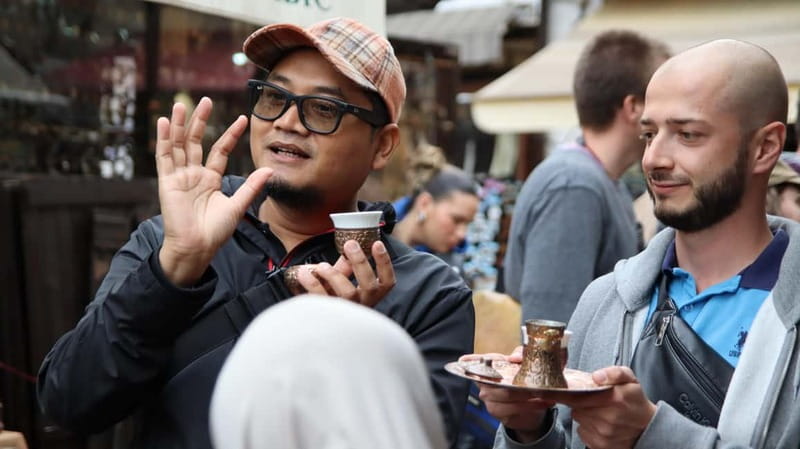
Bosnian coffee is included, along with a bottle of water. The coffee break gives the tour a welcome pause after the old town and war-related sites.
This is not just a free drink added to the price. Coffee is part of the social rhythm of Bosnia and Herzegovina, and tasting it with a guide gives you a small connection to everyday culture. Do not expect a full meal, though. Lunch and other food are not included, so plan to eat before or after the tour.
The break also helps balance a demanding route. Sarajevo’s war history can be heavy, and a simple coffee stop gives you time to absorb what you have seen before the day ends.
Guides, driving, and the pace of the route
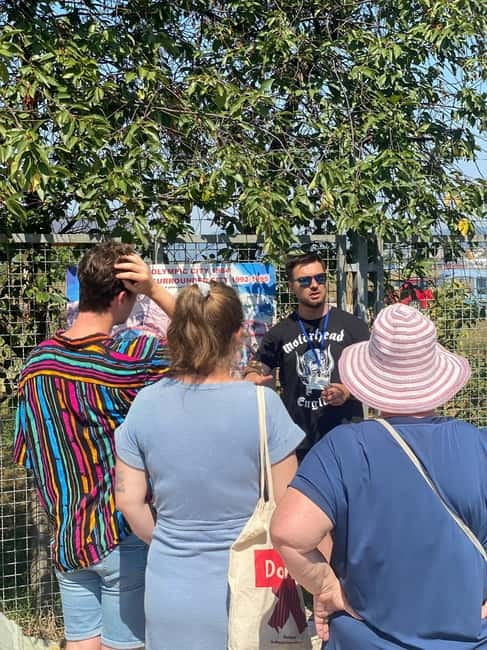
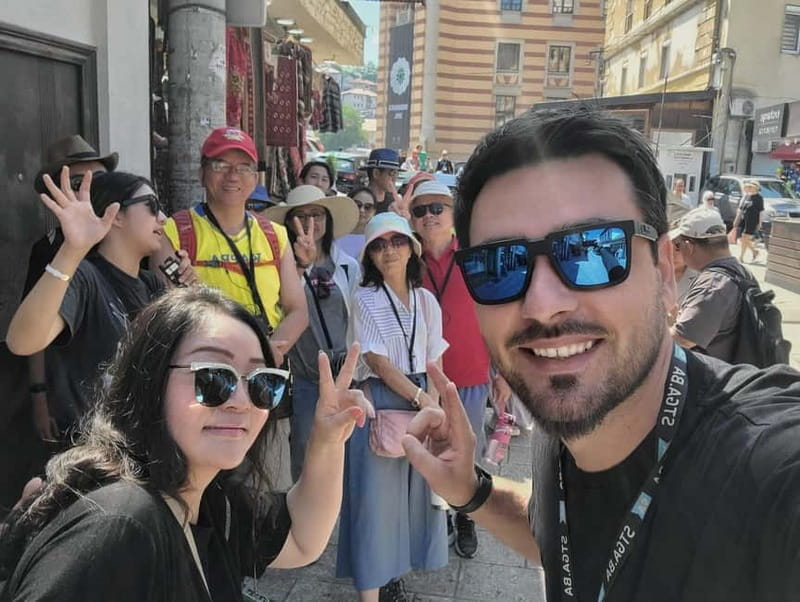
The tour is conducted in English by a licensed live guide. Names mentioned in the feedback include Elvis, Edis, and Enes. Elvis was especially praised for putting a solo woman at ease, explaining the city clearly, and driving as well as guiding. Edis was praised for giving detailed explanations, while Enes was described as helping reveal the true character of Sarajevo.
Those comments point to the service that matters most here: clear storytelling and confident movement through the city. One review specifically praised the driver’s skill on Sarajevo’s streets. That is relevant because the tour combines central walking with mountain and suburban roads.
You should expect a busy five hours. The schedule includes nine guided city or museum stops, a cemetery, the Olympic track, transport between areas, and coffee. The walking is active but broken up by vehicle rides and pauses, so it is less tiring than a full-day walking tour.
Still, this is not a slow, leisurely approach. At the mosque, Bezistan, cathedral, bridge, and market, you often have 10 to 15 minutes. If you want to read every museum label or linger in every shop, you will need extra time on another day.
Is $45 good value?
At $45 per person, the tour offers solid value if you want one organized introduction to Sarajevo. The price includes hotel pickup and drop-off, a licensed guide, private-vehicle transport, water, and Bosnian coffee. It also links sights that would be awkward to combine independently in five hours.
The extra War Tunnel Museum entrance fee slightly reduces the all-in value, but it is a normal cost to flag before booking rather than a surprise at the end. Lunch is also excluded, so the day is not completely prepaid.
I would compare the price with what separate taxis, museum entry, and a half-day guide would cost. The main saving is not just money. It is time and mental effort. You do not need to plan how to reach the cemetery or Trebević, and you get a guide to connect the Ottoman, Austro-Hungarian, socialist, Olympic, and wartime chapters.
For a person staying several days, the tour works best on the first or second day. It gives you a map of the city and helps you decide where to return for a longer visit. For a short stay, it may be the most efficient way to see the major themes in one morning or afternoon.
Who should book this Sarajevo tour?
I would choose this tour if you are visiting Sarajevo for the first time, have limited time, or want help with the city’s complicated past. It suits solo visitors, couples, and small groups who prefer explanation to simply collecting photographs.
It is also a good fit if you want both old-town walking and outlying sights. The private vehicle removes much of the hassle of connecting Baščaršija, the War Tunnel, the cemetery, and Trebević.
I would think twice if you prefer a slow museum day, want long independent shopping time, or find war history too difficult for a major part of your sightseeing. The route is full, and the subject matter is not softened.
The language is English, and hotel pickup is included. Free cancellation is available up to 24 hours before the tour, and you can reserve now and pay later, which helps if your Sarajevo plans are still shifting.
FAQ
How long does the Sarajevo Grand Tour last?
The tour lasts five hours, including walking, driving, guided visits, and the Bosnian coffee stop.
What language is the tour conducted in?
The live tour guide speaks English.
Is hotel pickup included?
Yes. Hotel pickup and drop-off in Sarajevo are included. You should wait in your hotel lobby 10 minutes before the scheduled pickup time.
Which major areas of Sarajevo does the tour cover?
The route covers the Ottoman Old Town, the Austro-Hungarian City Center, war-related sites, Trebević Mountain, and the Olympic bobsleigh and luge track.
Is the War Tunnel Museum entrance included?
No. The entrance fee to the War Tunnel Museum is not included in the tour price.
Is food included?
A bottle of water and Bosnian coffee are included. Lunch and other food are not included.
Which guides may lead the tour?
Guides named in the available feedback include Elvis, Edis, and Enes. The specific guide for your departure is not guaranteed in the provided information.
Can I cancel the booking for a full refund?
Yes. You can cancel up to 24 hours in advance for a full refund. You can also reserve now and pay later.
Should you book it?
Book this tour if you want Sarajevo’s main story in one well-planned half-day: Ottoman markets, religious landmarks, Austro-Hungarian streets, the Siege of Sarajevo, Jewish heritage, and the 1984 Olympics. At $45, the combination of transport, guiding, coffee, and access to distant sites makes good sense, even with the War Tunnel entrance fee added separately.
Skip it only if you want to explore at a very slow pace. For most first-time visitors, especially those with limited time, this is a practical and thoughtful introduction to Sarajevo.
Just added around Sarajevo
- Sarajevo Under Siege: A War History Tour★ 5.0 · 10 reviews
- WAR TUNNEL – Sarajevo’s only way of a communication during the WAR – Top secret★ 5.0 · 12 reviews
- Private Full Day Safari Tour★ 5.0 · 8 reviews
- Ultimate Gastro Experience★ 4.5 · 14 reviews
- Mysterious Visoko Pyramids Driving and Walking Tour★ 5.0 · 7 reviews
- Secret Tito’s Bunker/Konjic Tour★ 5.0 · 4 reviews
- The Secret Lifeline: Sarajevo’s War Tunnel Tour★ 5.0 · 6 reviews
- Crossroads of Cultures – Sarajevo Walking Tour★ 5.0 · 8 reviews
Sarajevo War Tunnel Tours, compared.

Fall of Yugoslavia, Sarajevo War Tour with Tunnel of Hope Museum and Frontlines
Read our review →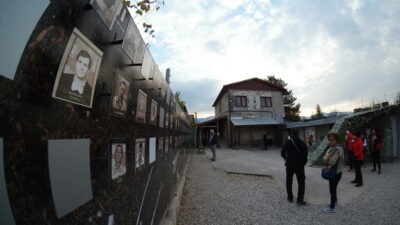
Sarajevo Grand Tour: Old Town, War Tunnel, Olympic Sites & More
Read our review →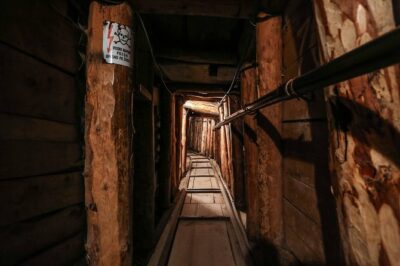
Times of Misfortune – Life Under Siege and the Tunnel of Hope
Read our review →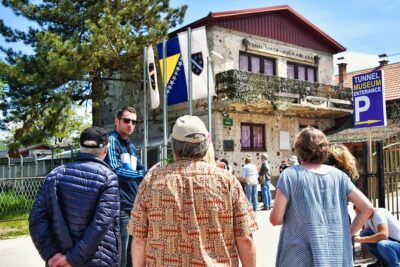
WAR TUNNEL – Sarajevo’s only way of a communication during the WAR – Top secret
Read our review →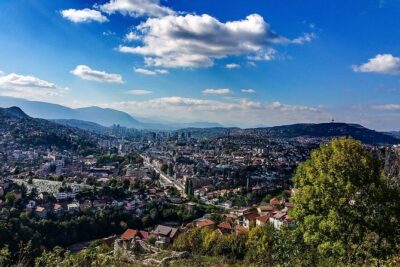
SARAJEVO SIEGE TIMES ’92-’95 / Sarajevo Roses & Tunnel of Hope /
Read our review →Browse the lists this tour appears in